
11:00 JST, December 5, 2025
It has been less than a year since Donald Trump came to power. Yet the world continues to be hit by multiple shocks in such a short time.
Trump’s initiative to broker a peace in Ukraine may come at the expense of Ukraine and America’s European allies. He has also imposed tariffs on imports, ignoring World Trade Organization rules.
Chinese President Xi Jinping, for his part, said in a joint declaration adopted at a Shanghai Cooperation Organization summit on Sept. 1 that mutual respect for sovereignty, territorial integrity, non-interference in internal affairs and not using force, among other principles, were “the foundation for the stable development of international relations.” Nonetheless, on Sept. 3, Xi appeared with Russian President Vladimir Putin, who leads the war against Ukraine, and North Korean leader Kim Jong Un, who has sent his country’s troops to the war. Xi was reviewing a military parade that commemorated the 80th anniversary of China’s victory in its resistance against Japan as if to keep Putin and Kim in line.
When the future is uncertain and unpredictable, more countries tend to put their own national interests first in the short term. There is no doubt that a global shift is underway. This shift is often described as “power politics,” a “sphere-of-influence order led by great powers,” or “the dismantling of the postwar order.”
Whatever it is called, this shift requires us to step back and make sense of some of the major global trends since the beginning of the 21st century.
Between 2000 and 2024, the size of the world economy, as measured in terms of nominal gross domestic product, more than tripled from $34 trillion to $110 trillion. This was driven by the rise of some developing countries into emerging economies, which pushed up the combined share of emerging market and developing economies (EMDEs) in the global economy from 21% to 41% over the period. This is why the Global South has been attracting attention.
However, this doesn’t mean that the world has become multi-polar. The United States’ share of the global economy fell from 30% in 2000 to 23% in 2010, but that had recovered to 27% as of 2024, accounting for 59% of economic output in the Group of Seven major countries.
U.S., Chinese dominance
On the other hand, China’s share of the world economy surged from 3.5% in 2000 to 17.4% in 2020, before declining to 16.6% in 2024.
Still, the combined share of the United States and China in the global economy stood at 43% in 2024, up from 34% in 2000, raising the importance of the two countries as “superpowers.” That has meant that the United States and China are increasingly influencing global affairs.
What about the grand strategies of the United States and China? The strategy of any country is bound by its past experiences and the lessons it learned therein. In China, Xi was elected general secretary of the Communist Party of China in 2012 in the wake of the 2008 global financial crisis. The crisis birthed a shared understanding that “the United States would decline and China would rise.” The Xi administration put an end to the “hide your strength, bide your time” strategy, which was introduced by Deng Xiaoping in the 1990s, and in its place declared “the great rejuvenation of the Chinese nation.”
However, in reality, China’s share of the world economy has been declining since the outbreak of the novel coronavirus in 2020. In the 2010s, it was predicted that China would eventually surpass the United States in nominal GDP in the 2020s. That is unlikely to come to pass.
While the Chinese economy has lost steam, the U.S. economy has kept growing steadily since the global financial crisis. This is probably why Trump has been so forcefully pressing ahead with his America First policy agenda.
Yet, China’s share of global manufacturing stands at 31.6% as of 2025, surpassing the combined total of the U.S., Japanese and German shares of 15.9%, 6.5% and 4.8%. The Trump administration’s goal of reviving manufacturing reflects these circumstances in addition to the lesson of the Ukraine war on the sector’s importance.
Japan’s share of the global economy has fallen. As of 2024, it stood at 3.7%, roughly a quarter of the 14.6% it claimed in 2000. Likewise, the figures for other G7 member states, as well as for South Korea and Taiwan, have dropped. Among major developed countries, only Australia increased its share — from 1.2% to 1.6%.
In contrast, emerging economies, namely India, Russia, Brazil, Indonesia, Turkey, Saudi Arabia and South Africa, have increased their representation in the global economy — from 0.5%-1.9% in 2000 to 0.7%-3.5% in 2024. Middle powers have notably advanced their positions.
The balance of power shifts
Next, let’s look at changes in the balance of power.
Given U.S. military spending as a base value of 100, the combined military expenditure of Washington’s key Asian and European allies as well as other regions fell from 51 in 2000 to 32 in 2010 and then rose to 46 in 2024 following Russia’s invasion of Ukraine.
However, military spending by major U.S. allies and other regions remains at only 2% of GDP, only about half that of the United States. This is one reason that Trump has criticized the military burden of the European and Asia allies as “unfair” and demanded that allies spend more on defense.
Japan’s defense spending held below 1% of GDP from 2000 through 2019. By 2024, the defense budget had reached 1.4% of GDP, thanks to Prime Minister Fumio Kishida’s decision in 2022. In the current fiscal year, the figure will likely rise to 2%. European members of NATO have agreed this year to boost their military spending to 3.5% of GDP.
In the meantime, China’s military spending has jumped from 3% of what the United States spent in 1990 to 32% in 2023. Yet, these expenses are 1.7% of its GDP, meaning China still has room to spend more.
Taking China’s military spending as a base value of 100, Japan’s defense spending stood at 159 in 1990 but then fell to 89 in 2000, and 16 in 2023. A similarly rapid change has been seen in spending comparisons with other U.S. allies in Asia — South Korea, the Philippines and Australia — and with Taiwan.
The balance of power is not determined solely by the scale of military spending, but China’s growing defense budget makes it clear that a favorable balance of power can no longer be sustained without the United States.
Cooperating with middle powers
Next, let’s look at per capita income in terms of purchasing power parity. Japan’s per capita income went up 19% over a 25-year period from 2000 to 2024. With the exception of South Korea and Taiwan, where per capita income doubled, there was not much difference among other advanced economies. The growth rates were 39% in the United States, 33% in Australia and 5% to 23% in major European countries. At this level of growth, it is hard to feel that life has improved considerably over the past 25 years.
In contrast, per capita income in Asian EMDEs has risen dramatically. In these 25 years, it rose nearly sixfold in China, more than tripled in India and Vietnam and roughly doubled in Indonesia, the Philippines, Malaysia and Thailand.
In countries where income has risen sharply, people expect that their income will continue to increase and that their lives will improve until they live on par with developed countries. When governments fail to meet these expectations, politics become unstable.
There are signs of this. Since 2020, income growth for middle-class people in many of Asia’s EMDEs has stagnated. Meeting expectations for higher incomes has been the biggest domestic political challenge in these countries.
Based on the above, these are the challenges that face Japan.
First, Japan should prioritize investment in national security and defense, in people and research and development, and in advanced manufacturing, ensuring that these efforts are fused with cutting-edge technologies and thereby establishing the necessary industrial base of national power.
Second, while strengthening the Japan-U.S. alliance as the cornerstone of regional security, Japan should expand and deepen cooperation with those countries, especially middle powers, in security, trade, science and technology, and other areas, based on a “rule-based, free, and open” vision for the world and Asia.
Third, to maintain a national consensus on these policies, the country must do its utmost to firmly uphold the “tacit agreement between the state and the people” to maintain a life of freedom, safety, and reasonable prosperity for all.
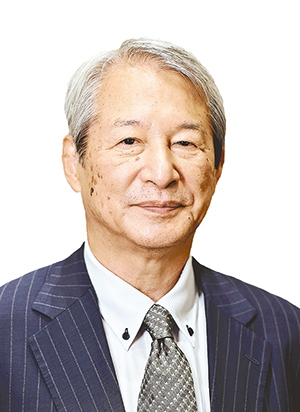
Takashi Shiraishi
Takashi Shiraishi is a scholar of Asian studies and distinguished university professor at the Prefectural University of Kumamoto, where he served as chancellor until the end of March 2024. Prior to that, he was president of the National Graduate Institute for Policy Studies from 2011 to 2017, and president of the Institute of Developing Economies, part of the Japan External Trade Organization, from 2007 to 2018.
The original article in Japanese appeared in the Nov. 30 issue of The Yomiuri Shimbun.



Most Read
Popular articles in the past 24 hours
-

Japanese Shipping Giants Halt Strait of Hormuz Transit as Iran Co...
-

U.S. Launches Attacks on Iran: Avoid Escalation of Conflict by An...
-

Sawtooth Roof Factory Stands as Monument to Ashikaga Textile Hist...
-

Parents of Japanese Teen Shot in U.S. Strive for Gun Control
-

Disinformation Spreads About Team Mirai, Ballot Readers; Online P...
-

Asahi Breweries to Stage Comeback with New Product in April; Comp...
-
Bank of Japan Deputy Governor Says Rate Hikes Likely to Continue
-
Japanese Government Bonds Rally, Yields Tumble as Iran Strikes Sp...
Popular articles in the past week
-

Nepal Bus Crash Kills 19 People, Injures 25 Including One Japanes...
-
Milano Cortina 2026: Japanese Gold Medalist Figure Skater Miura S...
-

Tokyo Spends Big on Children, Wins Over Parents
-

McDonald's Japan Raises Prices; Big Mac to Cost ¥500, Double Chee...
-

Japan’s Miura, Kihara Announce Withdrawal from Figure Skating Wor...
-

Exhibition Featuring Yoshiharu Tsuge’s Manga World Underway in Ch...
-

Yokohama to Test Out Renewable-Powered Offshore Floating Data Cen...
-
BOJ Keeping Eye on Economy and Takaichi's ‘Proactive Fiscal Polic...
Popular articles in the past month
-

Producer Behind Pop Group XG Arrested for Cocaine Possession
-

Japan PM Takaichi’s Cabinet Resigns en Masse
-

Man Infected with Measles Reportedly Dined at Restaurant in Tokyo...
-

Israeli Ambassador to Japan Speaks about Japan’s Role in the Reco...
-

Videos Plagiarized, Reposted with False Subtitles Claiming ‘Ryuky...
-

Man Infected with Measles May Have Come in Contact with Many Peop...
-

Prudential Life Insurance Plans to Fully Compensate for Damages C...
-

Woman with Measles Visited Hospital in Tokyo Multiple Times Befor...
Top Articles in Editorial & Columns
-

Riku-Ryu Pair Wins Gold Medal: Their Strong Bond Leads to Major Comeback Victory
-
Reciprocal Tariffs Ruled Illegal: Judiciary Would Not Tolerate President’s High-Handed Approach
-
China Provoked Takaichi into Risky Move of Dissolving House of Representatives, But It’s a Gamble She Just Might Win
-
Japan’s Plan for Investment in U.S.: Aim for Mutual Development by Ensuring Profitability
-
Flu Cases Surging Again: Infection Can Also Be Prevented by Humidifying Indoor Spaces
JN ACCESS RANKING
-
Producer Behind Pop Group XG Arrested for Cocaine Possession
-
Japan PM Takaichi’s Cabinet Resigns en Masse
-
Man Infected with Measles Reportedly Dined at Restaurant in Tokyo Station
-
Israeli Ambassador to Japan Speaks about Japan’s Role in the Reconstruction of Gaza
-
Videos Plagiarized, Reposted with False Subtitles Claiming ‘Ryukyu Belongs to China’; Anti-China False Information Also Posted in Japan