
Yomiuri Proposals on AI: Ensure Japan’s Autonomy in Domestic Development to Reflect Ethics, Values
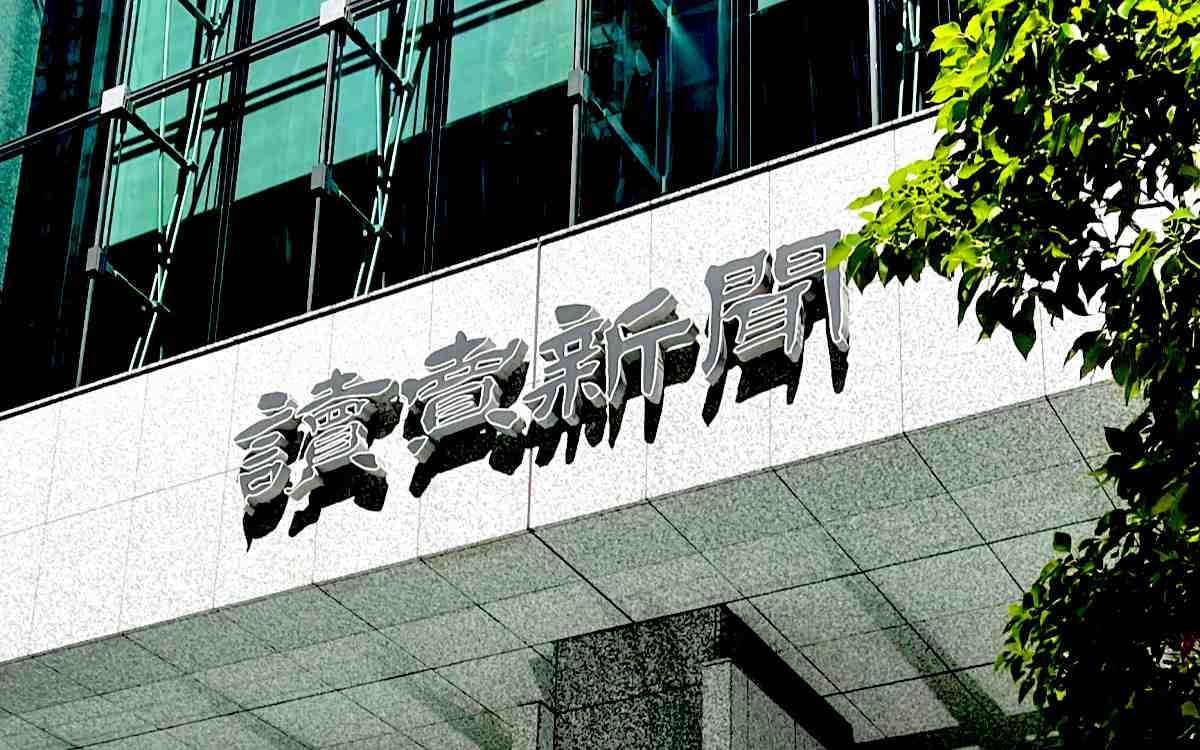
Yomiuri Shimbun building in Chiyoda Ward, Tokyo
2:00 JST, December 17, 2025
The Yomiuri Shimbun has compiled a set of proposals on coexistence with trustworthy generative artificial intelligence to establish an environment for utilizing generative AI.
Compiled on Monday, the proposals centered on enhancing Japan’s autonomy in developing domestic AI, establishing systems to be able to swiftly address issues, implementing employment measures and building human resource education that cultivates the ability to think and social skills.
With the United States and China leading generative AI development, the proposals called for government-led efforts to strengthen Japan’s autonomy. Overreliance on other countries for development could lead to restricting access depending on bilateral relations, and the inability to fully ensure a safe usage environment. Domestically developed AI also will be able to reflect ethical standards and values rooted in Japanese society.
Specifically, the proposals stated that the development of base models, such as large-scale language models that support generative AI, should be promoted through public-private cooperation, and accurate information on Japan in the Japanese language should be utilized to the maximum extent.
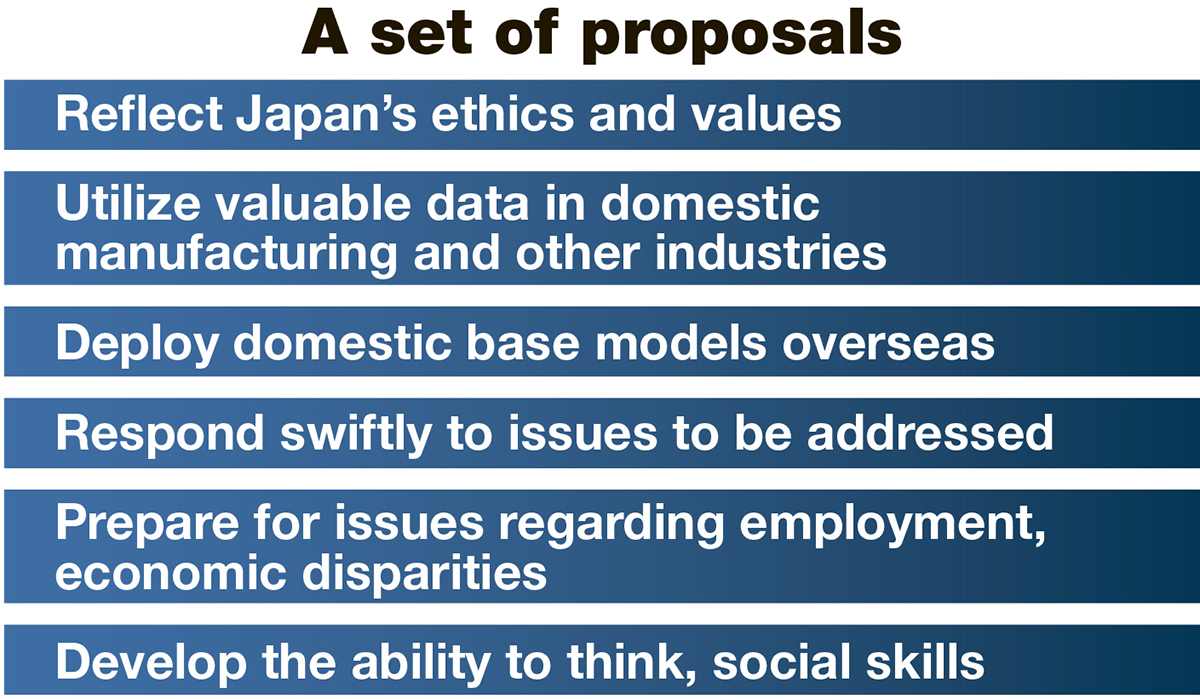
Overseas base models tend to rely heavily on information in widely used languages, such as English and Chinese, for learning data. The proposals also advocated for using valuable data held by domestic manufacturing and other industries, to ensure high-quality learning data is being collected.
Furthermore, noting the global trend of domestically developing generative AI, the proposals called for creating an international network connecting “trustworthy AI models” mutually recognized by Japanese and overseas users in the future. This aims to secure a “third path” beyond the frameworks led by the United States and China.
In the meantime, establishing operational rules and legal frameworks is essential for the safe usage of generative AI. As urgent priorities, the proposals called for the following three points — developing guidelines for developers and users; strengthening the Japan AI Safety Institute, or a government agency responsible for ensuring AI safety, and discussing civil liability of relevant parties.
Other important initiatives cited include the introduction of a third-party certification system to determine the eligibility of operators, and measures against tampering with official government and corporate documents.
Going forward, the proposals noted that generative AI deployed in the workplace could replace human labor, potentially leading to job cuts, reduced hiring plans and wage declines, and urged the government to implement preemptive measures and provide the necessary support to prevent generative AI from becoming a factor creating new economic disparities.
In addition, the proposals called for new human resource education to enhance critical thinking and social skills, so as to prevent people from not thinking for themselves due to their reliance on generative AI. They asked for fostering critical perspectives by deepening understanding of generative AI’s issues and risks specifically at the stage of compulsory education.
— The proposals were compiled through extensive internal deliberations within The Yomiuri Shimbun based on study sessions with experts and corporate subscribers of “DOW JONES YOMIURI SHIMBUN Pro,” a digital media service for corporate customers launched in April.





Most Read
Popular articles in the past 24 hours
-

Japanese Shipping Giants Halt Strait of Hormuz Transit as Iran Co...
-

U.S. Launches Attacks on Iran: Avoid Escalation of Conflict by An...
-

Sawtooth Roof Factory Stands as Monument to Ashikaga Textile Hist...
-

Parents of Japanese Teen Shot in U.S. Strive for Gun Control
-

Disinformation Spreads About Team Mirai, Ballot Readers; Online P...
-
Asahi Breweries to Stage Comeback with New Product in April; Comp...
-
Bank of Japan Deputy Governor Says Rate Hikes Likely to Continue
-

Japanese Government Bonds Rally, Yields Tumble as Iran Strikes Sp...
Popular articles in the past week
-

Nepal Bus Crash Kills 19 People, Injures 25 Including One Japanes...
-
Milano Cortina 2026: Japanese Gold Medalist Figure Skater Miura S...
-

Tokyo Spends Big on Children, Wins Over Parents
-

McDonald's Japan Raises Prices; Big Mac to Cost ¥500, Double Chee...
-

Japan’s Miura, Kihara Announce Withdrawal from Figure Skating Wor...
-

Exhibition Featuring Yoshiharu Tsuge’s Manga World Underway in Ch...
-

Yokohama to Test Out Renewable-Powered Offshore Floating Data Cen...
-

BOJ Keeping Eye on Economy and Takaichi's ‘Proactive Fiscal Polic...
Popular articles in the past month
-

Producer Behind Pop Group XG Arrested for Cocaine Possession
-

Japan PM Takaichi’s Cabinet Resigns en Masse
-

Man Infected with Measles Reportedly Dined at Restaurant in Tokyo...
-

Israeli Ambassador to Japan Speaks about Japan’s Role in the Reco...
-

Videos Plagiarized, Reposted with False Subtitles Claiming ‘Ryuky...
-

Man Infected with Measles May Have Come in Contact with Many Peop...
-

Prudential Life Insurance Plans to Fully Compensate for Damages C...
-

Woman with Measles Visited Hospital in Tokyo Multiple Times Befor...
Top Articles in Science & Nature
-

iPS Treatments Pass Key Milestone, but Broader Applications Far from Guaranteed
-

Record 700 Startups to Gather at SusHi Tech Tokyo in April; Event Will Center on Themes Like Artificial Intelligence and Robotics
-
iPS Cell Products for Parkinson’s, Heart Disease OK’d for Commercialization by Japan Health Ministry Panel
-

Japan to Ban Use of Power Banks on Airplanes
-
Kairos Rocket Launch Postponed
JN ACCESS RANKING
-
Producer Behind Pop Group XG Arrested for Cocaine Possession
-
Japan PM Takaichi’s Cabinet Resigns en Masse
-
Man Infected with Measles Reportedly Dined at Restaurant in Tokyo Station
-
Israeli Ambassador to Japan Speaks about Japan’s Role in the Reconstruction of Gaza
-
Videos Plagiarized, Reposted with False Subtitles Claiming ‘Ryukyu Belongs to China’; Anti-China False Information Also Posted in Japan