
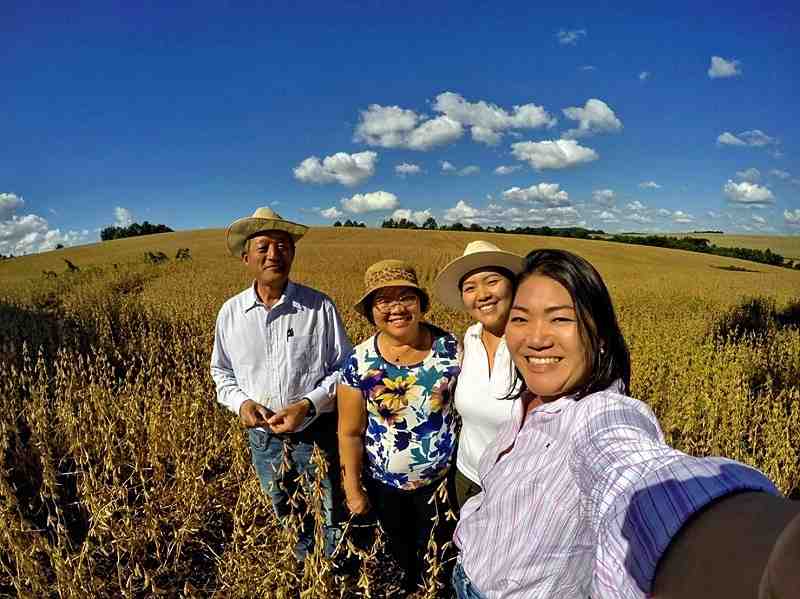
From right, Vivian Yurie Uemura, her sister, Rie, and their parents at the family farm in Brazil
6:00 JST, August 18, 2022
The recent relaxation of entry restrictions for foreigners opened the door again for overseas students to study in Japan. The Yomiuri Shimbun talked with students at Kai Japanese Language School in Shinjuku Ward, Tokyo. This is the third of a five-part series.
***
“Kannan shinku o norikoete …” intoned a student in a classroom of Kai Japanese Language School in mid-July. Third-generation Japanese-Brazilian Vivian Yurie Uemura listened to her classmate read aloud about overcoming hardships and followed along intently with her own textbook. The text traces the history of game company Nintendo Co. and is filled with words that even native speakers of Japanese find difficult to read.
Uemura is a diligent student who prepares carefully and always keeps up with the class. She was born into a farming family in southern Brazil where soybeans, wheat and corn grow on farms as far as the eye can see. Whenever she surveys this vast landscape, she remembers her grandfather, Yukimitsu.
Yukimitsu came to Brazil from Kumamoto Prefecture in 1929, shortly after his birth. Though he had no memories of Japan, Yukimitsu cherished the traditions of his home country. He would pray every day at the Buddhist altar in the family home. On New Year’s Day, his family and relatives gathered to pound mochi rice cake and eat them with soy sauce and sugar. Even after his death 14 years ago at age 80, his family continued to serve Japanese dishes such as miso soup and sukiyaki at the dining table.
Uemura, 31, first visited Japan eight years ago, and was surprised that the washoku Japanese cuisine served in Brazil and Japan were completely different — including the soy sauce. These differences drove her to pursue authentic washoku culture.
At that time, Uemura had already left home and was working in Brazil, but she returned to the family farm in 2019 to succeed her father.
The farm grows soybeans, the raw material for soy sauce. When the family was considering producing processed products due to unstable agricultural prices, Uemura hit upon the idea of brewing soy sauce from beans they grew. She began browsing information online and learned that in Japan, soy sauce was still made traditionally using wooden barrels. This sparked within her a desire to go to Japan and “carry on the traditions of the country where [her] grandfather was born.”
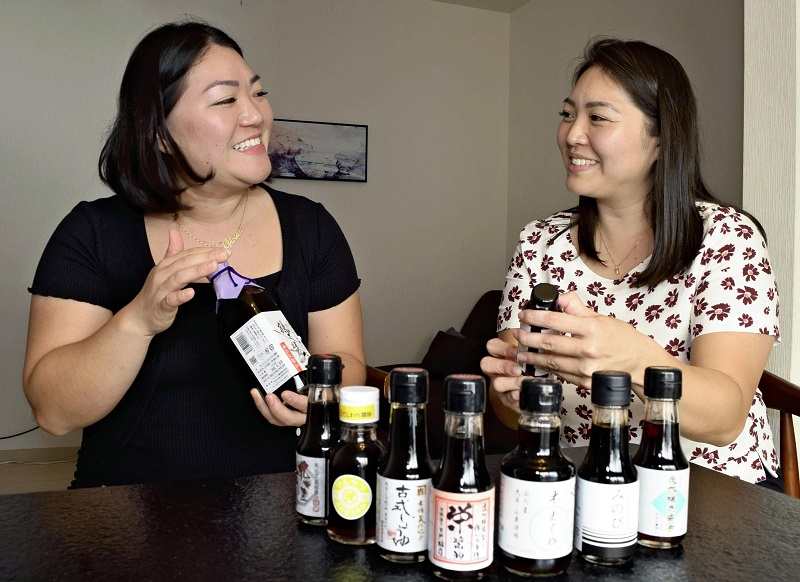
Vivian Yurie Uemura, left, and Rie talk about a traditional way of making soy sauce with wooden barrels in Shinjuku Ward, Tokyo, on July 22.
Uemura realized that strong Japanese language skills would be necessary to learn about this brewing method, so when she and her sister, Rie, 34, came to Japan in April, they enrolled in Kai school. Thanks partly to having listened to Yukimitsu speak Japanese and having already studied the language in Brazil, the sisters’ skill level is intermediate to advanced.
In June, they visited a soy sauce brewery in Shodoshima island in Kagawa Prefecture. Rich aromas wafted through the air around the brewery, and the woody flavor of the barrels imparted a wine-like complexity to the flavor of the sauce.
“This is the kind of soy sauce we want to make,” Uemura exclaimed.
After studying Japanese, she hopes to learn about soy sauce production at a brewery. The sisters say they know that the real challenge will start after they leave language school.
Japanese culture
Foreign students at Kai school say they have a keen interest in Japanese culture, and enjoy such things as the food, shrine and temple tours, trips to hot springs, anime and manga.
German Thomas Dullinger, 29, grew up watching dubbed versions of Pokemon, Dragon Ball and Ghibli on TV in Germany, and took Japanese classes at university. He visited Japan on a trip in 2019, but felt he could not fully enjoy the Japanese food served at a ryokan inn or sightseeing at a temple, because the Japanese explanations were too difficult.
“I think there are so many interesting and unique things about Japan and Japanese culture you will only be able to grasp, when you really are able to understand the language and are able to talk to Japanese people,” Dullinger said.
The Japan Tourism Agency conducted a survey in 2019 asking foreign visitors what they expected to do during their stay in Japan, with multiple answers allowed. The largest number, or 70%, said they would eat Japanese food, followed by shopping at 53% and visits to nature-rich and scenic spots at 47%. Additionally, 22% said they would experience Japanese history and traditional culture, 10% said they wanted to enjoy Japanese pop culture such as anime and games, and 5% planned to visit places associated with movies and anime.





Most Read
Popular articles in the past 24 hours
-
Japan Govt Aims for 10-Fold Increase in Computing Power of Superc...
-

Fukushima Towns Only Back to 20% of Population Before Nuclear Dis...
-
Reopened Fukushima Municipalities Lure New Residents with Educati...
-

2 People Reportedly Found on Mt. Fuji; Hiking Trail Currently Clo...
-

Japan's TEPCO to Raise Electricity Rates for Corporations in Apri...
-

Kesennuma, Miyagi Pref., Locals Raise Carp Streamers as Symbol of...
-

Japan’s Nikkei Stock Average Ends Higher as Traders Gauge Efforts...
-

Iran Situation: Significance of Rule of Law Must Be Conveyed
Popular articles in the past week
-

Ibaraki Pref.'s 1st Foreign Bus Driver Hired in Tsukuba
-

Amid Strait of Hormuz Blockade, Shipping Companies Scramble to Ge...
-
2 Unpublished Early Novellas by Japan's Kenzaburo Oe Discovered, ...
-
Govt to Utilize ODA for Ensuring Economic Security; Securing Ener...
-
Japan Govt Survey Finds Just 10% of Workers Want Working Hours to...
-
Japan's 2nd Round of U.S. Investments May Be Worth Over $100 Bill...
-

Imperial Family Watches World Baseball Classic Game Against Austr...
-

Donald Keene’s Drinking Buddy and Translator Yukio Kakuchi Pays T...
Popular articles in the past month
-

Producer Behind Pop Group XG Arrested for Cocaine Possession
-

Japan PM Takaichi’s Cabinet Resigns en Masse
-

Man Infected with Measles Reportedly Dined at Restaurant in Tokyo...
-

Videos Plagiarized, Reposted with False Subtitles Claiming ‘Ryuky...
-

iPS Treatments Pass Key Milestone, but Broader Applications Far f...
-

Sanae Takaichi Elected Prime Minister of Japan; Keeps All Cabinet...
-

Nepal Bus Crash Kills 19 People, Injures 25 Including One Japanes...
-

Japan's Govt to Submit Road Map for Growth Strategy in March, PM ...
Top Articles in Society
-
Producer Behind Pop Group XG Arrested for Cocaine Possession
-
Man Infected with Measles Reportedly Dined at Restaurant in Tokyo Station
-

Bus Carrying 40 Passengers Catches Fire on Chuo Expressway; All Evacuate Safely
-
Tokyo Skytree’s Elevator Stops, Trapping 20 People; All Rescued (Update 1)
-

U.S. Firm to Build Training Hub in Fukushima N-plant for Debris Removal; Plans to Establish Training Center by 2029
JN ACCESS RANKING
-
Producer Behind Pop Group XG Arrested for Cocaine Possession
-
Japan PM Takaichi’s Cabinet Resigns en Masse
-
Man Infected with Measles Reportedly Dined at Restaurant in Tokyo Station
-
Videos Plagiarized, Reposted with False Subtitles Claiming ‘Ryukyu Belongs to China’; Anti-China False Information Also Posted in Japan
-
iPS Treatments Pass Key Milestone, but Broader Applications Far from Guaranteed