
Vietnam’s Cherry Blossom Doctor Turns 10 Seeds from Japan into 120,000 Trees, Creating Lakeside Attraction
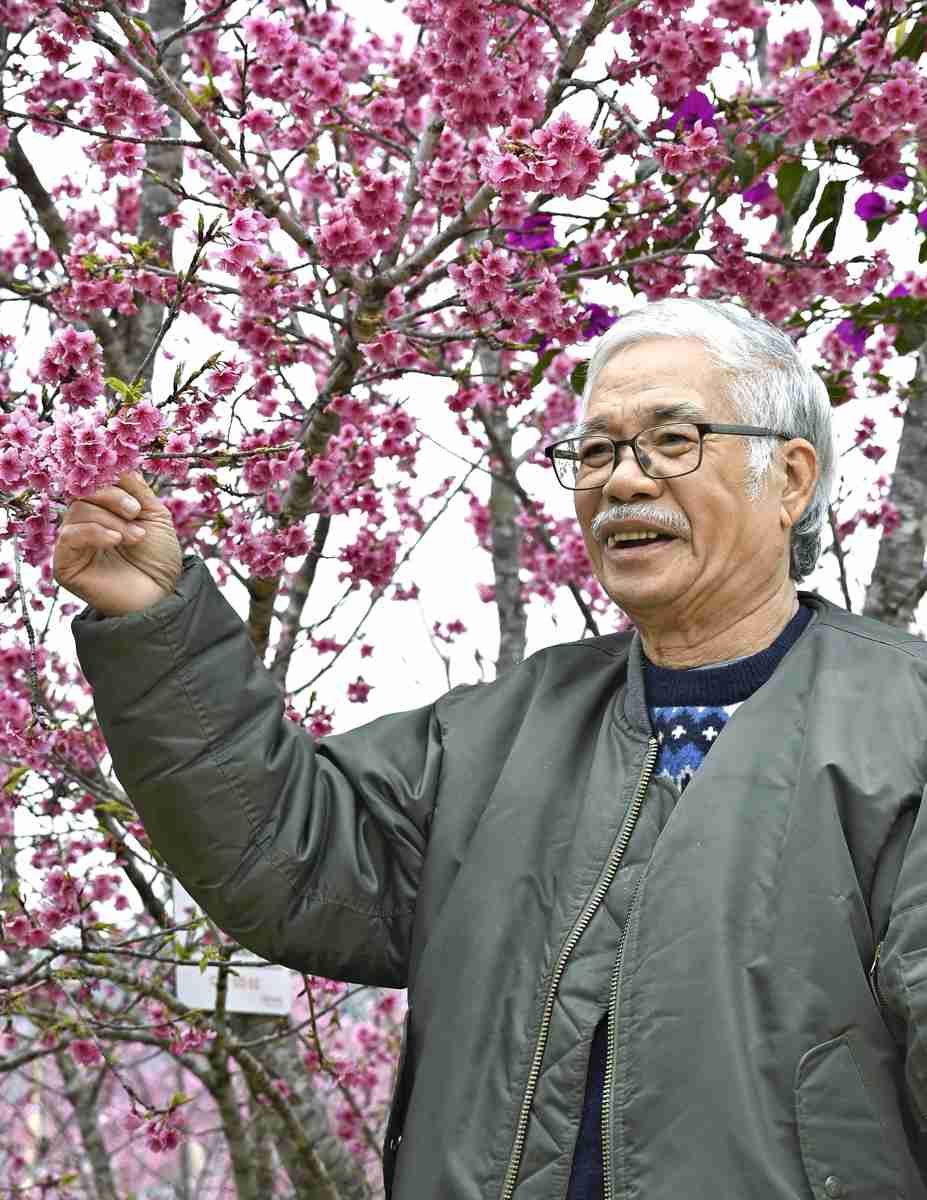
Tran Le
7:00 JST, February 7, 2026
DIEN BIEN PHU, Vietnam — In northwestern Vietnam, agricultural biologist Tran Le is known as the “cherry blossom doctor.” He has researched and cultivated Japanese cherry blossom trees, starting with just 10 cherry seeds he received from a Japanese friend and developing them into a famous spot for cherry blossoms.
Le hopes to plant Japanese cherry trees across Vietnam to promote friendship between the two countries.
In early January, pink and white cherry blossoms were in full bloom, forming dense clusters by a local lake. The lakeside area is about an hour’s drive from the center of Dien Bien Phu, a city about 300 kilometers west of Hanoi near the border with Laos.
The site is a cherry orchard managed by Le. Around 20 types of cherry trees grow, including Japan’s edohigan type, covering an area of about 10 hectares. This spectacle attracts many tourists to the area each year.
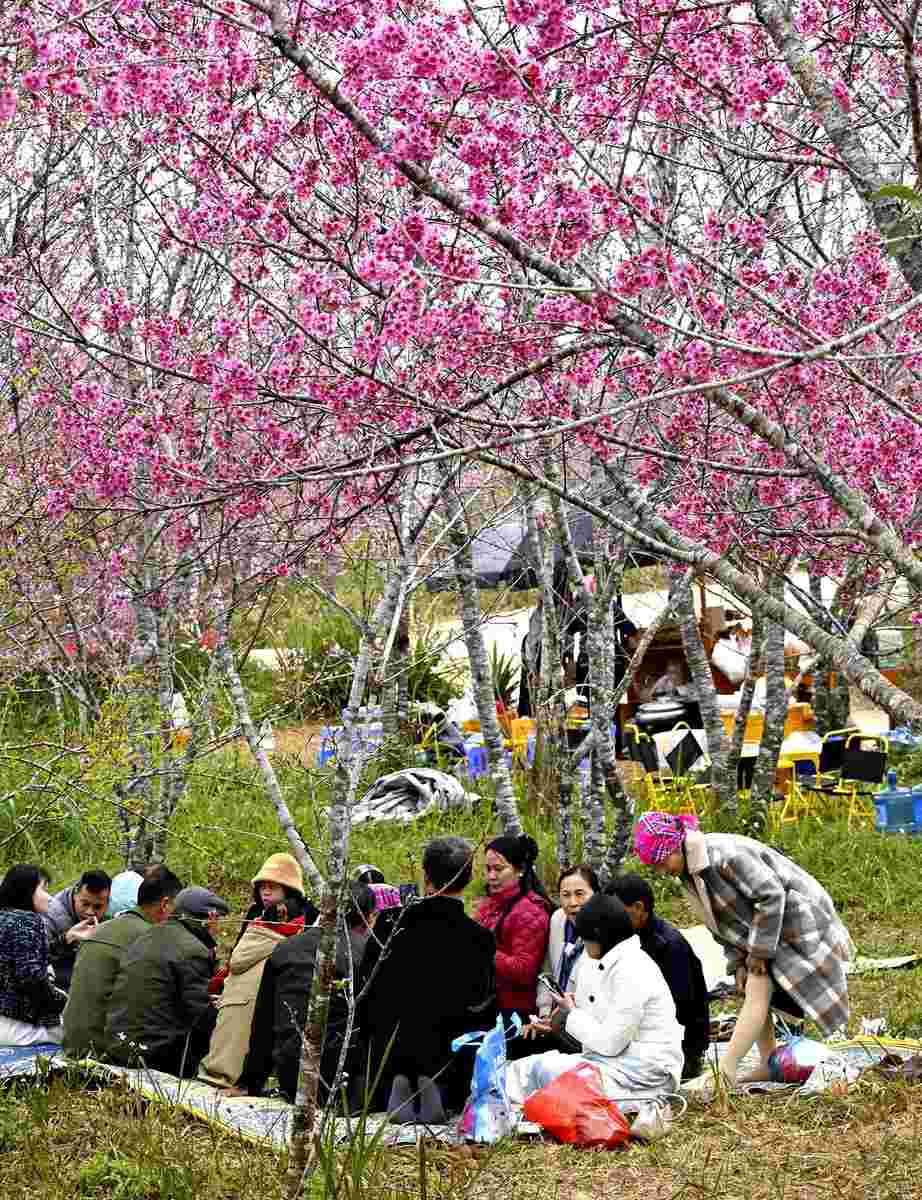
Tourists enjoy viewing cherry blossom at the orchard Le manages in northwestern Vietnam on Jan. 8.
“Now is the best time to view them. They are truly vivid,” Le said with a smile.
Le served in the North Vietnamese Army during the Vietnam War. In 1968, he was sent to Hungary in the Eastern bloc to study biotechnology in an academic program. He studied at a university in Budapest for seven years.
After the war ended, he returned home in September 1975 and worked at a national research institute, where he used his expertise in plant cultivation to support farmers.
After getting married, he left the research institute and became an independent agricultural researcher in Da Lat, a city in a highland region in central-southern Vietnam known for its thriving agriculture.
In the mid-1990s, Le was captivated by the flavor of wasabi at a sushi restaurant in Hanoi.
Although wasabi is difficult to grow, Le, who says he “likes to try new, challenging things,” quickly started a wasabi-growing project. By around 2000, he had managed to harvest as much as 20 tons of wasabi per year and even began exporting it to Japan.
Around that time, he heard that Japanese cherry trees would not grow in Vietnam. This rekindled his passion for taking on new challenges.
“I decided to make Japanese cherry trees bloom in Vietnam,” he said.
To awaken the cherry blossom buds, they need to undergo cold winter weather. Le assumed that the climate of Vietnam’s mountainous northern region may be suitable for cultivation as it has four distinct seasons.
He obtained 10 edohigan cherry seeds from a Japanese friend and planted them.
Thanks to meticulous temperature control, nine of the 10 seeds germinated. Le patiently nurtured the saplings. In 2008, four years after starting this challenging project, several cherry trees finally bloomed.
The lakeside area became home to a major cluster of cherry trees, transforming the area into a tourist spot overnight.
To date, Le has grown over 120,000 cherry blossom trees. Many people visit the area to purchase trees as gifts. Cherry blossom trees grown by him have been donated to schools and temples across the country as well.
Le’s cherry blossom trees have also been planted and grown in Hanoi, Da Nang in central Vietnam and Phu Quoc island in the south.
“Cherry blossoms brighten people’s spirits and strengthen human connections,” Le said. “I want to plant Japanese cherry trees all over Vietnam, so many people can enjoy their blossoms, and help strengthen Japan-Vietnam relations as a result.”
Le is pursuing this dream along with young Vietnamese people who are currently studying in Japan.



Most Read
Popular articles in the past 24 hours
-
Visitors Enjoy Early Blooming Flowers Set Against Mt. Fuji
-

Milano Cortina 2026: Japan’s Ayumu Hirano Points toward Com...
-
‘Bonbon Drop’ 3D Stickers Fly Off Shelves in Japan
-

Social Media and Disinformation: Risks Becoming More Serious with...
-
JR Yamanote Line Suspends Service Due to Accident on Saikyo Line
-
Hidetoshi Nishijima Puts Fatherhood on Display in Amazon Drama Se...
-

Japan’s Nikkei Stock AverageRallies on Earnings in Unsteady Trade...
-
Japan IT Groups Urge Apple, Google to Waive New Commissions
Popular articles in the past week
-

Man Infected with Measles May Have Come in Contact with Many Peop...
-
Australian Woman Dies After Mishap on Ski Lift in Nagano Prefectu...
-
Foreign Snowboarder in Serious Condition After Hanging in Midair ...
-
Chinese Embassy in Japan Reiterates Call for Chinese People to Re...
-

BTS to Hold Comeback Concert in Seoul on March 21; Popular Boy Ba...
-
Toyota Motor Group Firm to Sell Clean Energy Greenhouses for Stra...
-
Beer Yeast Helps Save Labor, Water Use in Growing Rice; Govt Hope...
-
Japan Tourism Agency Calls for Strengthening Measures Against Ove...
Popular articles in the past month
-
Univ. in Japan, Tokyo-Based Startup to Develop Satellite for Disa...
-
JAL, ANA Cancel Flights During 3-day Holiday Weekend due to Blizz...
-

Japan Institute to Use Domestic Commercial Optical Lattice Clock ...
-

China Eyes Rare Earth Foothold in Malaysia to Maintain Dominance,...
-
China Confirmed to Be Operating Drilling Vessel Near Japan-China ...
-
Man Infected with Measles May Have Come in Contact with Many Peop...
-

Japan, Qatar Ministers Agree on Need for Stable Energy Supplies; ...
-
Australian Woman Dies After Mishap on Ski Lift in Nagano Prefectu...
Top Articles in Society
-
JAL, ANA Cancel Flights During 3-day Holiday Weekend due to Blizzard
-
Man Infected with Measles May Have Come in Contact with Many People in Tokyo, Went to Store, Restaurant Around When Symptoms Emerged
-
Australian Woman Dies After Mishap on Ski Lift in Nagano Prefecture
-
Foreign Snowboarder in Serious Condition After Hanging in Midair from Chairlift in Nagano Prefecture
-
Record-Breaking Snow Cripples Public Transport in Hokkaido; 7,000 People Stay Overnight at New Chitose Airport
JN ACCESS RANKING
-
Univ. in Japan, Tokyo-Based Startup to Develop Satellite for Disaster Prevention Measures, Bears
-
JAL, ANA Cancel Flights During 3-day Holiday Weekend due to Blizzard
-
Japan Institute to Use Domestic Commercial Optical Lattice Clock to Set Japan Standard Time
-
China Eyes Rare Earth Foothold in Malaysia to Maintain Dominance, Counter Japan, U.S.
-
Man Infected with Measles May Have Come in Contact with Many People in Tokyo, Went to Store, Restaurant Around When Symptoms Emerged