
Crowded Races Expected in Japan’s Lower House Poll as Parties Shift from Coordination to Fielding Own Candidates
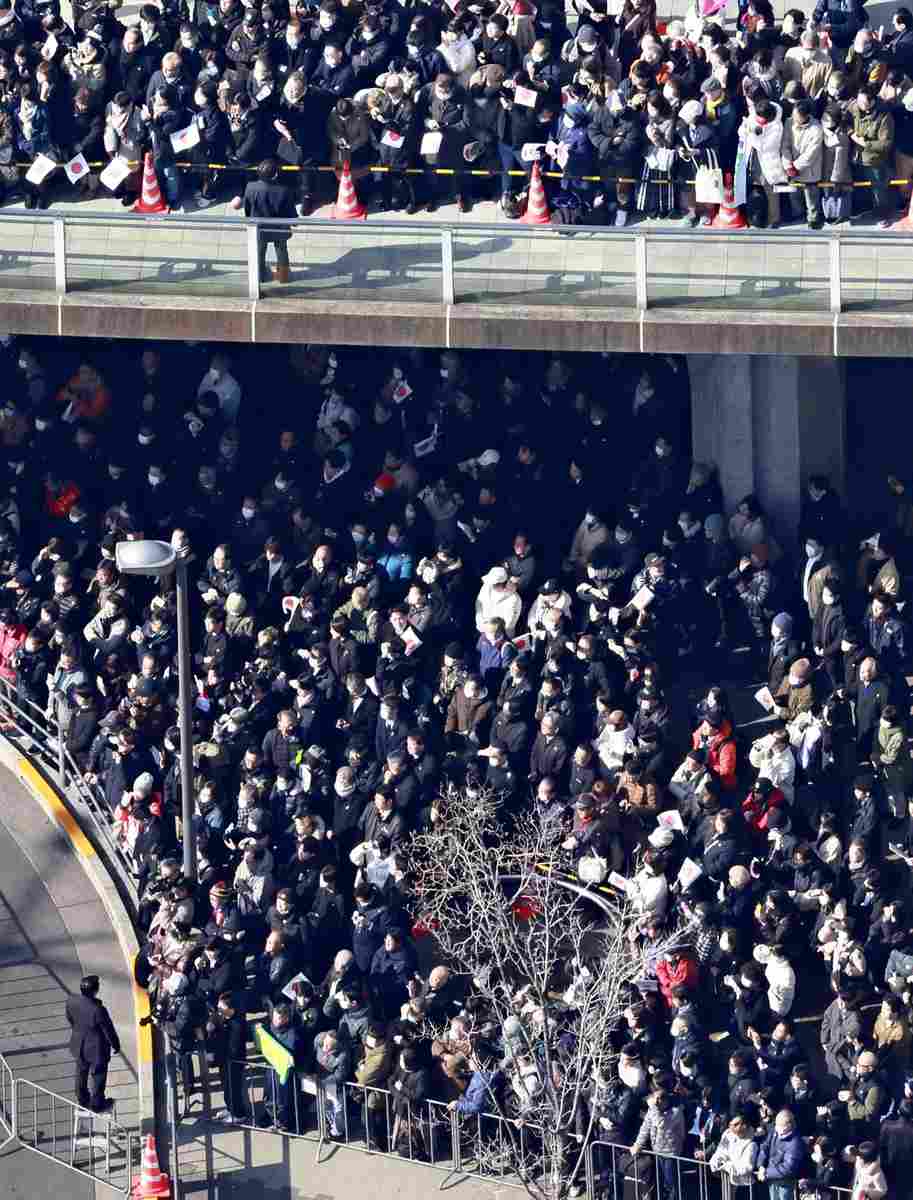
Voters gather for a street speech in Tokyo after official campaigning for the House of Representatives election kicked off on Tuesday.
7:00 JST, January 29, 2026
Official campaigning for the House of Representatives election kicked off Tuesday, with both ruling and opposition parties prioritizing the fielding of their own candidates over inter-party coordination. Some constituencies have become crowded battlegrounds, reflecting an increasingly multiparty political landscape, with intense competition for votes expected nationwide.
Also, the election is set to center on a showdown between the Liberal Democratic Party, which aims to gain a majority for the ruling bloc, and the Centrist Reform Alliance, which seeks to become the largest party in the Diet.
“Last time, [he] won by a mere 3,000 votes. This time, the environment is even tougher. We need your strength,” said Defense Minister Shinjiro Koizumi of the LDP to a crowd in Saitama on Tuesday. He was campaigning for a former LDP lawmaker seeking a sixth term in Saitama Constituency No. 1.
A fierce race is expected there as a former lawmaker now with the CRA — who narrowly lost in the 2024 lower house election but secured a seat through the proportional representation segment — is running again. Jun Azumi, co-secretary general of the CRA, was scheduled to visit the constituency on Wednesday to bolster support.
Of the 289 single-seat constituencies nationwide, the LDP has endorsed candidates in 285, while the CRA has fielded 202. The CRA, formed by the Constitutional Democratic Party of Japan and Komeito coming together, was officially launched on Jan. 22, just a day before the dissolution of the chamber. Despite the tight schedule, it managed to build up its roster through emergency recruitment. Its scale as the leading opposition force is comparable to the 207 candidates fielded by the CDPJ in the 2024 election.
As a result, the LDP and CRA will go head-to-head in 200 constituencies — nearly 70% of the total — including battles like Saitama Constituency No. 1 and Kagawa Constituency No. 1, where a former Cabinet minister of the LDP faces a former lawmaker now in the CRA.
The outcome of these direct clashes is expected to determine the overall winner of the election. Leaders of both parties visited these key constituencies on the first day to trade barbs.
In Sendai, Prime Minister Sanae Takaichi, who is the LDP president, took aim at the former Democratic Party of Japan administration once led by Yoshihiko Noda, who is now the coleader of the CRA. “While people complain about the weak yen now, we faced an outrageously strong yen back then,” she said. “Exports stalled, and our industries were hollowed out.”
Meanwhile, Noda argued in Fukushima: “Has the ‘politics and money’ scandal been resolved? The LDP has shown no true remorse.”
Eyeing ‘Komeito votes’
The most watched factor in the LDP-CRA rivalry is the destination of the “Komeito votes.” The end of Komeito’s long-standing coalition with the LDP to form a new party has upended the electoral map. While an LDP veteran hopes that “a certain number of votes will go to the LDP, given our long-standing cooperative relationship [with Komeito],” a former Cabinet minister of the LDP fears a massive exodus to the CRA.
Both parties face challenges. The LDP opted not to coordinate with the Japan Innovation Party over candidates it fields in most constituencies, leading to ruling-party clashes in 59 of the 200 key battlegrounds between the LDP and CRA. In total, the LDP and JIP are competing in 85 constituencies, which will inevitably split the pro-administration vote.
To mitigate this, the LDP sought JIP’s support in non-competing constituencies, securing recommendations for 129 candidates as of Tuesday. Takaichi and JIP coleader Hirofumi Yoshimura appeared together at a rally to project a sense of unity on Tuesday.
The CRA, meanwhile, has hit a rift with the Japanese Communist Party over security-related legislation. The JCP, strongly reacting to the CDPJ’s shift in policy, has fielded 158 candidates in single-seat constituencies. With the JCP running in 96 of the 200 constituencies contested by the LDP and CRA, the two opposition forces will be vying for the same pool of anti-administration votes.


Related Tags



Most Read
Popular articles in the past 24 hours
-

Voters Using AI to Choose Candidates in Japan's Upcoming General ...
-

Japan's Snow-Clad Beauty: Camellia Flowers Seen in Winter Bloom a...
-
Monkey Strikes Junior High School Girl from Behind in Japan's Yam...
-
Genichiro Inokuma's Mural in Ueno Station That Gave Hope in Postw...
-

Senior Japanese Citizens Return to University to Gain Knowledge, ...
-
Heavy Snow Linked to 30 Deaths across Japan since Late Jan.; JMA ...
-

Tokyo Police Arrest Head of Resignation Assistance Firm
-

Foreign and Security Policy: Political Parties Must Discuss How T...
Popular articles in the past week
-

Japan Institute to Use Domestic Commercial Optical Lattice Clock ...
-
Australian Woman Dies After Mishap on Ski Lift in Nagano Prefectu...
-
Foreign Snowboarder in Serious Condition After Hanging in Midair ...
-

Chinese Embassy in Japan Reiterates Call for Chinese People to Re...
-

Narita Airport, Startup in Japan Demonstrate Machine to Compress ...
-

Toyota Motor Group Firm to Sell Clean Energy Greenhouses for Stra...
-

Sakie Yokota, Last Surviving Parent of a North Korea Abductee, Ur...
-

Beer Yeast Helps Save Labor, Water Use in Growing Rice; Govt Hope...
Popular articles in the past month
-

Univ. in Japan, Tokyo-Based Startup to Develop Satellite for Disa...
-

JAL, ANA Cancel Flights During 3-day Holiday Weekend due to Blizz...
-
China Confirmed to Be Operating Drilling Vessel Near Japan-China ...
-

China Eyes Rare Earth Foothold in Malaysia to Maintain Dominance,...
-
M6.2 Earthquake Hits Japan's Tottori, Shimane Prefectures; No Tsu...
-
Japan Institute to Use Domestic Commercial Optical Lattice Clock ...
-

Japan, Qatar Ministers Agree on Need for Stable Energy Supplies; ...
-

Japan, Italy to Boost LNG Cooperation; Aimed at Diversifying Japa...
Top Articles in Politics
-
Japan Seeks to Enhance Defense Capabilities in Pacific as 3 National Security Documents to Be Revised
-
Japan Tourism Agency Calls for Strengthening Measures Against Overtourism
-

Japan’s Prime Minister: 2-Year Tax Cut on Food Possible Without Issuing Bonds
-
Japan-South Korea Leaders Meeting Focuses on Rare Earth Supply Chains, Cooperation Toward Regional Stability
-

Japanese Government Plans New License System Specific to VTOL Drones; Hopes to Encourage Proliferation through Relaxed Operating Requirements
JN ACCESS RANKING
-
Univ. in Japan, Tokyo-Based Startup to Develop Satellite for Disaster Prevention Measures, Bears
-
JAL, ANA Cancel Flights During 3-day Holiday Weekend due to Blizzard
-
China Confirmed to Be Operating Drilling Vessel Near Japan-China Median Line
-
China Eyes Rare Earth Foothold in Malaysia to Maintain Dominance, Counter Japan, U.S.
-
Japan Institute to Use Domestic Commercial Optical Lattice Clock to Set Japan Standard Time