
Most Parties Advocate for Consumption Tax Reduction, But Details Differ; Challenges Remain in Securing Funding
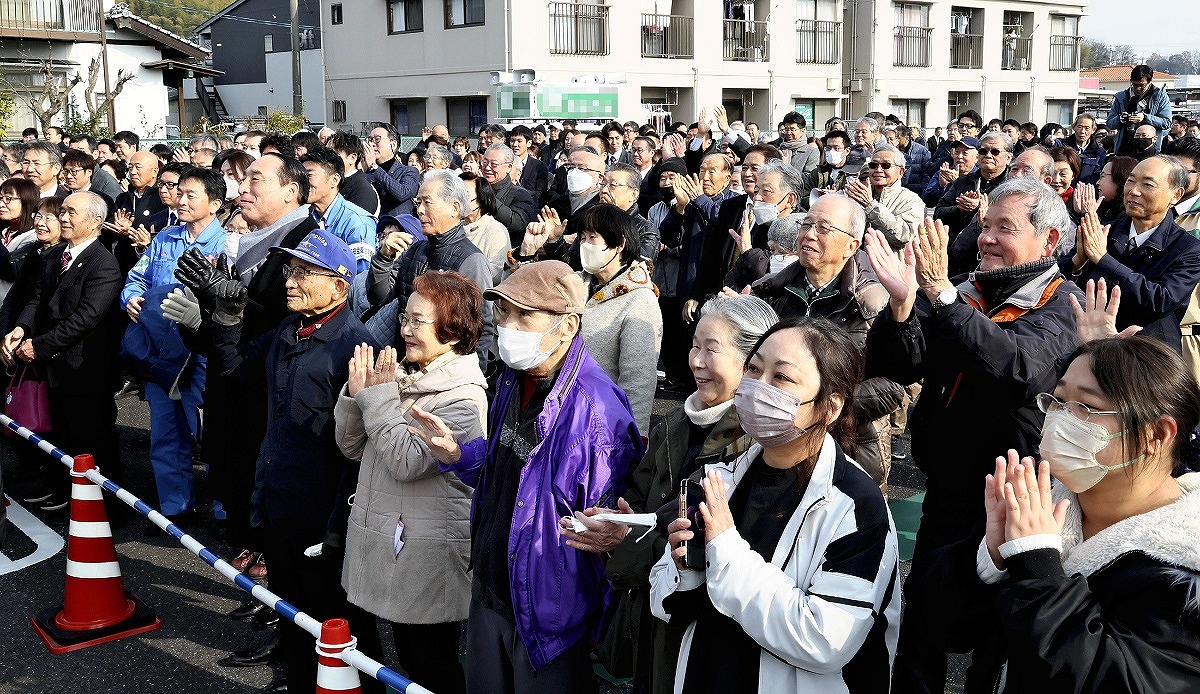
People applaud at a ceremony to kick off a candidate’s House of Representatives election campaign, in Iwakuni, Yamaguchi Prefecture, on Tuesday.
17:11 JST, January 27, 2026
The House of Representatives election is likely to be contested on economic policy grounds, including measures to tackle rising prices.
While both ruling and opposition parties have pledged to reduce or abolish the consumption tax, they differ on when they plan to implement such a change and the items that would be covered.
Official campaigning began on Tuesday, and the ruling Liberal Democratic Party and its coalition partner, the Japan Innovation Party, have both indicated that their plan is to design a “tax credit with cash benefits” program. Under the program, individuals would receive in cash the difference between their income tax and tax deduction when the latter exceeds the former. The coalition’s consumption tax reduction scheme would serve as a bridge until the program is introduced.
Both the LDP and JIP have explicitly pledged to eliminate the consumption tax on food items for two years. They intend to form a national council to accelerate discussions on the specific design of the program, funding sources and the schedule for implementing it. Prime Minister Sanae Takaichi, who also serves as LDP president, has signaled that she plans to implement the policy by the end of fiscal 2026.
In contrast, the Centrist Reform Alliance and the Conservative Party of Japan are calling for a permanent end to the consumption tax on food items, with the CRA stating their plan would “start to be realized in fall.”
The Democratic Party for the People, meanwhile, is advocating for a system to be established to refund social insurance contributions to reduce the burden on the working generation. Regarding the consumption tax, the party advocates lowering it to a uniform 5% without limiting the scope of the items covered, with the policy planned to remain in effect “until wage growth stabilizes at a level of inflation plus 2%.”
The Japanese Communist Party advocates for “eventually abolishing the consumption tax while immediately reducing it to 5%.” Sanseito and Reiwa Shinsengumi have pledged to abolish the tax.
The consumption tax is one of the three core taxes alongside income tax and corporate tax. Because it is relatively unaffected by changes in the economy or population structure, the entire amount is allocated to pensions, nursing care, medical services and child-rearing support.
Even if the consumption tax on food items alone were to be eliminated, the revenue shortfall would amount to about ¥5 trillion. The LDP proposes reviewing “special tax measures” including a measure to reduce corporate taxes, while the CRA aims to secure funding through measures such as utilizing government-affiliated funds. Whatever the measure, however, filling the gap would not be easy.
Without funding sources secured, confidence in the nation’s finances would be shaken. This year, the market yield on newly issued 10-year government bonds, a key indicator of long-term interest rates, has risen to the 2.3% range — its highest level in 27 years — and could climb higher. Should that occur, the government’s interest payments would increase, impacting on people’s lives through higher mortgage rates and other effects.
The consumption tax cut also faces another challenge: It would benefit high-income earners with higher spending habits more than low-income earners. While the LDP and others emphasize a “two-year limit” with the “tax credit with cash benefits” program in mind, raising the tax rate again after lowering it would likely pose significant political difficulties.


Related Tags


Most Read
Popular articles in the past 24 hours
-

Voters Using AI to Choose Candidates in Japan's Upcoming General ...
-

Japan's Snow-Clad Beauty: Camellia Flowers Seen in Winter Bloom a...
-

Monkey Strikes Junior High School Girl from Behind in Japan's Yam...
-

Genichiro Inokuma's Mural in Ueno Station That Gave Hope in Postw...
-
Senior Japanese Citizens Return to University to Gain Knowledge, ...
-
Heavy Snow Linked to 30 Deaths across Japan since Late Jan.; JMA ...
-

Foreign and Security Policy: Political Parties Must Discuss How T...
-

Tokyo Police Arrest Head of Resignation Assistance Firm
Popular articles in the past week
-

Japan Institute to Use Domestic Commercial Optical Lattice Clock ...
-
Australian Woman Dies After Mishap on Ski Lift in Nagano Prefectu...
-
Foreign Snowboarder in Serious Condition After Hanging in Midair ...
-

Chinese Embassy in Japan Reiterates Call for Chinese People to Re...
-
Narita Airport, Startup in Japan Demonstrate Machine to Compress ...
-

Toyota Motor Group Firm to Sell Clean Energy Greenhouses for Stra...
-

Sakie Yokota, Last Surviving Parent of a North Korea Abductee, Ur...
-

Beer Yeast Helps Save Labor, Water Use in Growing Rice; Govt Hope...
Popular articles in the past month
-

Univ. in Japan, Tokyo-Based Startup to Develop Satellite for Disa...
-

JAL, ANA Cancel Flights During 3-day Holiday Weekend due to Blizz...
-
China Confirmed to Be Operating Drilling Vessel Near Japan-China ...
-

China Eyes Rare Earth Foothold in Malaysia to Maintain Dominance,...
-
M6.2 Earthquake Hits Japan's Tottori, Shimane Prefectures; No Tsu...
-
Japan Institute to Use Domestic Commercial Optical Lattice Clock ...
-

Japan, Qatar Ministers Agree on Need for Stable Energy Supplies; ...
-

Japan, Italy to Boost LNG Cooperation; Aimed at Diversifying Japa...
Top Articles in Politics
-
Japan Seeks to Enhance Defense Capabilities in Pacific as 3 National Security Documents to Be Revised
-
Japan Tourism Agency Calls for Strengthening Measures Against Overtourism
-

Japan’s Prime Minister: 2-Year Tax Cut on Food Possible Without Issuing Bonds
-
Japan-South Korea Leaders Meeting Focuses on Rare Earth Supply Chains, Cooperation Toward Regional Stability
-

Japanese Government Plans New License System Specific to VTOL Drones; Hopes to Encourage Proliferation through Relaxed Operating Requirements
JN ACCESS RANKING
-
Univ. in Japan, Tokyo-Based Startup to Develop Satellite for Disaster Prevention Measures, Bears
-
JAL, ANA Cancel Flights During 3-day Holiday Weekend due to Blizzard
-
China Confirmed to Be Operating Drilling Vessel Near Japan-China Median Line
-
China Eyes Rare Earth Foothold in Malaysia to Maintain Dominance, Counter Japan, U.S.
-
Japan Institute to Use Domestic Commercial Optical Lattice Clock to Set Japan Standard Time