
Japan Mulls Subsidizing Sustainable Aviation Fuel for Domestic Airlines; Would Require Fuel Suppliers to Provide Mixture
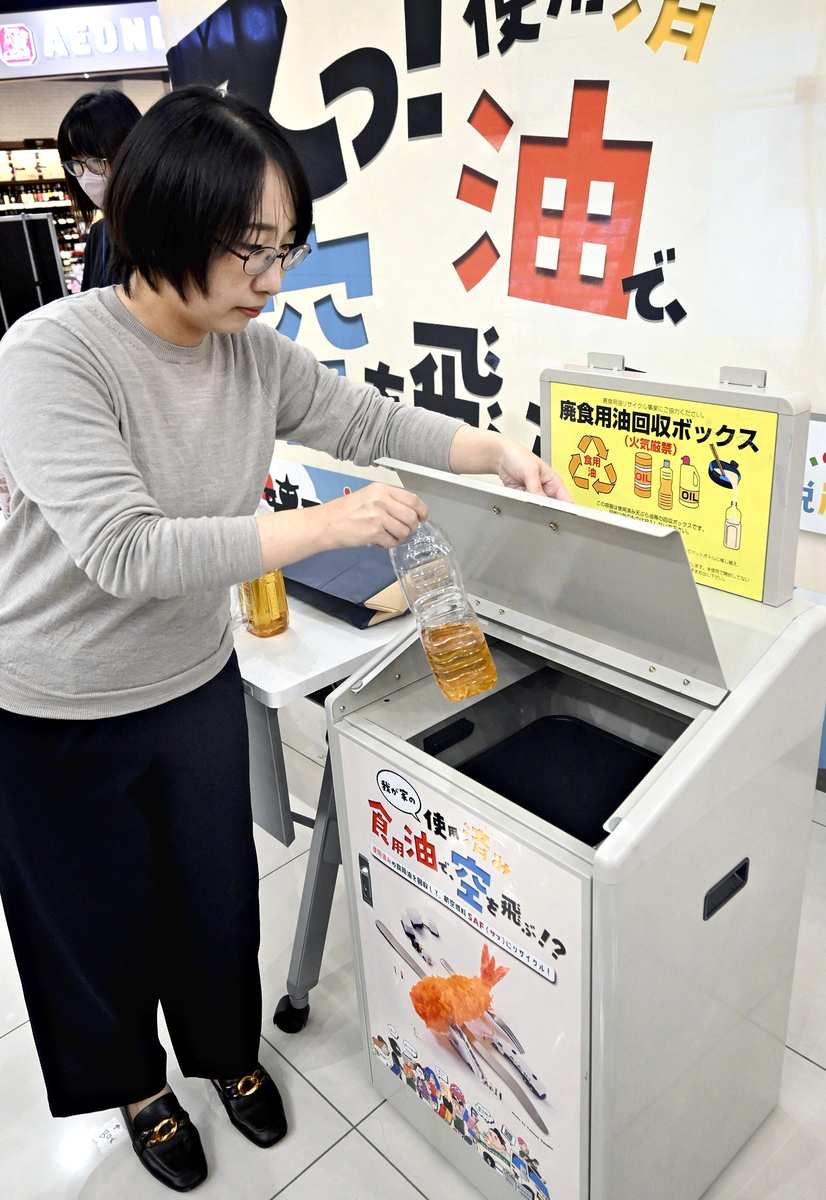
A person deposits used cooking oil in a plastic bottle into a collection box in Sakai, Osaka Prefecture, in November 2024.
2:00 JST, January 26, 2026
The government plans to support the cost of next-generation aviation fuel, known as Sustainable Aviation Fuel (SAF), by subsidizing purchases by domestic airlines.
The plans would require all airline passengers to shoulder an additional charge of several tens of yen while oil refiners and distributors would need to incorporate SAF, made from feedstocks such as used cooking oil, into aviation fuel. The government aims to promote domestically produced SAF from the perspectives of both supply and demand.
The government is expected to compile a basic policy framework to accelerate SAF adoption at an upcoming public-private council meeting, with an eye toward revising the Airport Law, it intends to finalize the details by fiscal 2026.
Compared with conventional jet fuel derived from crude oil, SAF can reduce carbon dioxide emissions by as much as 80%. However, procurement costs are widely believed to be 2 to 3 times higher, posing a major hurdle to broader uptake.
To address this gap, some airports in Italy and the United Kingdom subsidize the procurement of SAF with revenue from airport user fees. The European Union, meanwhile, requires SAF blending in fuel used at airports across the bloc and has set a goal of increasing the blending rate targets of a 6% by 2030 and 70% by 2050. The Japanese government plans to reference these examples when creating its own system.
The basic policy is also expected to specify robust capital investment support for suppliers along with cooperation with municipalities and collection firms to expand the recovery of used household cooking oil.
Amid the global tightening of regulations on CO2 emissions from air transport, SAF is increasingly seen as key to decarbonization in the aviation industry. Global demand is projected to rise to 88 million kiloliters in 2030 and to 650 million kiloliters in 2050.



Most Read
Popular articles in the past 24 hours
-

Voters Using AI to Choose Candidates in Japan's Upcoming General ...
-

Japan's Snow-Clad Beauty: Camellia Flowers Seen in Winter Bloom a...
-
Monkey Strikes Junior High School Girl from Behind in Japan's Yam...
-

Genichiro Inokuma's Mural in Ueno Station That Gave Hope in Postw...
-

Senior Japanese Citizens Return to University to Gain Knowledge, ...
-

Foreign and Security Policy: Political Parties Must Discuss How T...
-
Heavy Snow Linked to 30 Deaths across Japan since Late Jan.; JMA ...
-

Tokyo Police Arrest Head of Resignation Assistance Firm
Popular articles in the past week
-

Japan Institute to Use Domestic Commercial Optical Lattice Clock ...
-
Australian Woman Dies After Mishap on Ski Lift in Nagano Prefectu...
-
Foreign Snowboarder in Serious Condition After Hanging in Midair ...
-
Chinese Embassy in Japan Reiterates Call for Chinese People to Re...
-
Narita Airport, Startup in Japan Demonstrate Machine to Compress ...
-
Toyota Motor Group Firm to Sell Clean Energy Greenhouses for Stra...
-

Sakie Yokota, Last Surviving Parent of a North Korea Abductee, Ur...
-
Beer Yeast Helps Save Labor, Water Use in Growing Rice; Govt Hope...
Popular articles in the past month
-
Univ. in Japan, Tokyo-Based Startup to Develop Satellite for Disa...
-
JAL, ANA Cancel Flights During 3-day Holiday Weekend due to Blizz...
-
China Confirmed to Be Operating Drilling Vessel Near Japan-China ...
-
China Eyes Rare Earth Foothold in Malaysia to Maintain Dominance,...
-
M6.2 Earthquake Hits Japan's Tottori, Shimane Prefectures; No Tsu...
-
Japan Institute to Use Domestic Commercial Optical Lattice Clock ...
-
Japan, Qatar Ministers Agree on Need for Stable Energy Supplies; ...
-

Japan, Italy to Boost LNG Cooperation; Aimed at Diversifying Japa...
Top Articles in Politics
-
Japan Seeks to Enhance Defense Capabilities in Pacific as 3 National Security Documents to Be Revised
-
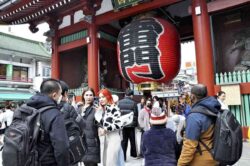
Japan Tourism Agency Calls for Strengthening Measures Against Overtourism
-

Japan’s Prime Minister: 2-Year Tax Cut on Food Possible Without Issuing Bonds
-
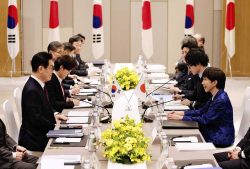
Japan-South Korea Leaders Meeting Focuses on Rare Earth Supply Chains, Cooperation Toward Regional Stability
-
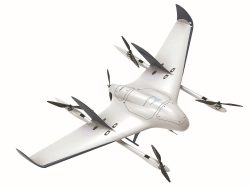
Japanese Government Plans New License System Specific to VTOL Drones; Hopes to Encourage Proliferation through Relaxed Operating Requirements
JN ACCESS RANKING
-
Univ. in Japan, Tokyo-Based Startup to Develop Satellite for Disaster Prevention Measures, Bears
-
JAL, ANA Cancel Flights During 3-day Holiday Weekend due to Blizzard
-
China Confirmed to Be Operating Drilling Vessel Near Japan-China Median Line
-
China Eyes Rare Earth Foothold in Malaysia to Maintain Dominance, Counter Japan, U.S.
-
Japan Institute to Use Domestic Commercial Optical Lattice Clock to Set Japan Standard Time