

Garrison and Teyana Gibson at a news conference at his attorney’s office on Jan. 17
12:33 JST, January 25, 2026
With long guns pointed in her direction, Teyana Gibson repeatedly demanded that federal immigration officers show her a warrant as she stood between them and her immigrant husband inside her Minneapolis house.
“What are you doing?” she yelled, as the officers burst through the front door with a battering ram, according to a cellphone recording of the chaotic encounter on Jan. 11. Officers handcuffed Garrison Gibson – a Liberian national who for years had reported for regular check-ins with Immigration and Customs Enforcement – and took him away in a government vehicle.
Then they handed Teyana Gibson, who is a U.S. citizen, a photocopy of a document that purported to give them the legal authority to enter and search her home without consent. But it was not a judicial warrant authorized by a federal judge – rather, the document was an administrative warrant signed by an ICE supervisor, according to court documents.
For years, federal immigration officers have been expected to produce judicial warrants to forcibly enter homes without permission. But a Department of Homeland Security memo that became public this week authorizes officers to use administrative warrants to enter the residences of immigrants who have final orders of deportation from federal immigration courts.
A judicial warrant is signed by an independent and neutral judge who examines the evidence to determine if it is sufficient to grant the government the extraordinary power to force their way into someone’s home, whereas an administrative warrant is usually signed by a federal immigration officer and is easier to obtain.
Immigration lawyers contend that the policy violates constitutional protections shielding people from unreasonable searches and seizures in their homes and could lead to dangerous interactions between officers and unsuspecting families.
DHS officials have refused to answer questions about where and when immigration officers are using administrative warrants. But at least one case involving the Gibson family is documented in a court filing in Minneapolis. Federal officers did not identify themselves before attempting to enter their home, and the couple’s young daughter and another relative hid in a bedroom, according to accounts from the family and their attorney.
Legal experts say the forced entry represents a breach of constitutional limits that have long restrained federal officers.
“I stood up and grabbed my husband, telling the officers they could not do this,” Teyana Gibson wrote in testimony submitted in a court petition to win her husband’s release. A federal judge ordered Garrison Gibson’s release days after his attorney argued in court that ICE agents violated his constitutional rights.
Immigration lawyers and advocates have for decades instructed immigrant families to refuse entry to officers who do not have a judicial warrant. Such constitutional protections have historically applied to everyone living in the country, regardless of immigration status, legal experts said.
Pace University constitutional law professor Bennett Gershman said there are emergency exceptions to the Fourth Amendment, which provides constitutional safeguards against unreasonable searches and seizures. But he said most immigration arrests do not satisfy those emergency requirements, which govern situations involving imminent danger or a suspect’s ability to escape arrest.
“A home is a castle. It’s the most private place of any we know in law, and the Supreme Court has said it over and over again,” Gershman said. “You need a warrant, consent or an emergency, that’s it. There is nothing for administrative warrants here.”
DHS Assistant Secretary Tricia McLaughlin defended the administration’s policy on administrative warrants, saying that every individual targeted by the policy has “full due process and a final order of removal.”
Gibson, 38, was brought by his parents to the United States as a child; an immigration judge ruled in 2009 that he should be deported, according to his court petition. He was not deported, however, but was instead placed under federal supervision – an arrangement that is similar to probation in the criminal justice system – after the Biden administration determined he posed no danger to the public and was not a flight risk.
Since 2021, Gibson had routinely checked in at his local ICE field office and wore an ankle monitor as required under the supervision agreement. His attorney, Marc Prokosch, said federal officials did not tell Gibson, who has a scheduled ICE appointment next week, whether he had violated the terms or if they had terminated the agreement. Prokosch said he also received no notice that Gibson’s removal was imminent, which Prokosch said was required by law.
Gibon’s family was sleeping on the morning of Jan. 11 when the ICE officers arrived at their home, according to court records. Teyana Gibson refused to open the door and demanded to see a warrant, prompting the ICE agents to leave.
When the officers returned, a group of demonstrators had gathered outside.
“There’s nobody here but my babies,” Teyana Gibson is heard saying in the cellphone footage of the forced entry. She instructed her daughter and another relative to shut themselves inside a bedroom.
ICE agents did not announce themselves before entering the home, Teyana Gibson wrote in an affidavit – something law enforcement experts say is extremely dangerous for both the officers and the occupants of the dwelling.
Prokosch said federal officials misrepresented the legal authority to arrest Garrison Gibson by failing to clarify that the warrant they had was “merely administrative,” according to a court petition.
Gibson was transported to a Texas detention center, where he spent the night, and flown back to Minnesota the next day. U.S. District Judge Jeffrey M. Bryan ordered his release on Jan. 15, ruling that ICE had violated Gibson’s civil rights and its own supervisory regulations. It was Gibson’s daughter’s 10th birthday.
The implications of Gibson’s case go far beyond the immigration context and could spill over into searches and arrests of U.S. citizens, said Don Bell, policy counsel for the nonpartisan Constitution Project. He urged Congress to set clear guidelines governing arrest warrants so the country can avoid the consequences of what he called the Trump administration’s “excesses.”
“The idea that the executive branch can unilaterally decide that they don’t need a warrant signed by a judge should be alarming to everyone, no matter their politics,” he said.





Most Read
Popular articles in the past 24 hours
-

Voters Using AI to Choose Candidates in Japan's Upcoming General ...
-

Japan's Snow-Clad Beauty: Camellia Flowers Seen in Winter Bloom a...
-

Monkey Strikes Junior High School Girl from Behind in Japan's Yam...
-

Genichiro Inokuma's Mural in Ueno Station That Gave Hope in Postw...
-

Senior Japanese Citizens Return to University to Gain Knowledge, ...
-
Heavy Snow Linked to 30 Deaths across Japan since Late Jan.; JMA ...
-

Foreign and Security Policy: Political Parties Must Discuss How T...
-

Tokyo Police Arrest Head of Resignation Assistance Firm
Popular articles in the past week
-

Japan Institute to Use Domestic Commercial Optical Lattice Clock ...
-
Australian Woman Dies After Mishap on Ski Lift in Nagano Prefectu...
-
Foreign Snowboarder in Serious Condition After Hanging in Midair ...
-

Chinese Embassy in Japan Reiterates Call for Chinese People to Re...
-
Narita Airport, Startup in Japan Demonstrate Machine to Compress ...
-

Toyota Motor Group Firm to Sell Clean Energy Greenhouses for Stra...
-

Sakie Yokota, Last Surviving Parent of a North Korea Abductee, Ur...
-

Beer Yeast Helps Save Labor, Water Use in Growing Rice; Govt Hope...
Popular articles in the past month
-

Univ. in Japan, Tokyo-Based Startup to Develop Satellite for Disa...
-
JAL, ANA Cancel Flights During 3-day Holiday Weekend due to Blizz...
-
China Confirmed to Be Operating Drilling Vessel Near Japan-China ...
-

China Eyes Rare Earth Foothold in Malaysia to Maintain Dominance,...
-
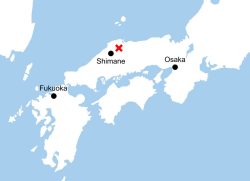
M6.2 Earthquake Hits Japan's Tottori, Shimane Prefectures; No Tsu...
-
Japan Institute to Use Domestic Commercial Optical Lattice Clock ...
-

Japan, Qatar Ministers Agree on Need for Stable Energy Supplies; ...
-

Japan, Italy to Boost LNG Cooperation; Aimed at Diversifying Japa...
Top Articles in News Services
-

Arctic Sees Unprecedented Heat as Climate Impacts Cascade
-

Prudential Life Expected to Face Inspection over Fraud
-

South Korea Prosecutor Seeks Death Penalty for Ex-President Yoon over Martial Law (Update)
-
Trump Names Former Federal Reserve Governor Warsh as the Next Fed Chair, Replacing Powell
-
Japan’s Nagasaki, Okinawa Make N.Y. Times’ 52 Places to Go in 2026
JN ACCESS RANKING
-
Univ. in Japan, Tokyo-Based Startup to Develop Satellite for Disaster Prevention Measures, Bears
-
JAL, ANA Cancel Flights During 3-day Holiday Weekend due to Blizzard
-
China Confirmed to Be Operating Drilling Vessel Near Japan-China Median Line
-
China Eyes Rare Earth Foothold in Malaysia to Maintain Dominance, Counter Japan, U.S.
-
Japan Institute to Use Domestic Commercial Optical Lattice Clock to Set Japan Standard Time