
Some Differences Seen Among Party Pledges on Consumption Tax Cuts, Parties Look to Stand Out More on Other Policies

The Diet Building in Chiyoda Ward, Tokyo
15:06 JST, January 24, 2026
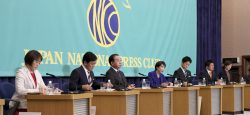
With the Liberal Democratic Party setting a two-year exemption of food items from the consumption tax as a key part of its official pledges for the House of Representatives election, differences between major ruling and opposition parties have become less clear in terms of measures to support household finances by increasing take-home pay.
However, differences remain on when and on which items they will seek consumption tax cuts.
Regarding policy on foreign nationals, the introduction of a selective separate surname system for married couples and constitutional revision, the parties have clear differences in their points of view.
“We want to thoroughly discuss funding sources and schedules at a planned national council that will be composed of ruling and opposition party lawmakers,” LDP Secretary General Shunichi Suzuki said Friday during a television program on NHK, referring to the reduction of the consumption tax.
The LDP initially opposed the reduction, as consumption tax revenue is a vital financial resource for social security. But it included in its official pledges that the party will accelerate discussions on exempting food items from consumption tax for two years, apparently in an aim to avoid making it a major campaign issue. The LDP’s coalition partner, the Japan Innovation Party, kept in step with its coalition partner, using the same expressions in its pledges.
In contrast, the Centrist Reform Alliance, a new party formed by the Constitutional Democratic Party of Japan and Komeito, vowed in its policy platform to permanently eliminate the consumption tax on food items from autumn.
The Democratic Party for the People calls for uniformly lowering the rate to 5%, while Sanseito and Reiwa Shinsengumi advocate for the abolition of the consumption tax. Seeking to eventually abolish the tax, the Japanese Communist Party calls for immediate reduction of the rate to 5%.
While the CRA calls for the creation of a tax credit system with cash payments that would combine direct cash payments and income tax cuts, the LDP and the JIP says in their pledges that they will discuss the design of the system.
In response to rising prices, the JIP lists a measure to increase subsidies for electricity and gas rates. The CRA aims to expand rent subsidies, while the DPFP pledges raising residential tax deduction.
Regarding policy on foreign nationals, the LDP pledges to review laws and rules on the acquisition of housing and land by foreigners. The DPFP aims to enact a law regulating land acquisition by foreigners, while Sanseito seeks imposing strict limits on the number of foreign nationals Japan accepts.
The CRA pledges aiming for a society of multicultural coexistence, and the JCP and Reiwa advocate drawing a clear line against exclusionist ideas, placing their focus on coexistence.
The CRA, DPFP, JCP and Reiwa advocate for the introduction of a separate surname system for married couples. The LDP and JIP pledge expanding the use of premarital surnames.
The LDP, JIP and DPFP say they will seek constitutional revision. The CRA says it will deepen discussions on the matter, while the JCP and Reiwa are taking a stance of opposing revision.


Related Tags




Most Read
Popular articles in the past 24 hours
-

Japan's Snow-Clad Beauty: Camellia Flowers Seen in Winter Bloom a...
-

Monkey Strikes Junior High School Girl from Behind in Japan's Yam...
-
Genichiro Inokuma's Mural in Ueno Station That Gave Hope in Postw...
-
Senior Japanese Citizens Return to University to Gain Knowledge, ...
-

Foreign and Security Policy: Political Parties Must Discuss How T...
-
Heavy Snow Linked to 30 Deaths across Japan since Late Jan.; JMA ...
-

Tokyo Police Arrest Head of Resignation Assistance Firm
-

Japan’s Nikkei Stock Average Jumps near 4%, Closes at Record High...
Popular articles in the past week
-

Japan Institute to Use Domestic Commercial Optical Lattice Clock ...
-
Australian Woman Dies After Mishap on Ski Lift in Nagano Prefectu...
-
Foreign Snowboarder in Serious Condition After Hanging in Midair ...
-

Chinese Embassy in Japan Reiterates Call for Chinese People to Re...
-
Narita Airport, Startup in Japan Demonstrate Machine to Compress ...
-

Toyota Motor Group Firm to Sell Clean Energy Greenhouses for Stra...
-
Sakie Yokota, Last Surviving Parent of a North Korea Abductee, Ur...
-

Beer Yeast Helps Save Labor, Water Use in Growing Rice; Govt Hope...
Popular articles in the past month
-
Univ. in Japan, Tokyo-Based Startup to Develop Satellite for Disa...
-
JAL, ANA Cancel Flights During 3-day Holiday Weekend due to Blizz...
-
China Confirmed to Be Operating Drilling Vessel Near Japan-China ...
-

China Eyes Rare Earth Foothold in Malaysia to Maintain Dominance,...
-
M6.2 Earthquake Hits Japan's Tottori, Shimane Prefectures; No Tsu...
-
Japan Institute to Use Domestic Commercial Optical Lattice Clock ...
-

Japan, Qatar Ministers Agree on Need for Stable Energy Supplies; ...
-

Japan, Italy to Boost LNG Cooperation; Aimed at Diversifying Japa...
Top Articles in Politics
-

Japan Seeks to Enhance Defense Capabilities in Pacific as 3 National Security Documents to Be Revised
-
Japan Tourism Agency Calls for Strengthening Measures Against Overtourism
-

Japan’s Prime Minister: 2-Year Tax Cut on Food Possible Without Issuing Bonds
-
Japan-South Korea Leaders Meeting Focuses on Rare Earth Supply Chains, Cooperation Toward Regional Stability
-

Japanese Government Plans New License System Specific to VTOL Drones; Hopes to Encourage Proliferation through Relaxed Operating Requirements
JN ACCESS RANKING
-
Univ. in Japan, Tokyo-Based Startup to Develop Satellite for Disaster Prevention Measures, Bears
-
JAL, ANA Cancel Flights During 3-day Holiday Weekend due to Blizzard
-
China Confirmed to Be Operating Drilling Vessel Near Japan-China Median Line
-
China Eyes Rare Earth Foothold in Malaysia to Maintain Dominance, Counter Japan, U.S.
-
Japan Institute to Use Domestic Commercial Optical Lattice Clock to Set Japan Standard Time