
Stage Set for Feb. 8 Election in Japan with Dissolution of Lower House
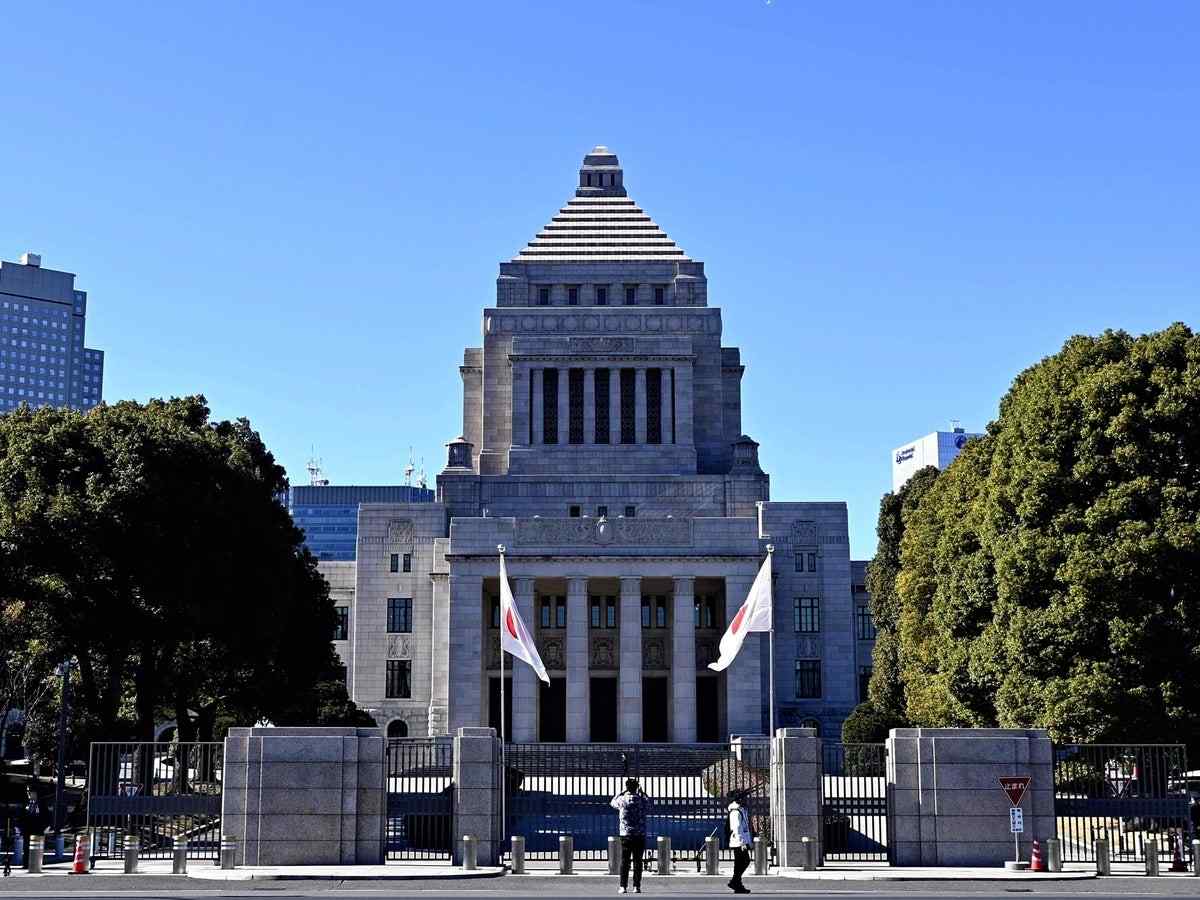
The Diet Building
13:04 JST, January 23, 2026 (updated at 17:00 JST, Jan. 23)
The House of Representatives was dissolved on Friday, setting the stage for a Feb. 8 lower house election to seek a public mandate for the administration of Prime Minister Sanae Takaichi.
The dissolution came at the start of the ordinary Diet session. During a subsequent extraordinary Cabinet meeting, the government formally decided on the election schedule with campaigning to kick off on Tuesday and voting to take place on Feb. 8.
The election date has been set for 16 days after the lower house dissolution, marking the shortest interval in the postwar era.
Ruling and opposition parties are effectively beginning an election battle, and focus is expected to be on issues such as the performance of Takaichi’s administration, which was launched in October last year, as well as on a public mandate for the ruling coalition of the Liberal Democratic Party and the Japan Innovation Party.
On Friday morning, the government obtained Cabinet approval to dissolve the lower house. Takaichi put the matter before a Cabinet meeting, and all ministers signed a Cabinet document for the dissolution.
After obtaining the Emperor’s signature and seal on a rescript for the lower house dissolution, Speaker Fukushiro Nukaga read out the rescript during a plenary session of the Diet session, which started at 1 p.m., making the dissolution official.
The Diet chamber was dissolved at the start of an ordinary Diet session for the first time in 60 years. It is also unusual for the dissolution to happen in January.
The upcoming lower house election will be the first in about one year and three months since the previous election was held in October 2024 under the Cabinet of then Prime Minister Shigeru Ishiba.
Both ruling and opposition parties are gearing up for a short showdown in the middle of winter. The lower house has a total of 465 seats comprising 289 in single-seat constituencies and 176 in the proportional representation segment.
This will be the first national election since the LDP and the JIP formed their ruling coalition.
Takaichi, who is also the LDP president, mentioned at a press conference on Monday that the ruling coalition’s goal is to secure a majority, which would mean winning at least 233 seats. She also stated her intention to stake her position as prime minister on the outcome of the election.
Through the election, Takaichi will seek a vote of public confidence in her measures, such as her signature policy for “responsible and proactive public finances” and efforts to drastically strengthen the nation’s defense capabilities.
In response, the Constitutional Democratic Party of Japan and Komeito, which are opposition parties, have formed the Centrist Reform Alliance to challenge the ruling bloc.
“This battle is a milestone toward political realignment,” Yoshihiko Noda, a coleader of the CRA, said during a street speech in Matsudo, Chiba Prefecture, on Friday morning. “We will fight with thorough pacifism and people-first measures.”
The Democratic Party for the People will not join the CRA, instead, it will aim to expand its base by pledging to increase take-home pay. Sanseito is also expected to aim for a significant increase in seats.
The ruling and opposition parties have called for measures, such as those to combat rising prices as well as reduction or abolition of the consumption tax, in their election pledges. Given that, economic and fiscal policies are also likely to be major issues in the election.
The passage of the government’s budget proposal for the next fiscal year is expected to come after the end of this fiscal year due to the lower house election. The government and ruling coalition plan to respond to this situation by compiling a provisional budget.


Related Tags





Most Read
Most read in the last 24 hours
-

Milano Cortina 2026: Miura, Kihara Among Participants at Tokyo Pa...
-

Former Staff Members at Japan's Osaka-Kansai Expo Use Skills from...
-

Mazda to End Domestic Production of Mazda2 Compact Car
-

India’s Arms Indigenization Quest for Self-Reliance / Big Firms, ...
-

Japan Moves Closer to Blocking Illegal Online Casinos as Governme...
-

Profitability of Hokkaido Shinkansen Project Profitability
-

Shifts Startup Focus to Nurturing Global Winners
-

Bibimbap with Spring Vegetables and Asari Clam Miso a Rich Taste ...
Most read in the last 7 days
-
Earthquake Hits Japan's Tohoku Region; 3-meter Tsunami Warning Is...
-

China, South Korea Object to Japanese PM Takaichi's Ritual Offeri...
-

Trump Extends the Ceasefire with Iran but Keeps the Blockade
-

India's Arms Indigenization Quest for Self-Reliance / New Delhi S...
-

¥1,000 Coins to Be Issued to Mark Anniversary of Beginning of Jap...
-

Most Serious Cyberattacks against the UK Now from Russia, Iran an...
-

Trump Opposes United–American Merger, Signals Support for Spirit
-

System Malfunction in Haneda Airport Causes 83 Flight Cancelation...
Most read in the last 30 days
-
Earthquake Hits Japan's Tohoku Region; 3-meter Tsunami Warning Is...
-
Police Find Child's Shoe During Search for Missing Boy in Nantan,...
-

Body Found in Nantan, Kyoto Prefecture, During Search for 11-Year...
-

Cherry Blossoms, Rapeseed Flowers Perform Colorful ‘Duet’ in Niig...
-
China, South Korea Object to Japanese PM Takaichi's Ritual Offeri...
-
Trump Extends the Ceasefire with Iran but Keeps the Blockade
-

Olympic Gold Medal-Winning Figure Skaters Riku-Ryu Announce Retir...
-

Japanese Prime Minister Takaichi Speaks to Pakistani Prime Minist...
Top Articles in Politics
-
India’s Arms Indigenization Quest for Self-Reliance / New Delhi Sticks to Its ‘All-Alignment’ Guns Even after Iran Warship Attack
-
Japan Aims to Enhance Deterrence, Defense Industry by Allowing Exports of Weapons
-

Former Japan PM Murayama’s Farewell Ceremony Held; Former Deputy PM Kono Vows to ‘Carry on Path Toward Peace’
-

Chinese Warships Cruise Past Japanese Islands in Retaliation for MSDF Ship Using Taiwan Strait
-

Japan Monitoring Situation Surrounding Revocation of Taiwan President’s Flight Permit by 3 Island Countries
JN ACCESS RANKING
-
Earthquake Hits Japan’s Tohoku Region; 3-meter Tsunami Warning Issued (Update 1)
-
Police Find Child’s Shoe During Search for Missing Boy in Nantan, Kyoto Prefecture
-
Body Found in Nantan, Kyoto Prefecture, During Search for 11-Year-Old Boy in Area (Update 1)
-
Cherry Blossoms, Rapeseed Flowers Perform Colorful ‘Duet’ in Niigata
-
China, South Korea Object to Japanese PM Takaichi’s Ritual Offering to Yasukuni Shrine
Most read in the last 24 hours
-
Milano Cortina 2026: Miura, Kihara Among Participants at Tokyo Pa...
-
Former Staff Members at Japan's Osaka-Kansai Expo Use Skills from...
-
Mazda to End Domestic Production of Mazda2 Compact Car
-
India’s Arms Indigenization Quest for Self-Reliance / Big Firms, ...
-
Japan Moves Closer to Blocking Illegal Online Casinos as Governme...
Most read in the last 7 days
-
Earthquake Hits Japan's Tohoku Region; 3-meter Tsunami Warning Is...
-
China, South Korea Object to Japanese PM Takaichi's Ritual Offeri...
-
Trump Extends the Ceasefire with Iran but Keeps the Blockade
-
India's Arms Indigenization Quest for Self-Reliance / New Delhi S...
-
¥1,000 Coins to Be Issued to Mark Anniversary of Beginning of Jap...
Most read in the last 30 days
-
Earthquake Hits Japan's Tohoku Region; 3-meter Tsunami Warning Is...
-
Police Find Child's Shoe During Search for Missing Boy in Nantan,...
-
Body Found in Nantan, Kyoto Prefecture, During Search for 11-Year...
-
Cherry Blossoms, Rapeseed Flowers Perform Colorful ‘Duet’ in Niig...
-
China, South Korea Object to Japanese PM Takaichi's Ritual Offeri...