
11:00 JST, January 23, 2026
What should a government leader or a diplomat say when meeting someone for the first time? Sixteenth-century Italian diplomat Stefano Guazzo offered this advice, quoted in the Essays of Michel de Montaigne: “It’s enough for the helmsman to think about the winds; the herdsman of his bulls; and the warrior to count his wounds and the shepherd to count his herds.” In short, one should endeavor to build a comfortable relationship with the other person through civil conversation.
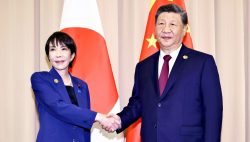
However, during her first summit with Chinese President Xi Jinping, Prime Minister Sanae Takaichi expressed her opinion on human rights issues in Hong Kong and the Xinjiang Uyghur region, without holding back at all. There is no doubt that her remarks went beyond Guazzo’s axiom, causing Xi to lose face. Moreover, immediately afterward, Takaichi told the Diet that a Taiwan contingency could be deemed a survival-threatening situation for Japan that would allow it to exercise the right to collective self-defense. Xi has taken this as interference in China’s internal affairs and seems to be determined to orchestrate Takaichi’s downfall.
Takaichi’s statement is consistent with the position that the government has so far maintained about exercising the right to collective self-defense. Nonetheless, even among those with whom her courage resonates, some must have doubted the timing of her remarks. However, there is a saying: “The foolish often regret their actions, while the unworthy consider themselves wise.” Some Japanese officials, including former government ministers, have argued that Takaichi “shouldn’t have said that kind of thing” or “should have used another kind of expression.” But their attitudes can’t be really admired. What’s more, they loudly insist that if Takaichi retracts her Diet statement, China will be satisfied. It reminds me of a Chinese saying attributed to The Yanzi Chunqiu: It’s like asking for a way to be saved after you’ve already drowned, or asking for directions after you’ve already gotten lost. This attitude could lead to servility that will only pander to the Chinese Communist Party.
In the 1972 Joint Communique of the Japanese and Chinese governments, Japan “recognized” the government of the People’s Republic of China as the sole legal government of China. The Japanese government cautiously noted that it “fully understands and respects” the position of the Chinese government that Taiwan is part of China. The Japanese government did not readily “recognize” the Chinese position at the time because there was a political entity effectively controlling Taiwan. The majority of Japanese people hope that the Taiwan issue will be resolved through dialogue involving the parties directly concerned, while maintaining stability and order in the East China Sea.
Persevere with stoic dignity
Unlike previous Japanese administrations, Takaichi avoided the “ambiguity strategy” and doesn’t hold any unnecessary illusions about the Chinese Communist Party. Isn’t this because she has beliefs close to those expressed by Yukichi Fukuzawa in his 1891 letter “Yasegaman no Setsu” (The Theory of Perseverance with Stoic Dignity)? According to Fukuzawa, “when a nation is in decline, be it a situation in which there is absolutely no chance of victory against the enemy in the first place,” coming to a decision on peace or war at the very end “only after enduring countless hardships and doing everything possible in their power” is “the right principle for the founding of a nation” and the “duty” of its citizens to contribute to their country. Fukuzawa called this kind of perseverance “yasegaman.”
In Japan, no cabinet addressed the risk of Japan’s resources being stolen in the East China Sea as a result of China’s exploitation of gas fields around the sea’s median line — not even before the balance of power between the two countries shifted to where it is now.
Fukuzawa stressed that perseverance with stoic dignity should not be forgotten even during regular interactions with other countries. He wondered why small countries in Europe, such as the Netherlands and Belgium, endeavored to maintain “small governments” amid their larger neighbors, France and Germany. Wouldn’t it be “comfortable” for them to be swallowed up by the big powers? He found an answer to this question: the dignity of small countries. Fukuzawa wrote, “It’s the small countries’ perseverance with stoic dignity that drives them to preserve sovereign independence without wavering — indeed, perseverance does enable them to uphold their honor.”
When the Chinese military conducted exercises encircling Taiwan toward the end of 2025, countries that share the values of freedom, democracy and the rule of law — including Japan, Australia, the Philippines, the United Kingdom, Germany and France, as well as the European Union — protested to China, saying the drills could lead to ambitions of changing the status quo by force. This shows that all those countries have the same spirit as Fukuzawa’s spirit of perseverance with stoic dignity.
The conflict between Takaichi, who has created a difficult political road for herself, and Xi, who was caught off guard by Japan’s first female prime minister, doesn’t seem likely to be resolved easily. During China’s Spring and Autumn period, advisor Fan Li told King Goujian of Yue, according to the Shuo Yuan classics of Chinese thought: If the timing isn’t right, you shouldn’t try to make things happen by force.
A contemporary Japanese person would probably advise Takaichi to wait peacefully and patiently for the right time to come. For his part, Xi is unlikely to continue to take a hard-line stance toward Japan for long, considering that China’s economic growth has slowed down to the 4% range with its youth unemployment rate remaining at around 17%.
If Takaichi wants to learn from history, she should familiarize herself with Roman statesman and commander Fabius Maximus’ political prudence and patience. When he had to encounter Carthage’s great strategist Hannibal, he avoided direct pitched battles, always hiding from the enemy or keeping distant from the main Carthaginian army. As a result, he is remembered as a strategist who postpones combat, and no matter how fiercely he is challenged, wears down his foes by his stalling tactics.
China has heightened its sanctions against Japan from an advisory to its citizens to refrain from traveling to Japan to an export ban on dual-use goods to Japan. Thus, China has resorted to a bad move that could end up hurting itself in terms of commerce.
As mentioned above, Fabius avoided direct battles as much as possible. Takaichi should prioritize avoiding clashes with China and respecting human life and prevent tensions over the Senkaku Islands from increasing and stem the illegal detention of Japanese residents in China. She should also consider countermeasures, such as export control measures regarding photoresists and precision manufacturing equipment sensors essential for the core process of semiconductor production.
As cool as water
Fabius was hailed by people who said, “As long as he is here, not a single person will lose their life.” Likewise, Takaichi should adopt measures to return the Japanese people to peaceful lives, including arranging for Japanese residents to temporarily return from China, with the determination to ensure that no Self-Defense Forces or Japan Coast Guard personnel lose their lives in vain.
According to Roman historian Livy’s “From the Founding of the City,” Fabius was not the kind of leader who would take risks to force a decisive battle. He was even looked down upon by his allies. He was cautious to the extent that he was abused for “being too afraid of battle.” Even so, he never accepted Hannibal’s challenges, causing his opponent to worry about the emergence of a new type of leader.
Unlike certain Japanese politicians of the past who behaved as if they were kowtowing to China, Takaichi might be a Japanese beyond what Xi can imagine. Even if Xi gained what people in ancient China called “small joys” through a victorious battle, he would be only increasingly haunted by “great anxiety” — the fate of China itself — by triggering enormous sacrifices along with the international isolation of his own country. If that were the case, it would be just a Pyrrhic victory gained at a devastating cost, which would directly hit the vulnerability of Xi’s dictatorial political system.
Almost in tandem with the Chinese announcement of an export ban on rare earths to Japan, a project was launched by Japan this month for the exploratory extraction of rare earth mud from the seabed, about 6,000 meters down, around Minami-Torishima Island of Tokyo’s Ogasawara Islands.
The Shuo Yuan contains an ancient Chinese maxim that reads, “When a noble person gains the right moment, they act like water; when an ignoble person gains theirs, they destroy things like fire.” In any case, as we ushered in the New Year, I hope Takaichi will seize the moment in any endeavor and behave as coolly as water, pursuing perseverance with stoic dignity.
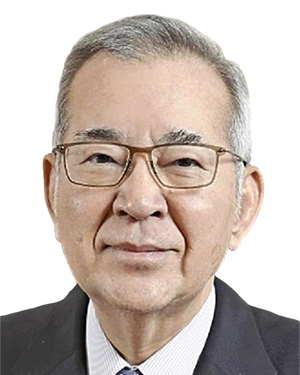
Masayuki Yamauchi
Yamauchi is a professor emeritus at the University of Tokyo, where he previously headed the school’s Center for Middle Eastern Studies, and a special visiting professor at the Mohammed V University of Rabat in Morocco. He was a professor at Musashino University in Tokyo from 2018 to 2023.
The original article in Japanese appeared in the Jan. 18 issue of The Yomiuri Shimbun.




Most Read
Popular articles in the past 24 hours
-

Voters Using AI to Choose Candidates in Japan's Upcoming General ...
-
Light of Hope Gas Lamp Lit in Wajima as Noto Earthquake, Flood Su...
-

Genichiro Inokuma's Mural in Ueno Station That Gave Hope in Postw...
-
Monkey Strikes Junior High School Girl from Behind in Japan's Yam...
-
Senior Japanese Citizens Return to University to Gain Knowledge, ...
-
Heavy Snow Linked to 30 Deaths across Japan since Late Jan.; JMA ...
-

Japan's Snow-Clad Beauty: Camellia Flowers Seen in Winter Bloom a...
-
Tokyo Police Arrest Head of Resignation Assistance Firm
Popular articles in the past week
-

Japan Institute to Use Domestic Commercial Optical Lattice Clock ...
-
Australian Woman Dies After Mishap on Ski Lift in Nagano Prefectu...
-
Foreign Snowboarder in Serious Condition After Hanging in Midair ...
-
Chinese Embassy in Japan Reiterates Call for Chinese People to Re...
-

Narita Airport, Startup in Japan Demonstrate Machine to Compress ...
-

Toyota Motor Group Firm to Sell Clean Energy Greenhouses for Stra...
-
Sakie Yokota, Last Surviving Parent of a North Korea Abductee, Ur...
-
Beer Yeast Helps Save Labor, Water Use in Growing Rice; Govt Hope...
Popular articles in the past month
-
Univ. in Japan, Tokyo-Based Startup to Develop Satellite for Disa...
-
JAL, ANA Cancel Flights During 3-day Holiday Weekend due to Blizz...
-
China Confirmed to Be Operating Drilling Vessel Near Japan-China ...
-

China Eyes Rare Earth Foothold in Malaysia to Maintain Dominance,...
-
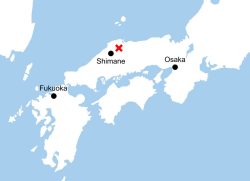
M6.2 Earthquake Hits Japan's Tottori, Shimane Prefectures; No Tsu...
-
Japan, Qatar Ministers Agree on Need for Stable Energy Supplies; ...
-
Japan Institute to Use Domestic Commercial Optical Lattice Clock ...
-

Japan, Italy to Boost LNG Cooperation; Aimed at Diversifying Japa...
Top Articles in Editorial & Columns
-
Myanmar Will Continue Under Military Rule Even After Election, Ex-Ambassador Maruyama Says in Exclusive Interview
-

40 Million Foreign Visitors to Japan: Urgent Measures Should Be Implemented to Tackle Overtourism
-

Expansion of New NISA: Devise Ways to Build up Household Assets
-
China Criticizes Sanae Takaichi, but China Itself Is to Blame for Worsening Relations with Japan
-
Withdrawal from International Organizations: U.S. Makes High-handed Move that Undermines Multilateral Cooperation
JN ACCESS RANKING
-
Univ. in Japan, Tokyo-Based Startup to Develop Satellite for Disaster Prevention Measures, Bears
-
JAL, ANA Cancel Flights During 3-day Holiday Weekend due to Blizzard
-
China Confirmed to Be Operating Drilling Vessel Near Japan-China Median Line
-
China Eyes Rare Earth Foothold in Malaysia to Maintain Dominance, Counter Japan, U.S.
-
Japan, Qatar Ministers Agree on Need for Stable Energy Supplies; Motegi, Qatari Prime Minister Al-Thani Affirm Commitment to Cooperation