
Sumo Scene / Return of the Idei: Stablemasters in Nara-Period Costumes Evoke Ancient Sumo Traditions
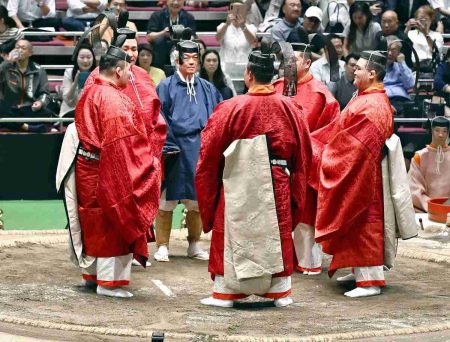
Stablemasters wearing the red attire of ancient sumo judges act out discussing a disputed bout in the ring during a special event at Tokyo’s Ryogoku Kokugikan on Oct. 7.
11:18 JST, November 12, 2025
The Kyushu Grand Sumo Tournament, the last big competition of the year, has begun in Fukuoka. Spectators can again catch the familiar sight of five stablemasters serving as ringside judges, dressed in their black crested kimono and traditional wide-legged hakama trousers.
The Japan Sumo Association requires judges to wear the formal crested attire and white tabi socks when appearing at the dohyo. It is strictly forbidden to sit ringside in a yukata or a business suit, which do not conform to the aesthetic standards of grand sumo.
However, the stablemasters who served as judges in the ancient sumo performance at the Centennial Tournament held in Tokyo’s Ryogoku Kokugikan in October wore some truly eye-catching outfits.
The tournament included a reenactment of the “Sumai no Sechie” ceremony, a court ritual from the Nara (710-794) and the Heian (794-late 12th century) periods, in which sumo bouts were presented to the Emperor.
Seated in the front row at the Centennial Tournament, dressed in bright red court attire and wearing traditional eboshi caps, were five stablemasters, all of whom previously held the ranks of yokozuna or ozeki.
When former popular wrestlers who had thrilled fans such as stablemaster Nishonoseki, formerly yokozuna Kisenosato, appeared dressed as idei — judges from ancient sumo performances — the venue was filled with astonished gasps and loud cheers.
These costumes were resplendent, straight out of an illustrated scroll from the Heian period. Very few people except for actors in historical dramas ever get a chance to wear such clothes.
The event was very lively, with a staged scene in which the five judges were brought together on the dohyo for a referees conference to decide a disputed call.
After playing this important role, stablemaster Otowayama, formerly yokozuna Kakuryu, wiped his brow and said, “It was a new experience, as we don’t usually get to wear this kind of attire.”
Watching this event that recreates the origins of today’s grand sumo, I felt as though I had gone back a thousand years in time.
It clearly demonstrates the profound connection between Japanese history and grand sumo.
The Sumo Association will mark the 100th anniversary of its incorporation in December. I deeply feel the importance of passing on the traditions of grand sumo to the next generation.
— Kamimura is a sumo expert.





Most Read
Popular articles in the past 24 hours
-
Japanese High School Student Aims to Share Kaiten History Through...
-
PM Takaichi Spells out Plans to Advance Bold Policy Shifts in Spe...
-
Chronic Issues Erode Thailand’s Economy as Political Confusion Pe...
-
Tottori: 95-Year-Old Japanese Descendent from Philippines Visits ...
-

Japan to Monitor Trump Administration's Response to U.S. Supreme ...
-
Milano Cortina 2026: Speed Skater Takagi Finishes 6th in the 1,50...
-
Osaka: 40 Ninjas Display Shuriken Throwing Skills at Japan Champi...
-
Miyazaki: Japanese Woman Walks in Footsteps of Samurai Ancestor W...
Popular articles in the past week
-

Japan PM Takaichi’s Cabinet Resigns en Masse
-

Man Infected with Measles Reportedly Dined at Restaurant in Tokyo...
-

Sanae Takaichi Elected Prime Minister of Japan; Keeps All Cabinet...
-

Japan's Govt to Submit Road Map for Growth Strategy in March, PM ...
-

Bus Carrying 40 Passengers Catches Fire on Chuo Expressway; All E...
-
Milano Cortina 2026: Figure Skaters Riku Miura, Ryuichi Kihara Pa...
-

Japan, U.S. Name 3 Inaugural Investment Projects; Reached Agreeme...
-

U.S. Firm to Build Training Hub in Fukushima N-plant for Debris R...
Popular articles in the past month
-
Japan PM Takaichi’s Cabinet Resigns en Masse
-

Japan Institute to Use Domestic Commercial Optical Lattice Clock ...
-

Israeli Ambassador to Japan Speaks about Japan’s Role in the Reco...
-
Man Infected with Measles Reportedly Dined at Restaurant in Tokyo...
-

Videos Plagiarized, Reposted with False Subtitles Claiming ‘Ryuky...
-

Man Infected with Measles May Have Come in Contact with Many Peop...
-

Prudential Life Insurance Plans to Fully Compensate for Damages C...
-

Woman with Measles Visited Hospital in Tokyo Multiple Times Befor...
Top Articles in Sports
-
Aonishiki Tops Atamifuji in Playoff to Win New Year Grand Sumo Tournament in Ozeki Debut
-
Milano Cortina 2026: Figure Skaters Riku Miura, Ryuichi Kihara Pair Win Gold; Dramatic Comeback from 5th Place in SP
-

Milano Cortina 2026: Kokomo Murase Comes Out on Top After Overcoming Obstacles, Aiming for Greater Heights in Competition
-
Milano Cortina 2026: Riku Miura, Ryuichi Kihara Clinch Japan’s 1st Gold in Pairs Figure Skating, Rebounding from Disappointing Short Program
-

Milano Cortina 2026: Olympics-Torch Arrives in Co-Host Cortina on Anniversary of 1956 Games
JN ACCESS RANKING
-
Japan PM Takaichi’s Cabinet Resigns en Masse
-
Japan Institute to Use Domestic Commercial Optical Lattice Clock to Set Japan Standard Time
-
Israeli Ambassador to Japan Speaks about Japan’s Role in the Reconstruction of Gaza
-
Man Infected with Measles Reportedly Dined at Restaurant in Tokyo Station
-
Videos Plagiarized, Reposted with False Subtitles Claiming ‘Ryukyu Belongs to China’; Anti-China False Information Also Posted in Japan