
13:27 JST, October 21, 2025
Having transformed an Israeli attack on Qatari soil into diplomatic momentum for a ceasefire in Gaza, officials in Doha are forging ahead on other thorny conflicts, including the escalating tensions between the United States and Venezuela.
After the presence of a Hamas delegation in its capital drew the Israel Defense Forces airstrike last month, the tiny Persian Gulf nation might have reassessed its foreign policy. But senior Qatari leaders are instead signaling that the ceasefire’s success has vindicated their approach.
Qatar is currently pursuing at least nine diplomatic efforts around the world, including negotiations with the Afghan Taliban over imprisoned Americans, the peace deal between the Democratic Republic of Congo and Rwanda, and prisoner exchanges between Russia and Ukraine.
“There always needs to be someone to talk to unsavory actors; Qatar is willing to play that role, and the United States has used them over and over,” said Dana Stroul, a former deputy assistant secretary of defense for the Middle East now with the Washington Institute for Near East Policy.
Talks hosted by Doha over the weekend led to a ceasefire between Pakistan and the Afghan Taliban.
The Qatari effort between the U.S. and Venezuela was described by one diplomat as a modest attempt to keep lines of communication open. The diplomat, like others quoted in this report, spoke on the condition of anonymity to discuss the sensitive matter.
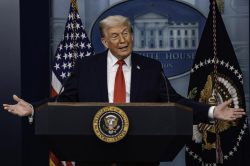
The mediation began under the Biden administration, according to a U.S. official, but it has not been prioritized under the Trump administration, which is instead ratcheting up military pressure. President Donald Trump said Wednesday he had authorized covert CIA operations inside Venezuela, the latest escalation against the authoritarian socialist government of President Nicolás Maduro.
But in July, the diplomat said, Qatar helped coordinate the exchange of 10 Americans held in Venezuela for more than 250 Venezuelans who were deported by the Trump administration to El Salvador, the result of months of complex negotiations between Washington, Caracas and San Salvador.
Arsonist and firefighter
But the relationship between Washington and Doha is complicated. Some in the U.S. accuse Qatar of playing both sides. During Trump’s first term, he accused Qatar of funding terrorism. Trump supporters called the decision this month to permit a Qatari training facility at a U.S. air base in Idaho a betrayal.
Such criticisms rankle Qatari officials. But the Israeli attack on Sept. 9, which targeted Hamas leaders but killed at least one Qatari citizen, threw the country into an existential crisis. The IDF fired 10 missiles at a residential building in the Leqtaifiya district of Doha, five miles from the offices of Qatar’s emir and prime minister.
Qatari Emir Tamim bin Hamad Al Thani, addressing the U.N. General Assembly days after the attack, denounced the strike as “treacherous” and accused Israeli Prime Minister Benjamin Netanyahu of “state terrorism.”
A former senior Western diplomat who had previously been posted to Doha said he anticipated some Qatari leaders would advise more caution in diplomacy going forward.
“Qatar has had its foreign policy stress tested, probably beyond its comfort zone,” he said. After Hamas attacked Israel on Oct. 7, 2023, killing some 1,200 people and taking 251 more back to Gaza, Doha’s relationship with the militant group left it feeling “pretty exposed,” he said. But “the way they decided to make that relationship work for them was to say we can negotiate hostage releases.”
Now that all the living hostages have been released from Gaza, Qatar is expected to reexamine the utility of allowing Hamas to maintain an office in Doha, according to a European official briefed on the matter. Whatever it decides, the official said, it’s expected to continue supporting the next phase of ceasefire talks and humanitarian aid.
Barbara Leaf, an assistant secretary of state for the region under President Joe Biden, said the two years since the Oct. 7 attack have been “taxing both physically and politically” for Qatar.
“I would see Sheikh Mohammed [bin Abdulrahman Al Thani], the prime minister and foreign minister, at very regular intervals over the 15 months I was in office and there were times when he was just literally gray with fatigue,” she said. She said Qatar was under constant pressure to pressure Hamas. “It was no question the hardest things they’ve ever been asked to do.”
But the effort gave Qatar the opportunity not only to strengthen ties with the United States but also to expand contacts with Israeli intelligence. Mossad, Israel’s external intelligence agency, took the lead on hostage negotiations with Hamas. Over the two years, Israeli intelligence officers decamped to Doha for months at a time for near-daily meetings with Qatari officials.
After the Israeli attack in Doha, Israelis familiar with the matter told The Washington Post that Mossad had opposed the attack out of concern it would rupture their burgeoning intelligence ties.
Need to be useful
During Qatar’s 2017 blockade crisis, when Saudi Arabia closed the emirate’s only land border and several countries severed air and sea links to punish Doha for its ties with militant groups and Iran, Doha doubled down on long-standing efforts to make itself indispensable to Washington.
The effort has succeeded, Stroul said: Officials of both the Biden and Trump administrations concluded Qatar was a “value-added partner.”
During the Biden administration, she said, the “defining experience” for many was Qatar’s help during the U.S. withdrawal from Afghanistan. When the U.S. was struggling to evacuate tens of thousands of people from the country, officials asked allies in the region to temporarily house evacuees. “Qatar was by far the most flexible, most helpful partner,” she said.
“You work on partnerships so that when you make an ask that isn’t convenient to them, they say yes because of the partnership,” she said. “We could not have saved lives without them.”
Trump has prioritized his relationship with Qatar, with which his inner circle maintains close business ties. When Trump’s first official visit abroad was partially overshadowed by news that Qatar planned to give the U.S. president a $400 million luxury airplane, Trump barreled through criticism to accept the gift. His administration has similarly ignored criticism surrounding his decision to extend to Qatar a NATO-like mutual defense pact and the training facility at Mountain Home Air Force Base in Idaho.
Patrick Theros, a former U.S. ambassador to Qatar, said Doha could become “choosier” about which conflicts it mediates, but he expects Qatari leadership to remain “indispensable” to Washington, especially for the remainder of Trump’s presidency.
The decision to give Ali al-Thawadi a lead role in the Gaza ceasefire negotiations indicated the importance Qatar has assigned to the relationship, Theros said. Thawadi, Qatar’s minister for strategic affairs, already had strong ties to the U.S. as a successful contractor and developer.
“I think he was chosen because he knows the Americans and also because he’s pretty prepossessing,” Theros said. “He has the personality for the role. He’s somewhat brusque, and he’s an alpha.”
The Gaza ceasefire remains shaky. Israel has accused Hamas of violations during the first phase, and the outline of the second phase, including the difficult task of disarming Hamas, is vague.
When Trump traveled to Sharm el-Sheikh, Egypt, to sign the agreement, Qatar’s emir was present, but the rulers of Saudi Arabia and the United Arab Emirates were not. That might be because others in the region are content with allowing Qatar to “own” the agreement while so much uncertainty remains, Stroul said. But it also makes sense for Doha to step forward.
“The one lesson of this year with Trump is you never know what’s going to happen,” she said. “So you might as well try to maximize what benefits you can when you have Trump’s attention.”





Most Read
Popular articles in the past 24 hours
-

Voters Using AI to Choose Candidates in Japan's Upcoming General ...
-

Japan's Snow-Clad Beauty: Camellia Flowers Seen in Winter Bloom a...
-
Monkey Strikes Junior High School Girl from Behind in Japan's Yam...
-

Genichiro Inokuma's Mural in Ueno Station That Gave Hope in Postw...
-

Senior Japanese Citizens Return to University to Gain Knowledge, ...
-

Foreign and Security Policy: Political Parties Must Discuss How T...
-
Heavy Snow Linked to 30 Deaths across Japan since Late Jan.; JMA ...
-

Tokyo Police Arrest Head of Resignation Assistance Firm
Popular articles in the past week
-

Japan Institute to Use Domestic Commercial Optical Lattice Clock ...
-
Australian Woman Dies After Mishap on Ski Lift in Nagano Prefectu...
-
Foreign Snowboarder in Serious Condition After Hanging in Midair ...
-
Chinese Embassy in Japan Reiterates Call for Chinese People to Re...
-

Narita Airport, Startup in Japan Demonstrate Machine to Compress ...
-

Toyota Motor Group Firm to Sell Clean Energy Greenhouses for Stra...
-
Sakie Yokota, Last Surviving Parent of a North Korea Abductee, Ur...
-

Beer Yeast Helps Save Labor, Water Use in Growing Rice; Govt Hope...
Popular articles in the past month
-
Univ. in Japan, Tokyo-Based Startup to Develop Satellite for Disa...
-
JAL, ANA Cancel Flights During 3-day Holiday Weekend due to Blizz...
-
China Confirmed to Be Operating Drilling Vessel Near Japan-China ...
-

China Eyes Rare Earth Foothold in Malaysia to Maintain Dominance,...
-
M6.2 Earthquake Hits Japan's Tottori, Shimane Prefectures; No Tsu...
-
Japan Institute to Use Domestic Commercial Optical Lattice Clock ...
-
Japan, Qatar Ministers Agree on Need for Stable Energy Supplies; ...
-
Japan, Italy to Boost LNG Cooperation; Aimed at Diversifying Japa...
Top Articles in News Services
-
Arctic Sees Unprecedented Heat as Climate Impacts Cascade
-

Prudential Life Expected to Face Inspection over Fraud
-

South Korea Prosecutor Seeks Death Penalty for Ex-President Yoon over Martial Law (Update)
-
Trump Names Former Federal Reserve Governor Warsh as the Next Fed Chair, Replacing Powell
-

Japan’s Nagasaki, Okinawa Make N.Y. Times’ 52 Places to Go in 2026
JN ACCESS RANKING
-
Univ. in Japan, Tokyo-Based Startup to Develop Satellite for Disaster Prevention Measures, Bears
-
JAL, ANA Cancel Flights During 3-day Holiday Weekend due to Blizzard
-
China Confirmed to Be Operating Drilling Vessel Near Japan-China Median Line
-
China Eyes Rare Earth Foothold in Malaysia to Maintain Dominance, Counter Japan, U.S.
-
Japan Institute to Use Domestic Commercial Optical Lattice Clock to Set Japan Standard Time