
China’s Economy Slows to 4.8% Annual Growth in July-September, Hit by Tariffs and Slack Demand
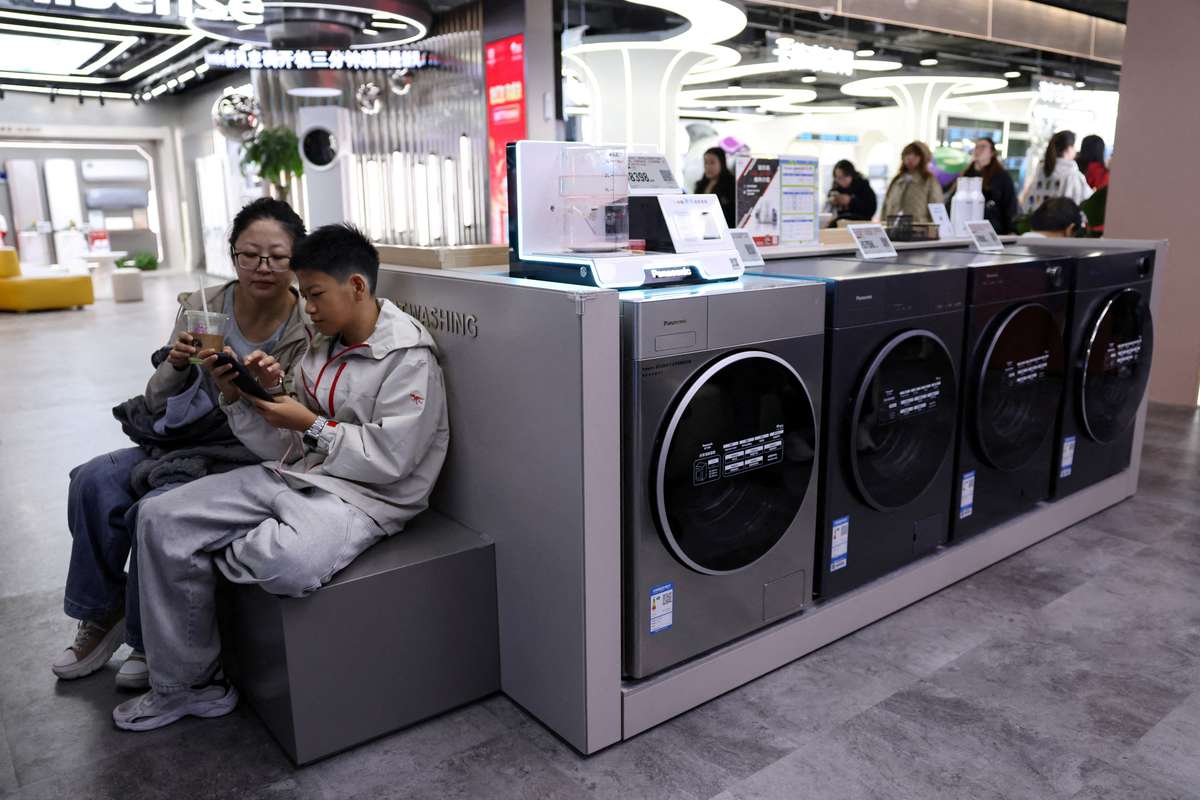
Customers rest next to washing machines displayed at a home appliance mall in Beijing on Sunday.
13:48 JST, October 20, 2025
HONG KONG (AP) — China’s economy expanded at the slowest annual pace in a year in July- September, growing 4.8%, weighed down by trade tensions with the United States and slack domestic demand.
The July-September data was the weakest pace of growth since the third quarter of 2024, and compares with a 5.2% pace of growth in the previous quarter, the government said in a report Monday.
In January-September, the world’s second largest economy grew at a 5.2% annual pace. Despite U.S. President Donald Trump’s higher tariffs on imports from China, the country’s exports have remained relatively strong as companies shifted their sales to other world markets.
Tensions between Beijing and Washington remain elevated, and it’s unclear if Trump and Chinese leader Xi Jinping will go ahead with a proposed meeting during a regional summit at the end of this month.
Xi and other ruling Communist Party members are convening one of China’s most important political meetings for the year on Monday, where they will map out economic and social policy goals for the country for the next five years.
The economy slowed in the last quarter as the authorities moved to curb fierce price wars in sectors such as the auto industry that resulted from overcapacity.
China is also facing challenges including a prolonged property sector downturn which has been affecting consumption and demand.
Ratings agency S&P estimates nationwide new home sales will fall by 8% in 2025 from the year before and by 6% to 7% in 2026.
The World Bank expects China’s economy to grow at a 4.8% annual rate this year. The government’s official growth target is around 5%.
China’s stronger economic growth in the first half of this year has given it “some buffer” to achieve the growth target, said Lynn Song, chief economist for Greater China at ING Bank.
However, spending during China’s eight-day Golden Week national holiday in October was “mildly disappointing,” reflecting sluggish consumer confidence and demand, Morningstar analysts said in a note this month.
There’s room for the government to do more, Song said.
“(We) are looking to see if there will be further measures to support consumption and the property market, as the impact from previous policies begins to weaken,” Song said.
Economists are also expecting a rate cut by China’s central bank by the end of the year, which could encourage more spending and investment.







Most Read
Popular articles in the past 24 hours
-

Voters Using AI to Choose Candidates in Japan's Upcoming General ...
-

Japan's Snow-Clad Beauty: Camellia Flowers Seen in Winter Bloom a...
-

Monkey Strikes Junior High School Girl from Behind in Japan's Yam...
-

Genichiro Inokuma's Mural in Ueno Station That Gave Hope in Postw...
-

Senior Japanese Citizens Return to University to Gain Knowledge, ...
-

Foreign and Security Policy: Political Parties Must Discuss How T...
-
Heavy Snow Linked to 30 Deaths across Japan since Late Jan.; JMA ...
-

Tokyo Police Arrest Head of Resignation Assistance Firm
Popular articles in the past week
-

Japan Institute to Use Domestic Commercial Optical Lattice Clock ...
-
Australian Woman Dies After Mishap on Ski Lift in Nagano Prefectu...
-
Foreign Snowboarder in Serious Condition After Hanging in Midair ...
-
Chinese Embassy in Japan Reiterates Call for Chinese People to Re...
-

Narita Airport, Startup in Japan Demonstrate Machine to Compress ...
-

Toyota Motor Group Firm to Sell Clean Energy Greenhouses for Stra...
-

Sakie Yokota, Last Surviving Parent of a North Korea Abductee, Ur...
-

Beer Yeast Helps Save Labor, Water Use in Growing Rice; Govt Hope...
Popular articles in the past month
-

Univ. in Japan, Tokyo-Based Startup to Develop Satellite for Disa...
-

JAL, ANA Cancel Flights During 3-day Holiday Weekend due to Blizz...
-

China Confirmed to Be Operating Drilling Vessel Near Japan-China ...
-
China Eyes Rare Earth Foothold in Malaysia to Maintain Dominance,...
-
M6.2 Earthquake Hits Japan's Tottori, Shimane Prefectures; No Tsu...
-
Japan Institute to Use Domestic Commercial Optical Lattice Clock ...
-

Japan, Qatar Ministers Agree on Need for Stable Energy Supplies; ...
-

Japan, Italy to Boost LNG Cooperation; Aimed at Diversifying Japa...
Top Articles in News Services
-

Arctic Sees Unprecedented Heat as Climate Impacts Cascade
-

Prudential Life Expected to Face Inspection over Fraud
-

South Korea Prosecutor Seeks Death Penalty for Ex-President Yoon over Martial Law (Update)
-

Trump Names Former Federal Reserve Governor Warsh as the Next Fed Chair, Replacing Powell
-

Japan’s Nagasaki, Okinawa Make N.Y. Times’ 52 Places to Go in 2026
JN ACCESS RANKING
-
Univ. in Japan, Tokyo-Based Startup to Develop Satellite for Disaster Prevention Measures, Bears
-
JAL, ANA Cancel Flights During 3-day Holiday Weekend due to Blizzard
-
China Confirmed to Be Operating Drilling Vessel Near Japan-China Median Line
-
China Eyes Rare Earth Foothold in Malaysia to Maintain Dominance, Counter Japan, U.S.
-
Japan Institute to Use Domestic Commercial Optical Lattice Clock to Set Japan Standard Time