
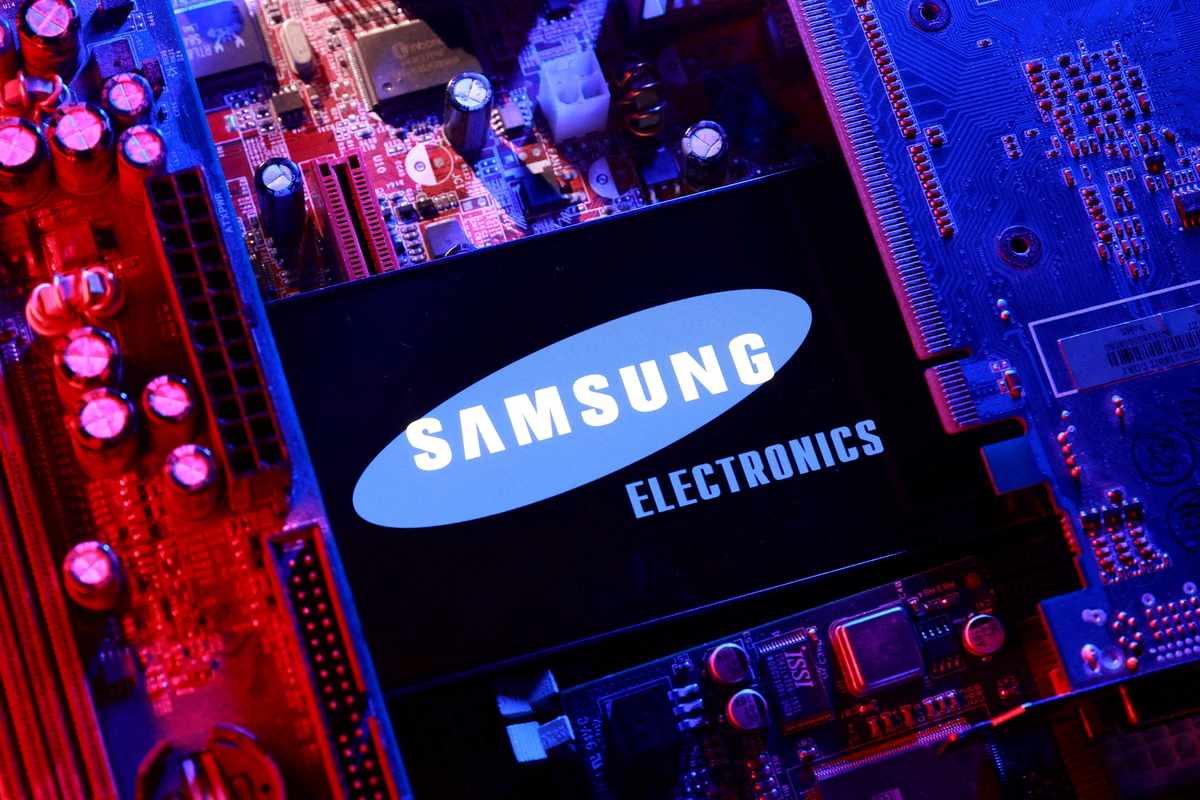
A Samsung Electronics logo and a computer motherboard appear in this illustration taken August 25, 2025.
11:20 JST, October 16, 2025
SEOUL, Oct 2 (Reuters) – Shares of South Korea’s Samsung Electronics 005930.KS jumped 4.7% and SK Hynix 000660.KS soared 12% on Thursday, bolstered by a deal with OpenAI to support the ChatGPT maker’s expansive Stargate artificial intelligence data center project.
The partnership, announced late on Wednesday, sent Samsung shares to their highest in more than four years and SK Hynix to an all-time high, adding $37 billion to their combined market capitalisation.
Their rally also propelled the benchmark KOSPI index .KS11 more than 3% to a record.
“There have been worries about high bandwidth memory (HBM) chip prices falling next year on intensifying competition, but such worries will be easily resolved by the strategic partnership,” Jeff Kim, an analyst at KB Securities, said in a note, expecting a surge in demand from the project.
“Since Stargate is a key project led by President Trump, there also is a possibility the partnership will have a positive impact on South Korea’s trade negotiations with the U.S.,” Kim said.
OpenAI, participating in President Donald Trump’s $500 billion Stargate private-sector initiative to build AI infrastructure in the U.S., agreed on Wednesday to join forces with the two chipmakers in semiconductor procurement and work on building two data centers in South Korea, a Korean-style Stargate.
With the new data centers, which will have an initial capacity of 20 megawatts, Seoul is hoping to become an AI hub in Asia, while OpenAI is looking to cement its position in the country which has the second-largest number of paying ChatGPT users after the United States.
Samsung Electronics’ affiliates Samsung SDI 006400.KS, Samsung C&T 028260.KS and Samsung SDS 018260.KS also rose sharply on partnerships with the U.S. firm.
The global AI boom has been driving strong demand for semiconductors, helping South Korea’s exports rise in September at the fastest pace in 14 months despite a hit from U.S. tariffs, blowing past market expectations.
South Korea hopes to formalize by late October a preliminary trade deal reached with Trump in July, lowering U.S. tariffs on South Korean imports in return for a $350 billion investment in the U.S.
However, follow-up negotiations have stalled due to Seoul’s concerns over the foreign exchange implications and structure of the investment package.





Most Read
Popular articles in the past 24 hours
-

Japan's Snow-Clad Beauty: Camellia Flowers Seen in Winter Bloom a...
-
Monkey Strikes Junior High School Girl from Behind in Japan's Yam...
-

Genichiro Inokuma's Mural in Ueno Station That Gave Hope in Postw...
-

Foreign and Security Policy: Political Parties Must Discuss How T...
-
Senior Japanese Citizens Return to University to Gain Knowledge, ...
-

Heavy Snow Linked to 30 Deaths across Japan since Late Jan.; JMA ...
-

Tokyo Police Arrest Head of Resignation Assistance Firm
-
Japan’s Nikkei Stock Average Jumps near 4%, Closes at Record High...
Popular articles in the past week
-

Japan Institute to Use Domestic Commercial Optical Lattice Clock ...
-
Australian Woman Dies After Mishap on Ski Lift in Nagano Prefectu...
-
Foreign Snowboarder in Serious Condition After Hanging in Midair ...
-
Chinese Embassy in Japan Reiterates Call for Chinese People to Re...
-
Narita Airport, Startup in Japan Demonstrate Machine to Compress ...
-

Toyota Motor Group Firm to Sell Clean Energy Greenhouses for Stra...
-

Sakie Yokota, Last Surviving Parent of a North Korea Abductee, Ur...
-

Beer Yeast Helps Save Labor, Water Use in Growing Rice; Govt Hope...
Popular articles in the past month
-
Univ. in Japan, Tokyo-Based Startup to Develop Satellite for Disa...
-

JAL, ANA Cancel Flights During 3-day Holiday Weekend due to Blizz...
-
China Confirmed to Be Operating Drilling Vessel Near Japan-China ...
-
China Eyes Rare Earth Foothold in Malaysia to Maintain Dominance,...
-
Japan Institute to Use Domestic Commercial Optical Lattice Clock ...
-
M6.2 Earthquake Hits Japan's Tottori, Shimane Prefectures; No Tsu...
-
Japan, Qatar Ministers Agree on Need for Stable Energy Supplies; ...
-
Japan, Italy to Boost LNG Cooperation; Aimed at Diversifying Japa...
Top Articles in News Services
-

Arctic Sees Unprecedented Heat as Climate Impacts Cascade
-

Prudential Life Expected to Face Inspection over Fraud
-

South Korea Prosecutor Seeks Death Penalty for Ex-President Yoon over Martial Law (Update)
-
Trump Names Former Federal Reserve Governor Warsh as the Next Fed Chair, Replacing Powell
-

Japan’s Nagasaki, Okinawa Make N.Y. Times’ 52 Places to Go in 2026
JN ACCESS RANKING
-
Univ. in Japan, Tokyo-Based Startup to Develop Satellite for Disaster Prevention Measures, Bears
-
JAL, ANA Cancel Flights During 3-day Holiday Weekend due to Blizzard
-
China Confirmed to Be Operating Drilling Vessel Near Japan-China Median Line
-
China Eyes Rare Earth Foothold in Malaysia to Maintain Dominance, Counter Japan, U.S.
-
Japan Institute to Use Domestic Commercial Optical Lattice Clock to Set Japan Standard Time