
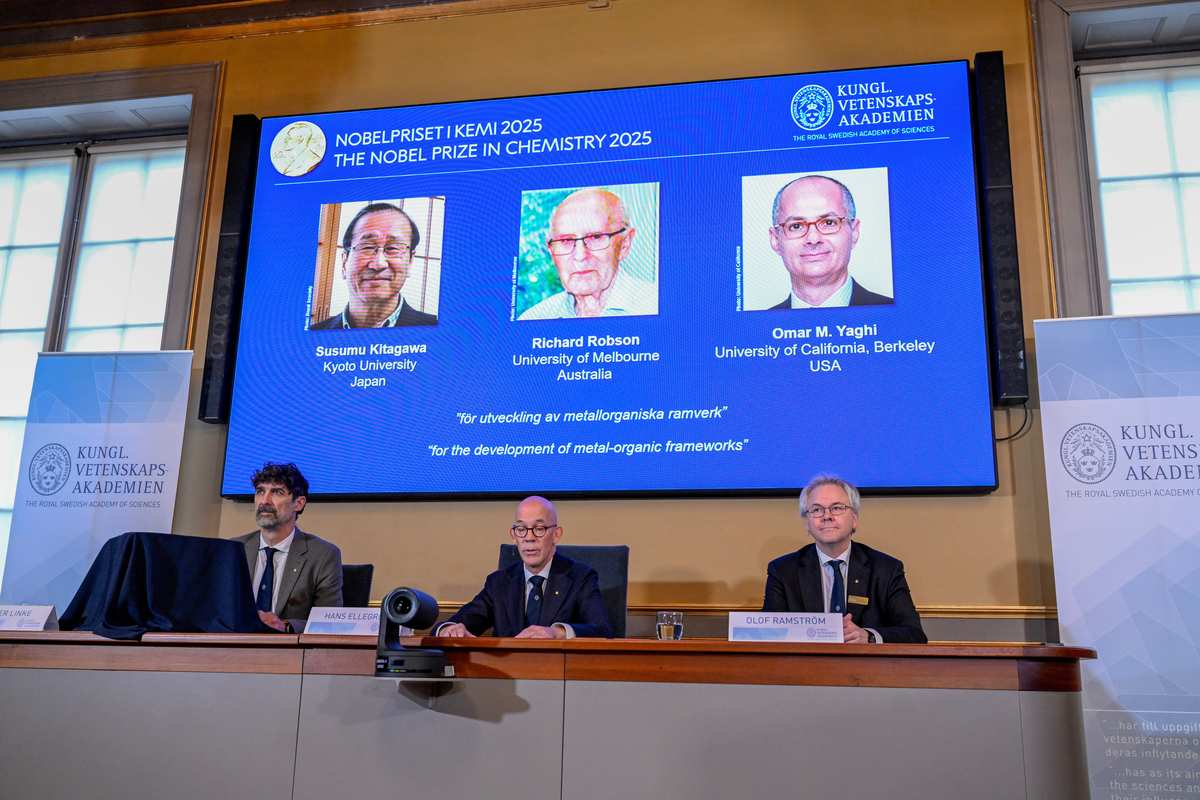
From left, Chair of the Nobel Committee for Chemistry Heiner Linke, Secretary General of the Swedish Academy of Sciences Hans Ellegren, and Member of the Nobel Committee for Chemistry Olof Ramstrom announce Susumu Kitagawa, Richard Robson and Omar Yaghi, on screen behind, as the recipients the Nobel Prize in Chemistry, at the Nobel Assembly of the Karolinska Institutet, in Stockholm, Sweden, Wednesday, Oct. 8, 2025.
19:31 JST, October 8, 2025
STOCKHOLM, Oct 8 (Reuters) – Scientists Susumu Kitagawa, Richard Robson and Omar Yaghi won the 2025 Nobel Prize in Chemistry “for the development of metal–organic frameworks,” the award-giving body said on Wednesday.
The more than a century-old prize is awarded by the Royal Swedish Academy of Sciences and the winners share 11 million Swedish crowns ($1.2 million), as well as the fame of winning arguably the world’s most prestigious science award.
“They have found ways to create materials, entirely novel materials, with large cavities on their inside which can be seen almost like rooms in a hotel, so that guest molecules can enter and also exit again from the same material,” Heiner Linke, Chairman of the Nobel Committee for Chemistry, told a press conference.
“A small amount of such material can be almost like Hermione’s handbag in Harry Potter. It can store huge amounts of gas in a tiny volume.”
The three laureates worked to create molecular constructions with large spaces through which gases and other chemicals can flow and that can be utilized to harvest water from desert air, capture carbon dioxide and store toxic gases.
Kitagawa is a professor at Kyoto University in Japan while Robson is a professor at the University of Melbourne, Australia, and Yaghi is a professor at the University of California, Berkeley, in the United States.
“Through the development of metal-organic frameworks, the laureates have provided chemists with new opportunities for solving some of the challenges we face,” the award-giving body said in a statement.
The Chemistry Nobel was the third prize announced in this year’s crop of awards, in keeping with tradition, following those for medicine and physics announced earlier this week.
Established in the will of Swedish inventor and businessman Alfred Nobel, the prizes for achievements in science, literature and peace have been awarded since 1901, with a few interruptions mostly due to the world wars.
Nobel was himself a chemist and his developments in that field helped underpin the wealth he amassed from his invention of dynamite in the 19th century. The economics prize is a later addition funded by the Swedish central bank.
Sometimes overshadowed by more famous laureates in the fields of physics, literature and peace, the chemistry awards have still recognized many influential discoveries such as nuclear fission, DNA sequencing techniques, and yeast.
Last year’s chemistry award went to U.S. scientists David Baker and John Jumper and Briton Demis Hassabis for work on decoding the structure of proteins and creating new ones, yielding advances in areas such as drug development. ($1 = 9.3436 Swedish crowns)


Related Tags




Most Read
Popular articles in the past 24 hours
-

Voters Using AI to Choose Candidates in Japan's Upcoming General ...
-

Japan's Snow-Clad Beauty: Camellia Flowers Seen in Winter Bloom a...
-
Monkey Strikes Junior High School Girl from Behind in Japan's Yam...
-

Genichiro Inokuma's Mural in Ueno Station That Gave Hope in Postw...
-
Senior Japanese Citizens Return to University to Gain Knowledge, ...
-

Foreign and Security Policy: Political Parties Must Discuss How T...
-
Heavy Snow Linked to 30 Deaths across Japan since Late Jan.; JMA ...
-
Tokyo Police Arrest Head of Resignation Assistance Firm
Popular articles in the past week
-

Japan Institute to Use Domestic Commercial Optical Lattice Clock ...
-

Australian Woman Dies After Mishap on Ski Lift in Nagano Prefectu...
-
Foreign Snowboarder in Serious Condition After Hanging in Midair ...
-
Chinese Embassy in Japan Reiterates Call for Chinese People to Re...
-
Narita Airport, Startup in Japan Demonstrate Machine to Compress ...
-

Toyota Motor Group Firm to Sell Clean Energy Greenhouses for Stra...
-
Sakie Yokota, Last Surviving Parent of a North Korea Abductee, Ur...
-

Beer Yeast Helps Save Labor, Water Use in Growing Rice; Govt Hope...
Popular articles in the past month
-
Univ. in Japan, Tokyo-Based Startup to Develop Satellite for Disa...
-
JAL, ANA Cancel Flights During 3-day Holiday Weekend due to Blizz...
-
China Confirmed to Be Operating Drilling Vessel Near Japan-China ...
-

China Eyes Rare Earth Foothold in Malaysia to Maintain Dominance,...
-
M6.2 Earthquake Hits Japan's Tottori, Shimane Prefectures; No Tsu...
-
Japan Institute to Use Domestic Commercial Optical Lattice Clock ...
-
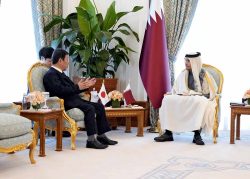
Japan, Qatar Ministers Agree on Need for Stable Energy Supplies; ...
-
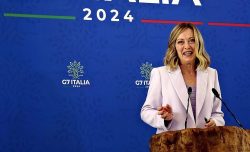
Japan, Italy to Boost LNG Cooperation; Aimed at Diversifying Japa...
Top Articles in News Services
-

Arctic Sees Unprecedented Heat as Climate Impacts Cascade
-

Prudential Life Expected to Face Inspection over Fraud
-

South Korea Prosecutor Seeks Death Penalty for Ex-President Yoon over Martial Law (Update)
-

Trump Names Former Federal Reserve Governor Warsh as the Next Fed Chair, Replacing Powell
-
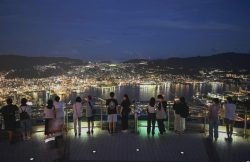
Japan’s Nagasaki, Okinawa Make N.Y. Times’ 52 Places to Go in 2026
JN ACCESS RANKING
-
Univ. in Japan, Tokyo-Based Startup to Develop Satellite for Disaster Prevention Measures, Bears
-
JAL, ANA Cancel Flights During 3-day Holiday Weekend due to Blizzard
-
China Confirmed to Be Operating Drilling Vessel Near Japan-China Median Line
-
China Eyes Rare Earth Foothold in Malaysia to Maintain Dominance, Counter Japan, U.S.
-
Japan Institute to Use Domestic Commercial Optical Lattice Clock to Set Japan Standard Time