
11:00 JST, September 26, 2025
In the eight months since Jan. 20, when Donald Trump was inaugurated president, the world has witnessed something very unusual: the rapid decline of a superpower, brought on not by any external force but by the hand of its own leadership.
This self-destruction was on vivid display at the recent summit meeting in Beijing to celebrate the 80th anniversary of the end of World War II. China, Russia, Iran and North Korea have been deepening their cooperation over the past few years, actively collaborating to support Moscow’s war effort against Ukraine. What raised eyebrows, however, was the presence of Indian Prime Minister Narendra Modi at the summit, and his eager embrace of Chinese President Xi Jinping and Russian President Vladimir Putin.
This sudden shift by the world’s largest country and largest democracy into the Chinese-led anti-democratic coalition was the direct outcome of decisions made by U.S. President Donald Trump. His immediate presidential predecessors, including Trump himself in his first term, have tried to cultivate good relations with New Delhi, because India is a serious rival and counterweight to China. The two countries have an active border dispute which led in recent years to shooting and deaths, and India has positioned itself as an alternative manufacturing base as American and other Western companies were seeking to uncouple themselves from China.
According to The New York Times, all of this came crashing down because of a single phone call between Trump and Modi. Donald Trump has been angling very openly for a Nobel Peace Prize, and in his talk with Modi claimed credit for the ceasefire between India and Pakistan in the conflict that broke out in May after a terrorist incident in Kashmir. The Indian prime minister found this very offensive: He told Trump that India had worked out the agreement directly with Pakistan, and didn’t require American assistance to get there. India has always been sensitive to suggestions that it needed help from any outside power, and yet Trump was insisting that the credit should go to him. Worse, the U.S. president explained how Pakistan was pushing for him to be awarded the Nobel Prize, with the suggestion that India should do likewise.
Modi’s refusal to give Trump credit for the ceasefire made Trump angry and caused him to threaten to impose 50% tariffs on imports from India. This came on top of earlier pressure against American companies that had moved their production from China to India in response to American demands during the first Trump administration. At a stroke, the U.S. president threw away decades of diplomatic efforts to cultivate India as a partner and counterbalance to China, and the immediate result was Modi’s appearance at the Beijing celebration.
What is notable but also sadly predictable about this incident was that Trump was not acting out of any sense of American national interest. His motives were completely self-centered: He wanted to get Indian support for his Nobel Prize, and like a 5-year-old child threw a temper tantrum when he didn’t get what he wanted.
This incident is only one of many acts of self-harm that Trump has inflicted on the United States. For the past couple of months, he has been on a campaign to force Federal Reserve chief Jerome Powell to lower interest rates, with verbal disparagement and threats against Powell personally. He followed this by firing one of the Federal Reserve governors, Lisa Cook, on a specious corruption charge. Needless to say, central bank independence has been one of the cornerstones of U.S. economic policy for decades, and the Fed’s credibility is one of the reasons that the United States could run up such large deficits over the years. In his quest for lower interest rates, Trump was willing to inflict long-term harm on the U.S. economy.
Another completely mysterious form of self-harm is Trump’s defunding and dismantling of much of American’s scientific establishment. The Trump administration has canceled funding for many types of research, in a broad attack on universities for the alleged wrong of promoting anti-Semitism. The most recent such act was the administration’s cutting money for mRNA research, a technology that underlay the first Trump administration’s singular achievement in creating a COVID vaccine in the space of six months. The Centers for Disease Control has seen the departure of most of its top scientists in opposition to the leadership of Robert F. Kennedy Jr., a crackpot anti-vaccine conspiracy theorist who had for years denied scientific evidence of their effectiveness. The attack on universities is a matter of pure populism, reflecting the resentment that less educated people feel towards those with educations.
The United States has one of the largest and most sophisticated militaries of any great power. Yet Trump’s major defense initiative, executed by his Defense Secretary and Christian nationalist Pete Hegseth, has been to reorient the military to domestic issues. He has deployed troops on the border with Mexico, and sent the Marines to Los Angeles to deal with non-existent disorder. The “One Big Beautiful Bill” passed by Congress over the summer provides some $170 billion in funding the Immigration and Customs Enforcement agency whose main objective now is deporting undocumented immigrants. This funding will make ICE much larger than the FBI, whose ranks have been thinned by purges of agents deemed to be insufficiently loyal to the president. Trump pardoned the Jan. 6 rioters who stormed the U.S. Capitol and attacked police officers, and his Justice Department is lodging criminal charges against the federal prosecutors to put them in jail. Trump is building up his own militia whose primary loyalty is not to the U.S. Constitution, but to Trump personally.
The final form of self-harm is one that should be familiar to Japanese readers: Trump’s tariff policies. These have been executed without any sense of strategic priority; Brazil, which actually runs a trade deficit with the U.S., was hit with a 50% tariff because of its prosecution of former President Jair Bolsonaro, an ideological ally of Donald Trump. A sensible tariff policy would have focused, as Joe Biden’s did, on strategic de-coupling from China. But his trade officials forgot that China maintains a stranglehold on the world’s supply of rare earths. So China got off relatively lightly, compared to traditional U.S. friends and allies.
It is very hard to see any consistent strategy or policy design behind any of these actions, except for Trump’s perceived personal advantage. He was against involvement in Middle East war, until Prime Minister Netanyahu presented him with an opportunity to bomb Iran at relatively low risk. He complains about prior American interference in foreign counties, but then sanctions Brazil for permitting its judicial processes to proceed against Bolsonaro. Everything for Trump is based on a calculation of personal rather than national interest, which is why he was skeptical of cryptocurrencies until someone convinced him that his family could profit off of them and he reversed course.
If someone wanted to gravely weaken the United States and strengthen China, it is hard to imagine them doing more than Trump has done over the past eight months. Though his popular support has weakened considerably since his election, a good part of his base still thinks that he is making American great again. Taking a longer term view, it is hard not to see his second presidency as marking the sudden acceleration of the decline of the United States as a superpower. Given the transformation of the Republican Party that has occurred under Trump, things are not likely to go back to the way they were even after Trump departs the scene. This is something that should worry all countries, like Japan, that have come to rely on the United States for their security and prosperity.
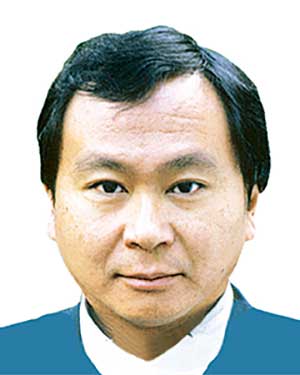
Francis Fukuyama
Francis Fukuyama is a senior fellow at Stanford University’s Freeman Spogli Institute for International Studies.
The Japanese translation of this article appeared in The Yomiuri Shimbun’s Sept. 21 issue.



Most Read
Popular articles in the past 24 hours
-

Japan's Snow-Clad Beauty: Camellia Flowers Seen in Winter Bloom a...
-
Monkey Strikes Junior High School Girl from Behind in Japan's Yam...
-

Foreign and Security Policy: Political Parties Must Discuss How T...
-
Senior Japanese Citizens Return to University to Gain Knowledge, ...
-
Genichiro Inokuma's Mural in Ueno Station That Gave Hope in Postw...
-
Heavy Snow Linked to 30 Deaths across Japan since Late Jan.; JMA ...
-
Tokyo Police Arrest Head of Resignation Assistance Firm
-

Japan’s Nikkei Stock Average Jumps near 4%, Closes at Record High...
Popular articles in the past week
-

Japan Institute to Use Domestic Commercial Optical Lattice Clock ...
-
Australian Woman Dies After Mishap on Ski Lift in Nagano Prefectu...
-
Foreign Snowboarder in Serious Condition After Hanging in Midair ...
-
Chinese Embassy in Japan Reiterates Call for Chinese People to Re...
-
Narita Airport, Startup in Japan Demonstrate Machine to Compress ...
-

Toyota Motor Group Firm to Sell Clean Energy Greenhouses for Stra...
-
Sakie Yokota, Last Surviving Parent of a North Korea Abductee, Ur...
-
Beer Yeast Helps Save Labor, Water Use in Growing Rice; Govt Hope...
Popular articles in the past month
-
Univ. in Japan, Tokyo-Based Startup to Develop Satellite for Disa...
-
JAL, ANA Cancel Flights During 3-day Holiday Weekend due to Blizz...
-
China Confirmed to Be Operating Drilling Vessel Near Japan-China ...
-
China Eyes Rare Earth Foothold in Malaysia to Maintain Dominance,...
-
Japan Institute to Use Domestic Commercial Optical Lattice Clock ...
-
M6.2 Earthquake Hits Japan's Tottori, Shimane Prefectures; No Tsu...
-
Japan, Qatar Ministers Agree on Need for Stable Energy Supplies; ...
-
Japan, Italy to Boost LNG Cooperation; Aimed at Diversifying Japa...
Top Articles in Editorial & Columns
-
Myanmar Will Continue Under Military Rule Even After Election, Ex-Ambassador Maruyama Says in Exclusive Interview
-
40 Million Foreign Visitors to Japan: Urgent Measures Should Be Implemented to Tackle Overtourism
-

Expansion of New NISA: Devise Ways to Build up Household Assets
-
China Criticizes Sanae Takaichi, but China Itself Is to Blame for Worsening Relations with Japan
-
Withdrawal from International Organizations: U.S. Makes High-handed Move that Undermines Multilateral Cooperation
JN ACCESS RANKING
-
Univ. in Japan, Tokyo-Based Startup to Develop Satellite for Disaster Prevention Measures, Bears
-
JAL, ANA Cancel Flights During 3-day Holiday Weekend due to Blizzard
-
China Confirmed to Be Operating Drilling Vessel Near Japan-China Median Line
-
China Eyes Rare Earth Foothold in Malaysia to Maintain Dominance, Counter Japan, U.S.
-
Japan Institute to Use Domestic Commercial Optical Lattice Clock to Set Japan Standard Time