
Tracing Footsteps of Absolute Pacifists in Hawaii: Adopted Son Seiki Scatters Donald Keene’s Ashes at Sea
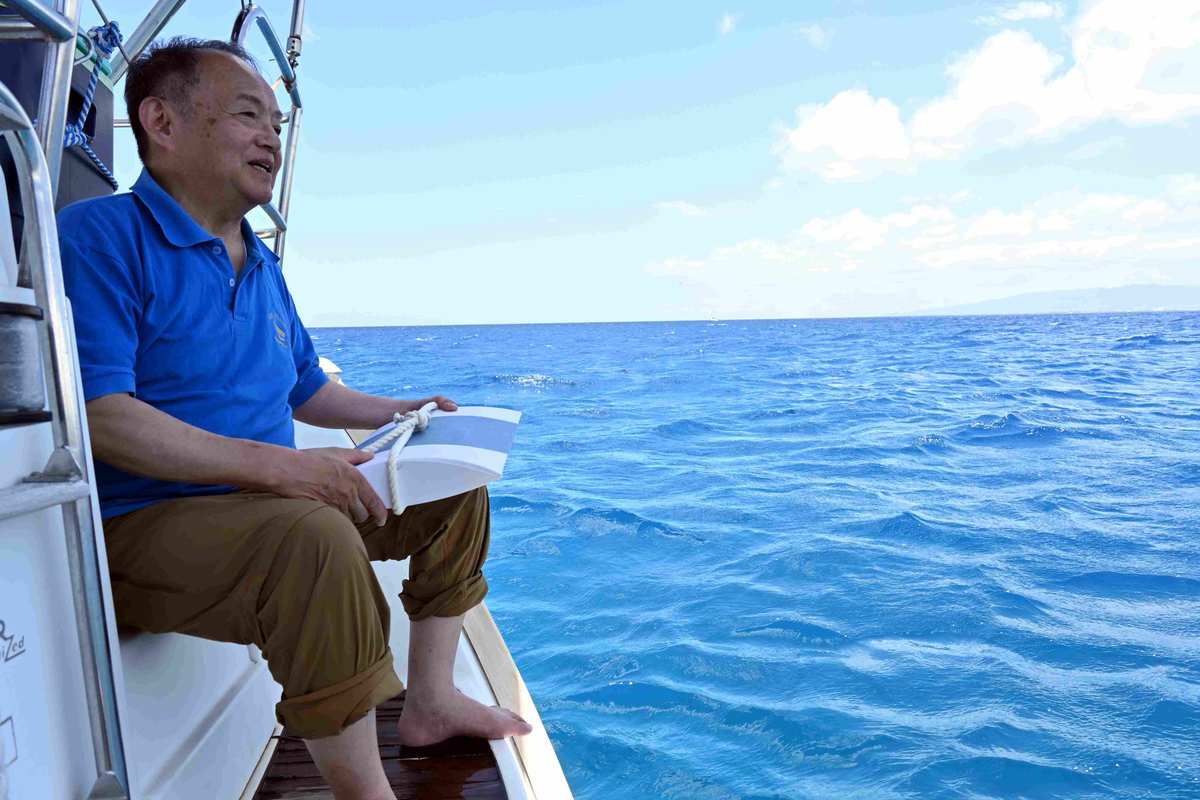
Seiki Keene, adopted son of Donald Keene, delivers a message to his father from a yacht floating in the sea off Honolulu before scattering Keene’s ashes, on June 6.
7:02 JST, August 11, 2025
“This is the sea of Hawaii that Dad loved so much. Please rest in peace.”
Seiki Keene, 75, the adopted son of Donald Keene, a Japanese literature scholar from the United States, spoke these words aboard a yacht off the coast of Honolulu. He then scattered the ashes of Keene, who passed away in 2019 at the age of 96, into the sea.
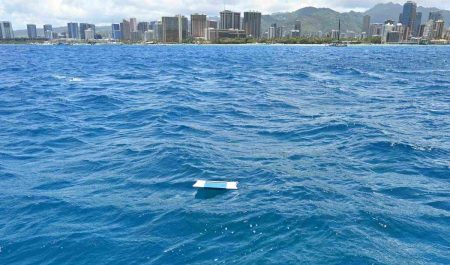
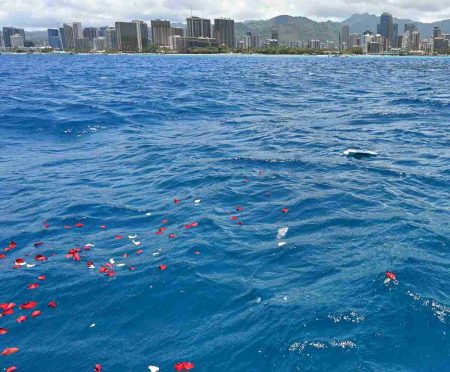
At 12:19 p.m. on June 6 this year, a paper container filled with a small amount of ashes, which could fit in the palm of a hand, drifted away with pink and purple petals on the cobalt blue sea.
-
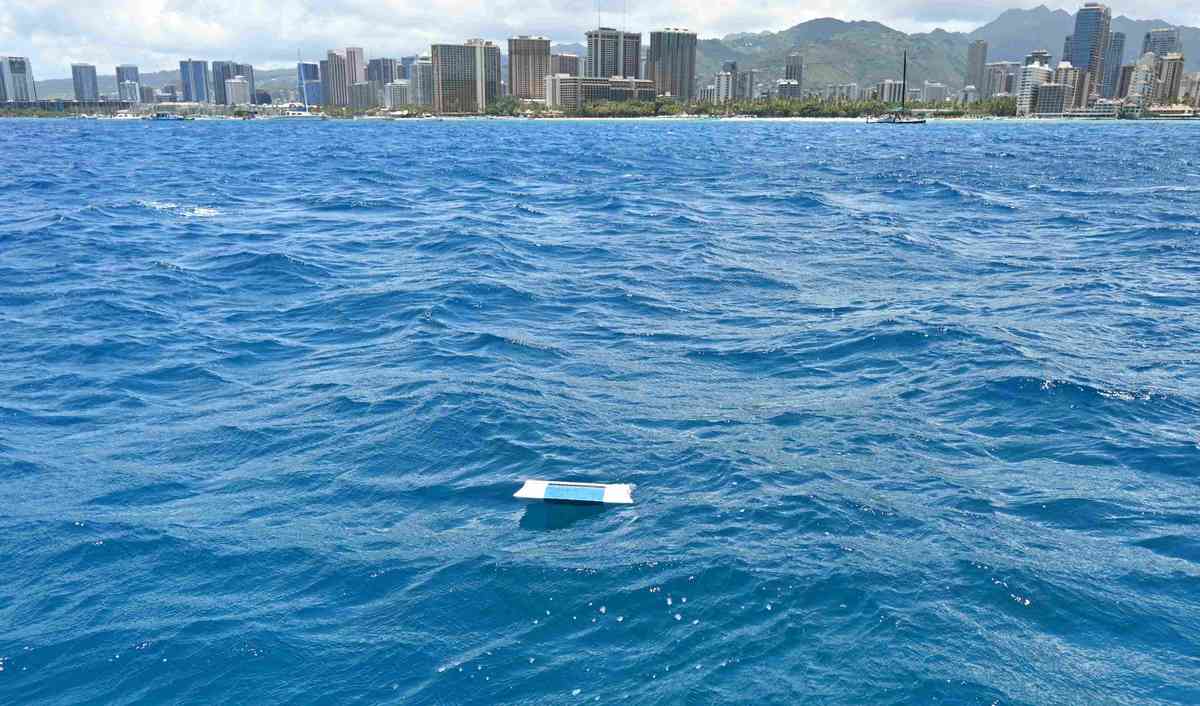
A paper container containing Keene’s ashes floats away on the ocean with Honolulu cityscape in the background
-
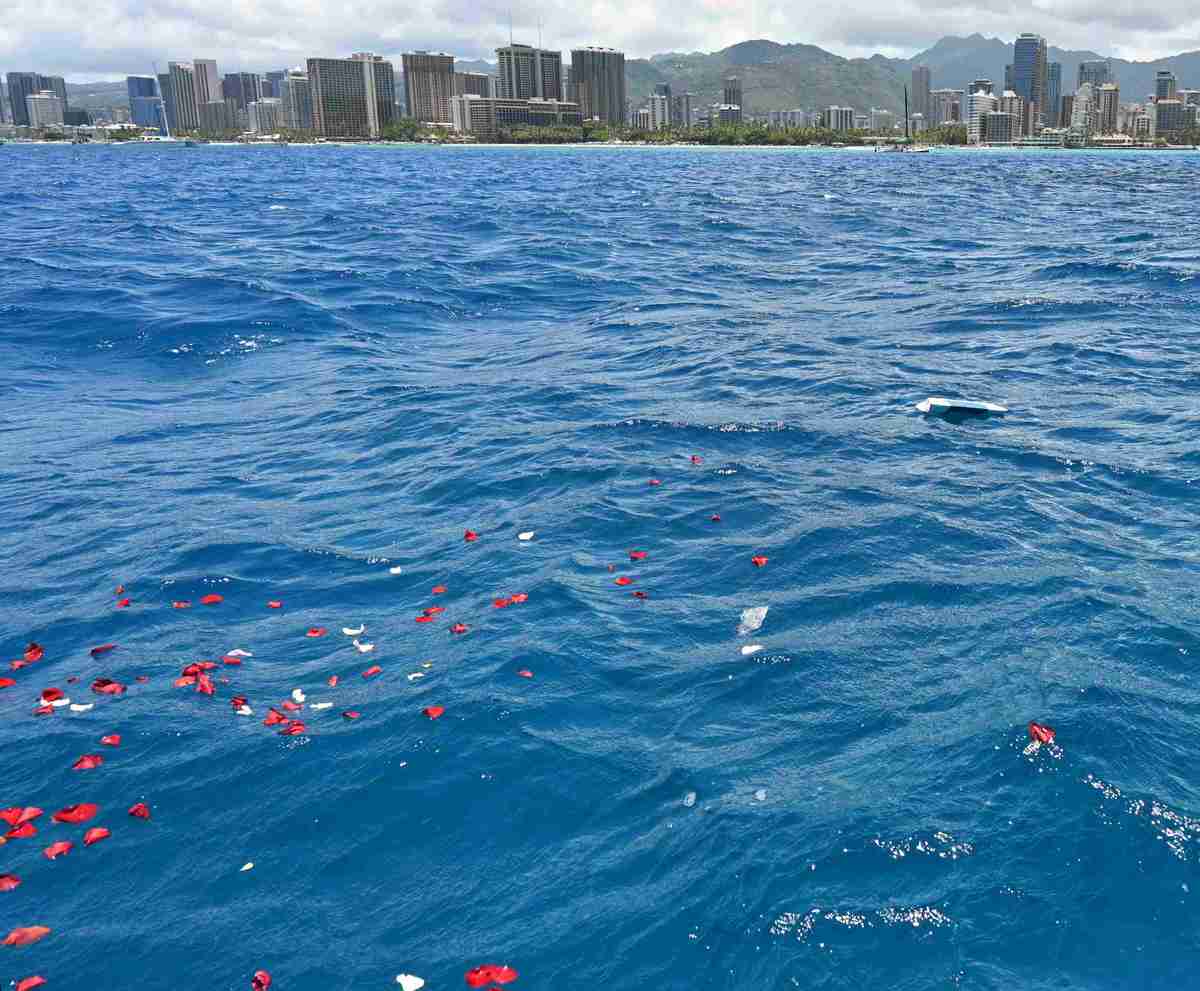
Seiki scattered flower petals from the yacht.
-
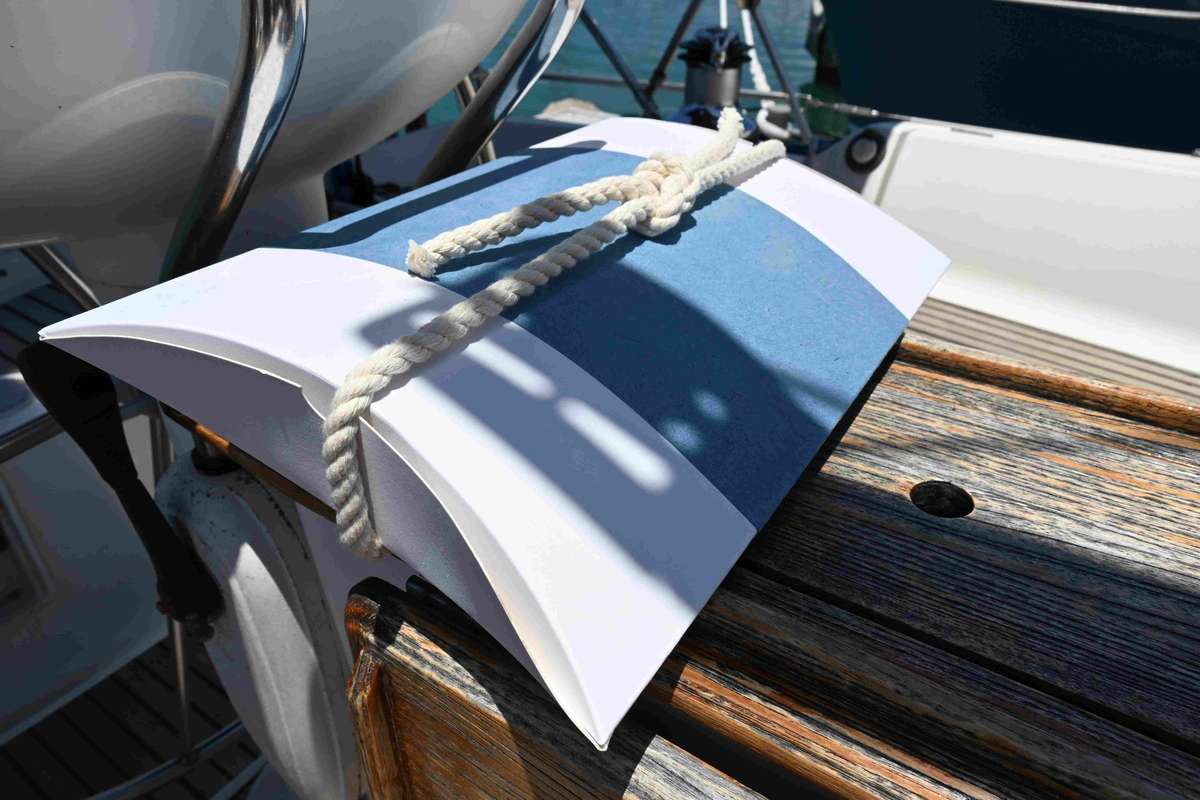
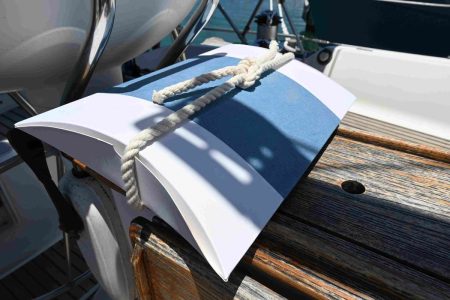
A paper box containing Keene’s ashes for scattering. It is an environmentally friendly container that dissolves in the sea in about two days.
-
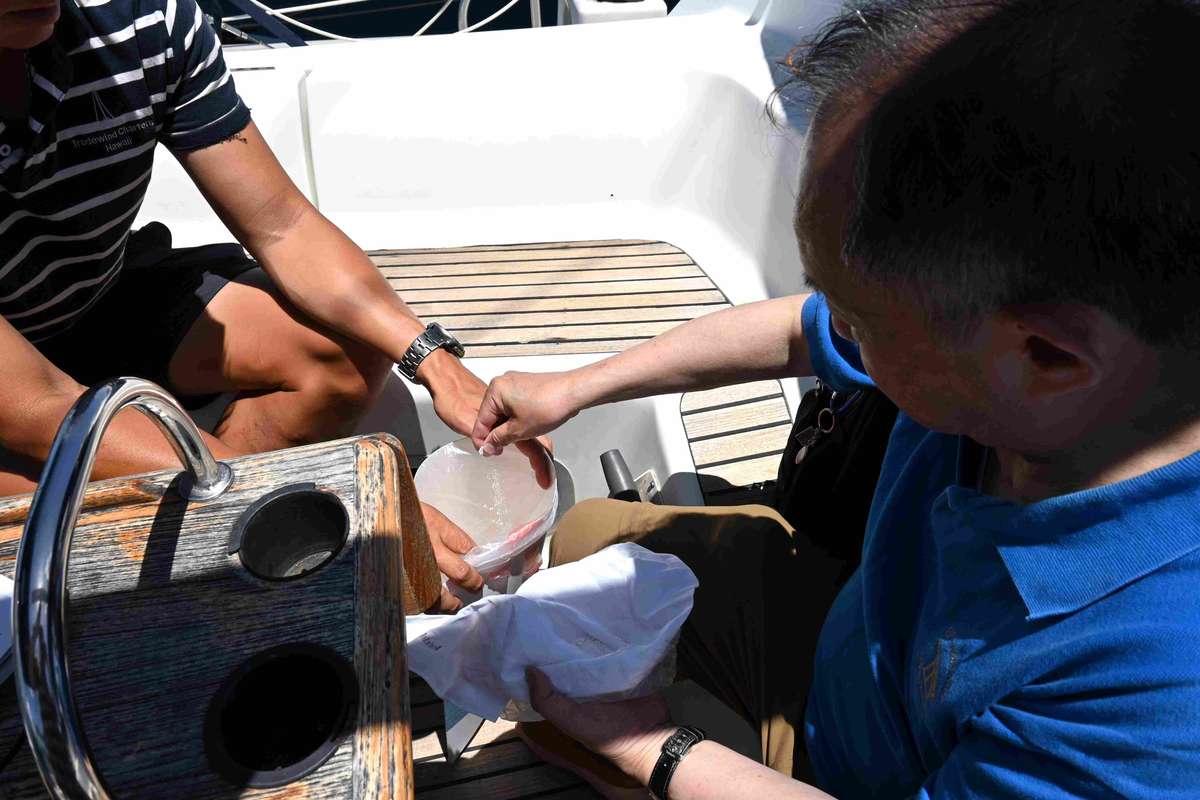
Seiki puts Keene’s ashes, which he brought from Japan, into a paper container on the yacht before departing from Honolulu harbor.
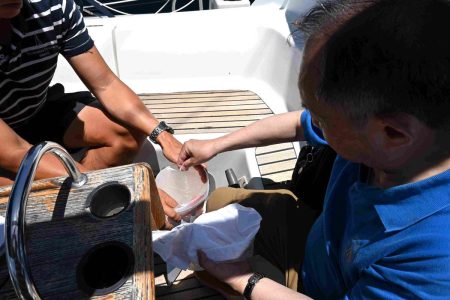
Hawaii, located between Japan and the U.S. mainland, is a place with special significance for Keene, where he developed a deep interest in Japan. Seiki wanted to mourn his father here.
Moved by Japanese soldier’s diaries
-
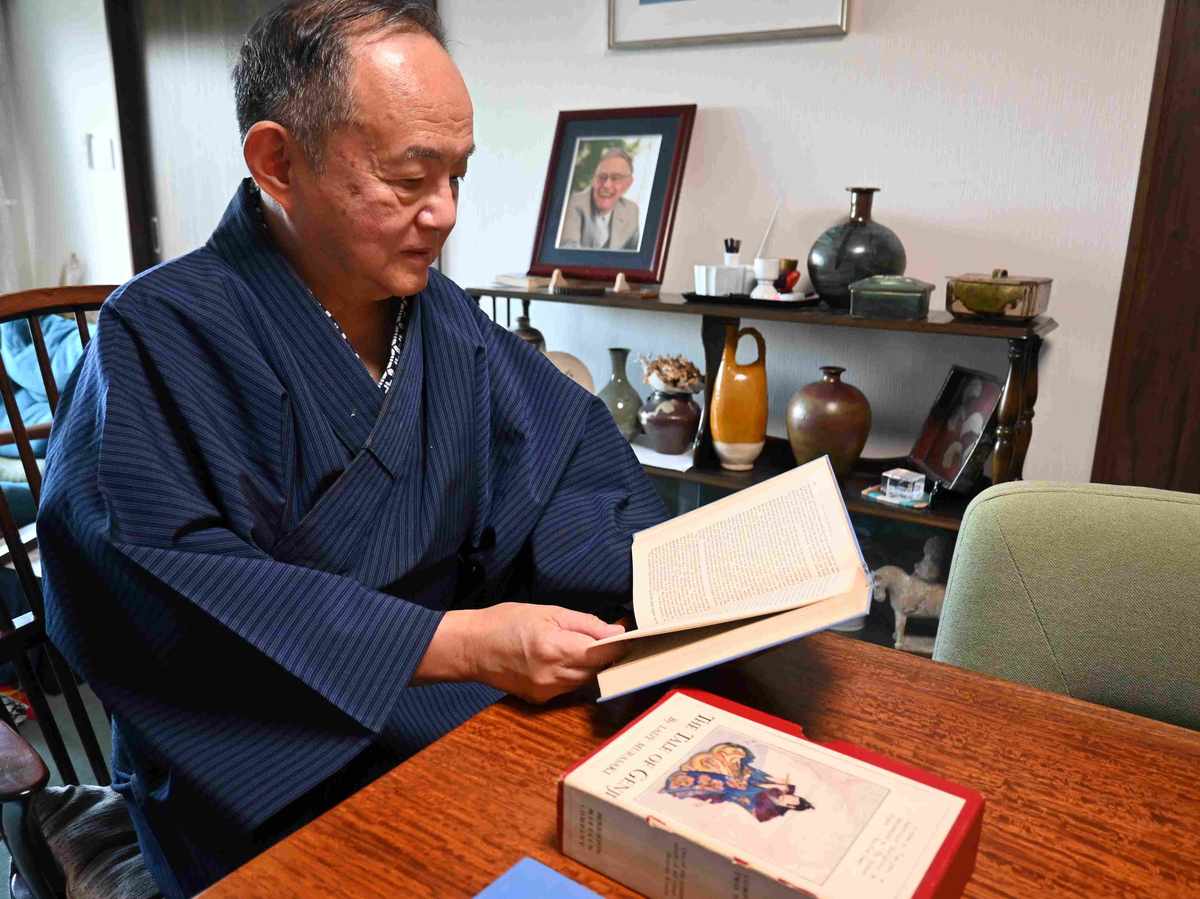
Seiki Keene reads the same copy of The Tale of Genji that Donald Keene read as a college student, at his home in Kita Ward, Tokyo, on July 10.
-
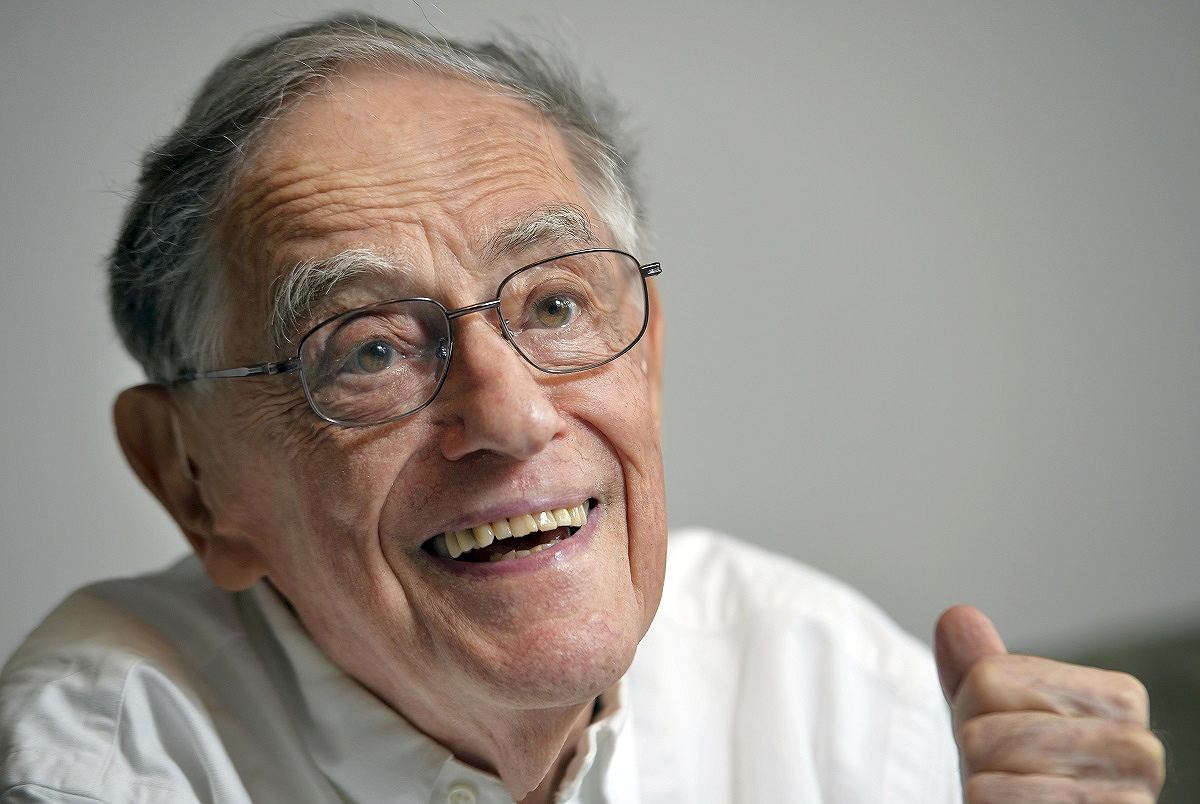
Donald Keene in September 2014 (Yomiuri Shimbun file photo)
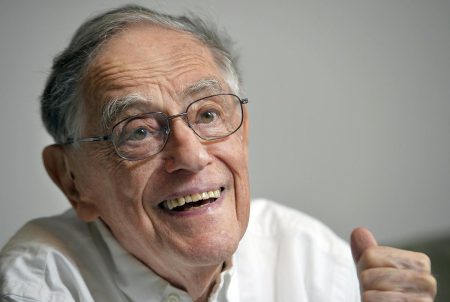
Keene is known for introducing Japanese literature to the world and for his friendships with famous writers such as Junichiro Tanizaki and Yukio Mishima.
Keene, who was born and raised in New York, encountered Japanese literature in 1940 while studying at Columbia University’s Faculty of Literature, when he picked up Arthur Waley’s translation of The Tale of Genji at a bookstore. At that time, World War II had already begun in Europe. Feeling depressed, Keene became familiar with the world of The Tale of Genji, which did not depict war, and found peace of mind.
In 1941, when Keene was a senior in college, war broke out between the United States and Japan. Keene sensed that “great calamity was about to befall me” (from his autobiography), but when he learned that the U.S. Navy had opened a Japanese language school to gather information on the enemy, he volunteered to enroll. For Keene, studying Japanese was not only his “favorite subject,” but also meant that he would not have to take up arms and kill people on the battlefield.
After 11 months of intensive Japanese language training, Keene was assigned to the U.S. Navy Language Service and stationed in Hawaii, where he translated various Japanese military documents collected from the battlefields. When he read the diaries of Japanese soldiers who had died in combat, he found some to be highly literary and was impressed, thinking, “This is truly a country of diary literature, dating back to the Heian period.”
Keene wanted to return these diaries to their family someday, so he kept them in a drawer, but his superior officer found them and discarded them, deciding they were unnecessary. According to Seiki, Keene regretted losing them for many years.
Reading The Tale of Genji
-

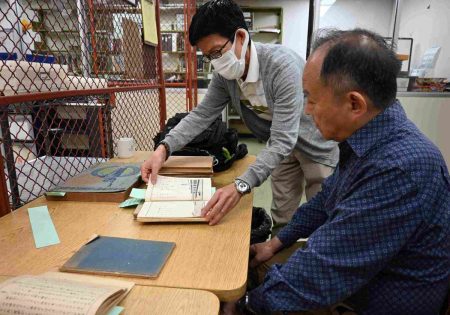
Seiki Keene, right, receives an explanation of materials from Mitsutaka Nakamura, Japanese Studies Librarian, at the University of Hawaii at Manoa Library, on June 4.
-
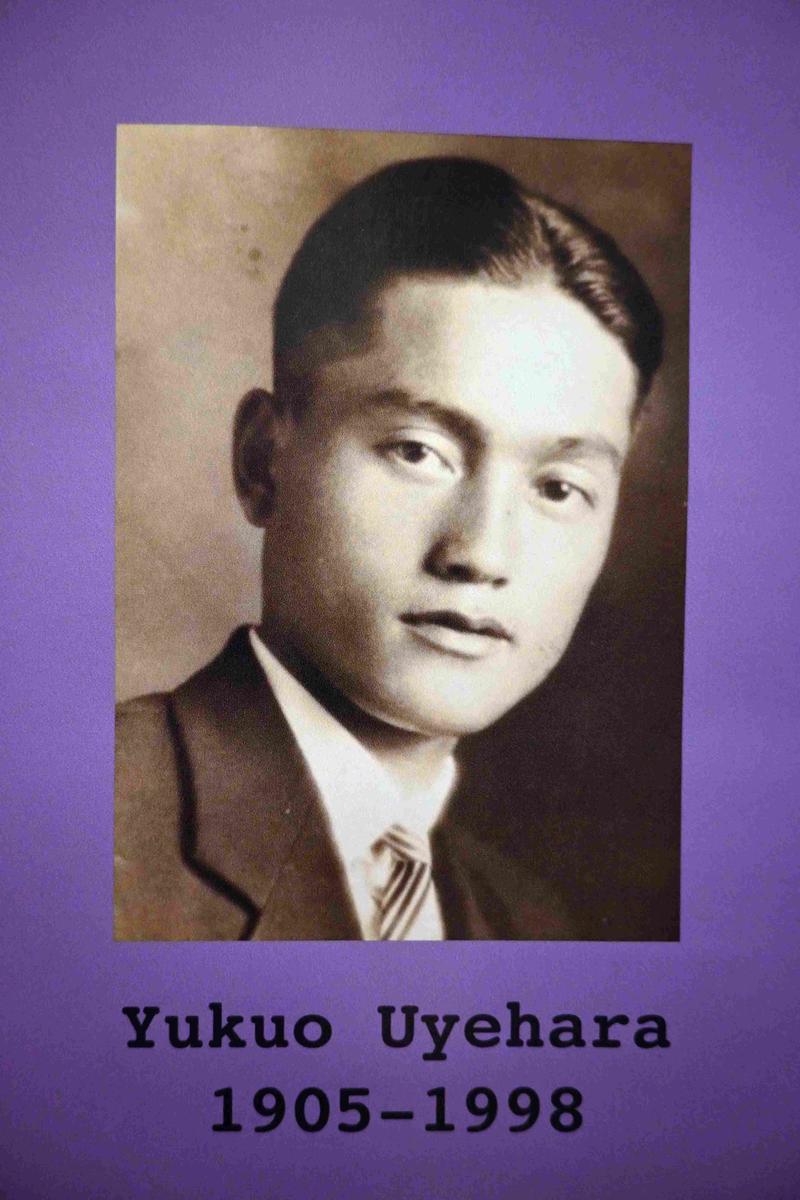
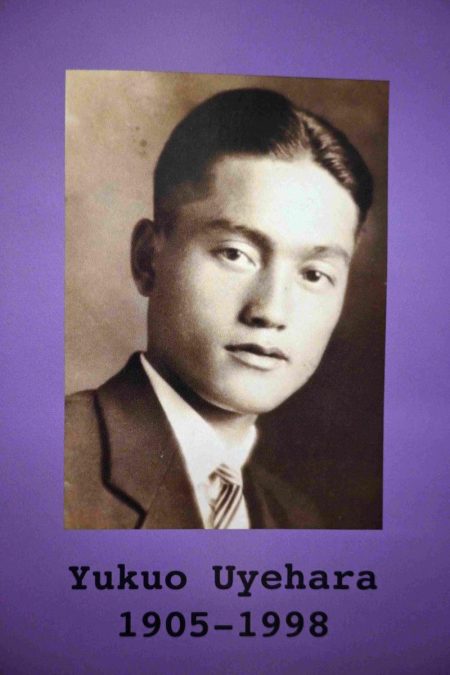
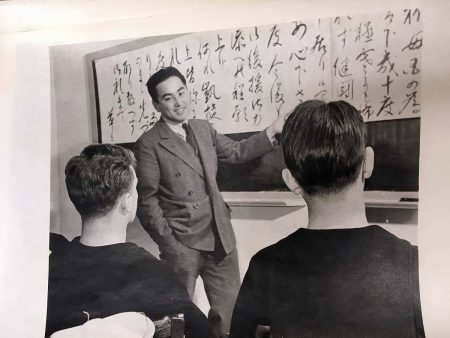
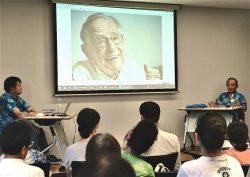
Professor Yukuo Uyehara of the University of Hawaii, who taught Japanese literature to Keene (from an exhibition at the University of Hawaii)
-
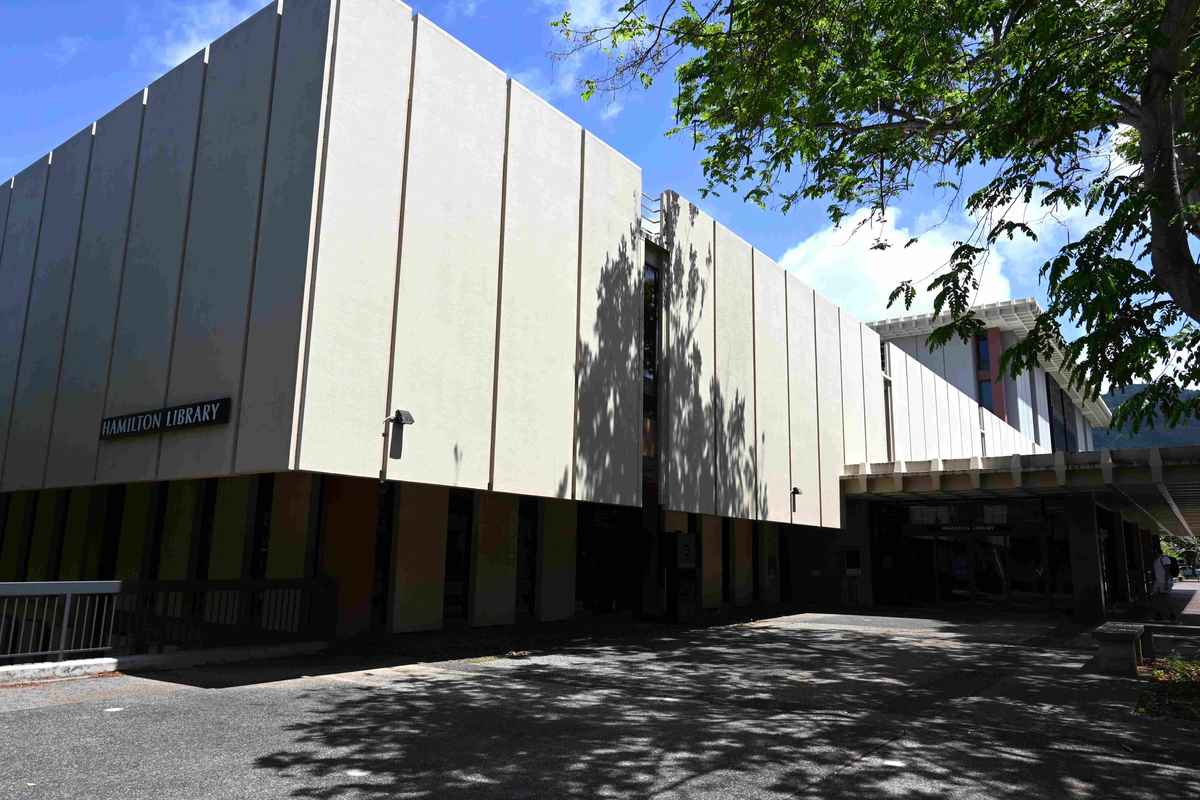
University of Hawaii at Manoa Library
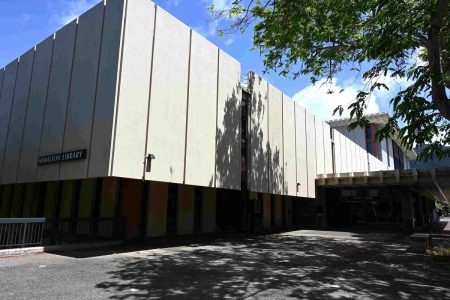
The University of Hawaii at Manoa is located north of Waikiki Beach. The spacious campus is lush with tropical trees and filled with birdsong.
During the war, Keene attended lectures on Japanese literature given by Yukuo Uyehara, a first-generation Japanese American who passed away in 1998, while serving in the military. He reread The Tale of Genji, which he had enjoyed as a student, and wrote an essay in Japanese about his impressions of Kikuchi Kan’s novel “Shohai.” Mitsu taka Nakamura, a Japan studies librarian at the University of Hawaii Library who is familiar with Keene, said, “I think Professor Uyehara was also impressed by the enthusiasm of the young American soldier.”
Encounter with a kamikaze plane
-
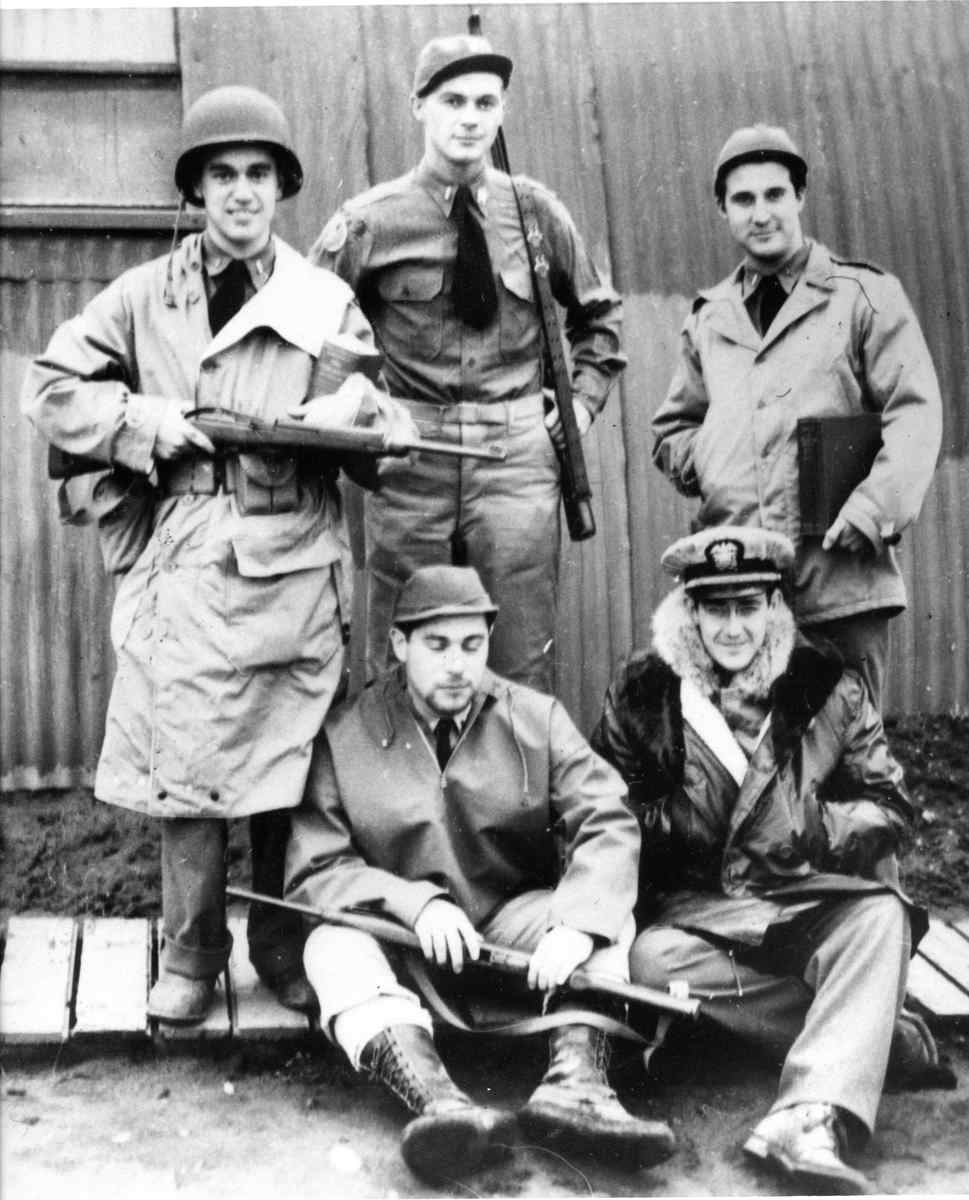
Courtesy of the Donald Keene Memorial Foundation
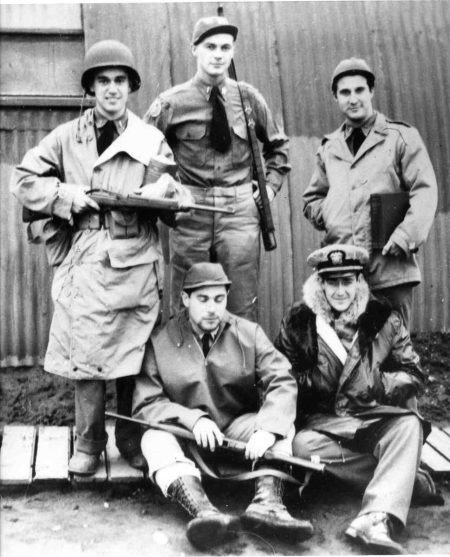
August 1943, on Adak Island. Donald Keene, left, holds a carbine rifle in his right hand and a Japanese-English dictionary published by Kenkyusha in his left hand. After the war, when Keene was asked “Did you actually fire the gun?” at a lecture in Japan, he replied, “It was just acting,” making the audience laugh. -
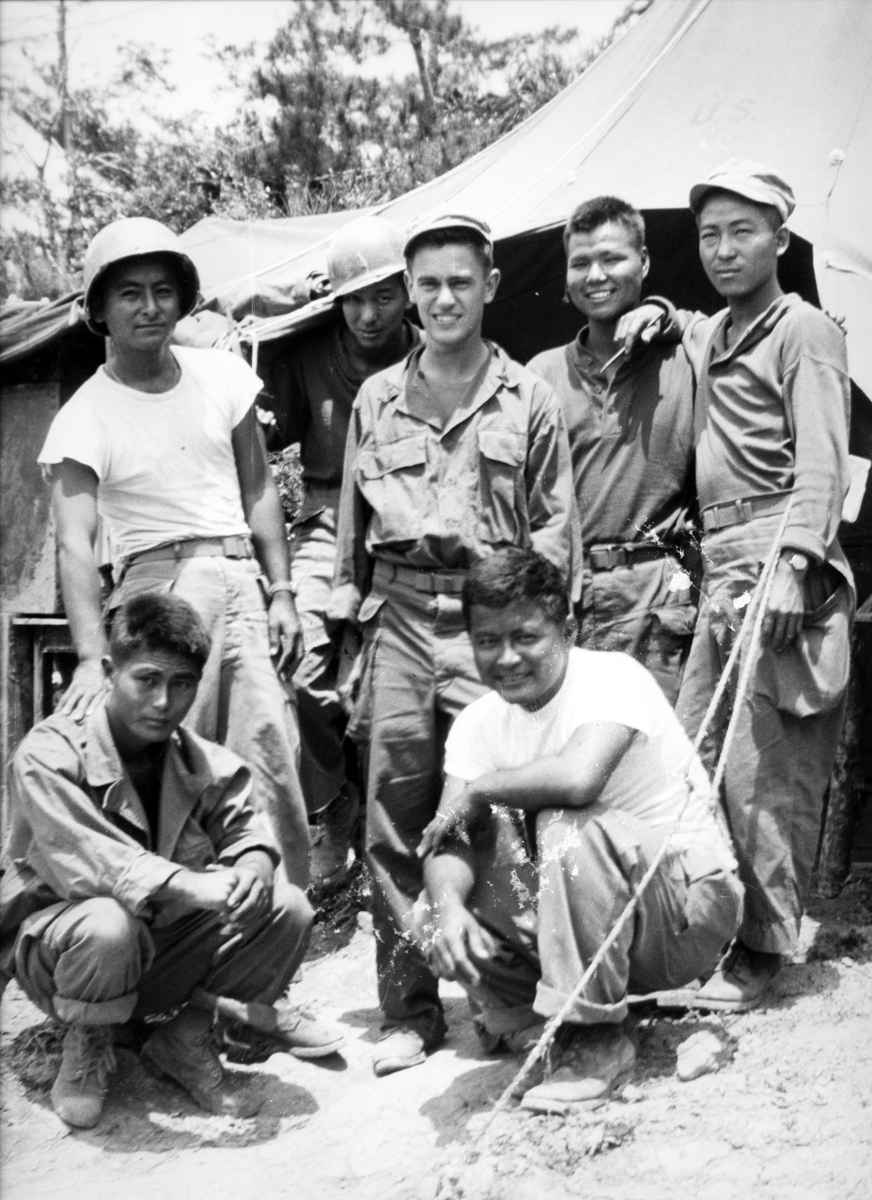
Courtesy of the Donald Keene Memorial Foundation
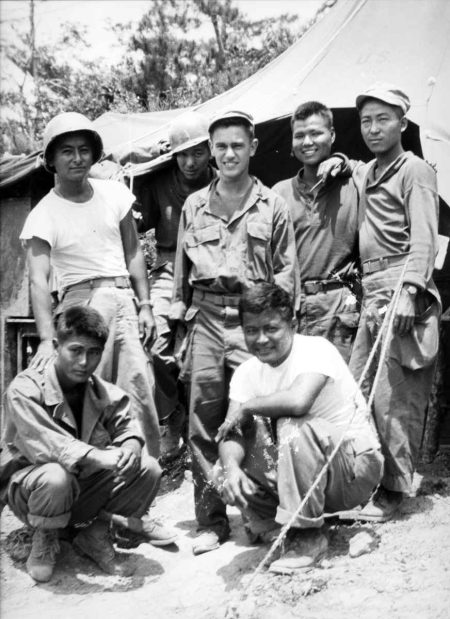
Donald Keene with Nisei language soldiers in Okinawa in 1945, second from left in the back row. -
Courtesy of the Donald Keene Memorial Foundation
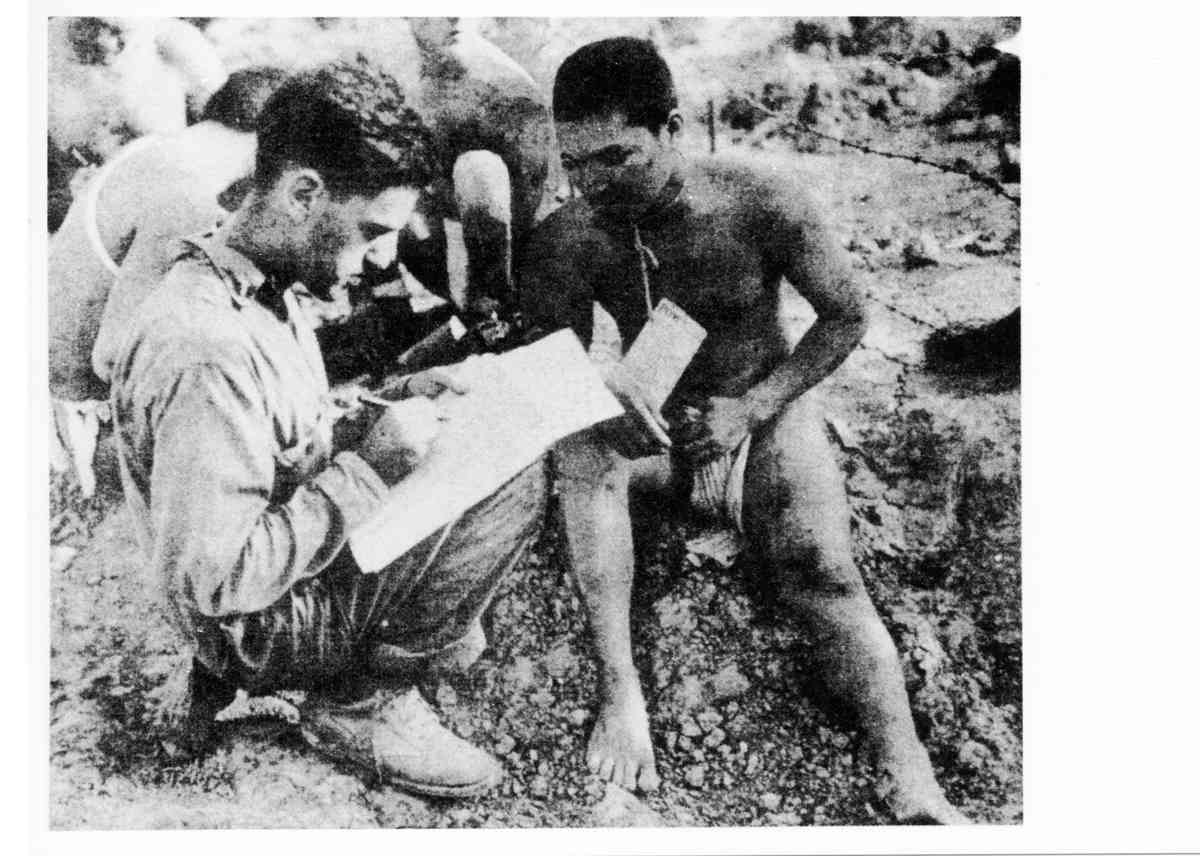
Donald Keene, left, interrogates Japanese prisoners of war after landing in Okinawa in 1945. -
Courtesy of the Donald Keene Memorial Foundation
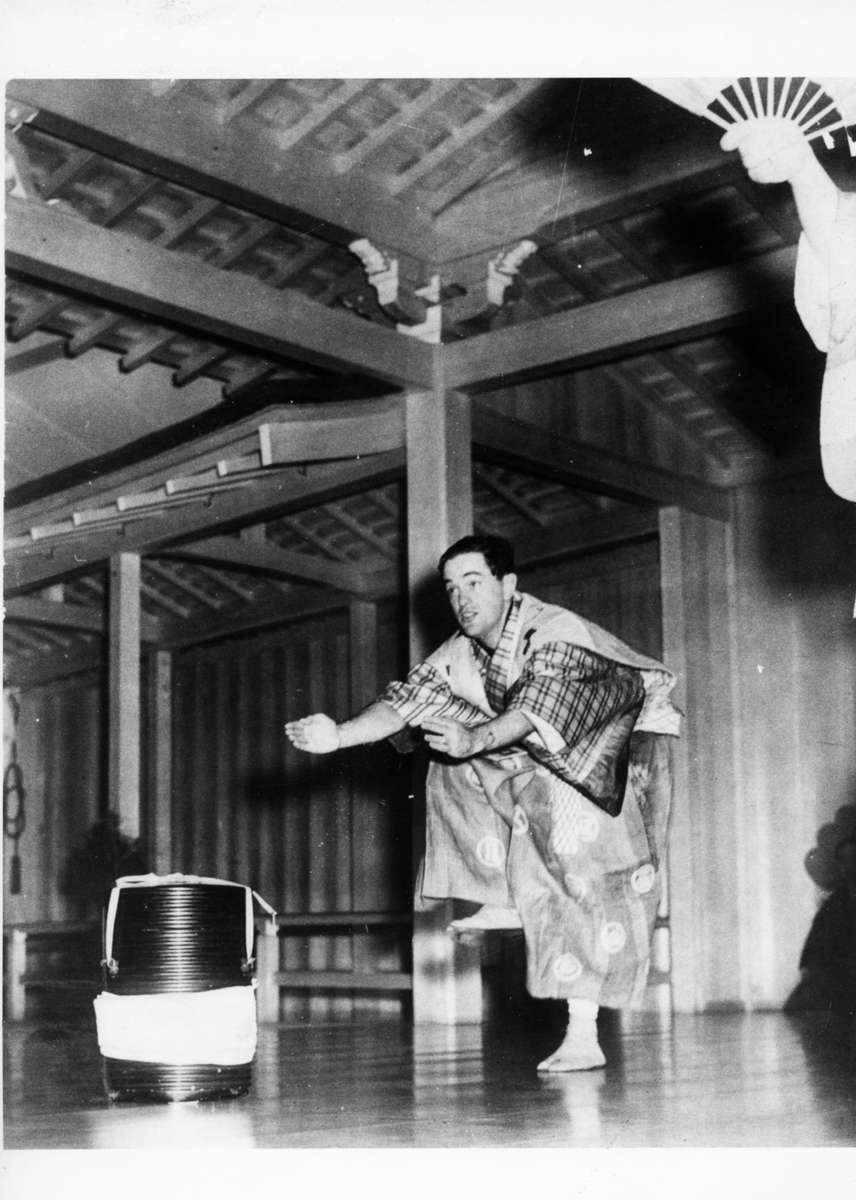
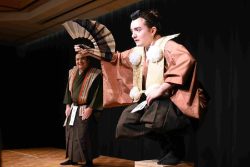
Donald Keene performs the role of Taro in the kyogen play Chidori on September 13, 1956 (photo by Yukichi Watabe)
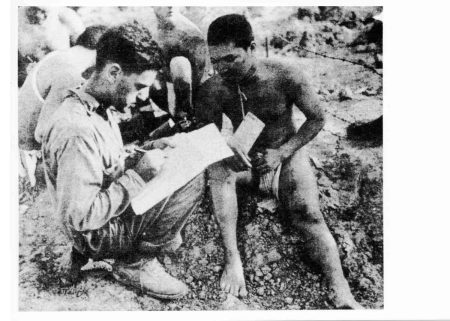
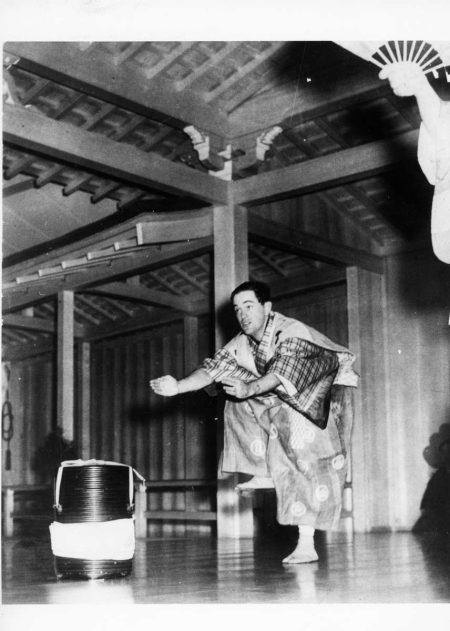
However, Keene did not spend his wartime days in peace. He also experienced the harsh realities of battle as a soldier. In March 1945, toward the end of the war, Keene was on a transport ship bound for Okinawa.
Just as the ship was about to land, Japanese kamikaze planes appeared in the sky. Keene, who was on the deck, was so nervous that he couldn’t move and couldn’t think of anything. Just as he felt that he had made eye contact with the pilot of a kamikaze plane approaching him, the plane crashed into the ship’s mast and fell into the sea.
In May 1943, he participated in the Battle of Attu Island in the Aleutian Islands, where the Japanese Imperial Army was completely wiped out. It was here that he saw a dead human body for the first time.
Many soldiers in the Japanese Imperial Army refused to be taken prisoner and chose to kill themselves. Keene wondered why Japanese soldiers did not throw their last hand grenades at American soldiers, but instead used them to kill themselves. Recalling that time, Keene told Seiki, “I couldn’t help but feel pity for them.”
After the war, Keene became an outspoken opponent of war. He even avoided watching war documentaries on television because they brought back memories that kept him awake at night.
When Seiki wore black clothes, Keene told him, “I don’t like black because it reminds me of totalitarianism and fascism.” Since then, Seiki stopped wearing black clothes.
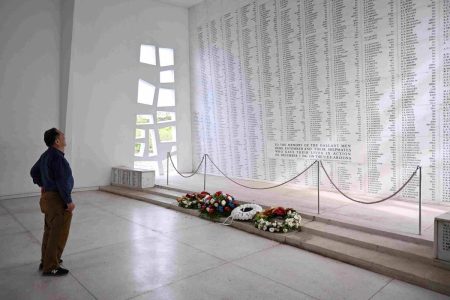





Most Read
Popular articles in the past 24 hours
-

Voters Using AI to Choose Candidates in Japan's Upcoming General ...
-
Japan's Snow-Clad Beauty: Camellia Flowers Seen in Winter Bloom a...
-

Monkey Strikes Junior High School Girl from Behind in Japan's Yam...
-
Genichiro Inokuma's Mural in Ueno Station That Gave Hope in Postw...
-
Senior Japanese Citizens Return to University to Gain Knowledge, ...
-

Foreign and Security Policy: Political Parties Must Discuss How T...
-
Heavy Snow Linked to 30 Deaths across Japan since Late Jan.; JMA ...
-
Tokyo Police Arrest Head of Resignation Assistance Firm
Popular articles in the past week
-

Japan Institute to Use Domestic Commercial Optical Lattice Clock ...
-
Australian Woman Dies After Mishap on Ski Lift in Nagano Prefectu...
-
Foreign Snowboarder in Serious Condition After Hanging in Midair ...
-
Chinese Embassy in Japan Reiterates Call for Chinese People to Re...
-
Narita Airport, Startup in Japan Demonstrate Machine to Compress ...
-

Toyota Motor Group Firm to Sell Clean Energy Greenhouses for Stra...
-
Sakie Yokota, Last Surviving Parent of a North Korea Abductee, Ur...
-
Beer Yeast Helps Save Labor, Water Use in Growing Rice; Govt Hope...
Popular articles in the past month
-
Univ. in Japan, Tokyo-Based Startup to Develop Satellite for Disa...
-
JAL, ANA Cancel Flights During 3-day Holiday Weekend due to Blizz...
-
China Confirmed to Be Operating Drilling Vessel Near Japan-China ...
-

China Eyes Rare Earth Foothold in Malaysia to Maintain Dominance,...
-
M6.2 Earthquake Hits Japan's Tottori, Shimane Prefectures; No Tsu...
-
Japan Institute to Use Domestic Commercial Optical Lattice Clock ...
-
Japan, Qatar Ministers Agree on Need for Stable Energy Supplies; ...
-

Japan, Italy to Boost LNG Cooperation; Aimed at Diversifying Japa...
Top Articles in JN Specialities


JN ACCESS RANKING
-
Univ. in Japan, Tokyo-Based Startup to Develop Satellite for Disaster Prevention Measures, Bears
-
JAL, ANA Cancel Flights During 3-day Holiday Weekend due to Blizzard
-
China Confirmed to Be Operating Drilling Vessel Near Japan-China Median Line
-
China Eyes Rare Earth Foothold in Malaysia to Maintain Dominance, Counter Japan, U.S.
-
Japan Institute to Use Domestic Commercial Optical Lattice Clock to Set Japan Standard Time