
Asthma, Bronchitis Patient Increase in Northern Noto Peninsula Likely Caused by Dust from Cleaning Rubble
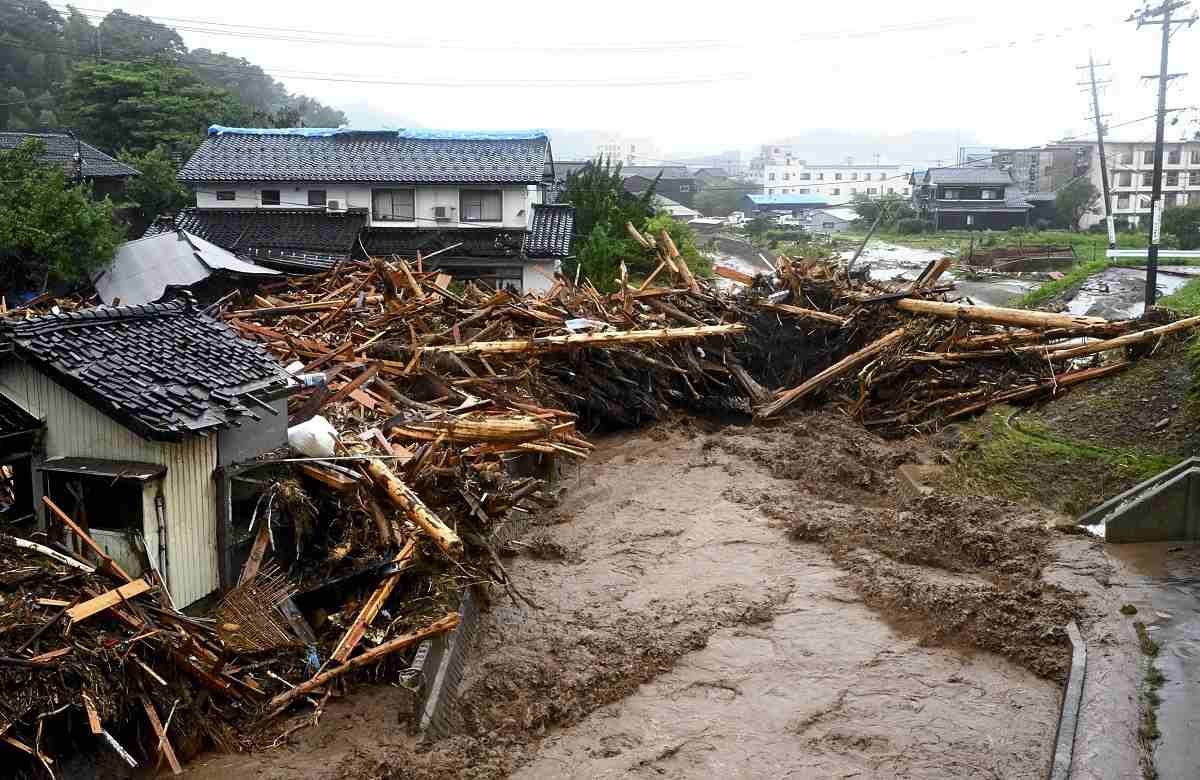
A residential area, covered with piles of rubble and driftwood from heavy rains, is seen in Wajima, Ishikawa Prefecture, on Sept. 22.
15:13 JST, December 21, 2024
KANAZAWA — The number of asthma and bronchitis patients has increased sharply in the northern Noto Peninsula area of Ishikawa Prefecture, which was severely damaged by the Noto Peninsula Earthquake in January and heavy rainfall in September.
Compared to pre-earthquake levels, the number of patients in some areas has increased 1.5 to 2.5 times, so medical experts are calling for caution, believing dust and dirt raised while rubble was being cleared may have contributed to the increase.
Taiichi Kirimoto, a 62-year-old representative of Wajima Kirimoto, which manufactures and sells wooden products and lacquerware in Wajima, was diagnosed with a relapse of asthma in mid-September.
After the earthquake on Jan. 1, he worked to clean up his workshop, and he has also been attending events across Japan since April in the hope of helping Wajima’s recovery. After that, his breathing became shallow, he had a feeling that he was not getting enough oxygen and he was experiencing feverishness, but he did not rest, saying, “This is not the time to go to the hospital.”
However, on the recommendation of a family member, he went to see a doctor who explained that his symptoms had worsened due to stress and fatigue caused by the earthquake.
“All I can do is wear a mask and be careful,” Kirimoto said.
At Anamizu General Hospital in the area, 144 patients were diagnosed with asthma from January to August, 1.7 times more than in the same period of the previous year. Acute bronchitis increased 2.5 times to 159 patients, and acute pneumonia increased 1.5 times to 194 patients.
Another hospital also saw a sharp increase in the number of patients with respiratory illnesses, and in some cases, patients whose conditional had deteriorated were transferred to a hospital in Kanazawa.
According to Takeshi Ishizaki, director of the northern Noto respiratory disease center at Anamizu General Hospital, who is in charge of medical examinations, one of the causes is believed to be the inhalation of rat feces and dust from construction materials. The fact that the victims had removed their masks during the summer, when microorganisms and bacteria are more active, is also believed to have contributed to the increase.
“Many people prioritize rebuilding their lives and do not see a doctor until their condition worsens,” said Ishizaki, who himself lives in temporary housing. “Even a cough or sore throat that lasts only a few days may indicate a respiratory disease.”
He urges people to take basic precautions such as wearing a mask, drinking plenty of water and breathing through the nose.




Most Read
Popular articles in the past 24 hours
-
Man Accused of Making Woman Drink 32 Shots of Tequila, Resulting ...
-

U.S. Launches Attacks on Iran: Avoid Escalation of Conflict by An...
-
Japan Police Told to Boost Security, Vigilance Around U.S., Israe...
-

Japan Shares and Yen Fall, Jgbs Rise as Iran Strikes Continue
-
Takaichi: Japan Striving to Ensure Safety of Japanese Nationals; ...
-
Japan Traditional Puppet Performance Held at Onsen Resort in Shiz...
-
Sawtooth Roof Factory Stands as Monument to Ashikaga Textile Hist...
-
Kyoto Animation President Hideaki Hatta Dies of Illness at 76; Co...
Popular articles in the past week
-
Milano Cortina 2026: Japanese Gold Medalist Figure Skater Miura S...
-
Tokyo Spends Big on Children, Wins Over Parents
-
Japan’s Miura, Kihara Announce Withdrawal from Figure Skating Wor...
-
Exhibition Featuring Yoshiharu Tsuge’s Manga World Underway in Ch...
-

Yokohama to Test Out Renewable-Powered Offshore Floating Data Cen...
-
BOJ Keeping Eye on Economy and Takaichi's ‘Proactive Fiscal Polic...
-
20 Trapped in Tokyo Skytree Lift, Rescued 5½ Hours Later
-
Tokyo Measles Patient Traveled to Fukuoka Aboard JAL Planes; Susp...
Popular articles in the past month
-

Producer Behind Pop Group XG Arrested for Cocaine Possession
-

Japan PM Takaichi’s Cabinet Resigns en Masse
-

Man Infected with Measles Reportedly Dined at Restaurant in Tokyo...
-

Israeli Ambassador to Japan Speaks about Japan’s Role in the Reco...
-

Videos Plagiarized, Reposted with False Subtitles Claiming ‘Ryuky...
-

Man Infected with Measles May Have Come in Contact with Many Peop...
-

Prudential Life Insurance Plans to Fully Compensate for Damages C...
-

Woman with Measles Visited Hospital in Tokyo Multiple Times Befor...
Top Articles in Society
-
Producer Behind Pop Group XG Arrested for Cocaine Possession
-
Man Infected with Measles Reportedly Dined at Restaurant in Tokyo Station
-
Man Infected with Measles May Have Come in Contact with Many People in Tokyo, Went to Store, Restaurant Around When Symptoms Emerged
-
Woman with Measles Visited Hospital in Tokyo Multiple Times Before Being Diagnosed with Disease
-

Bus Carrying 40 Passengers Catches Fire on Chuo Expressway; All Evacuate Safely
JN ACCESS RANKING
-
Producer Behind Pop Group XG Arrested for Cocaine Possession
-
Japan PM Takaichi’s Cabinet Resigns en Masse
-
Man Infected with Measles Reportedly Dined at Restaurant in Tokyo Station
-
Israeli Ambassador to Japan Speaks about Japan’s Role in the Reconstruction of Gaza
-
Videos Plagiarized, Reposted with False Subtitles Claiming ‘Ryukyu Belongs to China’; Anti-China False Information Also Posted in Japan