
16:47 JST, August 4, 2024
Cracks have begun to appear in the unity of the European Union over the bloc’s response to Russia’s ongoing aggression against Ukraine. Its 27 member states should firmly maintain the position that they will not tolerate Russia’s violations of international law.
Hungarian Prime Minister Viktor Orban stands out in the EU for his conciliatory stance toward Russia.
In July, Orban visited Russia and met with President Vladimir Putin. Noting that Hungary holds the presidency of the EU Council from July to the end of the year, he conveyed his intention to continue dialogue with Moscow.
Orban did not articulate the EU’s demand for the immediate withdrawal of Russian forces and respect for Ukraine’s territorial integrity. Given that, he cannot escape criticism that he has supported Russia’s position.
The main role of the country holding the EU presidency is to facilitate meetings of the EU Council, among other tasks, and that nation does not necessarily represent the EU externally. Without prior consultation with other EU member states and Ukraine, Orban visited Russia in his capacity as the leader of the country holding the presidency and communicated a policy different from that of the EU. This is clearly an arbitrary act based on his own judgment.
It appears inevitable that the EU took disciplinary action against Hungary by moving the August meeting of foreign and defense ministers from Budapest to Brussels, where the bloc’s headquarters is located.
Orban also visited China and met with Chinese President Xi Jinping. They agreed to develop EU-China relations with a focus on the economy.
Western countries have been increasingly critical of China for becoming a “decisive enabler” of the war against Ukraine by exporting to Russia parts and other items that can be used for military purposes. Orban’s behavior goes against this stance.
If the EU continues to respond in an inconsistent manner, it is likely to become even more difficult to put a brake on Russia and China, which have acted in defiance of international law.
Orban has touted the slogan “Make Europe Great Again,” emulating former U.S. President Donald Trump, to whom he is personally close. Orban opposes the EU’s support for Ukraine from the standpoint of prioritizing his own country.
Amid the prolonged war in Ukraine, aid fatigue has also spread among other EU member states. In Slovakia and the Netherlands, political parties calling for a focus on measures against rising domestic prices have won elections and come to power.
Even in France and Germany, which are the driving forces behind EU integration, xenophobic far-right parties gained more support than the ruling parties in the European Parliament elections in June. This should also be taken seriously.
To stave off division within the EU, it is imperative for member states to not only share values, such as freedom and democracy, but to also focus on tackling inflation and implementing measures on immigration.
(From The Yomiuri Shimbun, Aug. 4, 2024)


Most Read
Popular articles in the past 24 hours
-

Voters Using AI to Choose Candidates in Japan's Upcoming General ...
-

Japan's Snow-Clad Beauty: Camellia Flowers Seen in Winter Bloom a...
-
Monkey Strikes Junior High School Girl from Behind in Japan's Yam...
-
Genichiro Inokuma's Mural in Ueno Station That Gave Hope in Postw...
-
Senior Japanese Citizens Return to University to Gain Knowledge, ...
-
Heavy Snow Linked to 30 Deaths across Japan since Late Jan.; JMA ...
-

Foreign and Security Policy: Political Parties Must Discuss How T...
-
Tokyo Police Arrest Head of Resignation Assistance Firm
Popular articles in the past week
-

Japan Institute to Use Domestic Commercial Optical Lattice Clock ...
-
Australian Woman Dies After Mishap on Ski Lift in Nagano Prefectu...
-
Foreign Snowboarder in Serious Condition After Hanging in Midair ...
-
Chinese Embassy in Japan Reiterates Call for Chinese People to Re...
-
Narita Airport, Startup in Japan Demonstrate Machine to Compress ...
-

Toyota Motor Group Firm to Sell Clean Energy Greenhouses for Stra...
-
Sakie Yokota, Last Surviving Parent of a North Korea Abductee, Ur...
-

Beer Yeast Helps Save Labor, Water Use in Growing Rice; Govt Hope...
Popular articles in the past month
-
Univ. in Japan, Tokyo-Based Startup to Develop Satellite for Disa...
-
JAL, ANA Cancel Flights During 3-day Holiday Weekend due to Blizz...
-
China Confirmed to Be Operating Drilling Vessel Near Japan-China ...
-
China Eyes Rare Earth Foothold in Malaysia to Maintain Dominance,...
-
M6.2 Earthquake Hits Japan's Tottori, Shimane Prefectures; No Tsu...
-
Japan Institute to Use Domestic Commercial Optical Lattice Clock ...
-
Japan, Qatar Ministers Agree on Need for Stable Energy Supplies; ...
-
Japan, Italy to Boost LNG Cooperation; Aimed at Diversifying Japa...
Top Articles in Editorial & Columns
-
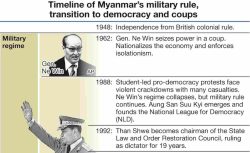
Myanmar Will Continue Under Military Rule Even After Election, Ex-Ambassador Maruyama Says in Exclusive Interview
-
40 Million Foreign Visitors to Japan: Urgent Measures Should Be Implemented to Tackle Overtourism
-

Expansion of New NISA: Devise Ways to Build up Household Assets
-
China Criticizes Sanae Takaichi, but China Itself Is to Blame for Worsening Relations with Japan
-
Withdrawal from International Organizations: U.S. Makes High-handed Move that Undermines Multilateral Cooperation
JN ACCESS RANKING
-
Univ. in Japan, Tokyo-Based Startup to Develop Satellite for Disaster Prevention Measures, Bears
-
JAL, ANA Cancel Flights During 3-day Holiday Weekend due to Blizzard
-
China Confirmed to Be Operating Drilling Vessel Near Japan-China Median Line
-
China Eyes Rare Earth Foothold in Malaysia to Maintain Dominance, Counter Japan, U.S.
-
Japan Institute to Use Domestic Commercial Optical Lattice Clock to Set Japan Standard Time