
Japan FM Yoko Kamikawa: AI Guidelines to be Shared Beyond G7; Calls to Protect Intellectual Property, Rediscover Print Culture
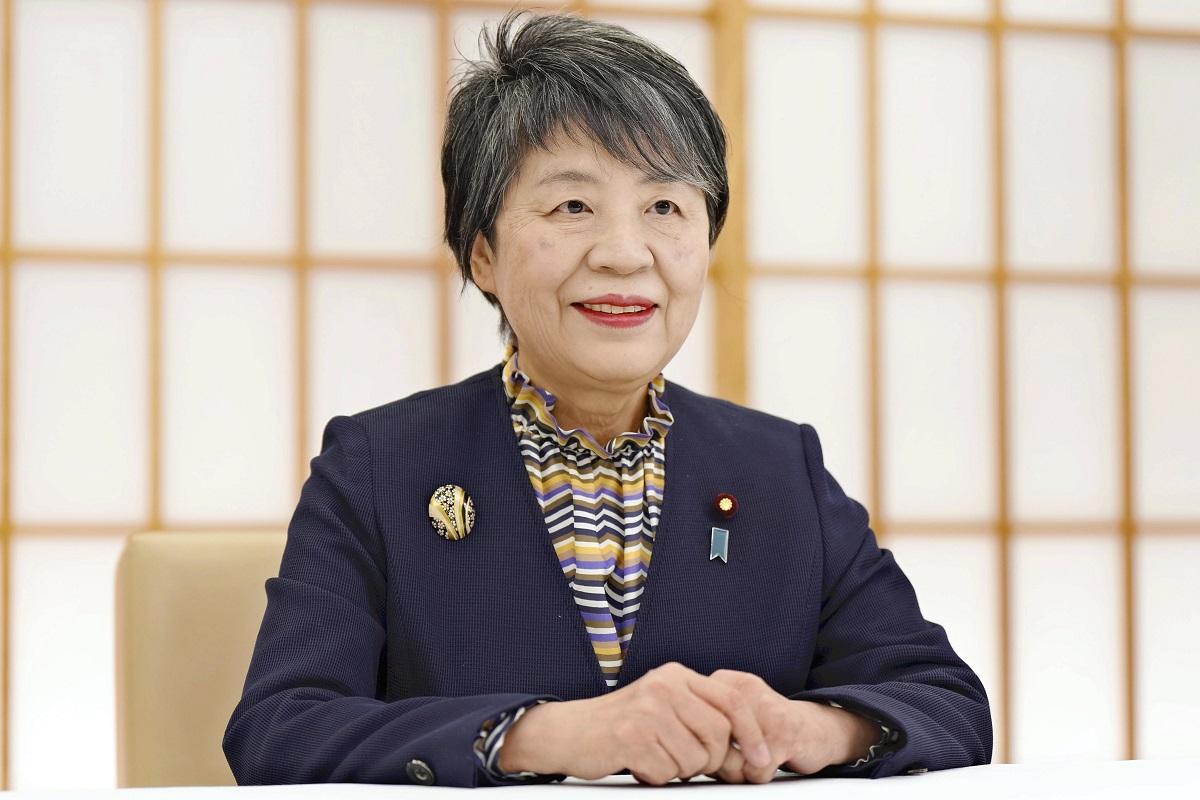
Foreign Minister Yoko Kamikawa speaks during her interview with The Yomiuri Shimbun on Feb. 9.
15:35 JST, February 15, 2024
The government wants to share with more nations the results of the Hiroshima AI Process initiated by Japan last year to address the challenges posed by generative artificial intelligence, Foreign Minister Yoko Kamikawa has told The Yomiuri Shimbun.
In last Friday’s exclusive interview, Kamikawa said that, as part of a cultural diplomacy push, she intends to actively engage in efforts that protect the rights of creators. Given the rapid development of generative AI, Kamikawa reiterated a plan to expand the results of the Hiroshima AI Process to nations outside the Group of Seven major economies, and to encourage international cooperation on this issue.
The G7 agreed in December a set of international guidelines based on the Hiroshima AI Process that cover those connected to generative AI from developers to users. Kamikawa accepted that creators had raised strong concerns about issues including violations of their intellectual property rights.
“These international guidelines specifically mention the protection of an individual’s data and intellectual property,” Kamikawa said during the interview, which was conducted at the Foreign Ministry. “They also contribute to protecting creators’ rights.”
Kamikawa added that she was determined to convey information about the thinking behind the Hiroshima AI Process to other nations in a bid to gain their support for this initiative. “I’ll work on efforts to bring AI that is safe, secure and reliable to fruition,” Kamikawa said.
The minister also recognized that generative AI had good and bad points. “While it makes international information transmission easy, it also heightens the risk of information manipulation, such as by spreading disinformation,” she said.
Observers have pointed out that generative AI has a range of risks, such as the creation of sophisticated voice recordings and text that could be used to commit fraud as well as manipulating public opinion by flooding the internet with disinformation.
“People must broaden the range of their sources of information, and rediscover the utility of print culture, such as newspapers and books, so they don’t get misled by disinformation and can exercise good judgment,” Kamikawa said.
During the interview, Kamikawa revealed that when she travels abroad, she visits bookstores if time allows and buys several books. She explained that this also was a useful way to boost cultural diplomacy.
“A nation’s history and culture, and the interests of its people, are condensed in its bookstores. These shops also help me learn how Japanese culture is being accepted in other countries,” Kamikawa said.





Most Read
Popular articles in the past 24 hours
-

Japan's Snow-Clad Beauty: Camellia Flowers Seen in Winter Bloom a...
-
Monkey Strikes Junior High School Girl from Behind in Japan's Yam...
-

Foreign and Security Policy: Political Parties Must Discuss How T...
-
Senior Japanese Citizens Return to University to Gain Knowledge, ...
-
Genichiro Inokuma's Mural in Ueno Station That Gave Hope in Postw...
-
Heavy Snow Linked to 30 Deaths across Japan since Late Jan.; JMA ...
-
Tokyo Police Arrest Head of Resignation Assistance Firm
-

Japan’s Nikkei Stock Average Jumps near 4%, Closes at Record High...
Popular articles in the past week
-

Japan Institute to Use Domestic Commercial Optical Lattice Clock ...
-
Australian Woman Dies After Mishap on Ski Lift in Nagano Prefectu...
-
Foreign Snowboarder in Serious Condition After Hanging in Midair ...
-
Chinese Embassy in Japan Reiterates Call for Chinese People to Re...
-
Narita Airport, Startup in Japan Demonstrate Machine to Compress ...
-

Toyota Motor Group Firm to Sell Clean Energy Greenhouses for Stra...
-
Sakie Yokota, Last Surviving Parent of a North Korea Abductee, Ur...
-

Beer Yeast Helps Save Labor, Water Use in Growing Rice; Govt Hope...
Popular articles in the past month
-
Univ. in Japan, Tokyo-Based Startup to Develop Satellite for Disa...
-
JAL, ANA Cancel Flights During 3-day Holiday Weekend due to Blizz...
-
China Confirmed to Be Operating Drilling Vessel Near Japan-China ...
-

China Eyes Rare Earth Foothold in Malaysia to Maintain Dominance,...
-
Japan Institute to Use Domestic Commercial Optical Lattice Clock ...
-
M6.2 Earthquake Hits Japan's Tottori, Shimane Prefectures; No Tsu...
-
Japan, Qatar Ministers Agree on Need for Stable Energy Supplies; ...
-

Japan, Italy to Boost LNG Cooperation; Aimed at Diversifying Japa...
Top Articles in Politics
-

Japan Seeks to Enhance Defense Capabilities in Pacific as 3 National Security Documents to Be Revised
-
Japan Tourism Agency Calls for Strengthening Measures Against Overtourism
-
Japan’s Prime Minister: 2-Year Tax Cut on Food Possible Without Issuing Bonds
-
Japan-South Korea Leaders Meeting Focuses on Rare Earth Supply Chains, Cooperation Toward Regional Stability
-

Japanese Government Plans New License System Specific to VTOL Drones; Hopes to Encourage Proliferation through Relaxed Operating Requirements
JN ACCESS RANKING
-
Univ. in Japan, Tokyo-Based Startup to Develop Satellite for Disaster Prevention Measures, Bears
-
JAL, ANA Cancel Flights During 3-day Holiday Weekend due to Blizzard
-
China Confirmed to Be Operating Drilling Vessel Near Japan-China Median Line
-
China Eyes Rare Earth Foothold in Malaysia to Maintain Dominance, Counter Japan, U.S.
-
Japan Institute to Use Domestic Commercial Optical Lattice Clock to Set Japan Standard Time