
Yomiuri Survey: 935 Care Facility Residents Evacuated After Noto Peninsula Earthquake, 150 Have Died Without Returning
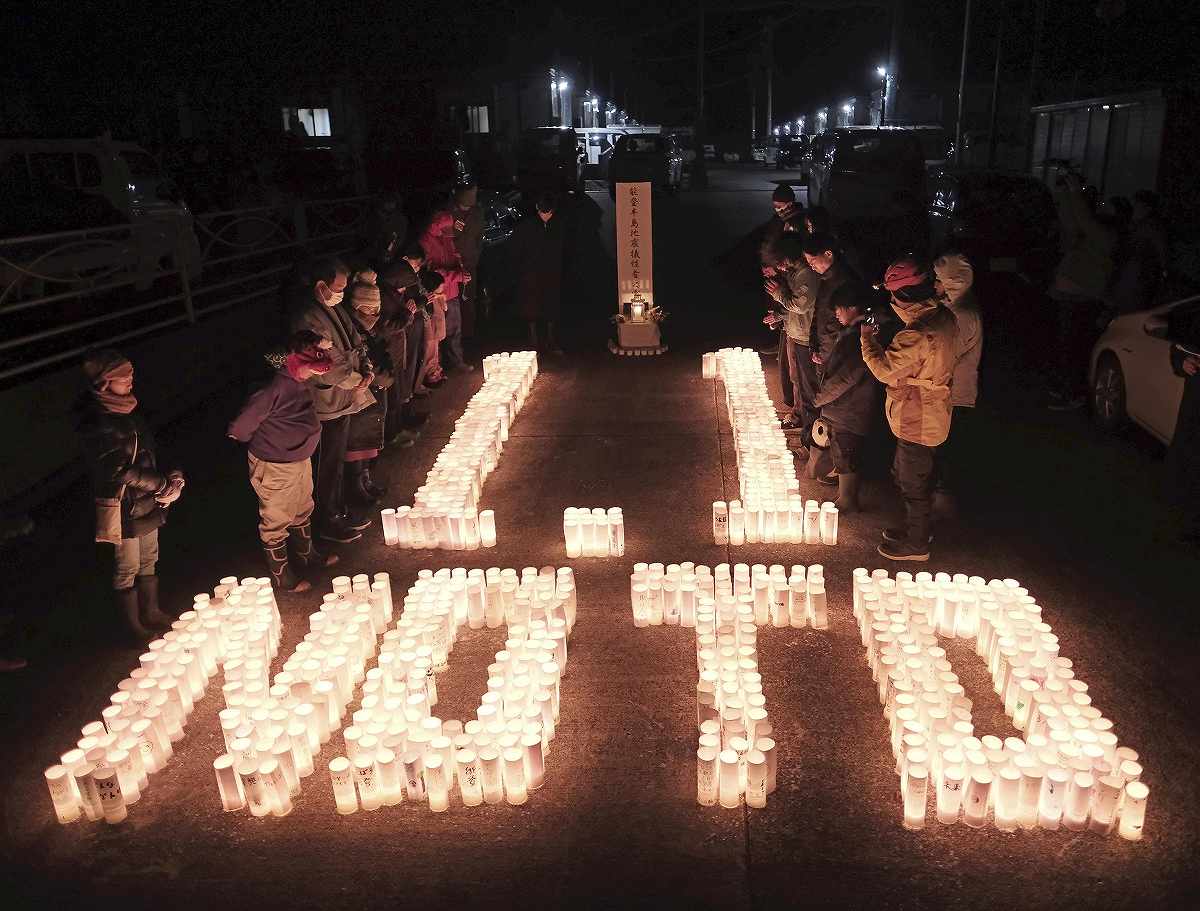
Residents pray for the victims of the Noto Peninsula Earthquake on Jan. 1, 2025, marking the disaster’s first anniversary.
16:12 JST, December 28, 2025
A total of 935 residents at 29 care facilities, including special nursing homes for the elderly, affected by a massive quake that hit the Noto Peninsula in Ishikawa Prefecture on New Year’s Day last year, were evacuated to other locations inside and outside of the prefecture, a Yomiuri Shimbun survey found.
Many of the facilities cited reasons such as hygiene deterioration due to water supply cutoff and power outages, as well as a lack of workers. Some residents of the facilities were taken as far away as Yamagata and Ibaraki prefectures.
Among those who were evacuated, 150 people have died without returning from their place of refuge, though potential links between evacuation and their deaths remain unknown.
The survey was conducted from November to December on 88 facilities in six cities and towns in the Noto region. Of those, 74 facilities, or 84%, responded. Twenty-nine facilities, accounting for about 40% of respondents, answered that residents had been evacuated following the disaster.
As for the timing of evacuations, 137 people were relocated to facilities inside and outside of the prefecture by the fifth day after the earthquake, when demand for emergency medical care for the facility residents had increased in the area. Between six and 18 days after the quake, 554 people were evacuated, with facilities making repeated requests for evacuation transportation.
The survey also found that 369 people managed to return to their original facilities after a certain period of evacuation. This figure accounts for less than 40% of the total number of evacuees. On the other hand, 243 people have permanently moved into facilities such as hospitals at their evacuation site. This includes wheelchair users, those with dementia and people who are bedridden.
Facilities that opted to evacuate residents said they had to do so because “they were unable to use toilets and baths due to water supply cutoff, leaving them incapable of maintaining appropriate hygiene levels” and “facility operations were limited because facility workers were also affected by the disaster.”
One facility voiced regret, saying, “We don’t know whether it was really for the best to evacuate all the residents.”
“Facilities must have made difficult decisions in an effort to protect the lives of their residents,” said Prof. Toshifumi Suzuki of the University of Shizuoka, an expert on disaster welfare. He went on to say that, in an emergency, facilities tend to make the choice between just two options — total evacuation or keeping all residents at the facility.
“Considering such issues as individual residents’ physical condition and preexisting illnesses, it is necessary [for facility operators] to plan out ‘evacuation triage’ [with set priorities],” he said.


Related Tags


Most Read
Popular articles in the past 24 hours
-

Japanese Shipping Giants Halt Strait of Hormuz Transit as Iran Co...
-

Improvement of Japanese Language Schools Lags Rise in Foreigners
-

U.S. Launches Attacks on Iran: Avoid Escalation of Conflict by An...
-
Rental Lab Space in Tokyo Area More Than Doubles Since 2010, Offe...
-
Parents of Japanese Teen Shot in U.S. Strive for Gun Control
-
Sawtooth Roof Factory Stands as Monument to Ashikaga Textile Hist...
-

Disinformation Spreads About Team Mirai, Ballot Readers; Online P...
-

Bank of Japan Deputy Governor Says Rate Hikes Likely to Continue
Popular articles in the past week
-

Nepal Bus Crash Kills 19 People, Injures 25 Including One Japanes...
-
Milano Cortina 2026: Japanese Gold Medalist Figure Skater Miura S...
-
Tokyo Spends Big on Children, Wins Over Parents
-

McDonald's Japan Raises Prices; Big Mac to Cost ¥500, Double Chee...
-

‘Dry Bonsai’ Gives New Life to Withered Trees, Allows Free Artist...
-

Japan’s Miura, Kihara Announce Withdrawal from Figure Skating Wor...
-

Exhibition Featuring Yoshiharu Tsuge’s Manga World Underway in Ch...
-

Yokohama to Test Out Renewable-Powered Offshore Floating Data Cen...
Popular articles in the past month
-

Producer Behind Pop Group XG Arrested for Cocaine Possession
-

Japan PM Takaichi’s Cabinet Resigns en Masse
-

Man Infected with Measles Reportedly Dined at Restaurant in Tokyo...
-

Israeli Ambassador to Japan Speaks about Japan’s Role in the Reco...
-

Videos Plagiarized, Reposted with False Subtitles Claiming ‘Ryuky...
-

Man Infected with Measles May Have Come in Contact with Many Peop...
-

Prudential Life Insurance Plans to Fully Compensate for Damages C...
-

Woman with Measles Visited Hospital in Tokyo Multiple Times Befor...
Top Articles in Society
-
Producer Behind Pop Group XG Arrested for Cocaine Possession
-
Man Infected with Measles Reportedly Dined at Restaurant in Tokyo Station
-
Man Infected with Measles May Have Come in Contact with Many People in Tokyo, Went to Store, Restaurant Around When Symptoms Emerged
-
Woman with Measles Visited Hospital in Tokyo Multiple Times Before Being Diagnosed with Disease
-

Bus Carrying 40 Passengers Catches Fire on Chuo Expressway; All Evacuate Safely
JN ACCESS RANKING
-
Producer Behind Pop Group XG Arrested for Cocaine Possession
-
Japan PM Takaichi’s Cabinet Resigns en Masse
-
Man Infected with Measles Reportedly Dined at Restaurant in Tokyo Station
-
Israeli Ambassador to Japan Speaks about Japan’s Role in the Reconstruction of Gaza
-
Videos Plagiarized, Reposted with False Subtitles Claiming ‘Ryukyu Belongs to China’; Anti-China False Information Also Posted in Japan