
Wajima Lacquerware Meets with Warm Reception at Milan Design Week, as Officials Plan to Grow Overseas Sales of Craft
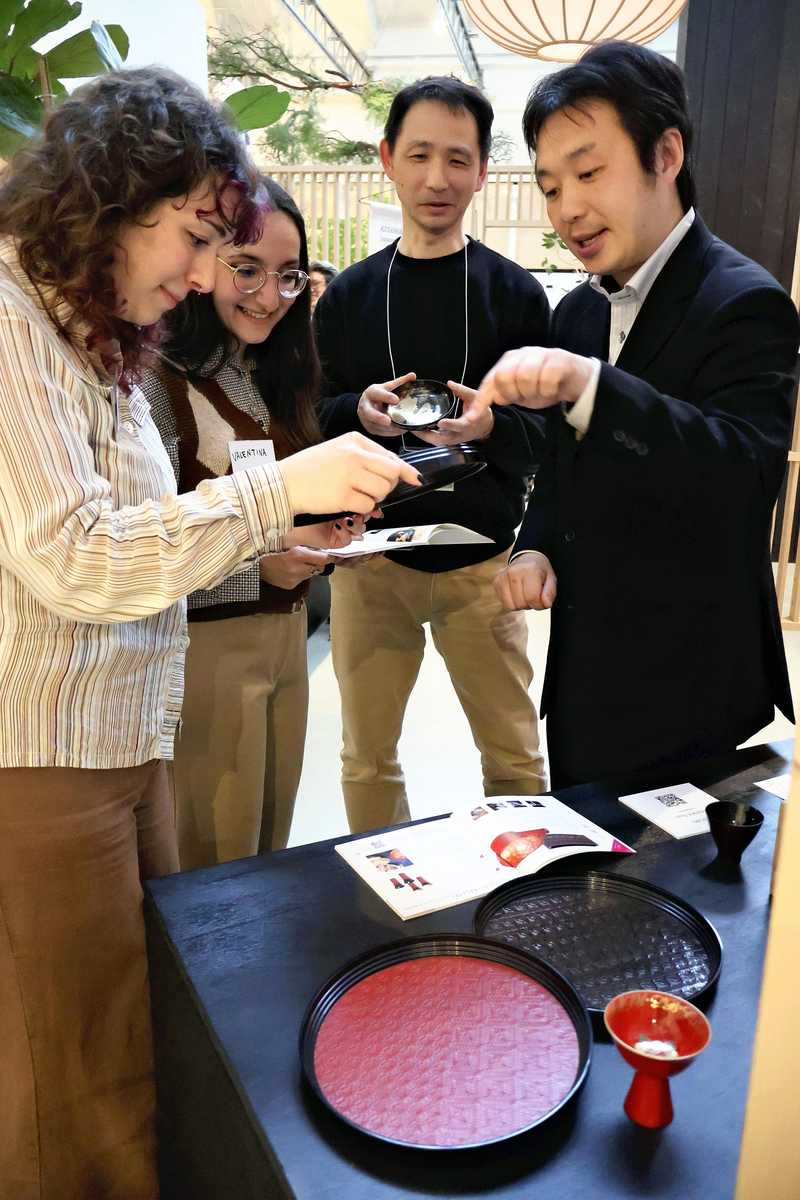
Representatives from Wajima, Ishikawa Prefecture, explain lacquerware pieces at Milan Design Week in Milan on April 10.
14:02 JST, May 21, 2025
Officials from Wajima, Ishikawa Prefecture, paid a visit in April to Milan Design Week, where they hope to start exhibiting Wajima lacquerware from next year onward. They were encouraged by the potential for expanded international sales of the craft, which was hard hit by the Noto Peninsula Earthquake.
The focus of the event is the international Salone del Mobile.Milano (Milan Furniture Fair), which attracts about 300,000 visitors and involves more than 2,000 companies and designers. A wide array of designs and art are displayed at the fair.
Milan Design Week is a key marketplace that draws buyers and retailers from around the world. Participating in these types of exhibitions can lead to significant international growth, as was experienced by Saga Prefecture’s Arita porcelain.
Officials from the Wajima municipal government and the Wajima Urushi Ware Cooperative Society stopped by venues displaying traditional crafts from Akita and Fukui prefectures. They were also seen explaining the more than 120-step production process for Wajima lacquerware and the techniques for decorating pieces with gold powder, holding up trays and bowls brought from Japan.
A Swiss student praised the gloss and colors as beautiful and artistic, and said she wanted to see more examples of the craft.
“Even abroad, people can understand the high quality and appeal of Wajima lacquerware,” reflected Hidekuni Hosokawa, a senior official from the Wajima municipal government’s global promotion office for lacquerware. “We want to sell around the world.”
“We gained valuable insight for developing sales channels,” said Iwane Matsumoto, of the Wajima Urushi Ware Cooperative Society. “It is crucial that we convey the unique characteristics of Wajima lacquerware in an easily understandable manner to an international market.”
Wajima lacquerware, which has been described as “durable and elegant,” depends on the advanced techniques of its craftspeople. However, the number of artisans fell from nearly 3,000 in the early 1990s to around 1,000 before the COVID-19 pandemic, a decline attributed to sluggish sales following the collapse of Japan’s bubble economy.
Workshops took another hit in the Noto Peninsula Earthquake, and the Wajima lacquerware cooperative now estimates that there are only about 600 people still working in the craft.
Ishikawa Prefecture plans to open a training facility for young workers to ensure that the industry lives on. The committee overseeing the plan for the facility includes representatives from the government, industry, areas where lacquerware is produced, and The Yomiuri Shimbun. It has discussed developing sales channels overseas and pursuing creative rebuilding.




Most Read
Popular articles in the past 24 hours
-

Japanese Shipping Giants Halt Strait of Hormuz Transit as Iran Co...
-

U.S. Launches Attacks on Iran: Avoid Escalation of Conflict by An...
-
Sawtooth Roof Factory Stands as Monument to Ashikaga Textile Hist...
-
Parents of Japanese Teen Shot in U.S. Strive for Gun Control
-
Rental Lab Space in Tokyo Area More Than Doubles Since 2010, Offe...
-
Disinformation Spreads About Team Mirai, Ballot Readers; Online P...
-
Asahi Breweries to Stage Comeback with New Product in April; Comp...
-
Bank of Japan Deputy Governor Says Rate Hikes Likely to Continue
Popular articles in the past week
-

Nepal Bus Crash Kills 19 People, Injures 25 Including One Japanes...
-
Milano Cortina 2026: Japanese Gold Medalist Figure Skater Miura S...
-
Tokyo Spends Big on Children, Wins Over Parents
-

McDonald's Japan Raises Prices; Big Mac to Cost ¥500, Double Chee...
-
‘Dry Bonsai’ Gives New Life to Withered Trees, Allows Free Artist...
-
Japan’s Miura, Kihara Announce Withdrawal from Figure Skating Wor...
-
Exhibition Featuring Yoshiharu Tsuge’s Manga World Underway in Ch...
-

Yokohama to Test Out Renewable-Powered Offshore Floating Data Cen...
Popular articles in the past month
-

Producer Behind Pop Group XG Arrested for Cocaine Possession
-

Japan PM Takaichi’s Cabinet Resigns en Masse
-

Man Infected with Measles Reportedly Dined at Restaurant in Tokyo...
-

Israeli Ambassador to Japan Speaks about Japan’s Role in the Reco...
-

Videos Plagiarized, Reposted with False Subtitles Claiming ‘Ryuky...
-

Man Infected with Measles May Have Come in Contact with Many Peop...
-

Prudential Life Insurance Plans to Fully Compensate for Damages C...
-

Woman with Measles Visited Hospital in Tokyo Multiple Times Befor...
Top Articles in Society
-
Producer Behind Pop Group XG Arrested for Cocaine Possession
-
Man Infected with Measles Reportedly Dined at Restaurant in Tokyo Station
-
Man Infected with Measles May Have Come in Contact with Many People in Tokyo, Went to Store, Restaurant Around When Symptoms Emerged
-
Woman with Measles Visited Hospital in Tokyo Multiple Times Before Being Diagnosed with Disease
-

Bus Carrying 40 Passengers Catches Fire on Chuo Expressway; All Evacuate Safely
JN ACCESS RANKING
-
Producer Behind Pop Group XG Arrested for Cocaine Possession
-
Japan PM Takaichi’s Cabinet Resigns en Masse
-
Man Infected with Measles Reportedly Dined at Restaurant in Tokyo Station
-
Israeli Ambassador to Japan Speaks about Japan’s Role in the Reconstruction of Gaza
-
Videos Plagiarized, Reposted with False Subtitles Claiming ‘Ryukyu Belongs to China’; Anti-China False Information Also Posted in Japan