
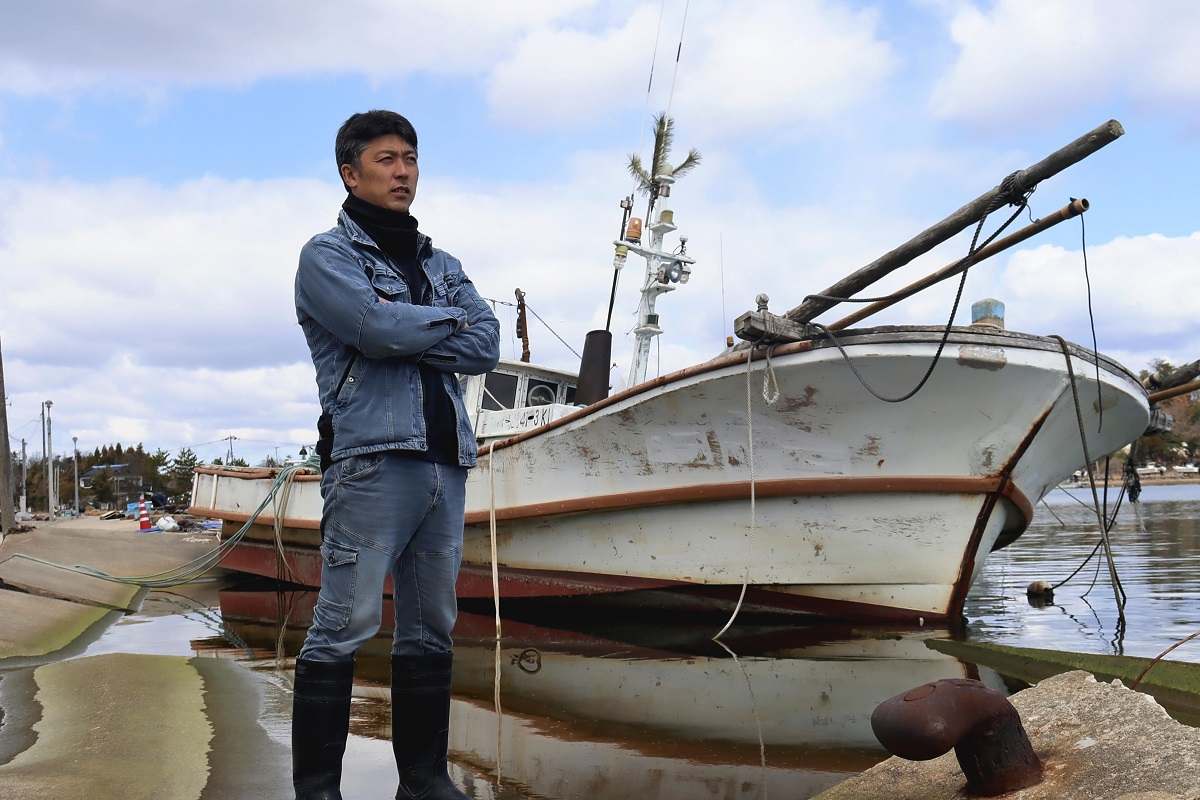
Fisherman Daiki Takeuchi looks over the fishing port in Nanao, Ishikawa Prefecture, on Friday.
6:00 JST, March 28, 2024
KANAZAWA — Fishing ports in Ishikawa Prefecture that were severely damaged by the Noto Peninsula Earthquake have met differing fates over the harvest of the season’s marine products.
In Nanao Bay in the city of Nanao, this is normally the harvest season for sea cucumbers, a specialty of the prefecture, but fishermen have been unable to resume fishing because tsunami dragged large amounts of debris into the bay, where much of it sank.
Fishermen in the city of Suzu, meanwhile, have enjoyed an unexpectedly good haul of natural wakame seaweed after the seabed was elevated as a result of the Jan. 1 major earthquake.
“The earthquake has completely changed the sea, and sea cucumbers have disappeared,” lamented Daiki Takeuchi, 38, a fisherman based at Ishizaki fishing port in Nanao.
In Nanao, where the sea cucumber fishing season peaks from January to March, more than 100 tons of sea cucumbers can be landed in a bumper year, but none have been caught this year. According to a person involved in fisheries, repeated tsunami washed large amounts of debris into the bay, preventing fishermen from using trawl nets there.
Because of the position of Noto Island in Nanao Bay, the tide is weak and debris tends to remain there. Some fishing boats also were capsized, and some quays were damaged at the port.
About 30 people, including fishermen and their families, are continuing efforts to remove the debris, but there is no clear path to the resumption of fishing.
According to the Nanao branch office of the prefectural fisheries cooperative, more than 70% of sea cucumber fishermen are over the age of 60, and some of them have decided to go out of business after the earthquake.
“The damage is greater than we expected. If the situation continues as it is, there will eventually be no fishermen left even if fishing resumes,” said Keita Takeguchi, 38, an official of the branch office.
In contrast, the Jike district of Suzu is booming thanks to the good harvest of natural wakame seaweed that began in the middle of this month.
The seaweed along the coast was initially thought to have disappeared after the seabed was elevated in the area. However, fisherman Shoichi Sakaguchi, 81, said it actually became easier to harvest it now that the sea is about one meter shallower. “We were able to harvest twice as much as we did at the same time last year,” Sakaguchi said with a smile.
In the Jike district, fishermen became able to harvest wakame after removing debris with the help of a business operator.
“Wakame harvests vary from year to year, so we honestly don’t know why the catch is abundant. It is possible that the tide carried nutrients into the sea area,” said an official of the Ishikawa Prefecture Fisheries Research Center.
The wakame season will peak in April. Since sales channels are limited after many individual customers in Suzu evacuated from the city, earnings are expected to fall below pre-earthquake levels. Still, Sakaguchi said he would be happy if he could make his life a little easier. “I hope it will be a step toward recovery,” he said.
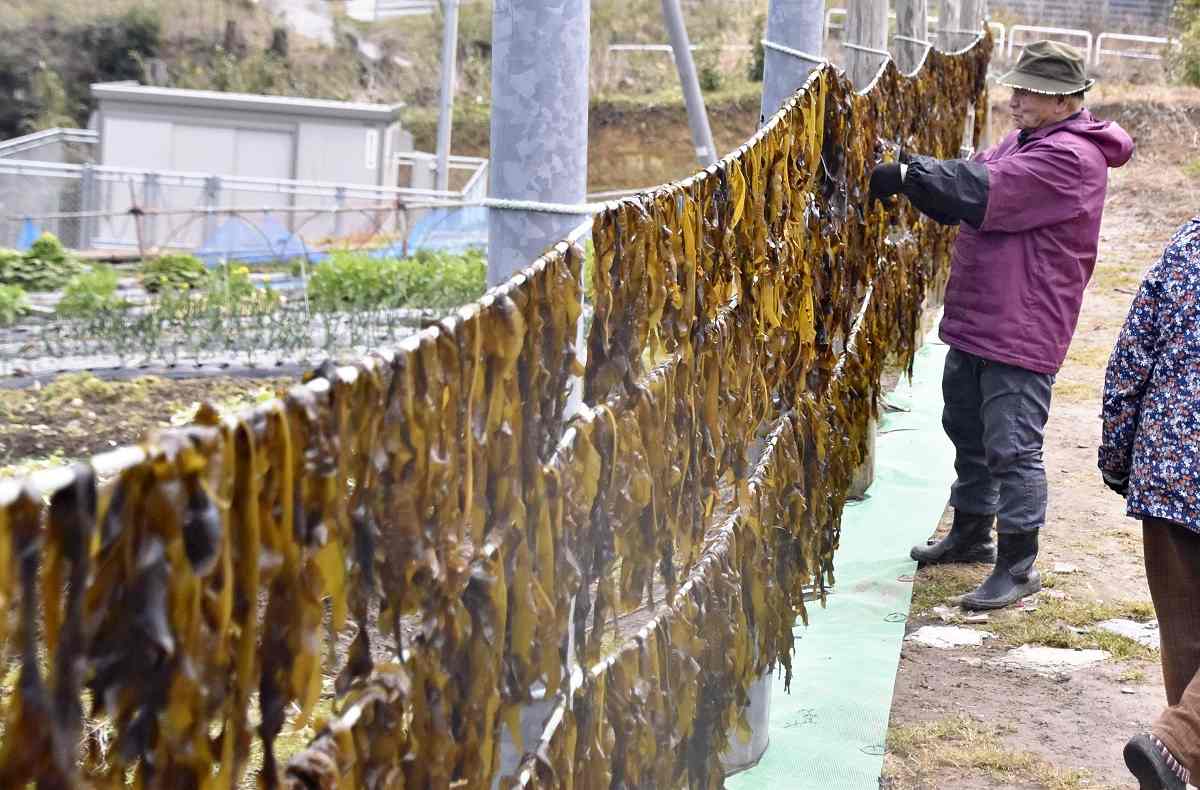
A fisherman dries natural wakame seaweed in Suzu, Ishikawa Prefecture, on Sunday.




Most Read
Popular articles in the past 24 hours
-
Japanese Shipping Giants Halt Strait of Hormuz Transit as Iran Co...
-

U.S. Launches Attacks on Iran: Avoid Escalation of Conflict by An...
-
Sawtooth Roof Factory Stands as Monument to Ashikaga Textile Hist...
-
Parents of Japanese Teen Shot in U.S. Strive for Gun Control
-
Disinformation Spreads About Team Mirai, Ballot Readers; Online P...
-
Asahi Breweries to Stage Comeback with New Product in April; Comp...
-
Bank of Japan Deputy Governor Says Rate Hikes Likely to Continue
-
Japanese Government Bonds Rally, Yields Tumble as Iran Strikes Sp...
Popular articles in the past week
-

Nepal Bus Crash Kills 19 People, Injures 25 Including One Japanes...
-
Milano Cortina 2026: Japanese Gold Medalist Figure Skater Miura S...
-
Tokyo Spends Big on Children, Wins Over Parents
-

McDonald's Japan Raises Prices; Big Mac to Cost ¥500, Double Chee...
-

Japan’s Miura, Kihara Announce Withdrawal from Figure Skating Wor...
-

Exhibition Featuring Yoshiharu Tsuge’s Manga World Underway in Ch...
-

Yokohama to Test Out Renewable-Powered Offshore Floating Data Cen...
-
BOJ Keeping Eye on Economy and Takaichi's ‘Proactive Fiscal Polic...
Popular articles in the past month
-

Producer Behind Pop Group XG Arrested for Cocaine Possession
-

Japan PM Takaichi’s Cabinet Resigns en Masse
-

Man Infected with Measles Reportedly Dined at Restaurant in Tokyo...
-

Israeli Ambassador to Japan Speaks about Japan’s Role in the Reco...
-

Videos Plagiarized, Reposted with False Subtitles Claiming ‘Ryuky...
-

Man Infected with Measles May Have Come in Contact with Many Peop...
-

Prudential Life Insurance Plans to Fully Compensate for Damages C...
-

Woman with Measles Visited Hospital in Tokyo Multiple Times Befor...
Top Articles in Society
-
Producer Behind Pop Group XG Arrested for Cocaine Possession
-
Man Infected with Measles Reportedly Dined at Restaurant in Tokyo Station
-
Man Infected with Measles May Have Come in Contact with Many People in Tokyo, Went to Store, Restaurant Around When Symptoms Emerged
-
Woman with Measles Visited Hospital in Tokyo Multiple Times Before Being Diagnosed with Disease
-

Bus Carrying 40 Passengers Catches Fire on Chuo Expressway; All Evacuate Safely
JN ACCESS RANKING
-
Producer Behind Pop Group XG Arrested for Cocaine Possession
-
Japan PM Takaichi’s Cabinet Resigns en Masse
-
Man Infected with Measles Reportedly Dined at Restaurant in Tokyo Station
-
Israeli Ambassador to Japan Speaks about Japan’s Role in the Reconstruction of Gaza
-
Videos Plagiarized, Reposted with False Subtitles Claiming ‘Ryukyu Belongs to China’; Anti-China False Information Also Posted in Japan