
Analysis Shows Tsunami Hit Suzu 1 Minute After Quake
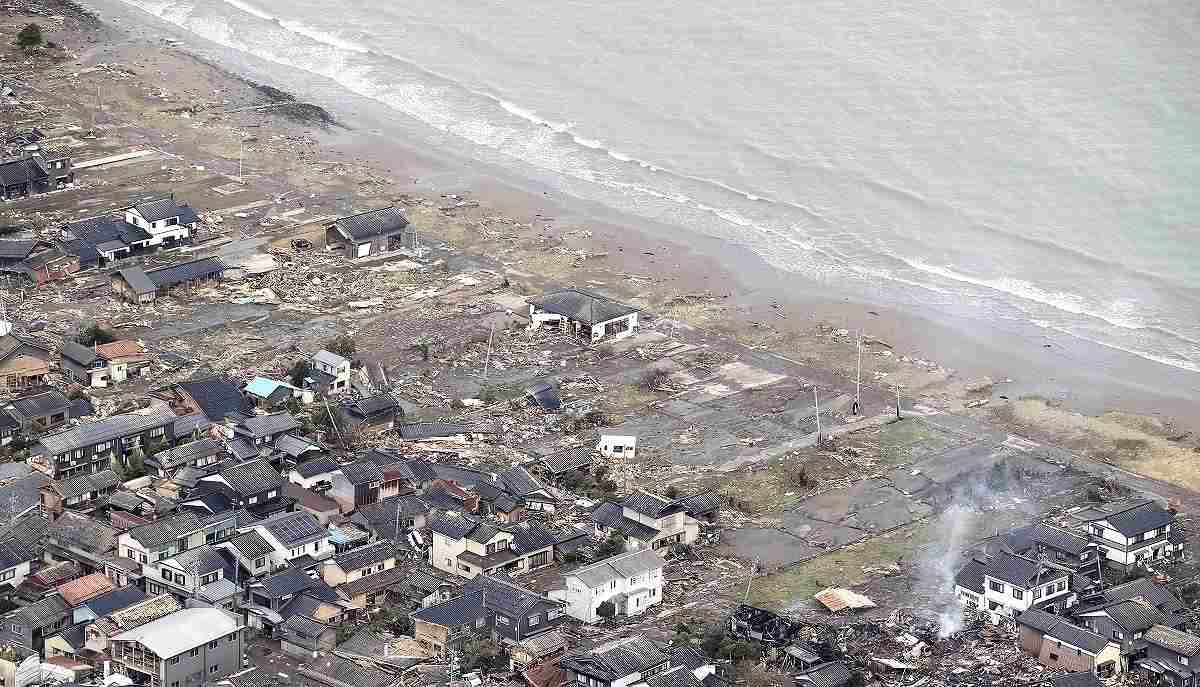
In this aerial view, a coastal area of Suzu, Ishikawa Prefecture that was hit by tsunami is seen on Tuesday.
16:06 JST, January 5, 2024
The first tsunami may have reached the city of Suzu, Ishikawa Prefecture, only one minute after the earthquake that hit the Noto region of the prefecture on Monday, according to an analysis by Tohoku University researchers.
As data transmission from the Japan Meteorological Agency tide gauge set up in the city was interrupted immediately after the earthquake began, details of the situation were initially unclear. The university’s analysis shows that the tsunami reached the city before the residents started to evacuate.
According to the agency, after the earthquake which occurred at around 4:10 p.m. on Monday, Ishikawa Prefecture’s Wajima City was hit by a tsunami of over 120 centimeters and Nanao City was hit by one that was 50-centimeters-high, while an 80-centimeter-high tsunami was recorded in Toyama City, Toyama Prefecture. No data was available for Suzu.
Tohoku University Prof. Fumihiko Imamura, an expert on tsunami engineering, used a computer to simulate conditions at locations where 50 centimeter or higher tsunami reached, based on factors such as the fault that caused the earthquake.
The results showed that the first tsunami arrived in Suzu one minute after the earthquake. In Nanao, where the agency’s data indicated that the tsunami struck about 30 minutes later, the first wave may have arrived as early as two minutes after the earthquake.
The extremely quick arrival of these tsunami is believed to be because the fault that caused the earthquake is located near the coast. “Tsunami from earthquakes that occur along the Sea of Japan coast tend to arrive quicker than those on the Pacific Ocean side, so caution must be maintained in the future,” Imamura said.
Meanwhile, analysis has also revealed that a large-scale landslide may have occurred on Toyama Bay’s seafloor at about the same time as the earthquake. In Toyama City, it was calculated that tsunami should have arrived five minutes after the quake at the earliest under normal circumstances, but they were observed immediately after it happened.
Toyama Bay has steep slopes on its seafloor, and a large-scale seafloor landslide also occurred in the 2007 earthquake that hit the Noto Peninsula.



Related Tags



Most Read
Popular articles in the past 24 hours
-
Japanese Shipping Giants Halt Strait of Hormuz Transit as Iran Co...
-

U.S. Launches Attacks on Iran: Avoid Escalation of Conflict by An...
-
Sawtooth Roof Factory Stands as Monument to Ashikaga Textile Hist...
-
Parents of Japanese Teen Shot in U.S. Strive for Gun Control
-

Disinformation Spreads About Team Mirai, Ballot Readers; Online P...
-
Asahi Breweries to Stage Comeback with New Product in April; Comp...
-

Bank of Japan Deputy Governor Says Rate Hikes Likely to Continue
-
Japanese Government Bonds Rally, Yields Tumble as Iran Strikes Sp...
Popular articles in the past week
-

Nepal Bus Crash Kills 19 People, Injures 25 Including One Japanes...
-

Milano Cortina 2026: Japanese Gold Medalist Figure Skater Miura S...
-
Tokyo Spends Big on Children, Wins Over Parents
-

McDonald's Japan Raises Prices; Big Mac to Cost ¥500, Double Chee...
-

Japan’s Miura, Kihara Announce Withdrawal from Figure Skating Wor...
-

Exhibition Featuring Yoshiharu Tsuge’s Manga World Underway in Ch...
-

Yokohama to Test Out Renewable-Powered Offshore Floating Data Cen...
-

BOJ Keeping Eye on Economy and Takaichi's ‘Proactive Fiscal Polic...
Popular articles in the past month
-

Producer Behind Pop Group XG Arrested for Cocaine Possession
-

Japan PM Takaichi’s Cabinet Resigns en Masse
-

Man Infected with Measles Reportedly Dined at Restaurant in Tokyo...
-

Israeli Ambassador to Japan Speaks about Japan’s Role in the Reco...
-

Videos Plagiarized, Reposted with False Subtitles Claiming ‘Ryuky...
-

Man Infected with Measles May Have Come in Contact with Many Peop...
-

Prudential Life Insurance Plans to Fully Compensate for Damages C...
-

Woman with Measles Visited Hospital in Tokyo Multiple Times Befor...
Top Articles in Society
-
Producer Behind Pop Group XG Arrested for Cocaine Possession
-
Man Infected with Measles Reportedly Dined at Restaurant in Tokyo Station
-
Man Infected with Measles May Have Come in Contact with Many People in Tokyo, Went to Store, Restaurant Around When Symptoms Emerged
-
Woman with Measles Visited Hospital in Tokyo Multiple Times Before Being Diagnosed with Disease
-

Bus Carrying 40 Passengers Catches Fire on Chuo Expressway; All Evacuate Safely
JN ACCESS RANKING
-
Producer Behind Pop Group XG Arrested for Cocaine Possession
-
Japan PM Takaichi’s Cabinet Resigns en Masse
-
Man Infected with Measles Reportedly Dined at Restaurant in Tokyo Station
-
Israeli Ambassador to Japan Speaks about Japan’s Role in the Reconstruction of Gaza
-
Videos Plagiarized, Reposted with False Subtitles Claiming ‘Ryukyu Belongs to China’; Anti-China False Information Also Posted in Japan