
Japan Must Clear Remove Hurdles to Active CyberDefense to Strengthen Alliance with United States
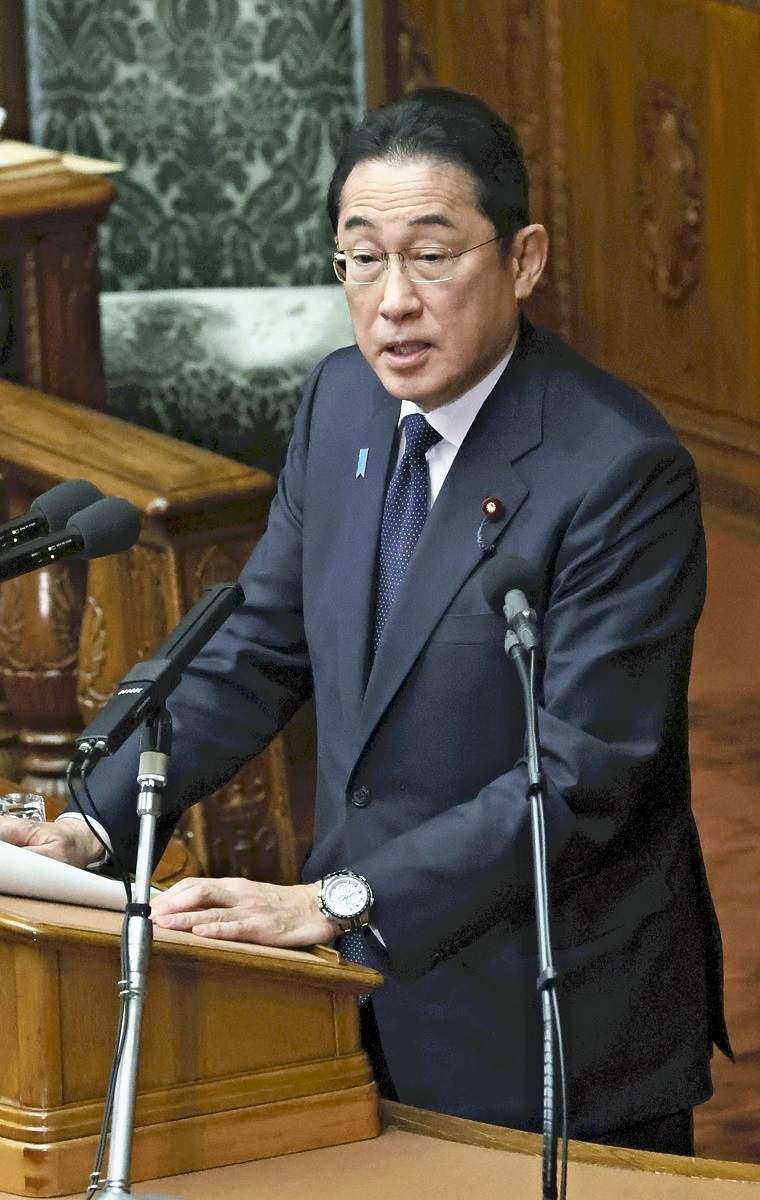
Prime Minister Fumio Kishida answers questions during a plenary session of the House of Representatives on Thursday.
7:00 JST, February 6, 2024
Prime Minister Fumio Kishida stressed the urgent need to improve Japan’s ability to mount an active cyberdefense during Diet deliberations last week, telling the Thursday session with party representatives in the House of Representatives that he would “speed up discussions to pass related bills as soon as possible.”
However, Kishida also said there were various issues that had to be considered from many points of view, “including connections with existing laws.”
The submission of related bills is therefore likely to be delayed to an extraordinary Diet session in autumn at the earliest.
Among the “connections with existing laws,” the highest hurdle is how to balance the bills’ aims with “the secrecy of any means of communication” guaranteed in the Constitution.
To detect and analyze the signs and origins of cyberattacks, telecommunications records such as emails used for the attacks have to be submitted to the government. A system will have to be designed to handle such matters as how to obtain telecommunications records, the range of the information covered, and the creation of a related framework within the government. A wide range of laws — such as the Telecommunications Business Law, the Law on Prohibition of Unauthorized Computer Access and the Panel Code — will also have to be revised.
These issues are being considered by government officials led by Deputy Chief Cabinet Secretary Shunichi Kuryu, the top bureaucrat involved.
Some in the government have voiced concern, pointing out that the Kishida Cabinet’s approval ratings have been low. They fear that the administration will not survive if opposition parties campaign against the moves, as they did regarding passages of the Law on the Protection of Specially Designated Secrets and a package of security-related legislation.
However, current procedures for responding to cyberattacks only allow countermeasures to be implemented after damage is noticed. This could lead to a situation in which system shutdowns and other problems throw society into confusion. Japan could suffer irreversible harm and losses.
U.S. Deputy National Security Advisor Anne Neuberger was interviewed by The Yomiuri Shimbun when she visited Japan in December to discuss how to enhance countermeasures and other matters with Japan. Neuberger leads cyber policies for the White House.
During the interview, Neuberger said cyber security is one of the core elements of Japan-U.S. cooperation, and the United States wants to collaborate with Japan as Washington makes significant efforts in that regard.
She also said it was possible for the two governments to detect threats while protecting citizens’ privacy, and that strengthening cyber security will actually protect personal information.
When Kishida visits the United States in April, cyber-related issues will likely be on the agenda in his meeting with U.S. President Joe Biden.
A growing number of Liberal Democratic Party lawmakers want the prime minister to demonstrate the political resolve to protect Japanese nationals and strengthen the bilateral alliance.








Most Read
Popular articles in the past 24 hours
-

Nidec Chairman Resigns Amid Accounting Scandal at Major Japanese ...
-

Trump’s Address: Confront the Dead End that Authoritarianism Has ...
-

Humbert Humbert: Husband-Wife Vocal Duo Brings Cheerful Singing t...
-

Japan’s Hikonyan Cat Mascot to Celebrate 20th Birthday with Party...
-

Pakistan, Afghan Forces Clash after Days of Hostilities
-

Japan's Kairos Rocket Set to Launch on Sunday After Delays
-

China-linked Actor Tried Using ChatGPT to Target Japan's PM Takai...
-

JR Kyushu Mulls Using Trains for Concertgoer Lodgings; Performanc...
Popular articles in the past week
-

Producer Behind Pop Group XG Arrested for Cocaine Possession
-

Tokyo Skytree's Elevator Stops, Trapping 20 People; All Rescued (...
-

Nepal Bus Crash Kills 19 People, Injures 25 Including One Japanes...
-
Milano Cortina 2026: Japanese Gold Medalist Figure Skater Miura S...
-

Japan’s Major Real Estate Firms Expanding Overseas Businesses to ...
-

Reciprocal Tariffs Ruled Illegal: Judiciary Would Not Tolerate Pr...
-

Japanese High School Student Aims to Share Kaiten History Through...
-

Milano Cortina 2026: Miura-Kihara Duo, Other Japanese Figure Skat...
Popular articles in the past month
-
Producer Behind Pop Group XG Arrested for Cocaine Possession
-

Japan PM Takaichi’s Cabinet Resigns en Masse
-

Man Infected with Measles Reportedly Dined at Restaurant in Tokyo...
-

Israeli Ambassador to Japan Speaks about Japan’s Role in the Reco...
-

Videos Plagiarized, Reposted with False Subtitles Claiming ‘Ryuky...
-

Man Infected with Measles May Have Come in Contact with Many Peop...
-

Prudential Life Insurance Plans to Fully Compensate for Damages C...
-

Woman with Measles Visited Hospital in Tokyo Multiple Times Befor...
Top Articles in Politics
-
Japan PM Takaichi’s Cabinet Resigns en Masse
-

Sanae Takaichi Elected Prime Minister of Japan; Keeps All Cabinet Appointees from Previous Term
-

Japan’s Govt to Submit Road Map for Growth Strategy in March, PM Takaichi to Announce in Upcoming Policy Speech
-

LDP Wins Historic Landslide Victory
-

LDP Wins Landslide Victory, Secures Single-party Majority; Ruling Coalition with JIP Poised to Secure Over 300 seats (UPDATE 1)
JN ACCESS RANKING
-
Producer Behind Pop Group XG Arrested for Cocaine Possession
-
Japan PM Takaichi’s Cabinet Resigns en Masse
-
Man Infected with Measles Reportedly Dined at Restaurant in Tokyo Station
-
Israeli Ambassador to Japan Speaks about Japan’s Role in the Reconstruction of Gaza
-
Videos Plagiarized, Reposted with False Subtitles Claiming ‘Ryukyu Belongs to China’; Anti-China False Information Also Posted in Japan