
New Mars Study Suggests an Ocean’s Worth of Water may be Hiding beneath the Red Dusty Surface
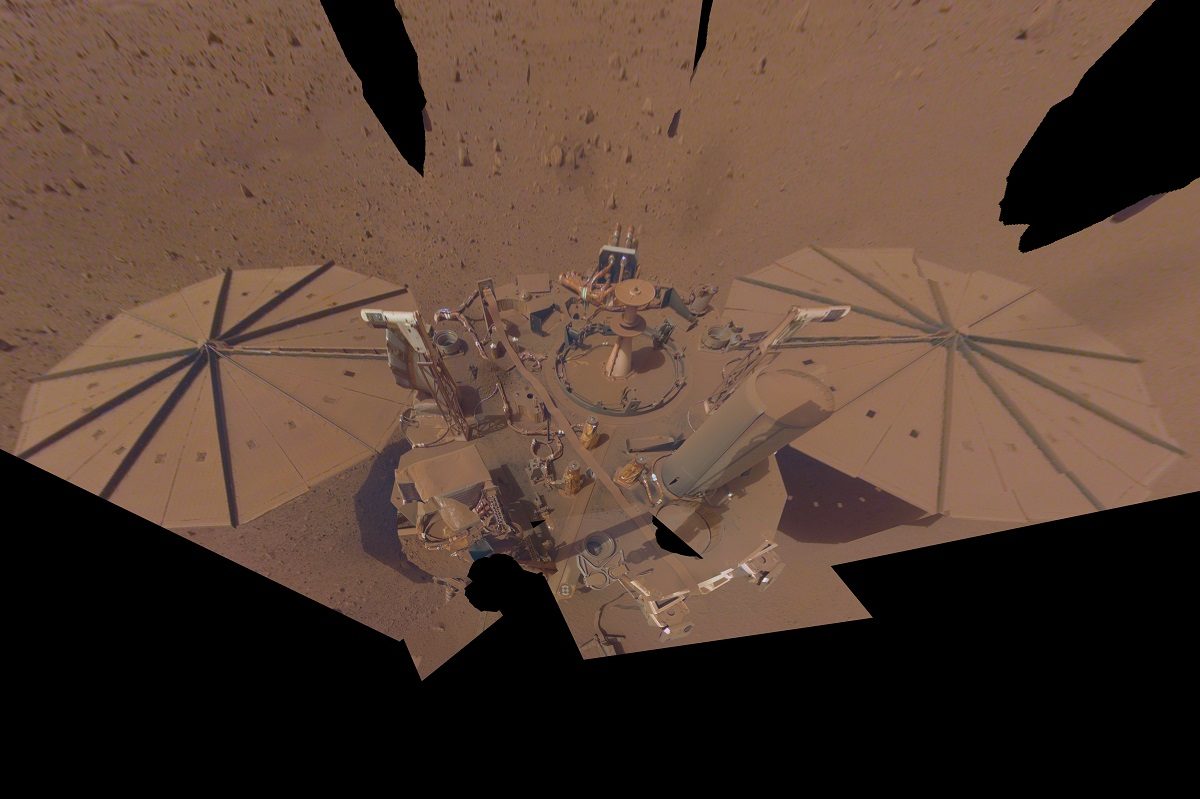
This image provided by NASA shows the InSight Mars lander in a selfie photo composite on April 24, 2022, the 1,211th Martian day, or sol, of the mission.
12:45 JST, August 13, 2024
CAPE CANAVERAL, Fla. (AP) — Mars may be drenched beneath its surface, with enough water hiding in the cracks of underground rocks to form a global ocean, new research suggests.
The findings released Monday are based on seismic measurements from NASA’s Mars InSight lander, which detected more than 1,300 marsquakes before shutting down two years ago.
This water — believed to be seven miles to 12 miles (11.5 kilometers to 20 kilometers) down in the Martian crust — most likely would have seeped from the surface billions of years ago when Mars harbored rivers, lakes and possibly oceans, according to the lead scientist, Vashan Wright of the University of California San Diego’s Scripps Institution of Oceanography.
Just because water still may be sloshing around inside Mars does not mean it holds life, Wright said.
“Instead, our findings mean that there are environments that could possibly be habitable,” he said in an email.
His team combined computer models with InSight readings including the quakes’ velocity in determining underground water was the most likely explanation. The results appeared Monday in the Proceedings of the National Academy of Sciences.
If InSight’s location at Elysium Planitia near Mars’ equator is representative of the rest of the red planet, the underground water would be enough to fill a global ocean a mile or so (1 kilometer to 2 kilometers) deep, Wright said.
It would take drills and other equipment to confirm the presence of water and seek out any potential signs of microbial life.
Although the InSight lander is no longer working, scientists continue to analyze the data collected from 2018 through 2022, in search of more information about Mars’ interior.
Wet almost all over more than 3 billion years ago, Mars is thought to have lost its surface water as its atmosphere thinned, turning the planet into the dry, dusty world known today. Scientists theorize much of this ancient water escaped out into space or remained buried below.







Most Read
Popular articles in the past 24 hours
-

Japan Figure Skating Legend Yuzuru Hanyu Is Proud Disaster Surviv...
-

Japan-U.S. Summit Likely to Focus on Middle East; Takaichi to Fac...
-

Hawaii Museum on Tsunami Including Japan's 2011 Disaster at Risk ...
-

15 Years since Great East Japan Earthquake: How Can Affected Area...
-

Japan Train Company to Increase Fares, Including in Tokyo Metropo...
-
Japan Holds Memorial Events to Mark 15th Anniversary of 2011 Eart...
-

Japan’s Mitsui O.S.K. Lines Container Ship Anchored in Persian Gu...
-

Struggling Onosato Pulls out of Spring Tourney
Popular articles in the past week
-

Ibaraki Pref.'s 1st Foreign Bus Driver Hired in Tsukuba
-
Japan Figure Skating Legend Yuzuru Hanyu Is Proud Disaster Surviv...
-

Nippon Life Insurance's U.S. Arm Sues OpenAI Over Legal Assistanc...
-
Govt to Utilize ODA for Ensuring Economic Security; Securing Ener...
-
Massive Sewer Pipe Found Jutting Out of Highway in Osaka
-
Amid Strait of Hormuz Blockade, Shipping Companies Scramble to Ge...
-

Beckoning Cats Get Makeover to Fit Modern Lifestyles with Sleek D...
-
Japan Govt Survey Finds Just 10% of Workers Want Working Hours to...
Popular articles in the past month
-

Producer Behind Pop Group XG Arrested for Cocaine Possession
-

Japan PM Takaichi’s Cabinet Resigns en Masse
-

Man Infected with Measles Reportedly Dined at Restaurant in Tokyo...
-

Videos Plagiarized, Reposted with False Subtitles Claiming ‘Ryuky...
-

iPS Treatments Pass Key Milestone, but Broader Applications Far f...
-

Sanae Takaichi Elected Prime Minister of Japan; Keeps All Cabinet...
-

Nepal Bus Crash Kills 19 People, Injures 25 Including One Japanes...
-
South Korea Tightens Rules on Foreigners Buying Homes in Seoul Me...
Top Articles in News Services
-
Survey Shows False Election Info Perceived as True
-

Japan’s Nikkei Stock Average Falls as US-Iran Tensions Unsettle Investors (UPDATE 1)
-
Japan’s Nikkei Stock Average Rises on Tech Rally and Takaichi’s Spending Hopes (UPDATE 1)
-

Japan to Ban Use of Power Banks on Airplanes
-

North Korea Unveils Image of Kim Jong Un’s Teenage Daughter Firing Rifle
JN ACCESS RANKING
-
Producer Behind Pop Group XG Arrested for Cocaine Possession
-
Japan PM Takaichi’s Cabinet Resigns en Masse
-
Man Infected with Measles Reportedly Dined at Restaurant in Tokyo Station
-
Videos Plagiarized, Reposted with False Subtitles Claiming ‘Ryukyu Belongs to China’; Anti-China False Information Also Posted in Japan
-
iPS Treatments Pass Key Milestone, but Broader Applications Far from Guaranteed