To use this site, please disable the ad blocking feature and reload the page.
This website uses cookies to collect information about your visit for purposes such as showing you personalized ads and content, and analyzing our website traffic. By clicking “Accept all,” you will allow the use of these cookies.
Users accessing this site from EEA countries and UK are unable to view this site without your consent. We apologize for any inconvenience caused.
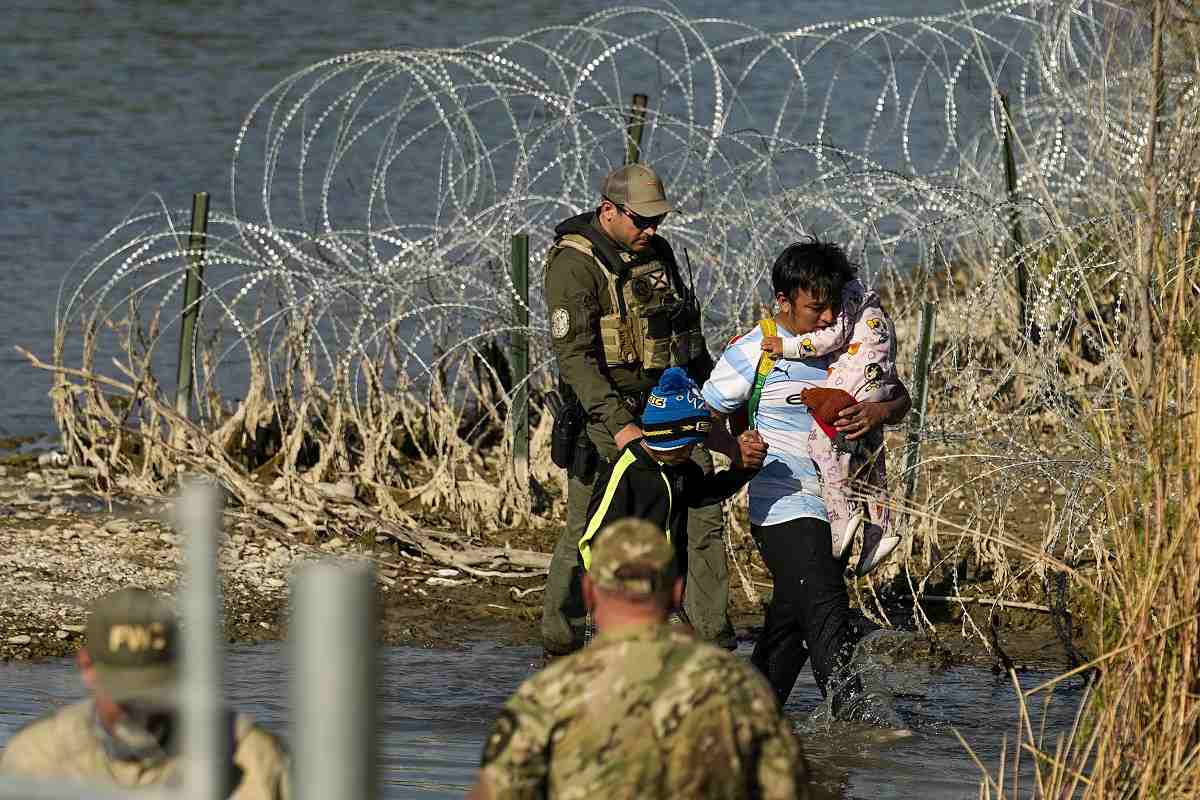
AP Photo/Eric Gay, file Migrants are taken into custody by officials at the Texas-Mexico border, Jan. 3, 2024, in Eagle Pass, Texas.
AP
11:17 JST, March 19, 2024
WASHINGTON (AP) — The Supreme Court on Monday continued to block, for now, a Texas law that would give police broad powers to arrest migrants suspected of illegally entering the U.S. while the legal battle it sparked over immigration authority plays out.
A one-page order signed by Justice Samuel Alito indefinitely prevents Texas from enforcing a sweeping state immigration enforcement law that had been set to take effect this month. The language of the order strongly suggests the court will take additional action, but it is unclear when.
It marks the second time Alito has extended a pause on the law, known as Senate Bill 4, which the Justice Department has argued would step on the federal government’s immigration powers. Monday’s order extending the stay came a few minutes after a 5 p.m. deadline the court had set for itself, creating momentary confusion about the measure’s status.
Opponents have called the law the most dramatic attempt by a state to police immigration since an Arizona law more than a decade ago, portions of which were struck down by the Supreme Court. The court battle is unfolding as immigration emerges as a key issue in the 2024 presidential race.
The office of Republican Texas Attorney General Ken Paxton has said the state’s law mirrored federal law and “was adopted to address the ongoing crisis at the southern border, which hurts Texans more than anyone else.”
Arrests for illegal crossings along the southern border hit record highs in December but fell by half in January, a shift attributed to seasonal declines and heightened enforcement by the U.S. and its allies. The federal government has not yet released numbers for February.
The Biden administration sued to strike down the Texas measure in January, arguing it’s a clear violation of federal authority on immigration that would hurt international relations and create chaos in administering immigration law. Critics have also said the law could lead to civil rights violations and racial profiling.
A federal judge in Texas struck down the law in late February, but the 5th Circuit Court of Appeals quickly stayed that ruling, leading the federal government to appeal to the Supreme Court.
The Supreme Court in 2012 struck down key parts of an Arizona law that would have allowed police to arrest people for federal immigration violations, often referred to by opponents as the “show me your papers” bill. The divided high court found then that the impasse in Washington over immigration reform did not justify state intrusion.
The battle over the Texas immigration law is one of multiple legal disputes between Texas officials and the Biden administration over how far the state can go to patrol the Texas-Mexico border and prevent illegal border crossings.
Several Republican governors have backed Gov. Greg Abbott’s efforts, saying the federal government is not doing enough to enforce existing immigration laws.