
Japan Govt Adopts Measures to Curb Mega Solar Power Plant Projects Amid Environmental Concerns
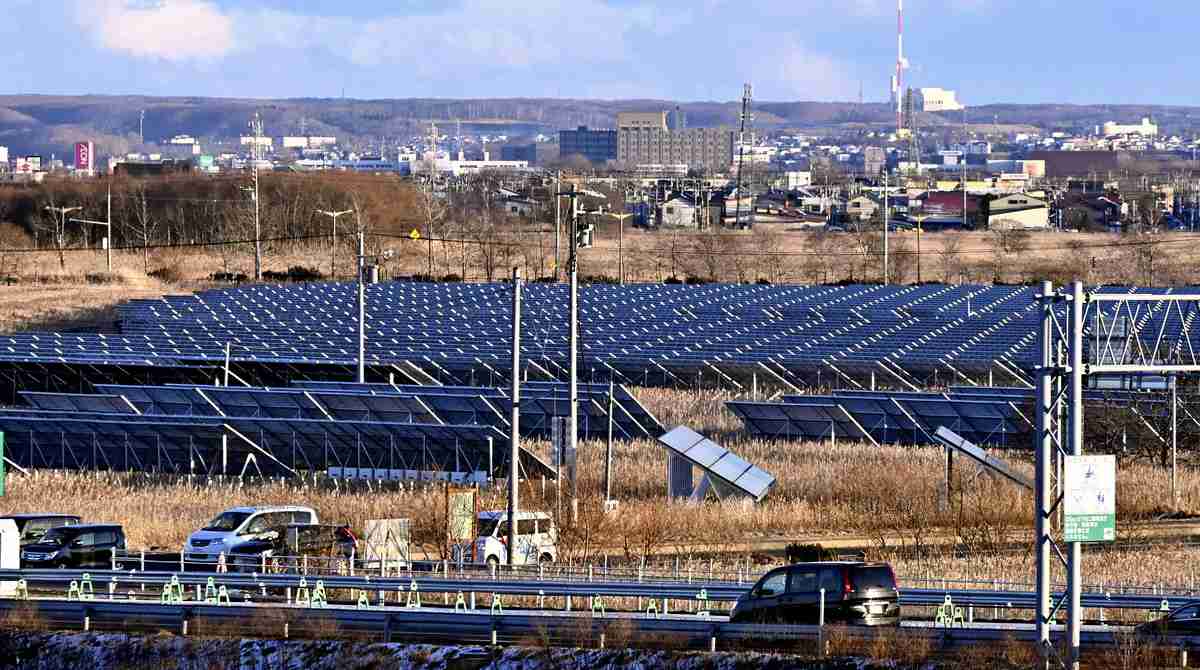
Solar panels are seen near the Kushiro Shitsugen in Kushiro, Hokkaido, in December 2024.
15:40 JST, December 25, 2025
The government has adopted a package of about 20 measures related to curbing mega solar power development projects to address concerns about environmental damage and potential disaster risks.
The measures, which were adopted on Tuesday at a meeting of relevant Cabinet members, include amending relevant legislation, bolstering monitoring systems and abolishing support for new large-scale solar power plants.
As part of measures to strengthen legal regulations, the government will lower the minimum 30,000-kilowatt threshold for mandatory environmental assessments, while also looking into expanding the scope of the inspections.
The government will also create a mechanism in which a government-certified organization will verify in advance if planned solar power plants comply with relevant technical standards. To make this requirement mandatory for the operators of solar power plants with an output of 10 kilowatts or more, the government aims to submit a bill to amend the Electricity Business Law during the ordinary Diet session next year.
The package also includes expanding restricted areas in the Hokkaido’s Kushiro Shitsugen National Park, the Japan’s largest wetland and surrounding hills, and reviewing the applications of the Protection of Cultural Properties Law, the Landscape Law and other relevant laws.
Starting in fiscal 2027, mega solar power plants with an output of 1,000 kilowatts or more will become ineligible for the feed-in premium program, a support system in which producers receive a fixed premium on top of the market price for electricity generated. On the other hand, the government will increase incentives for developing or introducing next-generation perovskite solar cells and rooftop solar systems, as they have a smaller environmental impact.
After the 2011 Great East Japan Earthquake, mega solar power plants were built one after another across the country. In fiscal 2012, the administration led by the then Democratic Party of Japan introduced a support system in which power companies purchased electricity generated by renewable energy producers at higher than market price as part of efforts to promote renewable energy.
However, now that solar power generation has grown to account for about 10% of the overall electricity output in the country, the government decided to review the support system, and concluded that it has already to some extent played its role in expanding renewable energy usage.



Most Read
Popular articles in the past 24 hours
-
Japanese Shipping Giants Halt Strait of Hormuz Transit as Iran Co...
-

U.S. Launches Attacks on Iran: Avoid Escalation of Conflict by An...
-
Sawtooth Roof Factory Stands as Monument to Ashikaga Textile Hist...
-
Parents of Japanese Teen Shot in U.S. Strive for Gun Control
-
Disinformation Spreads About Team Mirai, Ballot Readers; Online P...
-
Asahi Breweries to Stage Comeback with New Product in April; Comp...
-
Bank of Japan Deputy Governor Says Rate Hikes Likely to Continue
-
Japanese Government Bonds Rally, Yields Tumble as Iran Strikes Sp...
Popular articles in the past week
-

Nepal Bus Crash Kills 19 People, Injures 25 Including One Japanes...
-
Milano Cortina 2026: Japanese Gold Medalist Figure Skater Miura S...
-
Tokyo Spends Big on Children, Wins Over Parents
-

McDonald's Japan Raises Prices; Big Mac to Cost ¥500, Double Chee...
-
Japan’s Miura, Kihara Announce Withdrawal from Figure Skating Wor...
-

Exhibition Featuring Yoshiharu Tsuge’s Manga World Underway in Ch...
-

Yokohama to Test Out Renewable-Powered Offshore Floating Data Cen...
-
BOJ Keeping Eye on Economy and Takaichi's ‘Proactive Fiscal Polic...
Popular articles in the past month
-

Producer Behind Pop Group XG Arrested for Cocaine Possession
-

Japan PM Takaichi’s Cabinet Resigns en Masse
-

Man Infected with Measles Reportedly Dined at Restaurant in Tokyo...
-

Israeli Ambassador to Japan Speaks about Japan’s Role in the Reco...
-

Videos Plagiarized, Reposted with False Subtitles Claiming ‘Ryuky...
-

Man Infected with Measles May Have Come in Contact with Many Peop...
-

Prudential Life Insurance Plans to Fully Compensate for Damages C...
-

Woman with Measles Visited Hospital in Tokyo Multiple Times Befor...
Top Articles in Business
-
Prudential Life Insurance Plans to Fully Compensate for Damages Caused by Fraudulent Actions Without Waiting for Third-Party Committee Review
-

Japan, U.S. Name 3 Inaugural Investment Projects; Reached Agreement After Considerable Difficulty
-

Japan’s Major Real Estate Firms Expanding Overseas Businesses to Secure Future Growth, Focusing on Europe, U.S., Asia
-

SoftBank Launches AI Service for Call Centers That Converts Harsh Customer Voices into Softer Voices
-
Green Tea Exports Hit Record High in 2025 Amid Growing Demand, Likely to Be Driving Force Behind Govt Export Target
JN ACCESS RANKING
-
Producer Behind Pop Group XG Arrested for Cocaine Possession
-
Japan PM Takaichi’s Cabinet Resigns en Masse
-
Man Infected with Measles Reportedly Dined at Restaurant in Tokyo Station
-
Israeli Ambassador to Japan Speaks about Japan’s Role in the Reconstruction of Gaza
-
Videos Plagiarized, Reposted with False Subtitles Claiming ‘Ryukyu Belongs to China’; Anti-China False Information Also Posted in Japan