
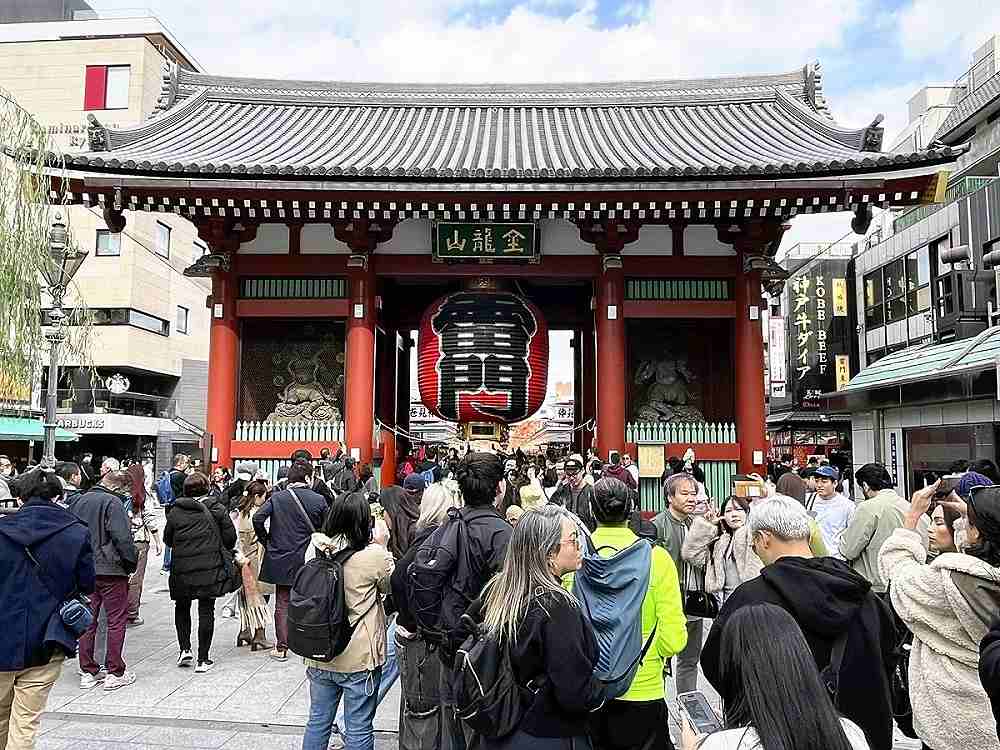
Tourists visit Sensoji temple’s Kaminarimon gate in Taito Ward, Tokyo, last month.
14:03 JST, December 18, 2025
The Chinese government’s advisory against traveling to Japan has severely blunted the growth in Chinese visitors to the nation, hurting sales at Japanese department stores and causing a flood of cancellations at hotels in tourist areas.
Many tourism businesses are concerned that the situation could drag on as the Lunar New Year holiday in February approaches.
“Many Chinese people have canceled their bookings,” the operator of a hotel in Nakagyo Ward, Kyoto, said Wednesday. “We’ve lowered our accommodation rates for the first time in a while.” The operator said room rates had been cut by about 10% from the same month last year.
Hotel rates in Kyoto had been steadily creeping upward since 2024, as the city experienced a rebound in tourism demand after the COVID-19 pandemic and capitalized on the 2025 Osaka-Kansai Expo. However, demand from Chinese visitors has plunged lately, forcing the hotel in Kyoto to cut its rates. “If this situation continues until the Lunar New Year, the impact will become even more severe,” the hotel operator told The Yomiuri Shimbun.
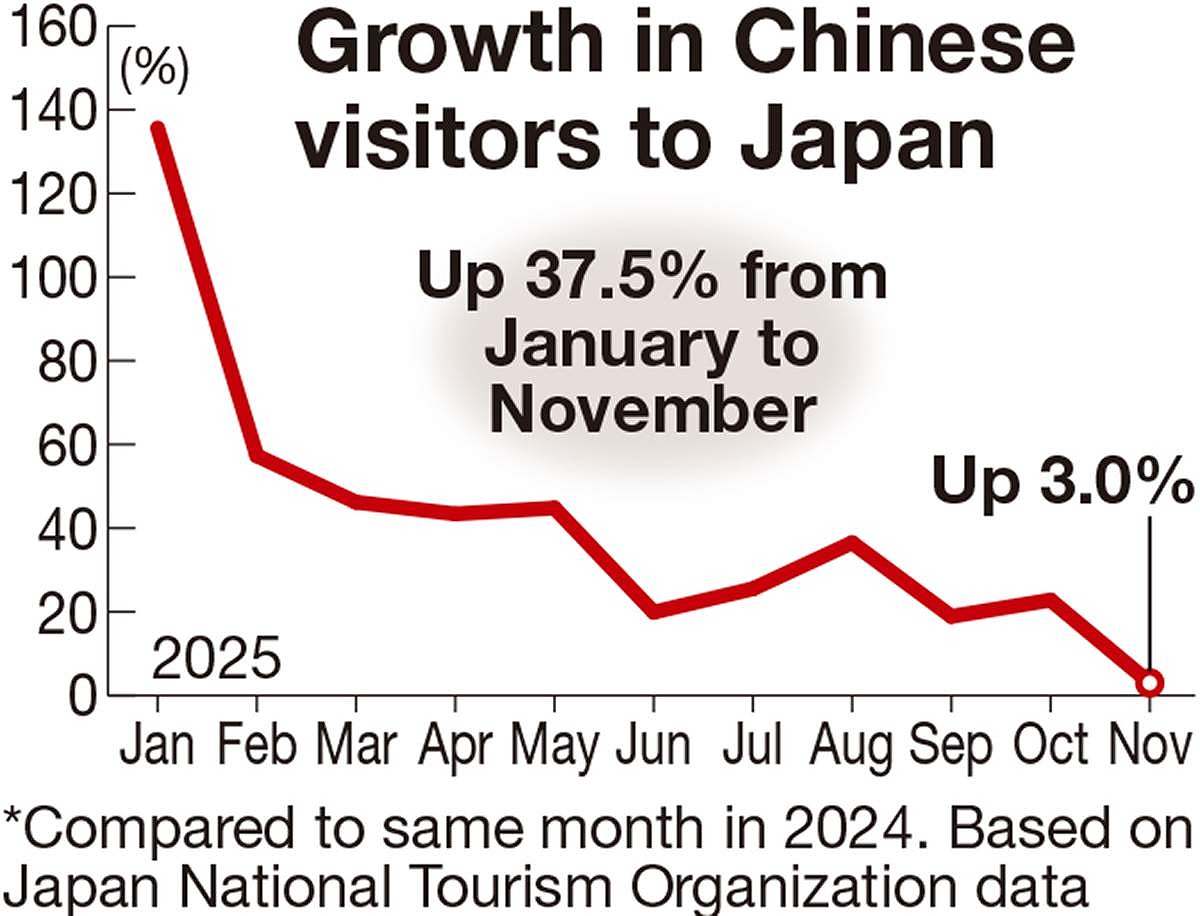
Visitors from mainland China and Hong Kong together accounted for 28% of all tourists to Japan from January to November this year. During this period, the number of Chinese tourists coming to Japan surged by 37.5% from the same period in 2024. However, that growth fell to just 3% in November. Flights between China and Japan have been reduced and cruise ships are axing stops at Japanese ports. The prospects for an improvement in this situation remain murky.
The drop in Chinese tourists is also hurting the retail industry.
Duty-free sales at Takashimaya department stores between Dec. 1 and 14 fell 9.8% from the same period in 2024. The sales from Chinese customers declined by a hefty 23.9%. Given that Chinese customers account for more than 40% of tax-free sales, their disappearance from stores will have a massive impact on the company’s performance.
In response to the recent chill in Tokyo-Beijing relations, Sogo & Seibu Co. has since last month moved ads from China to other markets, including Southeast Asia, Europe and the United States.
Escaping dependency
Foreign tourism dried up during the COVID-19 pandemic, but Japan has since seen a steadily increasing number of visitors. Their spending habits have noticeably diversified. Previously, many of these visitors indulged in shopping sprees, but nowadays more are seeking experiences that allow them to enjoy Japanese culture. The government aims to increase the annual number of foreign visitors to 60 million by 2030, with their spending to total ¥15 trillion. As things stand, good progress is being made on attaining these targets.
Despite this, there remain major concerns, especially within the tourism industry, about the falling out between Japan and China. According to a survey of businesses across the nation from Dec. 5 to 9, conducted by Teikoku Databank, Ltd., 42.8% of respondents said the Chinese government’s advisory would have a “negative impact” on the Japanese economy. This figure shot up to 53.8% among companies in the shipping and warehousing industry, which includes passenger transport businesses and travel businesses. The figure was noticeably higher in this industry compared to other sectors.
When asked about the government’s response to the economic impact, especially on the tourism industry, at a press conference Wednesday, Prime Minister Sanae Takaichi said, “We will strengthen a promotional campaign that will encourage people from a diverse range of countries to visit Japan.”
Takeshi Higashifukasawa, a senior economist at Mizuho Research & Technologies, Ltd., agreed with that plan. “The government should try to spread the risk, rather than relying on just one country,” he said. “It must try to increase spending by tourists and develop ways to attract wealthy visitors from many different areas.”





Most Read
Popular articles in the past 24 hours
-

Japanese Shipping Giants Halt Strait of Hormuz Transit as Iran Co...
-

U.S. Launches Attacks on Iran: Avoid Escalation of Conflict by An...
-

Sawtooth Roof Factory Stands as Monument to Ashikaga Textile Hist...
-

Parents of Japanese Teen Shot in U.S. Strive for Gun Control
-

Disinformation Spreads About Team Mirai, Ballot Readers; Online P...
-
Asahi Breweries to Stage Comeback with New Product in April; Comp...
-

Bank of Japan Deputy Governor Says Rate Hikes Likely to Continue
-
Japanese Government Bonds Rally, Yields Tumble as Iran Strikes Sp...
Popular articles in the past week
-

Nepal Bus Crash Kills 19 People, Injures 25 Including One Japanes...
-

Milano Cortina 2026: Japanese Gold Medalist Figure Skater Miura S...
-
Tokyo Spends Big on Children, Wins Over Parents
-

McDonald's Japan Raises Prices; Big Mac to Cost ¥500, Double Chee...
-

Japan’s Miura, Kihara Announce Withdrawal from Figure Skating Wor...
-

Exhibition Featuring Yoshiharu Tsuge’s Manga World Underway in Ch...
-

Yokohama to Test Out Renewable-Powered Offshore Floating Data Cen...
-

BOJ Keeping Eye on Economy and Takaichi's ‘Proactive Fiscal Polic...
Popular articles in the past month
-

Producer Behind Pop Group XG Arrested for Cocaine Possession
-

Japan PM Takaichi’s Cabinet Resigns en Masse
-

Man Infected with Measles Reportedly Dined at Restaurant in Tokyo...
-

Israeli Ambassador to Japan Speaks about Japan’s Role in the Reco...
-

Videos Plagiarized, Reposted with False Subtitles Claiming ‘Ryuky...
-

Man Infected with Measles May Have Come in Contact with Many Peop...
-

Prudential Life Insurance Plans to Fully Compensate for Damages C...
-

Woman with Measles Visited Hospital in Tokyo Multiple Times Befor...
Top Articles in Business
-
Prudential Life Insurance Plans to Fully Compensate for Damages Caused by Fraudulent Actions Without Waiting for Third-Party Committee Review
-

Japan, U.S. Name 3 Inaugural Investment Projects; Reached Agreement After Considerable Difficulty
-

Japan’s Major Real Estate Firms Expanding Overseas Businesses to Secure Future Growth, Focusing on Europe, U.S., Asia
-

SoftBank Launches AI Service for Call Centers That Converts Harsh Customer Voices into Softer Voices
-

Green Tea Exports Hit Record High in 2025 Amid Growing Demand, Likely to Be Driving Force Behind Govt Export Target
JN ACCESS RANKING
-
Producer Behind Pop Group XG Arrested for Cocaine Possession
-
Japan PM Takaichi’s Cabinet Resigns en Masse
-
Man Infected with Measles Reportedly Dined at Restaurant in Tokyo Station
-
Israeli Ambassador to Japan Speaks about Japan’s Role in the Reconstruction of Gaza
-
Videos Plagiarized, Reposted with False Subtitles Claiming ‘Ryukyu Belongs to China’; Anti-China False Information Also Posted in Japan