
Maddox: EU Needs to Become More Competitive Amid U.S. Uncertainty, China’s Aggressive Trade Policies
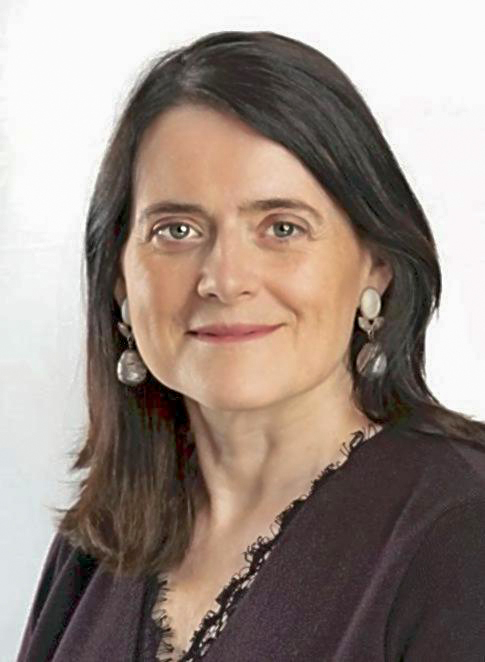
Bronwen Maddox
2:00 JST, December 16, 2025
The following is excerpted from an interview with Bronwen Maddox, director and chief executive of London-based think tank Chatham House, The Royal Institute of International Affairs, conducted by Yomiuri Shimbun Correspondent Hironari Akiyama.
The Yomiuri Shimbun: Can you describe the current environment for Europe in terms of economic security?
Bronwen Maddox: Efforts have been made by Europe to stabilize trade on the international level in many ways, but there are also problems inside European countries, particularly the big ones — whether they can get growth and productivity up.
The U.K., France, Germany, all struggle on this. Then you have the challenge from Russia. Europe has lived for a long time with cheap energy from Russia and can do so no longer now. That is another threat.
Yomiuri: How can the EU address challenges presented by the United States?
Maddox: First, one of the best things to do is to find agreement on tariffs. Second, they’re looking for where they can get more independence from the U.S., for example on defense. They are looking for new markets all around the world. And they’re looking for cheaper energy, including renewable energy.
In some ways, their values are now different. It is not clear that the U.S. still believes in free trade in the way that it has done for decades. And then some of the things that [U.S.] President [Donald] Trump has said, for example, wanting to take over Canada or Greenland or the Panama Canal, do not respect international law or principles of sovereignty. And I think at that point, Europe would say we have different values.
Yomiuri: What kind of policy on energy can the EU have?
Maddox: On cheap energy, I think the EU can’t ban fossil fuels at this point. It’s just too expensive a transition. But it can be more secure by getting its own fossil fuels, including from the North Sea, and then keeping moving very fast on its own clean energy technology.
Yomiuri: How do you see the Chinese dominance in the market of solar panels or wind power in the EU?
Maddox: They are very, very, very cheap, and they are good. But it is so aggressive a form of competition that some Europeans say this is not competition. This is state subsidized industry in a way that Europe does not do. And we should not let in these products which will destroy our own industry.
I think the EU may have to use some of the mechanisms it already has to say that this is unfair competition and to restrict those imports, specifically Chinese green technology.
I’m not in favor of tariffs generally. But I think Europe has a good case to say this is exceptional. This is very, very subsidized, so it is not real competition. We will compete with the rest of the world, but China is unfair in competition.
The Chinese government subsidizes a lot — the same for steel, clean tech and EV.
Let me say also, I think Europe needs to become more competitive.
At its heart, it [the EU] is a very powerful trading group of countries that agree to trade with each other. I mean, the big division is over Russia, and some countries are much closer to Russia in their relationships than others, and Russia is maximizing those differences as much as it can.
Yomiuri: Can you describe the importance of partnerships for the EU?
Maddox: Very important and getting more important. I think European Union and U.K. are very much looking for partners everywhere, new partners and better relationships separate from the U.S. or China.
And I think the U.K. is very willing to try to work with Japan on security around Japan. The U.K. has put a lot of emphasis on the Indo-Pacific for some years now. Just saying these are our allies, these are countries who see the world in the same kind of way, and we need to stand together.
I think there is a very strong sense, and I would say Japan feels closer to Europe than at any time I can remember because of the sense of common interests.
Yomiuri: Can the EU and U.K. still talk to the U.S. despite no longer sharing the same values?
Maddox: They can. And I think when President Trump goes, and he will go at the end of this term, not everything he’s done will stay.
I think in any case, other countries must keep talking to the U.S. And Mr. Trump is not the whole of the U.S.


Related Tags


Most Read
Popular articles in the past 24 hours
-

Japanese Shipping Giants Halt Strait of Hormuz Transit as Iran Co...
-

U.S. Launches Attacks on Iran: Avoid Escalation of Conflict by An...
-

Sawtooth Roof Factory Stands as Monument to Ashikaga Textile Hist...
-

Parents of Japanese Teen Shot in U.S. Strive for Gun Control
-

Disinformation Spreads About Team Mirai, Ballot Readers; Online P...
-
Asahi Breweries to Stage Comeback with New Product in April; Comp...
-
Bank of Japan Deputy Governor Says Rate Hikes Likely to Continue
-
Japanese Government Bonds Rally, Yields Tumble as Iran Strikes Sp...
Popular articles in the past week
-

Nepal Bus Crash Kills 19 People, Injures 25 Including One Japanes...
-
Milano Cortina 2026: Japanese Gold Medalist Figure Skater Miura S...
-

Tokyo Spends Big on Children, Wins Over Parents
-

McDonald's Japan Raises Prices; Big Mac to Cost ¥500, Double Chee...
-

Japan’s Miura, Kihara Announce Withdrawal from Figure Skating Wor...
-

Exhibition Featuring Yoshiharu Tsuge’s Manga World Underway in Ch...
-

Yokohama to Test Out Renewable-Powered Offshore Floating Data Cen...
-
BOJ Keeping Eye on Economy and Takaichi's ‘Proactive Fiscal Polic...
Popular articles in the past month
-

Producer Behind Pop Group XG Arrested for Cocaine Possession
-

Japan PM Takaichi’s Cabinet Resigns en Masse
-

Man Infected with Measles Reportedly Dined at Restaurant in Tokyo...
-

Israeli Ambassador to Japan Speaks about Japan’s Role in the Reco...
-

Videos Plagiarized, Reposted with False Subtitles Claiming ‘Ryuky...
-

Man Infected with Measles May Have Come in Contact with Many Peop...
-

Prudential Life Insurance Plans to Fully Compensate for Damages C...
-

Woman with Measles Visited Hospital in Tokyo Multiple Times Befor...
Top Articles in Business
-
Prudential Life Insurance Plans to Fully Compensate for Damages Caused by Fraudulent Actions Without Waiting for Third-Party Committee Review
-

Japan, U.S. Name 3 Inaugural Investment Projects; Reached Agreement After Considerable Difficulty
-

Japan’s Major Real Estate Firms Expanding Overseas Businesses to Secure Future Growth, Focusing on Europe, U.S., Asia
-

SoftBank Launches AI Service for Call Centers That Converts Harsh Customer Voices into Softer Voices
-

Green Tea Exports Hit Record High in 2025 Amid Growing Demand, Likely to Be Driving Force Behind Govt Export Target
JN ACCESS RANKING
-
Producer Behind Pop Group XG Arrested for Cocaine Possession
-
Japan PM Takaichi’s Cabinet Resigns en Masse
-
Man Infected with Measles Reportedly Dined at Restaurant in Tokyo Station
-
Israeli Ambassador to Japan Speaks about Japan’s Role in the Reconstruction of Gaza
-
Videos Plagiarized, Reposted with False Subtitles Claiming ‘Ryukyu Belongs to China’; Anti-China False Information Also Posted in Japan