
Yomiuri Survey: 935 Care Facility Residents Evacuated After Noto Peninsula Earthquake, 150 Have Died Without Returning
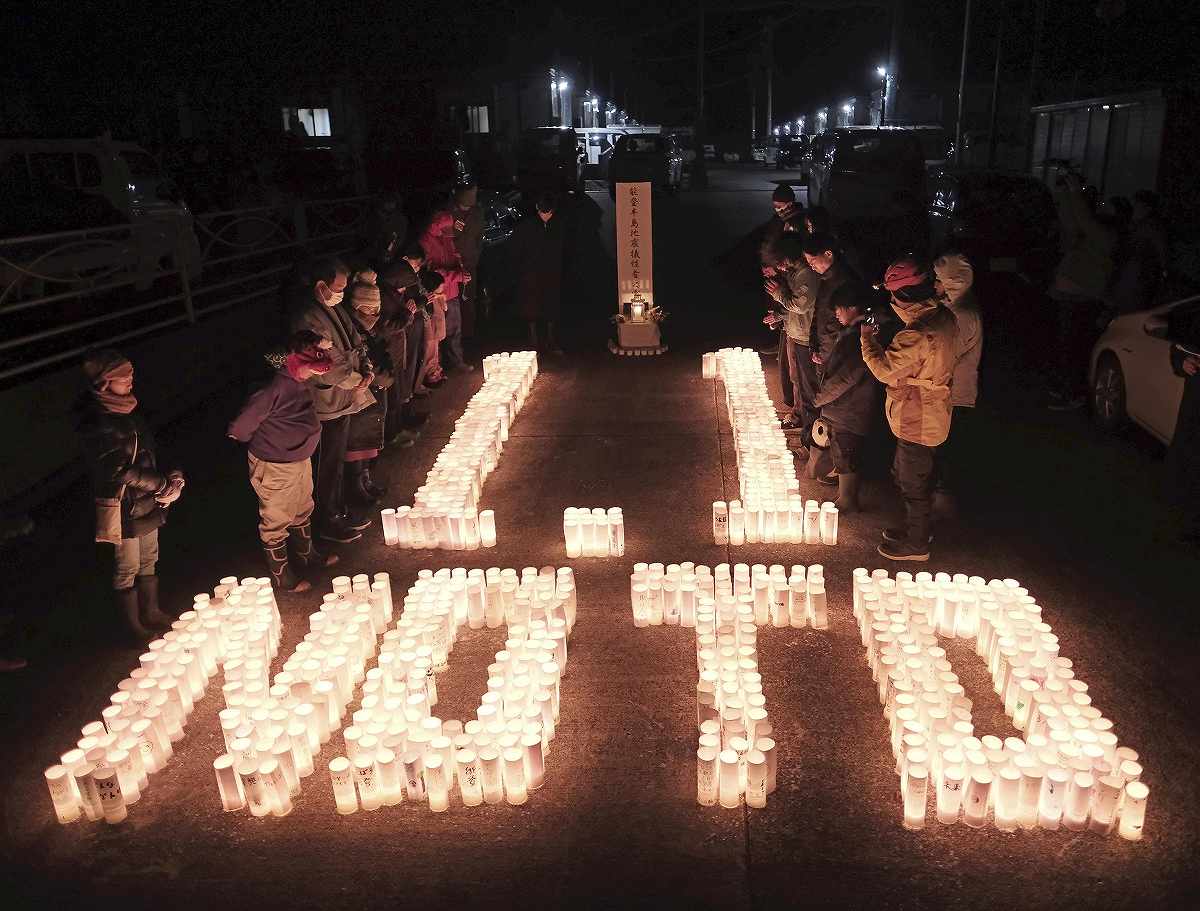
Residents pray for the victims of the Noto Peninsula Earthquake on Jan. 1, 2025, marking the disaster’s first anniversary.
16:12 JST, December 28, 2025
A total of 935 residents at 29 care facilities, including special nursing homes for the elderly, affected by a massive quake that hit the Noto Peninsula in Ishikawa Prefecture on New Year’s Day last year, were evacuated to other locations inside and outside of the prefecture, a Yomiuri Shimbun survey found.
Many of the facilities cited reasons such as hygiene deterioration due to water supply cutoff and power outages, as well as a lack of workers. Some residents of the facilities were taken as far away as Yamagata and Ibaraki prefectures.
Among those who were evacuated, 150 people have died without returning from their place of refuge, though potential links between evacuation and their deaths remain unknown.
The survey was conducted from November to December on 88 facilities in six cities and towns in the Noto region. Of those, 74 facilities, or 84%, responded. Twenty-nine facilities, accounting for about 40% of respondents, answered that residents had been evacuated following the disaster.
As for the timing of evacuations, 137 people were relocated to facilities inside and outside of the prefecture by the fifth day after the earthquake, when demand for emergency medical care for the facility residents had increased in the area. Between six and 18 days after the quake, 554 people were evacuated, with facilities making repeated requests for evacuation transportation.
The survey also found that 369 people managed to return to their original facilities after a certain period of evacuation. This figure accounts for less than 40% of the total number of evacuees. On the other hand, 243 people have permanently moved into facilities such as hospitals at their evacuation site. This includes wheelchair users, those with dementia and people who are bedridden.
Facilities that opted to evacuate residents said they had to do so because “they were unable to use toilets and baths due to water supply cutoff, leaving them incapable of maintaining appropriate hygiene levels” and “facility operations were limited because facility workers were also affected by the disaster.”
One facility voiced regret, saying, “We don’t know whether it was really for the best to evacuate all the residents.”
“Facilities must have made difficult decisions in an effort to protect the lives of their residents,” said Prof. Toshifumi Suzuki of the University of Shizuoka, an expert on disaster welfare. He went on to say that, in an emergency, facilities tend to make the choice between just two options — total evacuation or keeping all residents at the facility.
“Considering such issues as individual residents’ physical condition and preexisting illnesses, it is necessary [for facility operators] to plan out ‘evacuation triage’ [with set priorities],” he said.


Related Tags


Most Read
Most read in the last 24 hours
-

India's Arms Indigenization Quest for Self-Reliance / Desert Dril...
-
26-year-old U.S. National Falls While Climbing Mt. Fuji; Accompan...
-
Japan Passport Fees Going Down to ¥9,000 in July
-

Japanese Side Machida Zelvia Faces Ah-Ahli in Asian Champions Lea...
-

Transfer of Defense Equipment: Increase the Number of Like-minded...
-

Japan Eyes Trialing Dual-Use Tech Developed by Startups to Promot...
-

Charm of Meiji-Era Poet Takuboku Examined from Viewpoint of Donal...
-

Cherry Blossoms in Full Bloom in Hokkaido's Hakodate; Tourists Fl...
Most read in the last 7 days
-
Earthquake Hits Japan's Tohoku Region; 3-meter Tsunami Warning Is...
-

Trump Extends the Ceasefire with Iran but Keeps the Blockade
-

China, South Korea Object to Japanese PM Takaichi's Ritual Offeri...
-

India's Arms Indigenization Quest for Self-Reliance / New Delhi S...
-

Japan to Ban Use of Portable Chargers on Airplanes from April 24,...
-

¥1,000 Coins to Be Issued to Mark Anniversary of Beginning of Jap...
-

Most Serious Cyberattacks against the UK Now from Russia, Iran an...
-

New Challenges Await as Miura-Kihara Retires; Blade Maker, Ex-Coa...
Most read in the last 30 days
-
Earthquake Hits Japan's Tohoku Region; 3-meter Tsunami Warning Is...
-
Police Find Child's Shoe During Search for Missing Boy in Nantan,...
-
Body Found in Nantan, Kyoto Prefecture, During Search for 11-Year...
-
Cherry Blossoms, Rapeseed Flowers Perform Colorful ‘Duet’ in Niig...
-
Trump Extends the Ceasefire with Iran but Keeps the Blockade
-

Olympic Gold Medal-Winning Figure Skaters Riku-Ryu Announce Retir...
-

Nori Prices Surge in Japan Due to Poor Seaweed Production Amid Ri...
-
China, South Korea Object to Japanese PM Takaichi's Ritual Offeri...
Top Articles in Society
-
Earthquake Hits Japan’s Tohoku Region; 3-meter Tsunami Warning Issued (Update 1)
-
Police Find Child’s Shoe During Search for Missing Boy in Nantan, Kyoto Prefecture
-
Body Found in Nantan, Kyoto Prefecture, During Search for 11-Year-Old Boy in Area (Update 1)
-
Cherry Blossoms, Rapeseed Flowers Perform Colorful ‘Duet’ in Niigata
-

Two Women in Osaka Found Lying on Floor Bleeding, Later Pronounced Dead
JN ACCESS RANKING
-
Earthquake Hits Japan’s Tohoku Region; 3-meter Tsunami Warning Issued (Update 1)
-
Police Find Child’s Shoe During Search for Missing Boy in Nantan, Kyoto Prefecture
-
Body Found in Nantan, Kyoto Prefecture, During Search for 11-Year-Old Boy in Area (Update 1)
-
Cherry Blossoms, Rapeseed Flowers Perform Colorful ‘Duet’ in Niigata
-
Trump Extends the Ceasefire with Iran but Keeps the Blockade
Most read in the last 24 hours
-
India's Arms Indigenization Quest for Self-Reliance / Desert Dril...
-
26-year-old U.S. National Falls While Climbing Mt. Fuji; Accompan...
-
Japan Passport Fees Going Down to ¥9,000 in July
-
Japanese Side Machida Zelvia Faces Ah-Ahli in Asian Champions Lea...
-
Transfer of Defense Equipment: Increase the Number of Like-minded...
Most read in the last 7 days
-
Earthquake Hits Japan's Tohoku Region; 3-meter Tsunami Warning Is...
-
Trump Extends the Ceasefire with Iran but Keeps the Blockade
-
China, South Korea Object to Japanese PM Takaichi's Ritual Offeri...
-
India's Arms Indigenization Quest for Self-Reliance / New Delhi S...
-
Japan to Ban Use of Portable Chargers on Airplanes from April 24,...
Most read in the last 30 days
-
Earthquake Hits Japan's Tohoku Region; 3-meter Tsunami Warning Is...
-
Police Find Child's Shoe During Search for Missing Boy in Nantan,...
-
Body Found in Nantan, Kyoto Prefecture, During Search for 11-Year...
-
Cherry Blossoms, Rapeseed Flowers Perform Colorful ‘Duet’ in Niig...
-
Trump Extends the Ceasefire with Iran but Keeps the Blockade