
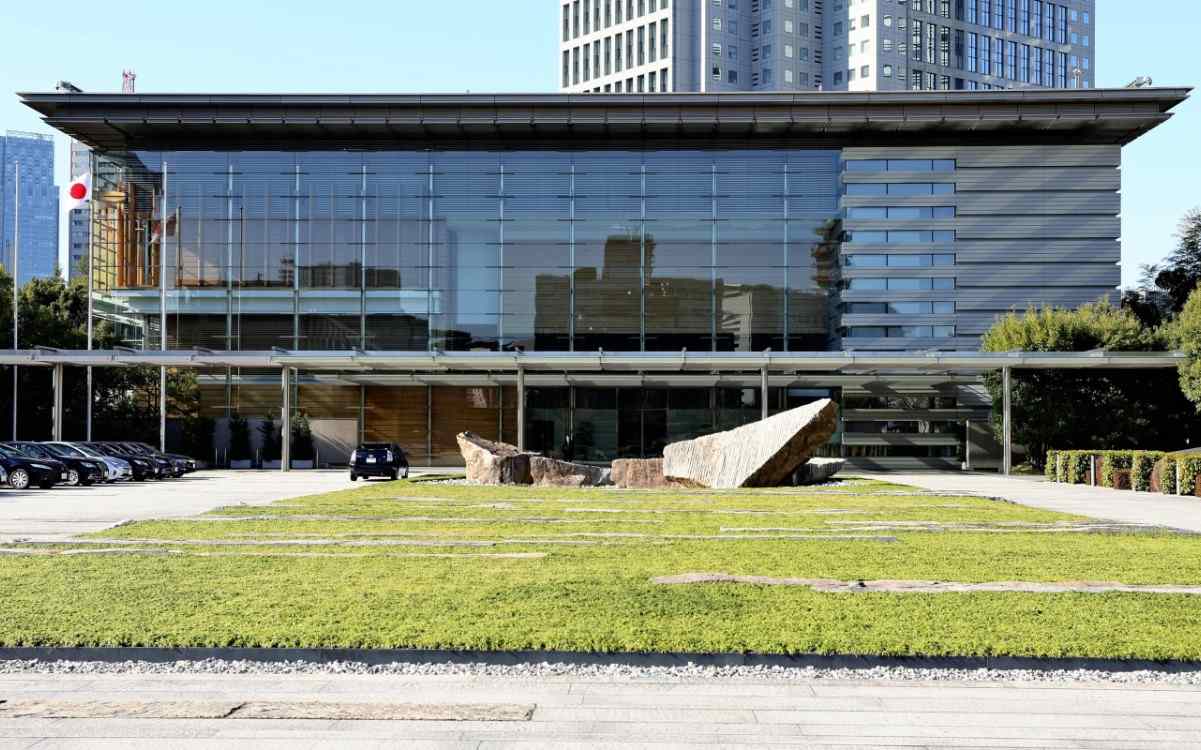
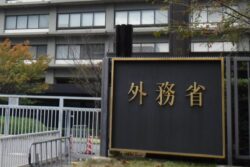
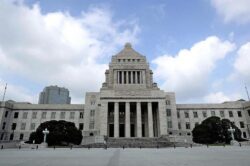
Prime Minister’s Office in Tokyo
10:56 JST, December 26, 2025
TOKYO (Jiji Press) — The Japanese government adopted at a cabinet meeting Friday a draft fiscal 2026 budget featuring record-high general-account spending of ¥122,309.2 billion .
The expenditures, larger than the ¥115,197.8 billion under the fiscal 2025 initial budget, will hit an all-time high for the second consecutive year.
The draft budget for the year starting in April 2026 includes measures to deal with inflation as the administration of Prime Minister Sanae Takaichi, who took office in October, aims to promote “responsible and proactive” public finances.
Social security spending is set to hit a record high partly because of inflation. Debt-servicing spending will top ¥30 trillion for the first time, due to rises in interest rates reflecting the Bank of Japan’s moves to end massive monetary easing and promote policy normalization.
It will be the first initial state budget to be compiled under Takaichi. The government plans to submit the draft budget to next year’s ordinary session of the Diet, Japan’s parliament, to be convened in January, aiming to secure its enactment before the current fiscal year ends on March 31.
The ruling Liberal Democratic Party and its coalition partner, the Japan Innovation Party, also known as Nippon Ishin no Kai, lack a majority in the House of Councillors, the upper chamber of the Diet. In the Upper House debate on the draft budget, the ruling bloc therefore aims to seek cooperation from the opposition Democratic Party for the People, with which the governing parties have agreed to raise the minimum annual taxable income level to ¥1.78 million .
Social security-related expenditures, which account for more than 30% of the total spending, will rise 2.0% from the fiscal 2025 initial budget to ¥39,055.9 billion chiefly because the main portion of medical service fees, covering labor costs for medical workers, will be raised 3.09% in a biennial revision, a significant increase from the 0.88% hike in the previous overhaul, owing to inflation and wage increases.
The government will set aside ¥1,239 billion under a special account as resources for aid to strengthen the foundations of the country’s semiconductor and artificial intelligence sectors as part of growth investments aimed at realizing a strong economy.
About ¥700 billion will be earmarked for programs to make high school education and elementary school meals free of charge, both set to start in fiscal 2026.
Defense-related spending will total ¥8,984.3 billion , a record high, after the government achieved a goal of raising the proportion of such expenditures to gross domestic product to 2% in fiscal 2025, two years earlier than planned.
Tax revenue grants to local governments will reach ¥20,877.8 billion , also an all-time high.
Debt-servicing expenses, or principal repayments and interest payments on Japanese government bonds, will amount to ¥31,275.8 billion , hitting a record high for the sixth straight year. The assumed interest rate, used to calculate interest payment costs, will be hiked from 2.0% to 3.0% amid a recent climb in long-term interest rates traced to concerns over the Takaichi administration’s aggressive spending policy.
Meanwhile, tax revenue will rise to an all-time high of ¥83,735 billion due to inflation and robust corporate earnings.
This will not be enough to cover the higher spending, however. To make up for the shortfall, the government plans to issue about ¥29,584 billion in new bonds, up from ¥28,647.1 billion under the fiscal 2025 initial budget. This means that the government will depend on bond issues for 24.2% of its total fiscal 2026 revenue.





Popular Articles
Popular articles in the past 24 hours
-

Immersive Fort Tokyo to Close After Less Than 2 Years; Theme Park...
-

Japan to Raise Budget for Science Grants by ¥10 Billion Amid Conc...
-
Japan's H3 Rocket Likely Made 1.5 Trips Around Earth; Analyst Bel...
-

As Bird Flu Pushes Egg Prices Higher, Japan's Agriculture Ministr...
-
AI-Driven ‘Zero Clicks’ Phenomenon Threatens Democracy; News Outl...
-

Intl Research Excellence Designation for Univs: Take the Lead in ...
-
Lithium-Ion Battery Fire Risk Prompts Govt to Name 36 Firms Over ...
-
Yokozuna Onosato Says He Has Recovered from Shoulder Injury, Is R...
Popular articles in the past week
-

Japan Set to Participate in EU's R&D Framework, Aims to Boost Coo...
-

Nagano Pref. Village to Introduce Fines for Some Disruptive Behav...
-
Artificial Intelligence Expands Possibilities for Foreign Languag...
-

Popularity of Piggy Banks Across Time and Place Seen at Bank's Mu...
-
-250x167.jpg)
Japan Eyes Plan to Accept Up To 1.23 Mil. Foreign Workers by End ...
-
Bank of Japan Considered U.S. Tariffs, Coming Shunto Wage Hike Ta...
-

Japan's H3 Rocket Failed in Latest Launch, Says Official
-
Japanese Public, Private Sectors to Partner on ¥3 Tril. Project t...
Popular articles in the past month
-
Tokyo Economic Security Forum to Hold Inaugural Meeting Amid Tens...
-
Keidanren Chairman Yoshinobu Tsutsui Visits Kashiwazaki-Kariwa Nu...
-
Imports of Rare Earths from China Facing Delays, May Be Caused by...
-
University of Tokyo Professor Discusses Japanese Economic Securit...
-
Japan Pulls out of Vietnam Nuclear Project, Complicating Hanoi's ...
-

Govt Aims to Expand NISA Program Lineup, Abolish Age Restriction
-
Blanket Eel Trade Restrictions Rejected
-
Key Japan Labor Group to Seek Pay Scale Hike
"Politics" POPULAR ARTICLE
-

Japan to Support Central Asian Logistics Route That Bypasses Russia, Plan to Be Part of Upcoming Summit in Tokyo
-

Chinese, Russian Bombers Flew Unusual Path by Heading Toward Tokyo; Move Likely Meant to Intimidate Japan
-
Japan Plans National Database to Track Foreign Ownership of Real Estate, Land as It Weighs New Rules
-
Up to 199,000 Deaths Estimated From Mega-Tsunami; Most Recent Occurrence Took Place in 17th Century
-
Japan Govt to Soon Submit Lower House Seat Reduction Bill That Could Take Effect in FY27
JN ACCESS RANKING
-
Tokyo Economic Security Forum to Hold Inaugural Meeting Amid Tense Global Environment
-
Keidanren Chairman Yoshinobu Tsutsui Visits Kashiwazaki-Kariwa Nuclear Power Plant; Inspects New Emergency Safety System
-
Imports of Rare Earths from China Facing Delays, May Be Caused by Deterioration of Japan-China Relations
-
University of Tokyo Professor Discusses Japanese Economic Security in Interview Ahead of Forum
-
Japan Pulls out of Vietnam Nuclear Project, Complicating Hanoi’s Power Plans