
‘Backstage Player’ Enhances Sea-Breeze Flavor of Butter-Sauteed Oysters on Shredded Potatoes
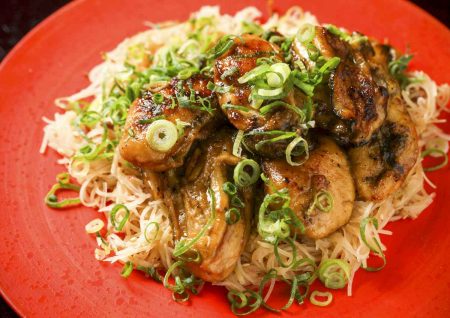
Butter-sauteed oysters with shuto-flavored potatoes
12:30 JST, December 7, 2025
Oysters are the star of a dish prepared by Akihiko Murata, the chef of Suzunari, a Japanese cuisine restaurant in Tokyo. The main supporting player among the other ingredients is a kind of shiokara called shuto.
Shiokara is the salted and fermented inner organs of sea creatures, commonly squid. But shuto is made with the organs of bonito, tuna or other fish. Murata uses shuto as a seasoning to add the flavor the ocean to his dishes.
“Shuto is the mightiest of all seasonings,” Murata said.
He uses shuto in various ways, such as mixing it with bonito sashimi or adding a little bit to stewed daikon radish as a finishing touch. He thinks shuto gives any flavor greater depth with its combination of saltiness and umami, as well as its aroma.
For this dish, Murata prepared butter-sauteed oysters served on top of finely grated and sauteed potatoes. Shuto is used in the potatoes.
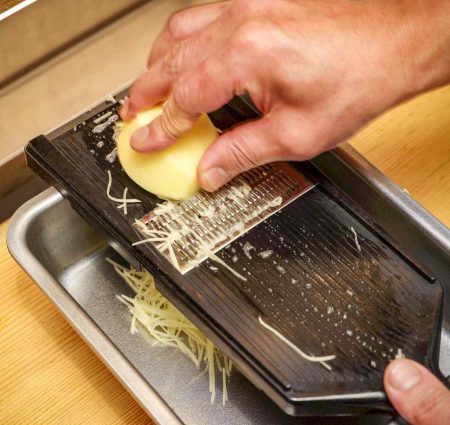
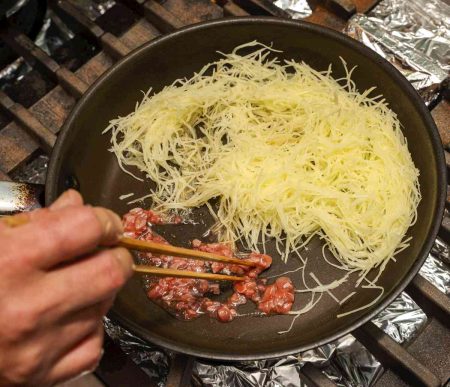
One tip is to grate the potatoes and rinse them well in water. This gives them a crisp texture when done. Spread the grated potato evenly in one half of a frying pan with sesame oil. Then put the shuto on the other side. The point is not to mix them immediately and instead wait until the sesame oil has had time to absorb the umami and aroma of the shuto.
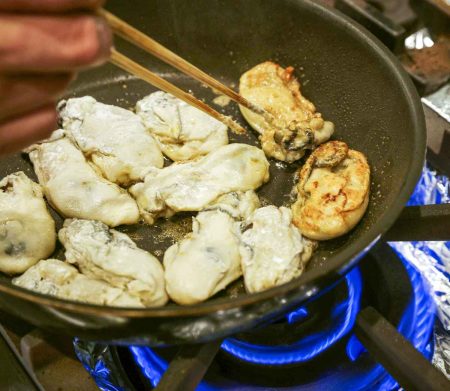
Thoroughly pat the oysters dry before flouring them, so that their surfaces will become nicely crisp when sauteed and will not stick as easily to the frying pan. This also makes it easier to toss them in soy sauce and butter later on.
“I recommend that you saute the potatoes and the oysters at the same time,” Murata said.
This makes it possible to serve the potatoes and oysters together as soon as they are done, filling the whole dish with even more flavor. It is worth trying if you have at least two burners on your stove. Speed is key to this recipe, so it is important to make sure all the ingredients are properly prepared and commit the cooking directions to memory.
When you sit down to eat, put some oyster and potato in your mouth at the same time — the aroma of the shuto will be enhanced, building on the umami of the oysters. The butter and soy-sauce seasoning has a rich flavor while there is also a delicate aftertaste typical of Japanese cuisine. It’s the kind taste that may make you want a drink. A glass of beer or sake would surely be a nice accompaniment to this meal.
Butter-sauteed oysters with shuto-flavored potatoes
Ingredients (for two servings)
- 250 grams oysters for cooking
- 200 grams potatoes
- 1 tbsp bonito shuto
- 1 tsp white sesame seeds
- 10 grams butter
- ¼ lemon
- 2 negi green onions (finely chopped)
- appropriate amount of flour
- 3 tbsp sesame oil
- 1 tsp mirin
- ½ tsp pepper
- 1 tbsp sake
- ½ tbsp soy sauce
-
The Yomiuri Shimbun
A potato is grated on a slicer. -
The Yomiuri Shimbun
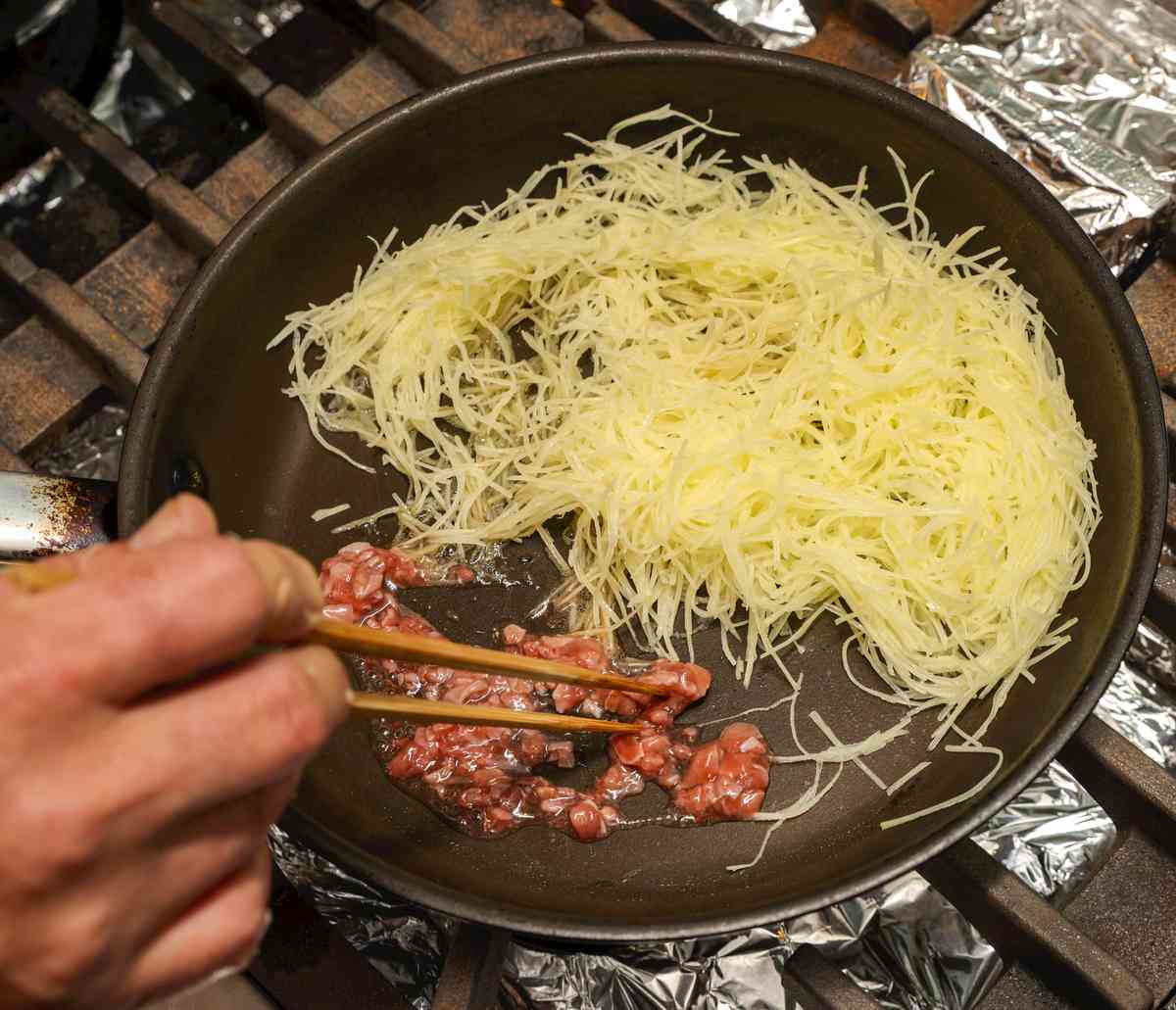
Bonito shuto is sauteed on one side of a frying pan while grated potato is sauteed on the other side of the same pan. -
The Yomiuri Shimbun
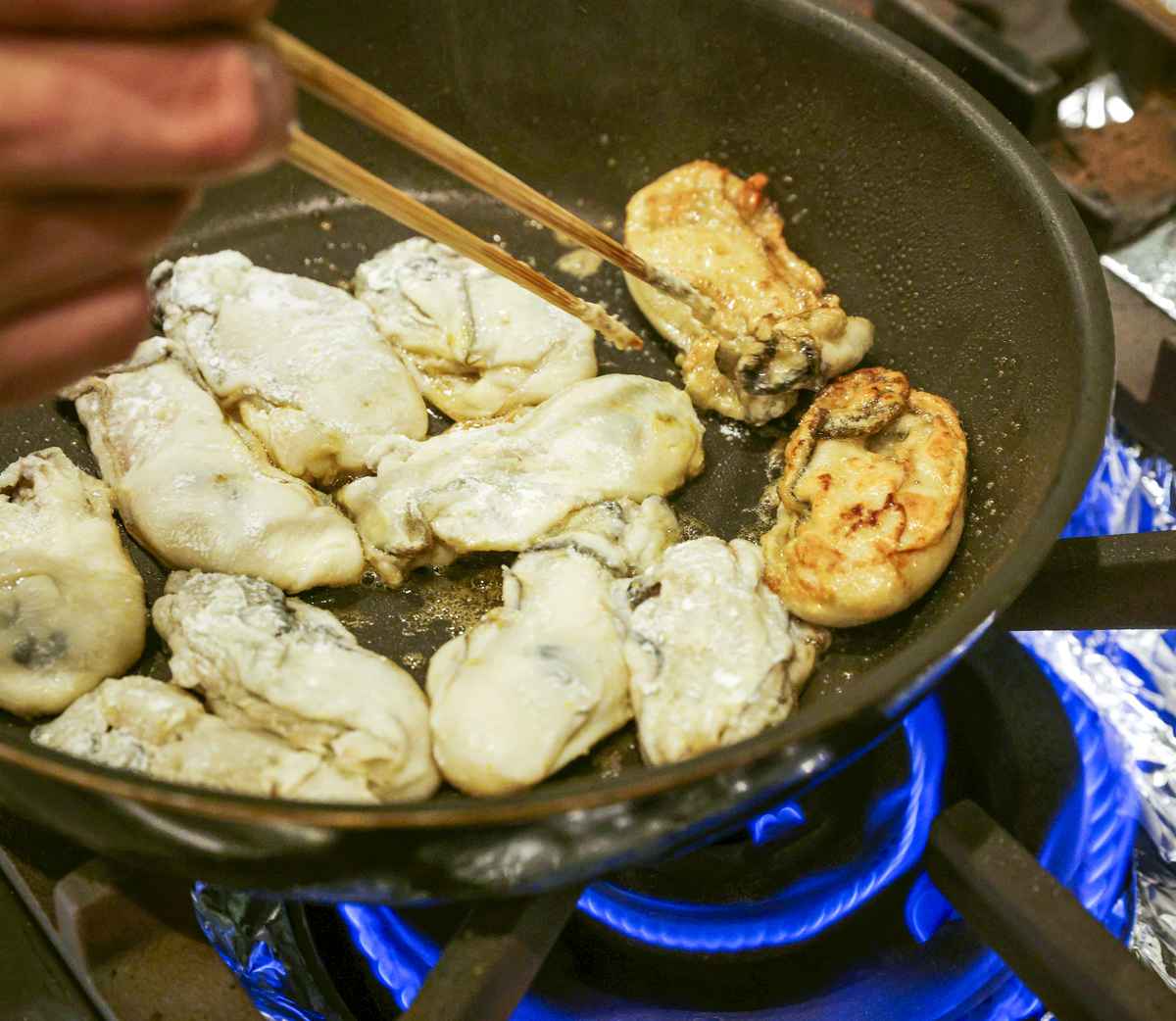
Oysters are cooked in a frying pan until browned on both sides. 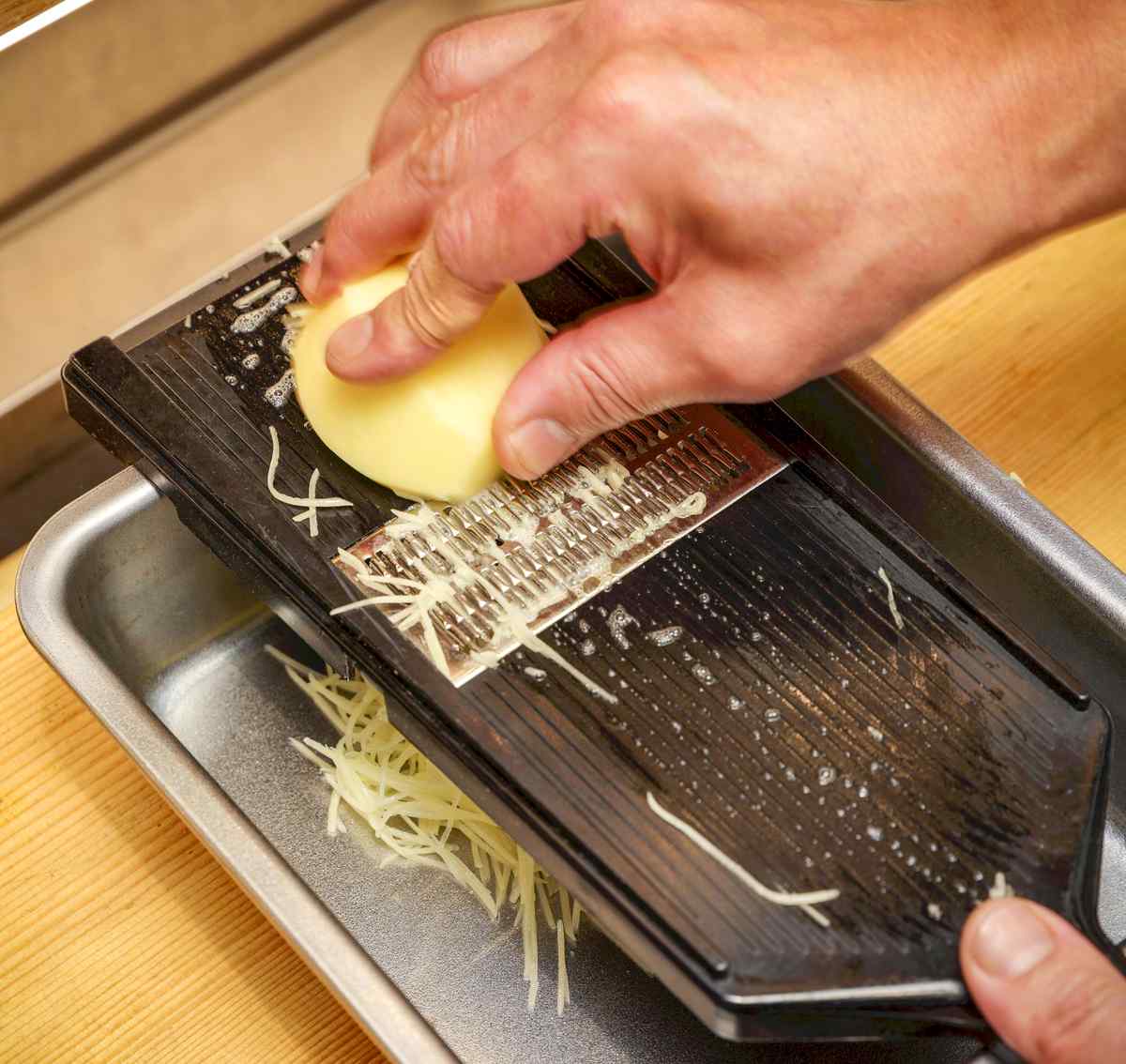
Directions:
1. Grate the potatoes. Add the grated potatoes and water to a bowl. Remove starch from the potato by changing the water several times. Drain in a colander.
2. Wash the oysters with water, then pat dry with paper towels. Spread an appropriate amount of flour on a tray and cover the oysters well.
3. Pour 1½ tablespoons of sesame oil into a frying pan and heat. Add the potato evenly on one side of the pan and the shuto on the other side of the same pan. Leave until an aroma arises.
4. Turn up the heat and add the mirin. Then saute everything in the pan quickly to remove excess moisture. Mix in the white sesame seeds and take off the heat.
5. Pour the remaining sesame seed oil into another frying pan, and cook the oysters over medium heat. Turn them over a few times so that both sides are evenly done and nicely colored. Add the pepper, sake and soy sauce to the pan and mix. Melt butter in the pan and toss with the other ingredients. Squeeze lemon over them and take off the heat.
6. Spread the shuto potatoes evenly on a serving dish. Place the oysters on top and sprinkle with finely chopped negi green onion.


Related Tags



Most Read
Most read in the last 24 hours
-

Iran's Top Diplomat Briefly Returns to Pakistan but Trump Says th...
-

DC Gala Shooting Suspect Aired Grievances against Trump in Writin...
-

Tokyo Vice Governor: SusHi Tech Tokyo Garners Tangible Business O...
-

Japan to Host Leaders from Major Cities from Around the World for...
-
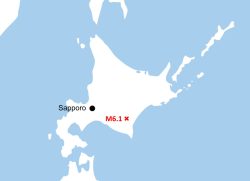
M6.1 Earthquake Hits Hokkaido, Japan; No Tsunami Expected
-

Japanese Police Storm Bus to Arrest Man with Knife; No Injuries R...
-

Japan's LDP Urges More Social Structures Against a ‘State of Emer...
-

Students’ ‘ITAMAE’ Project Boosts Interest in Starting Small Busi...
Most read in the last 7 days
-

China, South Korea Object to Japanese PM Takaichi's Ritual Offeri...
-

Trump Extends the Ceasefire with Iran but Keeps the Blockade
-

India's Arms Indigenization Quest for Self-Reliance / New Delhi S...
-

¥1,000 Coins to Be Issued to Mark Anniversary of Beginning of Jap...
-

Most Serious Cyberattacks against the UK Now from Russia, Iran an...
-

Trump Opposes United–American Merger, Signals Support for Spirit
-

System Malfunction in Haneda Airport Causes 83 Flight Cancelation...
-

Florida Launches Criminal Probe into OpenAI and ChatGPT over Dead...
Most read in the last 30 days
-
Earthquake Hits Japan's Tohoku Region; 3-meter Tsunami Warning Is...
-

Police Find Child's Shoe During Search for Missing Boy in Nantan,...
-

Body Found in Nantan, Kyoto Prefecture, During Search for 11-Year...
-
China, South Korea Object to Japanese PM Takaichi's Ritual Offeri...
-

Cherry Blossoms, Rapeseed Flowers Perform Colorful ‘Duet’ in Niig...
-
Trump Extends the Ceasefire with Iran but Keeps the Blockade
-

Olympic Gold Medal-Winning Figure Skaters Riku-Ryu Announce Retir...
-

Japanese Prime Minister Takaichi Speaks to Pakistani Prime Minist...
Top Articles in Features
-

Cherry Blossoms in Full Bloom Draw Crowds in Sendai, Miyagi Pref.; Aquarium Creates Underwater ‘Cherry Blossom Viewing’ Show
-

Cherry Blossom Viewing Season at Peak in Japan’s Kanazawa
-

Cherry Blossoms, Tulips, Snow-Capped Peaks Create Picturesque Scene in Toyama Pref., Japan
-

Cherry Blossoms Reach Peak in Fukushima Pref., Including Trees Planted to Commemorate Birth of Princess Aiko
-
Cherry Blossom Viewers Enjoy Picnic Under the Trees in Full Bloom in Famous Osaka Spot
JN ACCESS RANKING
-
Earthquake Hits Japan’s Tohoku Region; 3-meter Tsunami Warning Issued (Update 1)
-
Police Find Child’s Shoe During Search for Missing Boy in Nantan, Kyoto Prefecture
-
Body Found in Nantan, Kyoto Prefecture, During Search for 11-Year-Old Boy in Area (Update 1)
-
China, South Korea Object to Japanese PM Takaichi’s Ritual Offering to Yasukuni Shrine
-
Cherry Blossoms, Rapeseed Flowers Perform Colorful ‘Duet’ in Niigata
Most read in the last 24 hours
-
Iran's Top Diplomat Briefly Returns to Pakistan but Trump Says th...
-
DC Gala Shooting Suspect Aired Grievances against Trump in Writin...
-
Tokyo Vice Governor: SusHi Tech Tokyo Garners Tangible Business O...
-
Japan to Host Leaders from Major Cities from Around the World for...
-
M6.1 Earthquake Hits Hokkaido, Japan; No Tsunami Expected
Most read in the last 7 days
-
China, South Korea Object to Japanese PM Takaichi's Ritual Offeri...
-
Trump Extends the Ceasefire with Iran but Keeps the Blockade
-
India's Arms Indigenization Quest for Self-Reliance / New Delhi S...
-
¥1,000 Coins to Be Issued to Mark Anniversary of Beginning of Jap...
-
Most Serious Cyberattacks against the UK Now from Russia, Iran an...
Most read in the last 30 days
-
Earthquake Hits Japan's Tohoku Region; 3-meter Tsunami Warning Is...
-
Police Find Child's Shoe During Search for Missing Boy in Nantan,...
-
Body Found in Nantan, Kyoto Prefecture, During Search for 11-Year...
-
China, South Korea Object to Japanese PM Takaichi's Ritual Offeri...
-
Cherry Blossoms, Rapeseed Flowers Perform Colorful ‘Duet’ in Niig...