
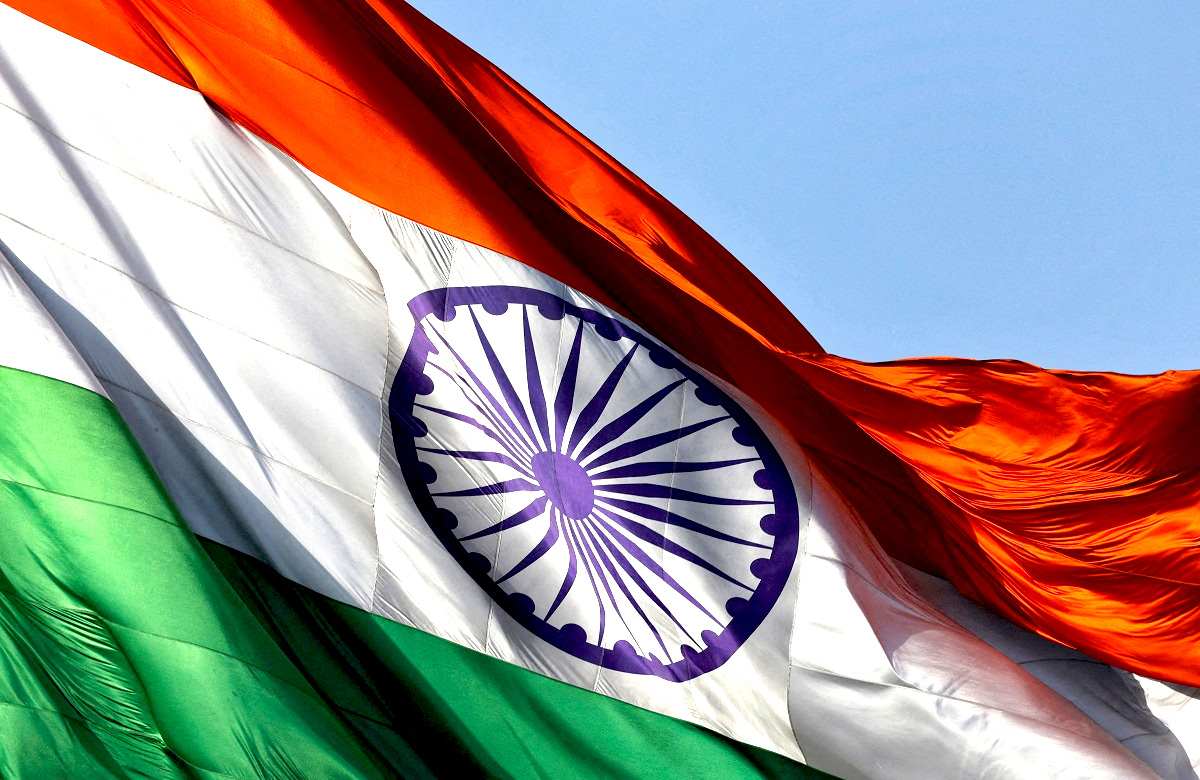
The Indian national flag, in New Delhi, India, April 16, 2024.
2:00 JST, August 29, 2025
The following is the full written response from Indian Prime Minister Narendra Modi to questions from The Yomiuri Shimbun.
The Yomiuri Shimbun: Mr. Prime Minister, you are visiting Japan after two years. While your visit in 2023 had a multilateral context, your current visit is seen as an important one for India-Japan relations. What should we look forward to during your two days in Japan?
Indian Prime Minister Narendra Modi: I am delighted to be in Tokyo once again, this time for the 15th India-Japan Annual Summit. I warmly thank Prime Minister Ishiba for his gracious invitation.
India and Japan are not just two close partners. We are ancient civilizations, vibrant democracies and leading economies. We share a common strategic outlook. Over the past decade, our ties have scaled new heights since they were elevated to Special Strategic and Global Partnership. The annual Summit itself is testament to the maturity and vibrancy of our ties.
During my meeting with Prime Minister Ishiba, I look forward to charting the next phase of our partnership. Our focus will be to strengthen security, enhance resilience, drive innovation and deliver prosperity for our peoples.
I also look forward to visiting Sendai in Miyagi Prefecture. It is a region that symbolizes both resilience and innovation.
I am confident that my visit, though short, will be long in impact. India and Japan will continue to be a force for peace, progress and stability in Asia and the world.
Yomiuri: What concrete steps are being taken under the India-Japan partnership to improve cooperation on semiconductors, and how will this collaboration help address supply chain challenges, boost domestic manufacturing in India and support the technological ambitions of both countries?
Modi: The India-Japan partnership is unique. It spans millennia of cultural bonds, and is now shaping the contours of the 21st century. We are working together on new and emerging technologies, with semiconductor being one of them.
India’s semiconductor sector is on the cusp of transformation. We have put in place a comprehensive regulatory and policy framework, backed by incentives, to build a strong semiconductor and display ecosystem. Already, six semiconductor units are taking root in India, with four more on the way.
By the end of this very year, “Made in India” chips will be in the market, a clear demonstration of India’s design and manufacturing capabilities.
Japanese companies, with their technological strengths and global leadership, can play a pivotal role in this journey. A strong beginning has already been made. By combining India’s scale and capabilities with Japan’s advanced technologies, we can build a resilient and trusted semiconductor value chain.
This collaboration will support the technological ambitions of both our countries, and enhance global supply chain security.
I see semiconductor cooperation emerging as a major pillar of the India–Japan partnership.
After all, in this digital century, chips are not just about computers, they are about competitiveness, credibility and confidence in the future.
Yomiuri: India has an expansive vision for space exploration, and we understand that your government has recently approved the Chandrayaan 5 Mission, and that this will be done in collaboration with Japan. How do you envision the future of space exploration with Japan as the key partner?
Modi: India’s space journey is a story of determination, hard work and innovation of our scientists.
From Chandrayaan-3’s historic landing on the moon’s south pole to our advances in interplanetary missions, India has consistently demonstrated that space is not the final frontier, it is the next frontier.
I am glad that India and Japan are joining hands for the next edition of the Chandrayaan series or the LUPEX (Lunar Polar Exploration) mission. This will contribute to deepening our understanding of the permanently shadowed regions at the lunar south pole.
Our G2G collaboration in the space sector, between ISRO and JAXA, is fostering a culture of cooperation between our industries and startups. This is creating an ecosystem where innovation flows both ways — from labs to launch pads, and from research to real-world applications.
The impact of space science is linked to progress in our daily lives, from agriculture, disaster management, to communications and beyond.
I am confident that our scientific teams will be working together to push the boundaries of space science. And, our partnership in space will not only expand horizons above us, but also improve lives around us.
Yomiuri: During the India-Japan Defense Ministers’ meeting in May 2025 in New Delhi, both sides focused on deepening defense cooperation in pursuing military modernization. In this regard, how has the India-Japan defense partnership evolved in recent years, and what opportunities and challenges lie ahead for both countries in improving defense cooperation?
Modi: Collaboration in the defense sector has been a strong success story for India and Japan. Both countries have a shared interest in peace, security and stability of the Indo-Pacific region.
Today, our partnership spans across all three services. We conduct regular bilateral and multilateral exercises. We are building a robust Defense Equipment and Technology Cooperation, and working on codevelopment and coproduction of UNICORN masts for our Navy.
In recent years, Indian defense products are rapidly expanding their global footprint. Japan also has a proven record in the field of defense technology. Together, with political trust and natural complementarities, we can design and produce next generation defense platforms not just for ourselves, but also for the world.
The Joint Declaration on Security Cooperation to be adopted during my visit will further military modernization and defense industry collaboration, and advance our ambition for shaping a secure and stable Indo-Pacific for generations to come.
Yomiuri: How do you evaluate the economic partnership between India and Japan?
Modi: Economic partnership is one of the key pillars of our Special Strategic and Global Partnership. As the world’s leading economies, we have been contributing to each other’s growth, competitiveness and dynamism.
Japan has been a trusted partner in India’s infrastructure development across generations. Japan has also been a leading source of Foreign Direct Investment for India in key sectors including automobiles, electronics, telecom, chemicals, finance and pharmaceuticals.
The number of Japanese firms in India has grown steadily to around 1,500, while more than 400 Indian companies operate in Japan. Clearly, this is only the beginning — the real potential is much higher.
We must aim bigger and remain ambitious. The synergies across governments, businesses and people can create scale and speed in our economic partnership.
We maintain important trade relations, but it has not yet reached the levels envisaged under our CEPA [Comprehensive Economic Partnership Agreement]. I am confident that with renewed efforts, we can diversify our trade basket, make it more balanced and open up new frontiers as well.
The 20th century saw Japan emerge as a major partner in India’s infrastructure development. I am confident that the 21st century will see Japan as a major partner in India’s innovation, manufacturing, and global value chains.
Yomiuri: Some Japanese companies are positioning their production bases in India as hubs for third-country markets such as Africa. How would India support the efforts of such companies?
Modi: India has seen multi-faceted reforms which make manufacturing in India easier than ever before. We have removed compliance burdens, rolled out incentives and ensured a large skilled work force for companies to set base in India.
Many global companies, including from Japan, are setting up their production in India not only to cater to our domestic market, but also for the world.
Just a couple of days back, I was at the Suzuki plant in India where we flagged off electric vehicles to be exported to a hundred countries, including Japan.
India enjoys a historically close and multifaceted relationship with Africa and various countries of the Global South.
Steps like “Japan-India Cooperation Initiative for Sustainable Economic Development in Africa” combining Japan’s technological and financial expertise with India’s developmental partnership and long-standing goodwill in Africa are good efforts in the right direction.
India is well placed to play the role of a bridge connecting Japan’s capabilities with Africa’s growth and development priorities.
Yomiuri: One of the main items on your agenda for your visit will be India’s bullet train project. What are your expectations for Japan, with its Shinkansen technology, in terms of future vehicle production in India?
Modi:The Mumbai-Ahmedabad High-Speed Rail project is a flagship project between India and Japan. We are aiming to have the passenger services start in a few years’ time.
While the Mumbai-Ahmedabad High-Speed Rail project is on its way, we have unveiled a bigger ambition: to have a 7,000-kilometer-long network of high-speed rail in our country.
Much of it will have to be through Make in India, so that the program is sustainable and viable. I welcome active participation by Japanese companies in this endeavour.
There is also potential to expand our cooperation beyond high-speed rail to cover other areas of mobility including sectors such as ports, aviation, shipbuilding, road transport, railways and logistics where India has launched ambitious initiatives.
Clearly, Japan’s technological edge in many of these areas, together with India’s scale, manufacturing and innovation power, can create enormous value for both sides.
Yomiuri: People-to-People exchanges between India and Japan have become an important area of cooperation. Can you tell us more about how India and Japan plan to take this forward?
Modi: Immense mutual goodwill and friendship between the people of India and Japan is at the heart of our ties with Japan. There is great receptivity toward our cultures and cuisines in both countries.
Professionals from Japan are well respected in India and have built a niche for themselves.
Similarly, Indian diaspora across the world are contributing significantly in the growth of various countries. Whether it is Indian IT professionals or Indian scientific manpower, greater presence of the Indian diaspora in Japan can help stimulate new industries and new fields of knowledge where our two countries have so much at stake.
We have also etched important agreements under Japan’s Specified Skilled Worker (SSW) program and the Technical Intern Training Program (TITP) to enhance the advanced manufacturing skills of our workers.
This will help our manufacturing industry grow and contribute to our vision for a developed India. Our focus has also been in promoting language education in India which would also allow our people to connect better with each other and to tap into the complementarities. I look forward to discussing this aspect of our relations at the Summit.
Yomiuri: What can Japan and India do to help establish international rules for the reliable use of AI? What are your thoughts on data sovereignty?
Modi: We live in the digital age. Technology is playing an increasingly important role in our lives, with AI being in the forefront. India sees AI as a medium to enhance human progress.
But we are equally conscious of the risk it poses. We believe that resolving concerns and encouraging innovation should be given equal importance in AI Governance so that we only promote Responsible AI. There is a need to evolve a consensus on global governance and norms for Responsible AI.
AI Governance must go beyond mitigating risks; it should also encourage fair access and foster inclusive progress for all, especially in the Global South.
India’s Data Empowerment and Protection Architecture (DEPA) has democratized digital commerce and addressed key data protection issues through techno-legal solutions.
Similarly, Japan’s “Data Free Flow with Trust” (DFFT) initiative focuses on privacy, security and trustworthy cross-border data flows.
In a data-driven world, international collaboration is crucial for effective AI governance and secure and transparent cross-border data exchange.
India and Japan should seize this opportunity to deepen our partnership, promote interoperability while respecting sovereignty, harmonize standards through techno-legal solutions and identify convergence between regulatory approaches.
India will be hosting the AI Impact Summit in 2026. It will be an opportunity for India and Japan to collaborate and take these issues forward.
Yomiuri: What are your views on the Japanese government’s concept of a free and open Indo-Pacific? How will India and Japan cooperate and enhance their relationship to realize this concept?
Modi:There is a strong convergence between Japan’s vision of a Free and Open Indo-Pacific and India’s own approach encapsulated in our Indo-Pacific vision, in the Vision MAHASAGAR and the Indo-Pacific Oceans’ Initiative. India and Japan are committed to an Indo-Pacific that is peaceful, prosperous, stable and where the territorial integrity and sovereignty of nations are respected.
Both our countries have strong and extensive linkages with countries in the Indo-Pacific region, and we both engage with some of them in plurilateral formats to give expression to our shared objectives.
Yomiuri: You are visiting China after your visit to Japan. What is the importance of improving relations with China at this time?
Modi: At the invitation of President Xi Jinping, I would be traveling to Tianjin from here to take part in the SCO Summit. Since my meeting with President Xi in Kazan last year, steady and positive progress has been made in our bilateral ties.
Stable, predictable, and amicable bilateral relations between India and China, as two neighbours and the two largest nations on earth, can have a positive impact on regional and global peace and prosperity.
This is also crucial for a multi-polar Asia and a multi-polar world.
Given the current volatility in world economy, it is also important for India and China, as two major economies, to work together to bring stability to the world economic order. India is ready to advance bilateral relations from a strategic and long-term perspective on the basis of mutual respect, mutual interest and mutual sensitivity, and to enhance strategic communication to address our developmental challenges.
Yomiuri: You recently held consecutive phone conversations with the leaders of Russia and Ukraine. What role does India envision playing in the peaceful resolution of the conflict between the two countries?
Modi: India has maintained a principled and humanitarian stance on the conflict which is equally appreciated by both President Putin and President Zelenskyy. In line with this, both the leaders spoke to me to share their perspectives on the developments related to the conflict. I reiterated India’s principled and consistent stand and encouraged dialogue and diplomacy to resolve the conflict.
I have already indicated India’s willingness to support meaningful efforts aimed at achieving peaceful resolution of the conflict. I believe, by virtue of our good relations with both sides, including key stakeholders, we can strengthen efforts dedicated to the restoration of an early and lasting peace in Ukraine.
Yomiuri: As a member of BRICS, how do you view the importance of the Global South? Should Japan see India as a bridge between the Global South and other countries such as Quad members?
Modi: The global community has made a commitment to create a more equitable world through achieving Sustainable Development Goals by 2030. If we have to live up to this commitment, then the Global South must be given priority. In a highly interconnected world, we have seen the debilitating impact of the pandemic, conflicts and supply chain disruptions on the Global South. They continue to face myriad challenges involving global governance, climate change, food and energy security, debt and financial stress, all having significant impact on their development priorities.
As members of the Global South, we clearly understand these concerns and their effects on people’s lives. We have made strenuous efforts to bring these to the forefront of the global agenda.
All our global initiatives, like Mission LiFE, Coalition for Disaster Resilient Infrastructure, International Solar Alliance, Global Biofuels Alliance, focus on promoting the interests of the Global South. Our G20 Presidency saw the inclusion of the African Union and gave voice to the aspirations of the Global South.
Similarly, in BRICS, we are actively engaged in working toward the benefit of the Global South. India attaches importance to its engagement with BRICS, which has emerged as a valuable forum for consultation, and cooperation and has helped promote mutual understanding, on a specific set of issues of common interest to emerging economies.
Under the rubric of the Quad, we have worked for the development and progress of the countries in the Indo-Pacific.
India has also consistently called for urgent and comprehensive reforms of the global multilateral institutions to make them more effective and reflective of the current geopolitical and economic realities.
India’s motto is “Vasudhaiva Kutumbakam” — the world is one family. We believe in building bridges of cooperation and friendship among nations.
Yomiuri: When it comes to the Quad, what is the significance of the Indian prime minister visiting Japan? What areas of cooperation with Japan would you like to see confirmed ahead of the group’s autumn summit? How will you develop the Quad framework in the future?
Modi: In the last twenty years since its inception in 2004, the Quad has emerged as a force of global good delivering positive outcomes for the people of the Indo-Pacific region. Quad’s practical agenda ranges from maritime safety and security, Humanitarian Assistance and Disaster Relief, cyber security, critical and emerging technologies and connectivity to education, health and even space cooperation.
The role of the Quad in the delivery of public goods can also be very significant. We greatly value Japan’s role in strengthening the Quad’s agenda and believe that together we can continue to deliver practical solutions and tangible outcomes that benefit not only our region but the wider world.



Most Read
Popular articles in the past 24 hours
-
5 Major Japan Banks Raise Fixed Rates for Housing Loans
-

Next Federal Reserve Board Chair: Preserving Independence of Mone...
-

Japanese Byobu Folding Screens Tailored to Meet Modern Lifestyles...
-

Investigation of Anonymous, Fluid Criminal Groups: Devise Ways to...
-
Japan's Takaichi, U.K.’s Starmer to Boost Critical Minerals Suppl...
-

Carlos Alcaraz Becomes Youngest Man to Complete a Career Grand Sl...
-

More Winter Weather Leads to Heavy Snow, Canceled Flights and, in...
-

Pakistan Says It Has Killed 145 'Indian-Backed Terrorists' in Bal...
Popular articles in the past week
-

Japan Institute to Use Domestic Commercial Optical Lattice Clock ...
-
Record-Breaking Snow Cripples Public Transport in Hokkaido; 7,000...
-
North Korea Possibly Launches Ballistic Missile
-

Foreign Snowboarder in Serious Condition After Hanging in Midair ...
-
Narita Airport, Startup in Japan Demonstrate Machine to Compress ...
-

Sakie Yokota, Last Surviving Parent of a North Korea Abductee, Ur...
-

Toyota Motor Group Firm to Sell Clean Energy Greenhouses for Stra...
-
Japan to Face Shortfall of 3.39 Million Workers in AI, Robotics i...
Popular articles in the past month
-
Univ. in Japan, Tokyo-Based Startup to Develop Satellite for Disa...
-

JAL, ANA Cancel Flights During 3-day Holiday Weekend due to Blizz...
-
China Confirmed to Be Operating Drilling Vessel Near Japan-China ...
-

China Eyes Rare Earth Foothold in Malaysia to Maintain Dominance,...
-

Tokyo, Yokohama Observe First Snowfall of Season; 1 Day Earlier t...
-
M6.2 Earthquake Hits Japan's Tottori, Shimane Prefectures; No Tsu...
-
Japan, Qatar Ministers Agree on Need for Stable Energy Supplies; ...
-

Japan, Italy to Boost LNG Cooperation; Aimed at Diversifying Japa...
Top Articles in World
-
China Confirmed to Be Operating Drilling Vessel Near Japan-China Median Line
-
China Eyes Rare Earth Foothold in Malaysia to Maintain Dominance, Counter Japan, U.S.
-
Japan, Qatar Ministers Agree on Need for Stable Energy Supplies; Motegi, Qatari Prime Minister Al-Thani Affirm Commitment to Cooperation
-
North Korea Possibly Launches Ballistic Missile
-

10 Universities in Japan, South Korea, Mongolia to Establish Academic Community to Promote ICC Activities, Rule of Law
JN ACCESS RANKING
-
Univ. in Japan, Tokyo-Based Startup to Develop Satellite for Disaster Prevention Measures, Bears
-
JAL, ANA Cancel Flights During 3-day Holiday Weekend due to Blizzard
-
China Confirmed to Be Operating Drilling Vessel Near Japan-China Median Line
-
China Eyes Rare Earth Foothold in Malaysia to Maintain Dominance, Counter Japan, U.S.
-
M6.2 Earthquake Hits Japan’s Tottori, Shimane Prefectures; No Tsunami Threat (Update 4)