
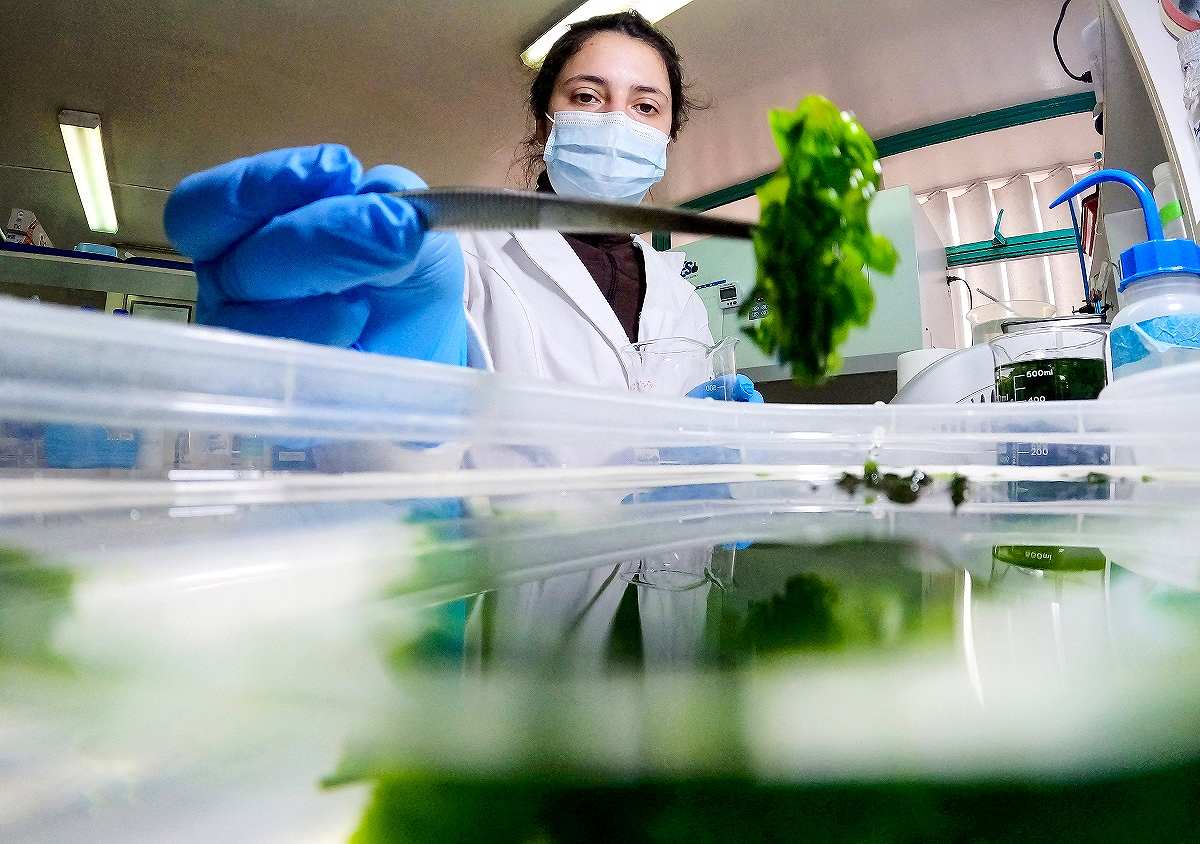
A student extracts Ulva Lactuca seaweed on Sept. 3.
11:44 JST, October 3, 2024
SANTIAGO (Reuters) — Slimy, green seaweed floats in water-filled beakers, buckets and bins in the University of Santiago’s labs, algae which scientists in the Chilean capital are trying to turn into an efficient power source.
Their field is biophotovoltaics, which uses a photosynthetic organism such as seaweed to convert light into electrical energy. The scientists spread the seaweed onto electrodes on biophotovoltaic panels, similar to the solar type.
“Algae use light to oxidize water, and in the process they release electrons,” said project leader Federico Tasca, adding that these can then be picked up in electric circuits, with the oxygen released in the process an added benefit.
Similar projects before have used microalgae, which are single-celled organisms, while seaweed is a macroalga, or multicellular organism, Tasca said.
“Macroalgae are more hardy, easier to work with, easier to harvest,” Tasca said, while acknowledging that the process was still far from being energy efficient.
“That’s exactly what the investigation is about, it’s about improving the efficiency of producing electricity,” he said.
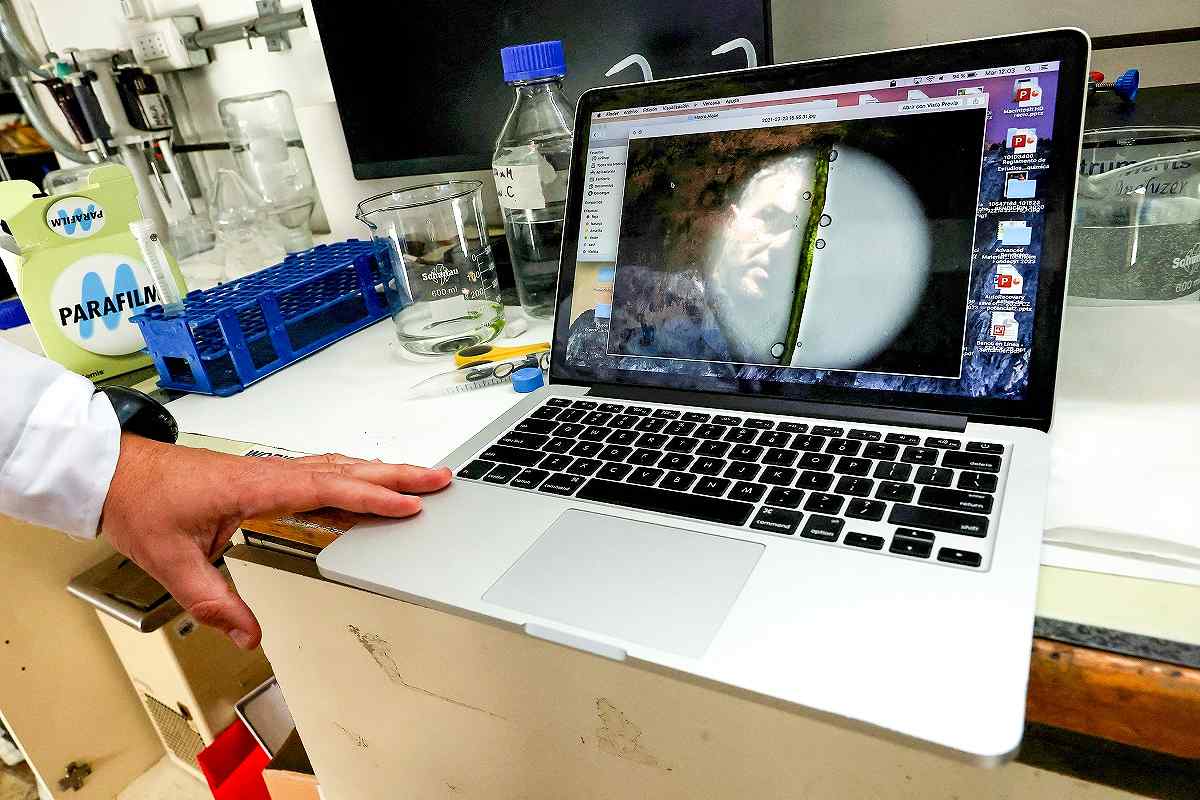
Federico Tasca Gottardo at the University of Santiago reflects on a screen that shows a microscopic image of Ulva Lactuca seaweed generating oxygen, at the University of Santiago’s laboratory on Aug. 27.
Seaweed could be used in some cases where alternatives were not available. “It’s a good system to feed energy to a light bulb, to light up some LEDs,” he said.
Algae are still under-researched, said Alejandra Moenne, who heads the University of Santiago’s marine biology department.
“I’ve always said that algae are like a treasure chest buried at sea. They’re full of genes and molecules that we still don’t know enough about, which could even be used for medicinal purposes one day,” said Moenne.






Most Read
Popular articles in the past 24 hours
-
Japanese High School Student Aims to Share Kaiten History Through...
-

PM Takaichi Spells out Plans to Advance Bold Policy Shifts in Spe...
-

Chronic Issues Erode Thailand’s Economy as Political Confusion Pe...
-

Tottori: 95-Year-Old Japanese Descendent from Philippines Visits ...
-

Japan to Monitor Trump Administration's Response to U.S. Supreme ...
-

Milano Cortina 2026: Speed Skater Takagi Finishes 6th in the 1,50...
-
Osaka: 40 Ninjas Display Shuriken Throwing Skills at Japan Champi...
-

Miyazaki: Japanese Woman Walks in Footsteps of Samurai Ancestor W...
Popular articles in the past week
-

Japan PM Takaichi’s Cabinet Resigns en Masse
-

Man Infected with Measles Reportedly Dined at Restaurant in Tokyo...
-

Sanae Takaichi Elected Prime Minister of Japan; Keeps All Cabinet...
-

Japan's Govt to Submit Road Map for Growth Strategy in March, PM ...
-

Bus Carrying 40 Passengers Catches Fire on Chuo Expressway; All E...
-

Milano Cortina 2026: Figure Skaters Riku Miura, Ryuichi Kihara Pa...
-

Japan, U.S. Name 3 Inaugural Investment Projects; Reached Agreeme...
-

U.S. Firm to Build Training Hub in Fukushima N-plant for Debris R...
Popular articles in the past month
-
Japan PM Takaichi’s Cabinet Resigns en Masse
-

Japan Institute to Use Domestic Commercial Optical Lattice Clock ...
-

Israeli Ambassador to Japan Speaks about Japan’s Role in the Reco...
-
Man Infected with Measles Reportedly Dined at Restaurant in Tokyo...
-

Videos Plagiarized, Reposted with False Subtitles Claiming ‘Ryuky...
-

Man Infected with Measles May Have Come in Contact with Many Peop...
-

Prudential Life Insurance Plans to Fully Compensate for Damages C...
-

Woman with Measles Visited Hospital in Tokyo Multiple Times Befor...
Top Articles in Science & Nature
-
Japan Institute to Use Domestic Commercial Optical Lattice Clock to Set Japan Standard Time
-
Japan to Face Shortfall of 3.39 Million Workers in AI, Robotics in 2040; Clerical Workers Seen to Be in Surplus
-
Record 700 Startups to Gather at SusHi Tech Tokyo in April; Event Will Center on Themes Like Artificial Intelligence and Robotics
-

iPS Treatments Pass Key Milestone, but Broader Applications Far from Guaranteed
-
iPS Cell Products for Parkinson’s, Heart Disease OK’d for Commercialization by Japan Health Ministry Panel
JN ACCESS RANKING
-
Japan PM Takaichi’s Cabinet Resigns en Masse
-
Japan Institute to Use Domestic Commercial Optical Lattice Clock to Set Japan Standard Time
-
Israeli Ambassador to Japan Speaks about Japan’s Role in the Reconstruction of Gaza
-
Man Infected with Measles Reportedly Dined at Restaurant in Tokyo Station
-
Videos Plagiarized, Reposted with False Subtitles Claiming ‘Ryukyu Belongs to China’; Anti-China False Information Also Posted in Japan