To use this site, please disable the ad blocking feature and reload the page.
This website uses cookies to collect information about your visit for purposes such as showing you personalized ads and content, and analyzing our website traffic. By clicking “Accept all,” you will allow the use of these cookies.
Users accessing this site from EEA countries and UK are unable to view this site without your consent. We apologize for any inconvenience caused.
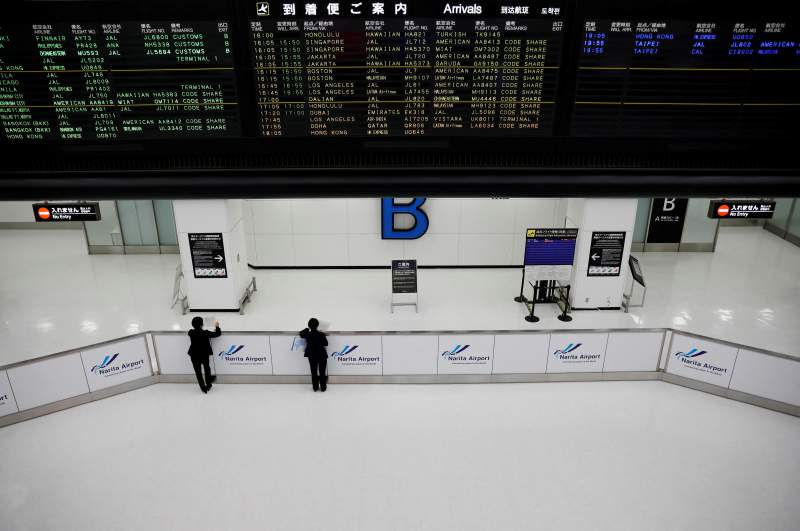
REUTERS File Photo Pick up service staffs wait for passengers at an arrival hall at Narita international airport on the first day of closed borders to prevent the spread of the new coronavirus Omicron variant amid the coronavirus disease (COVID-19) pandemic in Narita, east of Tokyo, Japan, November 30, 2021.
By Chisato Yomon / Yomiuri Shimbun Staff Writer
17:26 JST, June 10, 2022
There are lingering concerns that relaxing Japan’s strict border control measures could usher in another resurgence of novel coronavirus infections.
“More infected people will probably slip through our borders,” said Takaji Wakita, chair of a Health, Labor and Welfare Ministry advisory panel and director general of the National Institute of Infectious Diseases. “But even so, it’s hard to forecast how much of an impact this would have on the spread of infections in Japan.”
Travelers to Japan previously had to undergo coronavirus infection checks when they departed their country of origin and again on arrival here. However, travelers coming from 98 countries and regions deemed to be low risk are from this month not required to be tested when they arrive in Japan. It is possible that a person who became infected immediately before departing would test negative before departure, posing the risk of them being infectious after they enter Japan.
The risk of infected travelers arriving in Japan also is affected by the extent of the virus’ spread in each country or region. Atsuo Hamada, a specially appointed professor at Tokyo Medical University and an expert on travel medicine, said, “The government will need to constantly review which countries will be subject to the loosened entry restrictions.”
How to ensure that visitors faithfully wear masks also will become a thorny issue. Under government guidelines, any visitor who refuses to wear a mask despite being warned by a tour attendant could be withdrawn from the tour group. Although tour attendants are required to tell visitors to strictly follow infection prevention precautions before they go out at night, question marks hang over the extent to which this will sink in.
If a travel company is found not to be adhering to the guidelines, the Japan Tourism Agency will consider steps including publicly announcing the operator’s name and refusing permission for the operator to conduct tours for overseas visitors.