To use this site, please disable the ad blocking feature and reload the page.
This website uses cookies to collect information about your visit for purposes such as showing you personalized ads and content, and analyzing our website traffic. By clicking “Accept all,” you will allow the use of these cookies.
Users accessing this site from EEA countries and UK are unable to view this site without your consent. We apologize for any inconvenience caused.
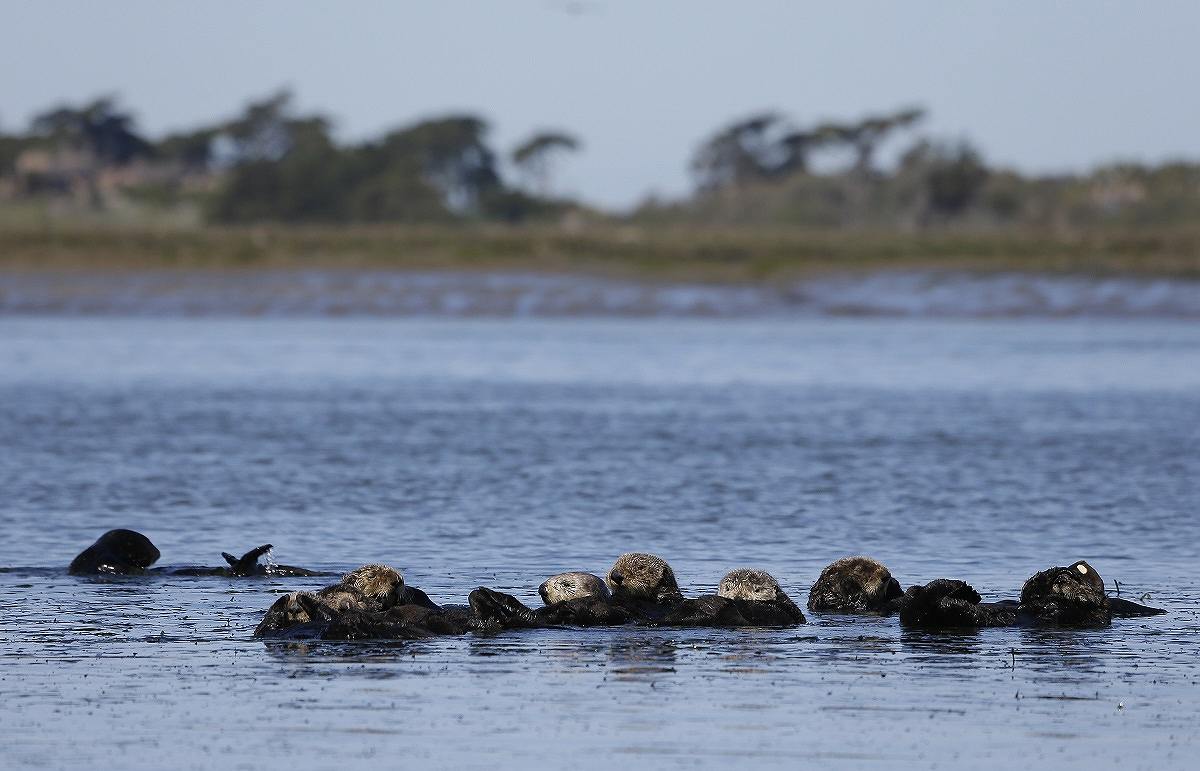
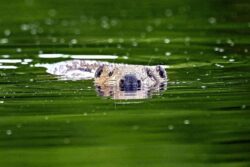
AP file photo Sea otters are seen together along the Elkhorn Slough in Moss Landing, Calif., in March 2018.
AP
15:28 JST, February 7, 2024
WASHINGTON (AP) — The return of sea otters and their voracious appetites has helped rescue a section of California marshland, a new study shows.
Sea otters eat constantly and one of their favorite snacks is the striped shore crab. These crabs dig burrows and also nibble away roots of the marsh grass pickleweed that holds dirt in place.
Left unchecked, the crabs turn the marsh banks “into Swiss cheese,” which can collapse when big waves or storms hit, said Brent Hughes, a Sonoma State University marine ecologist and coauthor of the new study published on Jan. 31 in the journal Nature.
Researchers found that the return of the crab-eating sea otters to a tidal estuary near Monterey, California, helped curb erosion.
“They don’t completely reverse erosion, but slow it down to natural levels,” said Hughes.
For many years, there weren’t any sea otters in Elkhorn Slough.
The 19th century fur trade decimated their global population which once stretched from Alaska to California, as well as into Russia and Japan. At one point, as few as 2,000 animals remained, mostly in Alaska.
Hunting bans and habitat restoration efforts helped sea otters recover some of their former range. The first returnees were spotted in Elkhorn Slough in 1984. The Monterey Bay Aquarium’s program for raising and releasing orphaned sea otters also boosted the estuary’s population.
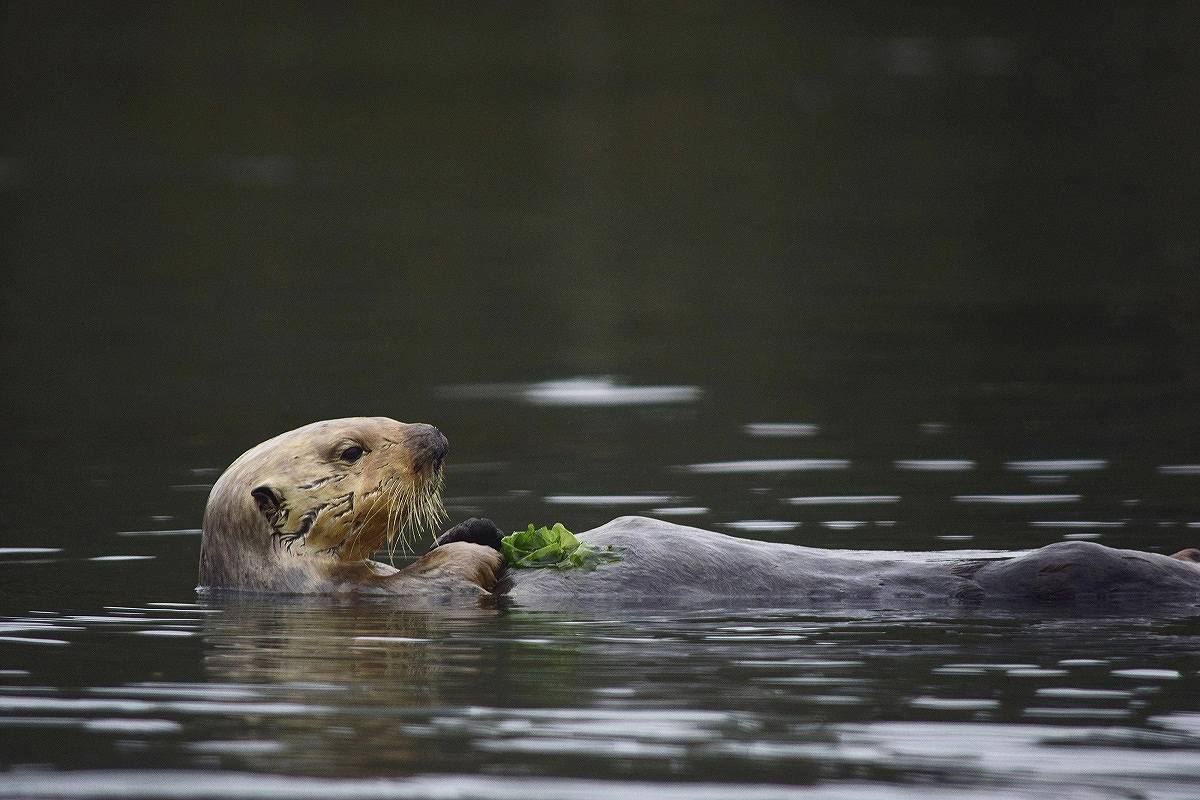
AP file photos Above: A sea otter is seen in the estuarine water of Elkhorn Slough, Monterey Bay, Calif., in May 2019. Below: Sea otters loll in the water at the Monterey Bay Aquarium in March 2018.
For the new study, researchers analyzed historic erosion rates dating back to the 1930s to assess the impact of the sea otters’ return. They also set up fenced areas to keep otters away from some creek sections for three years — those creek banks eroded much faster.
Past studies about the return of top predators to various habitats — most famously, the reintroduction of gray wolves to Yellowstone National Park — show how such species maintain ecosystem stability. Wolves curbed the number of elk and moose that ate saplings and slowed riverbank erosion.
Many past studies relied on observations, but the design of the latest research left no doubt as to the sea otters’ impact, said Johan Eklof, a Stockholm University marine biologist who was not involved in the new study.
Other research has shown that sea otters help kelp forests regrow by controlling the number of sea urchins that munch kelp.
Sea otters “are amazing finders and eaters,” said Brian Silliman, a Duke University coastal ecologist and coauthor of the latest study.
AP file photo A sea otter in Morro Bay, Calif., in January 2010