
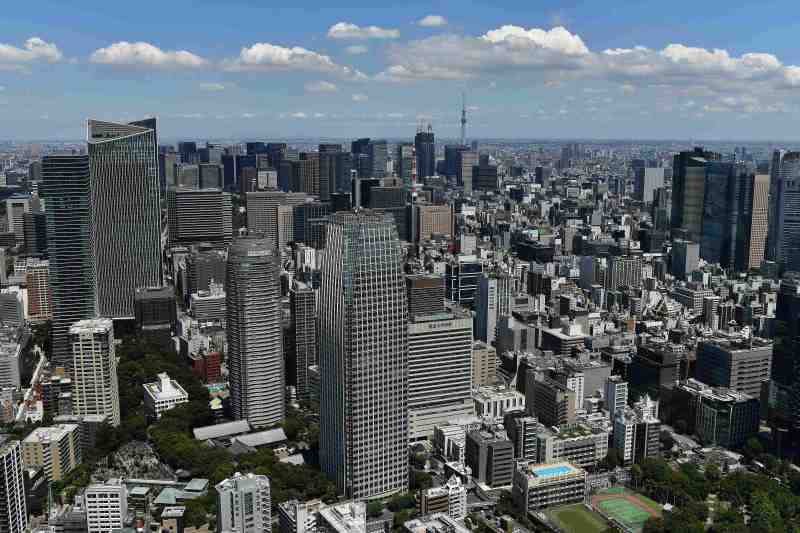
A general view from Tokyo Tower is seen of the city of Tokyo, 2021.
November 1, 2021
Economic policy and coronavirus measures were focal points of the House of Representatives election. In response to the outcome, the business community wants the government to present details about the “new capitalism” economic policy emphasizing the distribution of wealth proposed by Prime Minister Fumio Kishida and take further measures against the coronavirus.
The results show voters’ “expectations that the government will forge a strong economic recovery with an eye on the post-coronavirus era,” Masakazu Tokura, chairperson of the Japan Business Federation (Keidanren), said in a statement Monday.
Tokura listed mitigating infections, the rejuvenation of socioeconomic activities, decarbonization and digitization as important issues, and said he wants the Kishida Cabinet to “exercise strong leadership and work swiftly on these issues.”
Kengo Sakurada, chairperson of the Japan Association of Corporate Executives (Keizai Doyukai), said, “We welcome the continued efforts to realize a ‘new capitalism.’” He called for thorough discussions on energy policy and fiscal, social and economic security, among other issues.
“The nation is facing the last chance to regain its footing after years of stagnation,” Sakurada said.
Regarding measures against the coronavirus, Japan Chamber of Commerce and Industry Chairman Akio Mimura urged the government to strengthen support for small and midsize businesses that have been battered by the pandemic.
“We hope the government will swiftly and decisively move forward with the process of developing a comprehensive strategy that serves as a foothold to rejuvenate the economy, enabling both infection mitigation and increased socioeconomic activities,” Mimura said.
Hiroshi Mikitani pointed to the importance of “letting the private sector do what the private sector can do,” “solving social issues by making the most of the private sector” and “thorough reform.” Mikitani, the representative director of the Japan Association of New Economy, a group of tech companies and start-ups, called for regulatory and tax reforms that will lead to technological innovation.
The Japanese economy is facing various challenges. Many companies, especially those in the tourism industry and the food and beverage industry, are still being buffeted by headwinds caused by the pandemic. The future of the manufacturing industry is also cloudy as production cuts due to semiconductor shortages and the spread of the coronavirus in Southeast Asia have become problematic for automakers.






Most Read
Popular articles in the past 24 hours
-
Japanese High School Student Aims to Share Kaiten History Through...
-
Milano Cortina 2026: Japan Sees Leap in Olympic Performance Throu...
-
PM Takaichi Spells out Plans to Advance Bold Policy Shifts in Spe...
-
Chronic Issues Erode Thailand’s Economy as Political Confusion Pe...
-

Milano Cortina 2026: Japan's Satoshi Furuno Places 4th in Men's S...
-
Tottori: 95-Year-Old Japanese Descendent from Philippines Visits ...
-

Milano Cortina 2026: Speed Skater Takagi Finishes 6th in the 1,50...
-
Osaka: 40 Ninjas Display Shuriken Throwing Skills at Japan Champi...
Popular articles in the past week
-

Japan PM Takaichi’s Cabinet Resigns en Masse
-

Man Infected with Measles Reportedly Dined at Restaurant in Tokyo...
-

Sanae Takaichi Elected Prime Minister of Japan; Keeps All Cabinet...
-

Japan's Govt to Submit Road Map for Growth Strategy in March, PM ...
-

Bus Carrying 40 Passengers Catches Fire on Chuo Expressway; All E...
-

Milano Cortina 2026: Figure Skaters Riku Miura, Ryuichi Kihara Pa...
-

Japan, U.S. Name 3 Inaugural Investment Projects; Reached Agreeme...
-

U.S. Firm to Build Training Hub in Fukushima N-plant for Debris R...
Popular articles in the past month
-
Japan PM Takaichi’s Cabinet Resigns en Masse
-

Japan Institute to Use Domestic Commercial Optical Lattice Clock ...
-

Israeli Ambassador to Japan Speaks about Japan’s Role in the Reco...
-
Man Infected with Measles Reportedly Dined at Restaurant in Tokyo...
-

Videos Plagiarized, Reposted with False Subtitles Claiming ‘Ryuky...
-

Man Infected with Measles May Have Come in Contact with Many Peop...
-

Prudential Life Insurance Plans to Fully Compensate for Damages C...
-

Woman with Measles Visited Hospital in Tokyo Multiple Times Befor...
Top Articles in Business
-
Prudential Life Insurance Plans to Fully Compensate for Damages Caused by Fraudulent Actions Without Waiting for Third-Party Committee Review
-
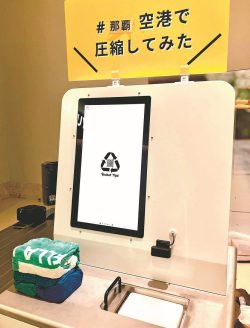
Narita Airport, Startup in Japan Demonstrate Machine to Compress Clothes for Tourists to Prevent People from Abandoning Suitcases
-
Japan, U.S. Name 3 Inaugural Investment Projects; Reached Agreement After Considerable Difficulty
-
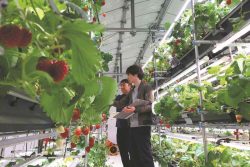
Toyota Motor Group Firm to Sell Clean Energy Greenhouses for Strawberries
-

SoftBank Launches AI Service for Call Centers That Converts Harsh Customer Voices into Softer Voices
JN ACCESS RANKING
-
Japan PM Takaichi’s Cabinet Resigns en Masse
-
Japan Institute to Use Domestic Commercial Optical Lattice Clock to Set Japan Standard Time
-
Israeli Ambassador to Japan Speaks about Japan’s Role in the Reconstruction of Gaza
-
Man Infected with Measles Reportedly Dined at Restaurant in Tokyo Station
-
Videos Plagiarized, Reposted with False Subtitles Claiming ‘Ryukyu Belongs to China’; Anti-China False Information Also Posted in Japan