
Sho-chu Time / Making Wooden Barrels Supports Traditional Spirit Production
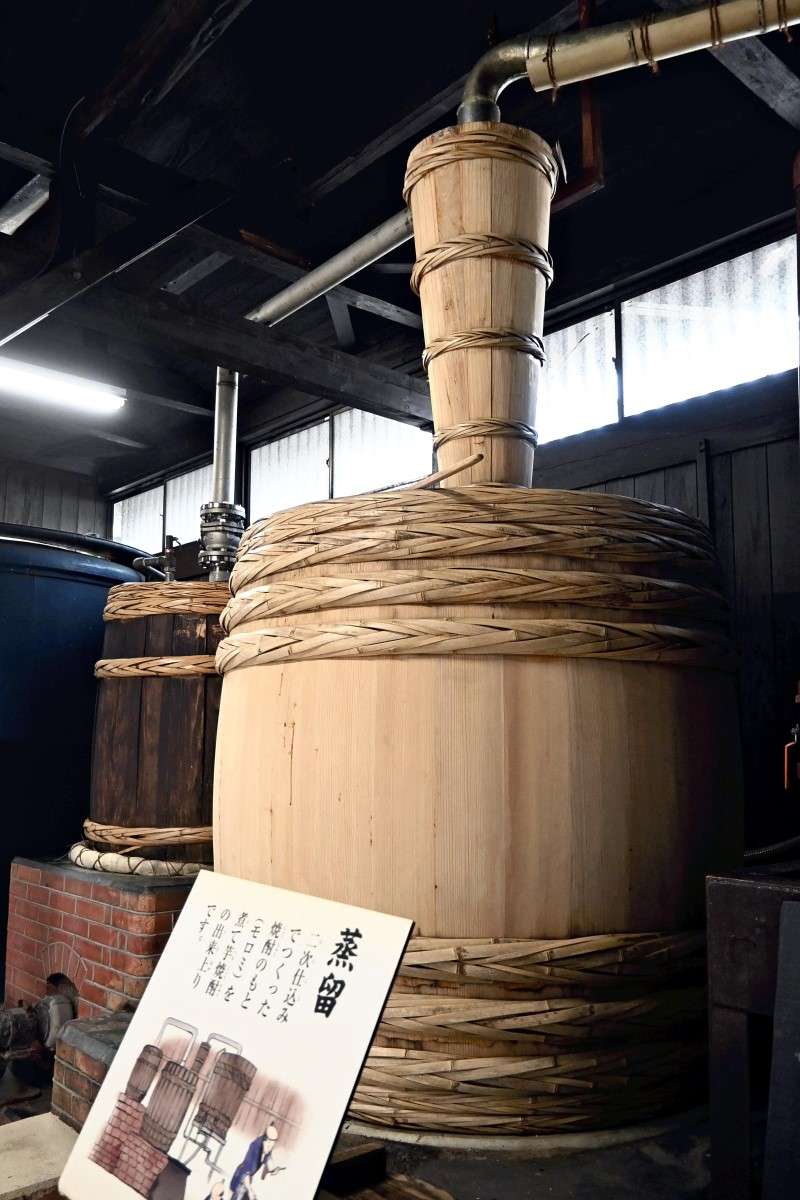
Left: A wooden barrel shochu distiller used at Shirakane Shuzou Co.
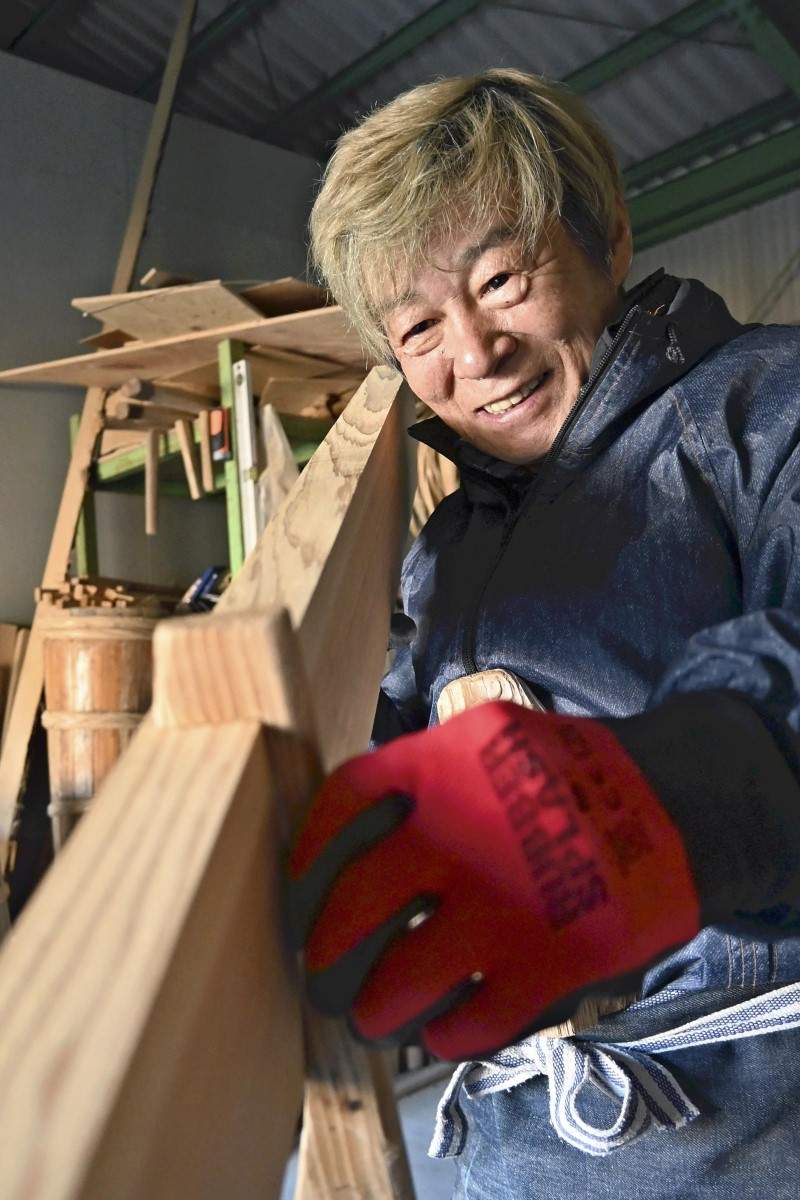
Right: Yasuro Tsudome makes a wooden barrel for the distillation of shochu.
2:00 JST, January 17, 2025
Kagoshima Prefecture is one of the nation’s major production areas of shochu. This is the fifth in a series introducing the charm of the distilled spirit and the people involved in its creation.
***
SOO, Kagoshima — Shh-shh, shh-shh … On a cold, windy day at the end of the year, this sound filled a warehouse at the foot of a mountain in Soo, Kagoshima Prefecture. It was the sound of Yasuro Tsudome, 62, shaving cedar planks. When he was done, he used a handmade wooden tool called a shochi to carefully examine the curves of the planks, looking closely for any minor gaps between them and the tool.
“Good. They fit perfectly,” Tsudome said with a satisfied smile.
Tsudome is a craftsman who makes wooden barrels for distilling shochu, a profession which is practiced by very few people anywhere in the country. He learned the technique from his father, Tatsuya, who was designated as a “contemporary master craftsman” and died in 2014 at the age of 78.
The barrels are made with no adhesives or metal nails. Long, narrow cedar planks are assembled into a cylindrical shape and bound with “taga,” which are hoops made by weaving together long strips of bamboo. To finish, the round bottom is attached to the body.
There is no blueprint for making these barrels. It requires the expertise, skill and intuition of a professional craftsman.
Tsudome quit his salaryman job at the age of 46 and became his father’s apprentice. His father made him repeatedly practice selecting quality local cedar trees — ones over 80 years old, with dense growth rings — and shaving cedar planks to give them the necessary curves to form a circle when joined together so that they could serve as barrel staves.
A 1-ton wooden barrel is 1.5 meters in diameter and 1.45 meters high. Normally, a barrel of this size is made from 33 staves, but Tsudome once needed 38 staves, as he had shaved them down too much, failing to give them the proper curvature.
He worked with his father for only about four and a half years. His father simply told him, “Just try it,” and he desperately worked to acquire the technique by watching and imitating his father’s actions.
When Tsudome was about 32, he had told his father, who was in the hospital with a serious illness, that he would follow in his footsteps. However, his father had been against the idea at the time, saying, “It will end when I’m gone.” His father also said that working for a company would be a more reliable way of life than making barrels, for which there is little demand.
Still, Tsudome was envious of his father, who was called “Tsudome-san” with affection and respect by the people at all the shochu companies he visited.
Now that Tsudome works independently, he makes the same number of barrels that his father did, and delivers them to nearly 20 shochu makers in the prefecture.
Each wooden barrel can hold about 1 ton of moromi, the fermented mash that is essential for shochu production, at about 100 C, but they need to be replaced every three to five years, as the repeated expansion and contraction causes the wood to degrade.
A customer told him: “We were able to make good shochu. Make another one for us, please.” Other customers followed, which means that he was recognized as being as skilled as his father.
Shirakane Shuzou Co. in Aira, founded in 1869, is the oldest shochu maker in the prefecture and has been using wooden barrels made by Tsudome’s father and Tsudome himself for about 35 years. Currently they use them to make a sweet potato shochu called Ishigura.
Yohei Kawada, 43, the sixth-generation president of the company, vouches for the quality of the barrels, saying: “Unlike stainless steel tanks, wooden barrels can release carbon dioxide to the outside through pores in the wood tissue during distillation, giving the shochu a very nice aroma.”
In December, traditional Japanese methods of making shochu, sake and other alcoholic beverages were added to UNESCO’s Intangible Cultural Heritage list.
“I’m honored to be involved in the production of the wooden barrels for distillation that support traditional alcohol making,” Tsudome said.
Tsudome took the plunge into the work despite his father’s objections. He now said with a smile: “My greatest wish is that the shochu makers in Kagoshima Prefecture will become more active.”
You can read this article in Japanese here.


Related Tags



Most Read
Most read in the last 24 hours
-

India's Arms Indigenization Quest for Self-Reliance / Desert Dril...
-

26-year-old U.S. National Falls While Climbing Mt. Fuji; Accompan...
-
Japan Passport Fees Going Down to ¥9,000 in July
-

Japanese Side Machida Zelvia Faces Ah-Ahli in Asian Champions Lea...
-

Transfer of Defense Equipment: Increase the Number of Like-minded...
-

Charm of Meiji-Era Poet Takuboku Examined from Viewpoint of Donal...
-
Japan Eyes Trialing Dual-Use Tech Developed by Startups to Promot...
-

Cherry Blossoms in Full Bloom in Hokkaido's Hakodate; Tourists Fl...
Most read in the last 7 days
-
Earthquake Hits Japan's Tohoku Region; 3-meter Tsunami Warning Is...
-

Trump Extends the Ceasefire with Iran but Keeps the Blockade
-

China, South Korea Object to Japanese PM Takaichi's Ritual Offeri...
-

India's Arms Indigenization Quest for Self-Reliance / New Delhi S...
-

Japan to Ban Use of Portable Chargers on Airplanes from April 24,...
-
¥1,000 Coins to Be Issued to Mark Anniversary of Beginning of Jap...
-

Most Serious Cyberattacks against the UK Now from Russia, Iran an...
-
New Challenges Await as Miura-Kihara Retires; Blade Maker, Ex-Coa...
Most read in the last 30 days
-
Earthquake Hits Japan's Tohoku Region; 3-meter Tsunami Warning Is...
-
Police Find Child's Shoe During Search for Missing Boy in Nantan,...
-
Body Found in Nantan, Kyoto Prefecture, During Search for 11-Year...
-
Cherry Blossoms, Rapeseed Flowers Perform Colorful ‘Duet’ in Niig...
-
Trump Extends the Ceasefire with Iran but Keeps the Blockade
-

Olympic Gold Medal-Winning Figure Skaters Riku-Ryu Announce Retir...
-
Nori Prices Surge in Japan Due to Poor Seaweed Production Amid Ri...
-
China, South Korea Object to Japanese PM Takaichi's Ritual Offeri...
Top Articles in Society
-
Earthquake Hits Japan’s Tohoku Region; 3-meter Tsunami Warning Issued (Update 1)
-
Police Find Child’s Shoe During Search for Missing Boy in Nantan, Kyoto Prefecture
-
Body Found in Nantan, Kyoto Prefecture, During Search for 11-Year-Old Boy in Area (Update 1)
-
Cherry Blossoms, Rapeseed Flowers Perform Colorful ‘Duet’ in Niigata
-

Two Women in Osaka Found Lying on Floor Bleeding, Later Pronounced Dead
JN ACCESS RANKING
-
Earthquake Hits Japan’s Tohoku Region; 3-meter Tsunami Warning Issued (Update 1)
-
Police Find Child’s Shoe During Search for Missing Boy in Nantan, Kyoto Prefecture
-
Body Found in Nantan, Kyoto Prefecture, During Search for 11-Year-Old Boy in Area (Update 1)
-
Cherry Blossoms, Rapeseed Flowers Perform Colorful ‘Duet’ in Niigata
-
Trump Extends the Ceasefire with Iran but Keeps the Blockade
Most read in the last 24 hours
-
India's Arms Indigenization Quest for Self-Reliance / Desert Dril...
-
26-year-old U.S. National Falls While Climbing Mt. Fuji; Accompan...
-
Japan Passport Fees Going Down to ¥9,000 in July
-
Japanese Side Machida Zelvia Faces Ah-Ahli in Asian Champions Lea...
-
Transfer of Defense Equipment: Increase the Number of Like-minded...
Most read in the last 7 days
-
Earthquake Hits Japan's Tohoku Region; 3-meter Tsunami Warning Is...
-
Trump Extends the Ceasefire with Iran but Keeps the Blockade
-
China, South Korea Object to Japanese PM Takaichi's Ritual Offeri...
-
India's Arms Indigenization Quest for Self-Reliance / New Delhi S...
-
Japan to Ban Use of Portable Chargers on Airplanes from April 24,...
Most read in the last 30 days
-
Earthquake Hits Japan's Tohoku Region; 3-meter Tsunami Warning Is...
-
Police Find Child's Shoe During Search for Missing Boy in Nantan,...
-
Body Found in Nantan, Kyoto Prefecture, During Search for 11-Year...
-
Cherry Blossoms, Rapeseed Flowers Perform Colorful ‘Duet’ in Niig...
-
Trump Extends the Ceasefire with Iran but Keeps the Blockade