
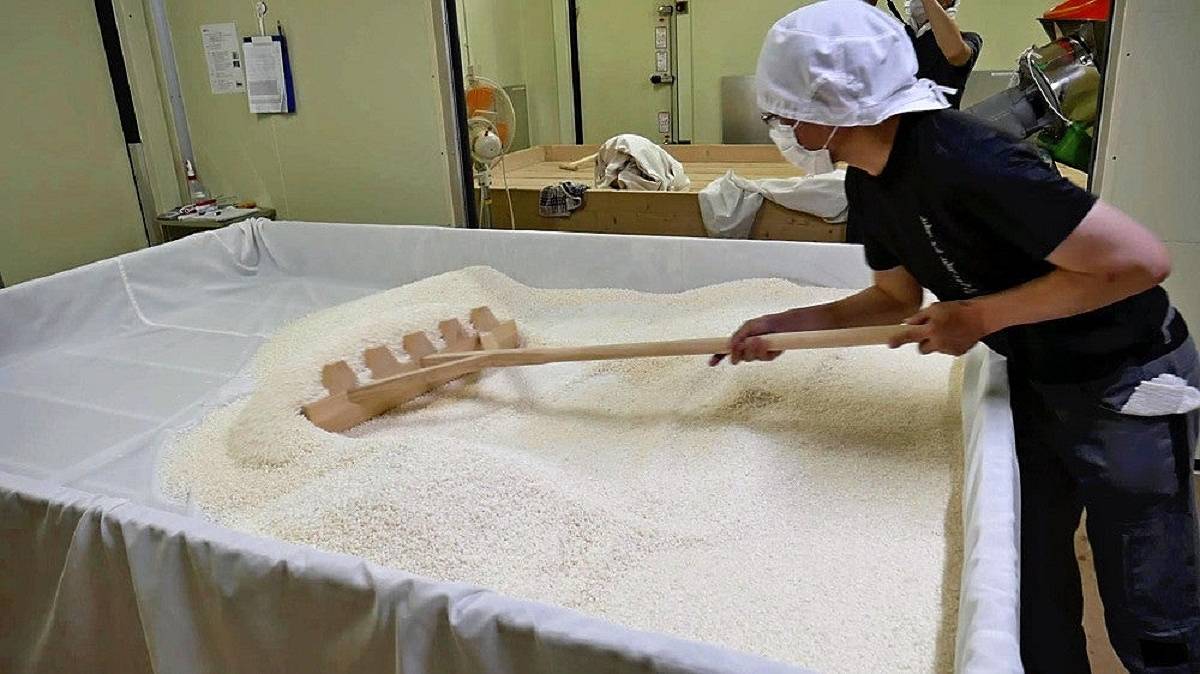
The koji-making process of traditional sake brewing
11:15 JST, November 5, 2024
Tokyo (Jiji Press)—An advisory panel to UNESCO has sought to register traditional Japanese sake brewing techniques using koji mold as intangible cultural heritage, Japan’s Cultural Affairs Agency said Tuesday.
The registration is expected to be formalized at a meeting of a UNESCO intergovernmental committee, scheduled for Dec. 2-7 in Paraguay.
The traditional techniques to make sake as well as “shochu” and “awamori” distilled spirits will be the 23rd intangible cultural heritage for Japan.
The prototype of traditional sake brewing was established more than 500 years ago, and the techniques were developed in accordance with the climate and culture in various parts of Japan, according to the Japanese agency.
Sake produced by “toji” master brewers plays essential roles in Japanese culture such as ceremonies and festivals, the agency said.
As Japan has a large number of registered heritage assets, screening for the country is practically conducted once every two years. The traditional sake brewing techniques were initially proposed in 2022. But the review was postponed, and they were proposed again in 2023.





Most Read
Popular articles in the past 24 hours
-

Yokohama to Test Out Renewable-Powered Offshore Floating Data Cen...
-
Ishinomaki Man Plush Toy Offers Hope to Children in Times of Disa...
-

Microsoft Japan Raided by Antitrust Watchdog for Allegedly Blocki...
-
Japan Eyes Introducing Prescreening System for Foreign Travelers,...
-

Nikkei Tops 59,000 for First Time
-

Party Representatives’ Questions in Diet: Takaichi Says Consumpti...
-
Pokémon Celebrates 30 Years with Japanese Pro Baseball Collab
-

Milano Cortina 2026: News in Pictures / Feats of Japanese Athlete...
Popular articles in the past week
-

Producer Behind Pop Group XG Arrested for Cocaine Possession
-

iPS Treatments Pass Key Milestone, but Broader Applications Far f...
-

Japan, U.S. Name 3 Inaugural Investment Projects; Reached Agreeme...
-
Tokyo Skytree's Elevator Stops, Trapping 20 People; All Rescued (...
-
Milano Cortina 2026: Japanese Gold Medalist Figure Skater Miura S...
-

Japan’s Major Real Estate Firms Expanding Overseas Businesses to ...
-

Nepal Bus Crash Kills 19 People, Injures 25 Including One Japanes...
-

Baby Monkey Punch Captures Hearts at Chiba Pref. Zoo, on Social M...
Popular articles in the past month
-
Producer Behind Pop Group XG Arrested for Cocaine Possession
-

Japan PM Takaichi’s Cabinet Resigns en Masse
-

Japan Institute to Use Domestic Commercial Optical Lattice Clock ...
-

Man Infected with Measles Reportedly Dined at Restaurant in Tokyo...
-

Israeli Ambassador to Japan Speaks about Japan’s Role in the Reco...
-

Videos Plagiarized, Reposted with False Subtitles Claiming ‘Ryuky...
-

Man Infected with Measles May Have Come in Contact with Many Peop...
-

Prudential Life Insurance Plans to Fully Compensate for Damages C...
Top Articles in Society
-
Producer Behind Pop Group XG Arrested for Cocaine Possession
-
Man Infected with Measles Reportedly Dined at Restaurant in Tokyo Station
-
Man Infected with Measles May Have Come in Contact with Many People in Tokyo, Went to Store, Restaurant Around When Symptoms Emerged
-

Woman with Measles Visited Hospital in Tokyo Multiple Times Before Being Diagnosed with Disease
-
Australian Woman Dies After Mishap on Ski Lift in Nagano Prefecture
JN ACCESS RANKING
-
Producer Behind Pop Group XG Arrested for Cocaine Possession
-
Japan PM Takaichi’s Cabinet Resigns en Masse
-
Man Infected with Measles Reportedly Dined at Restaurant in Tokyo Station
-
Israeli Ambassador to Japan Speaks about Japan’s Role in the Reconstruction of Gaza
-
Videos Plagiarized, Reposted with False Subtitles Claiming ‘Ryukyu Belongs to China’; Anti-China False Information Also Posted in Japan