
Ashfall from Mt. Fuji Eruption Included in Evacuation Guidelines; Public Urged to Stay Home If Ash Under 30cm
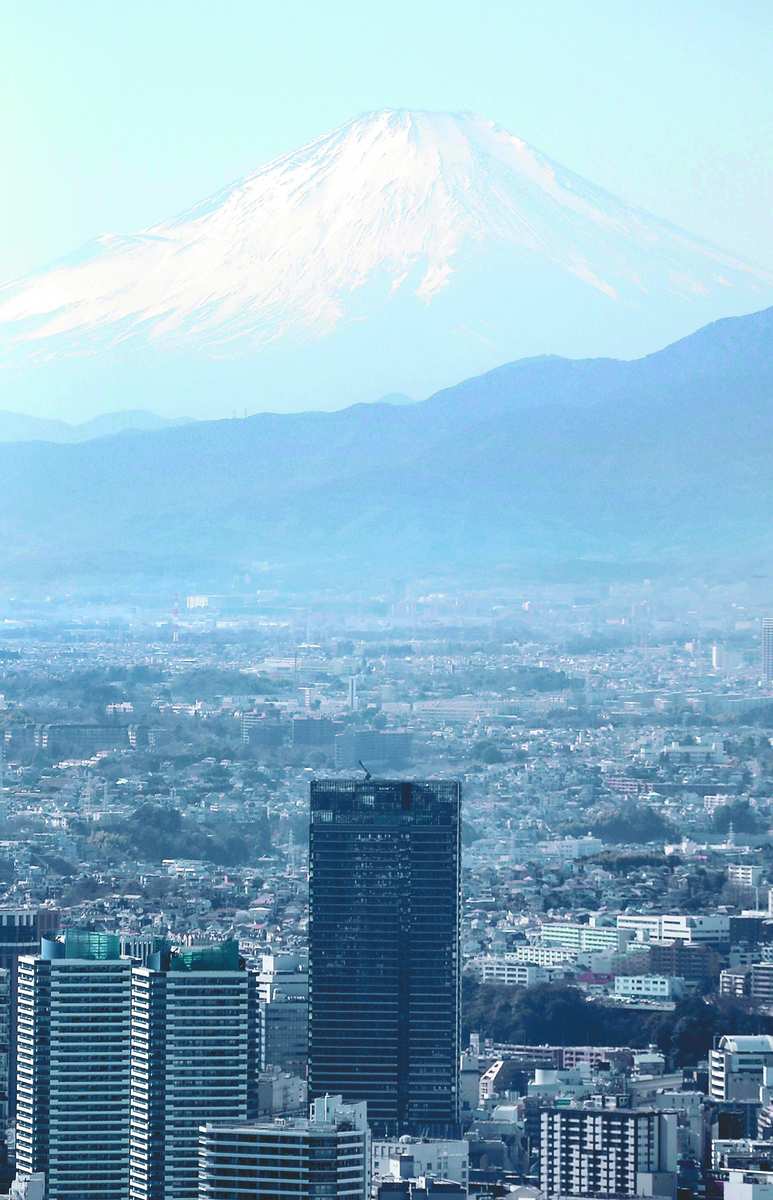
Mt. Fuji is seen on Feb. 25.
17:30 JST, March 21, 2025
Residents in the Tokyo metropolitan area are urged to carry on with life at home when Mt. Fuji erupts but to evacuate if more than 30 centimeters of ashfall accumulates, the government’s expert panel suggested in its draft guidelines released Friday.
The panel to discuss preparations for ashfall in the Tokyo metropolitan area in the event of a Mt. Fuji eruption submitted a report to the Cabinet Office that included a draft of guidelines for refuge actions to be taken by residents.
The Cabinet Office will also apply these guidelines to ashfall from volcanoes other than Mt. Fuji and will notify the relevant ministries and prefectures shortly. This is the first set of guidelines regarding evacuations in the event of ashfall covering extensive areas.
A government forecast in 2020 contemplated a worst-case scenario of ash falling over much of the Tokyo metropolitan area three hours after Mt. Fuji’s eruption, accumulating to a depth of more than 30 centimeters about two weeks later in Kanagawa Prefecture and elsewhere and around 10 centimeters in the center of the capital. The panel came up with specific measures based on this scenario.
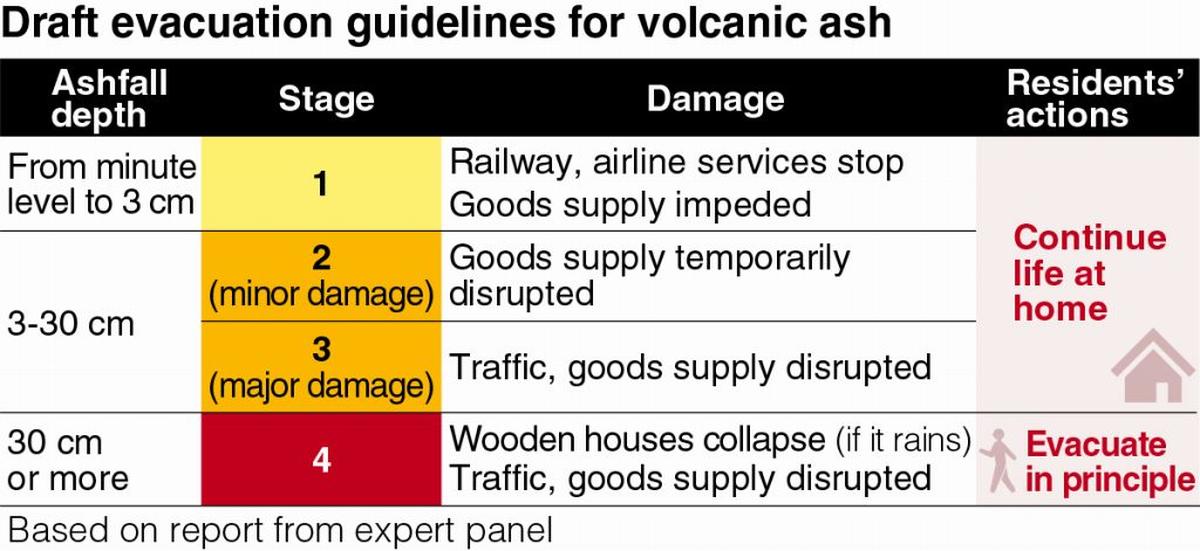
The draft guidelines give instructions for basic actions that residents should take according to four stages based on the amount of ash:
From Stages 1 to 3, the panel urges people to stay home and carry on with their activities based on the assumption that ash would not immediately threaten human life. At Stage 3, however, residents are urged to move to a different area in circumstance such as there being a risk of mudslides or a significant impact on daily life, such as major disruptions of transportation or the supply of goods.
At Stage 4, people are urged to evacuate, in principle, against possible mudslides or the collapse of wooden houses by ashfall that becomes heavier when it absorbs rain. In those cases, municipalities should urge people to evacuate outside their residential area.
The guidelines noted the central government will need to provide a forecast for volcanic ash distribution at the time of an eruption so as to help people predict ashfall and take adequate prevention measures. The Japan Meteorological Agency will introduce ashfall forecasts within the next few years following the guidelines and create alerts in the event of a major disaster.
At the time of the Hoei eruption in 1707, ash fell intermittently for 16 days and reached what is now central Tokyo. Since then, Mt. Fuji has been dormant for more than 300 years. However, it has erupted on average once every 30 years over the past 5,600 years, and it could become more active at any time.


Related Tags


Most Read
Popular articles in the past 24 hours
-

Japan Seeks to Counter China's Expanding Influence in Pacific by ...
-

Exhibition Featuring Yoshiharu Tsuge’s Manga World Underway in Ch...
-
Tokyo Skytree Observation Deck Remains Closed for Inspection afte...
-

Japanese Watermelon Shipments Starts in Leading Production Distri...
-

Impact on Japanese Economy Unclear with Trump’s New Tariffs, Shif...
-

Takeshima Day: Persistently Demanding Resolution from South Korea...
-

Hanzomon Line Service Suspended between Kudanshita, Oshiage Stati...
-

Japan's Services Inflation Steady, Signals Wage-Driven Price Pres...
Popular articles in the past week
-

Producer Behind Pop Group XG Arrested for Cocaine Possession
-

iPS Treatments Pass Key Milestone, but Broader Applications Far f...
-

Japan, U.S. Name 3 Inaugural Investment Projects; Reached Agreeme...
-
Tokyo Skytree's Elevator Stops, Trapping 20 People; All Rescued (...
-

Director Naomi Kawase's New Film Explores Heart Transplants in Ja...
-

Japan’s Major Real Estate Firms Expanding Overseas Businesses to ...
-

Milano Cortina 2026: Japanese Figure Skater Kaori Sakamoto’...
-

Baby Monkey Punch Captures Hearts at Chiba Pref. Zoo, on Social M...
Popular articles in the past month
-
Producer Behind Pop Group XG Arrested for Cocaine Possession
-

Japan PM Takaichi’s Cabinet Resigns en Masse
-

Japan Institute to Use Domestic Commercial Optical Lattice Clock ...
-

Man Infected with Measles Reportedly Dined at Restaurant in Tokyo...
-

Israeli Ambassador to Japan Speaks about Japan’s Role in the Reco...
-

Videos Plagiarized, Reposted with False Subtitles Claiming ‘Ryuky...
-

Man Infected with Measles May Have Come in Contact with Many Peop...
-

Prudential Life Insurance Plans to Fully Compensate for Damages C...
Top Articles in Society
-
Producer Behind Pop Group XG Arrested for Cocaine Possession
-
Man Infected with Measles Reportedly Dined at Restaurant in Tokyo Station
-
Man Infected with Measles May Have Come in Contact with Many People in Tokyo, Went to Store, Restaurant Around When Symptoms Emerged
-

Woman with Measles Visited Hospital in Tokyo Multiple Times Before Being Diagnosed with Disease
-

Australian Woman Dies After Mishap on Ski Lift in Nagano Prefecture
JN ACCESS RANKING
-
Producer Behind Pop Group XG Arrested for Cocaine Possession
-
Japan PM Takaichi’s Cabinet Resigns en Masse
-
Man Infected with Measles Reportedly Dined at Restaurant in Tokyo Station
-
Israeli Ambassador to Japan Speaks about Japan’s Role in the Reconstruction of Gaza
-
Videos Plagiarized, Reposted with False Subtitles Claiming ‘Ryukyu Belongs to China’; Anti-China False Information Also Posted in Japan