
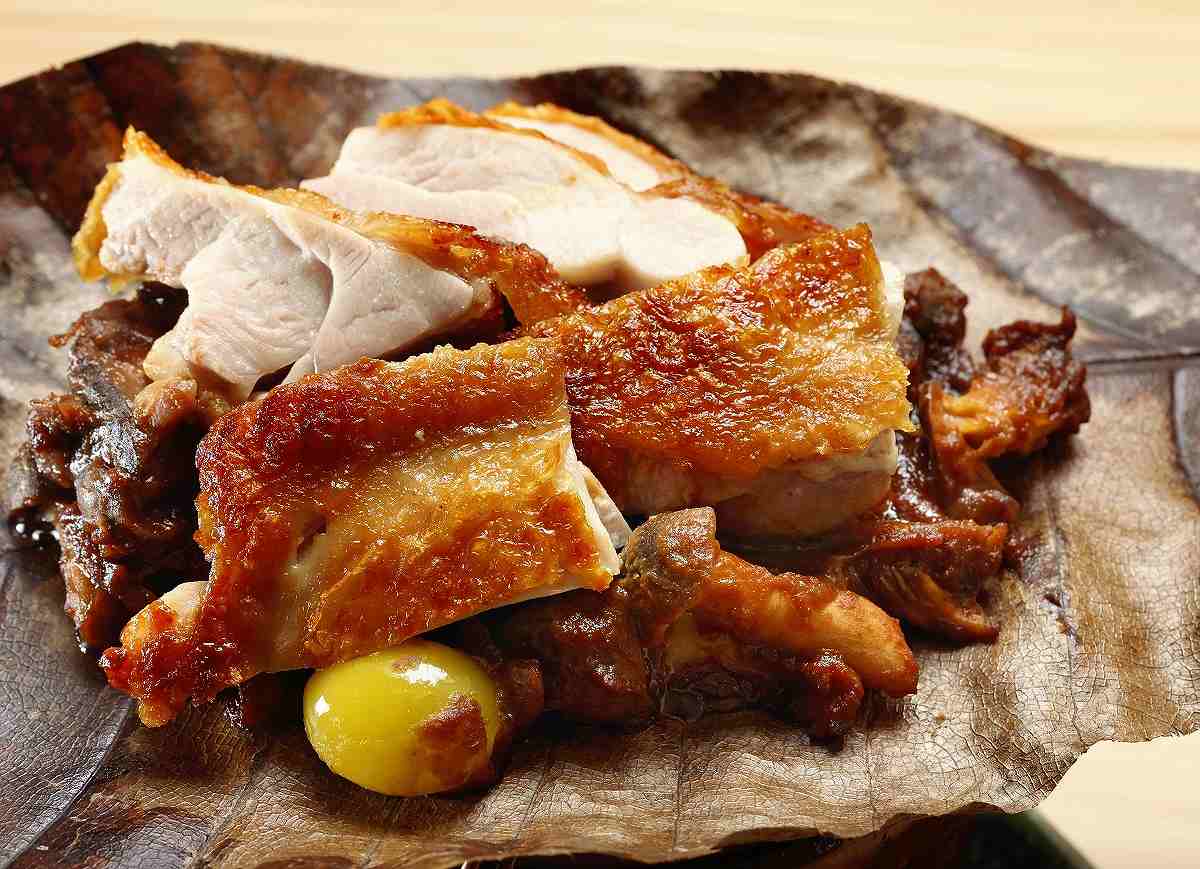
Chicken with hoba miso
12:00 JST, January 21, 2024
During the cold winter season, as people try to find ways to warm themselves, eating something flavorful sometimes does the trick.
Satoshi Ogino, the owner of a Japanese restaurant, shares his grilled chicken dish using hoba miso.
Hoba miso is a dish from the Hida area of Gifu Prefecture. Miso paste and other foodstuffs are placed on a dried magnolia leaf and are eaten while heated over charcoal. Eating miso paste warmed on a leaf goes well with steamed rice or sake.
Ogino’s restaurant serves hoba miso dishes from November every year.
“Magnolia leaves smell really good, and the miso goes well with seasonal foods like mushrooms and nuts,” he said. “And grilled meat is a hearty dish.”
Ogino uses boar meat at his restaurant, but he chose chicken for this recipe as it is easier to prepare. Magnolia leaves are not too difficult to find in stores, but they can be replaced with aluminum foil.
The first step is to mix the miso with an egg to make a paste called tamamiso. Dark brown miso, known as akamiso, and light brown miso, known as shiromiso, are mixed with the egg, along with other seasonings, and are cooked in a pan until the consistency resembles the original miso. The richness of the miso goes well with chicken, among other foods, due to its balanced sweet and salty flavor.
Seasonal vegetables, such as burdock root and mushrooms, are also added to the miso. Sake is then added and stirred into the mixture while it is being heated. Walnuts and ginkgo nuts are added after that.
The chicken, once at room temperature, is grilled in a pan with the skin side down. It is grilled while covered so that it cooks slowly and evenly. The chicken is then flipped so the other side can cook as well.
“But 90% of it should be cooked on the skin side,” Ogino said.
Magnolia leaves are placed on a mesh grill, and the chicken and miso should be placed on top. The aroma of the leaf wafts through the air as it is heated, and the miso, as the leaf’s edges singe, produces a roasted fragrance.
The chicken fat and the miso create a perfect balance in my mouth, and the walnuts and mushrooms give the dish a good texture. It’s almost as if I’m in Gifu Prefecture.
Tamamiso topping
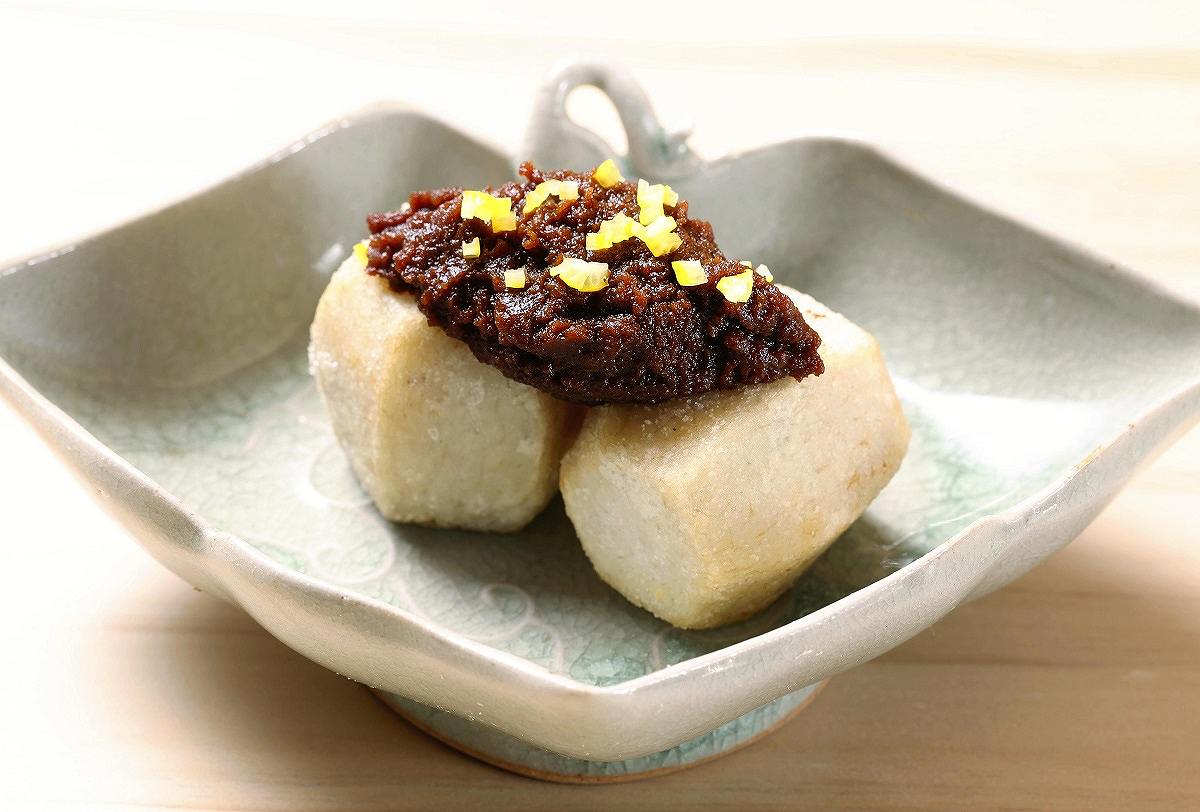
Fried taro dengaku
Tamamiso can be kept refrigerated for about a month and is a good topping for deep-fried taro, which can be done in the dengaku style of spreading miso over various foods.
Taro are peeled into hexagonal columns, boiled in soup stock with salt and soy sauce, and then set aside to cool. The taro are then patted dry, covered with flour and placed in a fryer at 180 C.
Tamamiso is then used as a topping, and the dish is garnished with chopped yuzu peel.
Ogino said tofu or konnyaku, a jellylike food made of konjac potato, are good replacements for taro.
Chicken with hoba miso
Ingredients (Serves 2):
- 1 chicken thigh (300 grams)
- 1/2 burdock root
- 1/4 pack shimeji mushrooms
- 2 fresh shiitake mushrooms
- Dried walnuts as needed
- 4 ginkgo nuts
- 2 dried magnolia leaves (or aluminum foil)
- 60 grams akamiso
- 40 grams shiromiso
- 2 tbsp sake
- 20 grams sugar
- 1 egg
Tamamiso
Directions:
1. Soak magnolia leaves overnight in water.
2. Allow the chicken to reach room temperature. Shred burdock. Cut off shimeji stems. Cut off shiitake stems and slice the caps into 5-millimeter strips. Finely crush the walnuts. Shell and fry the ginkgo nuts and remove the skin.
3. Add all the ingredients for tamamiso into a saucepan except for the egg. Beat the egg and strain before adding it to the miso mixture.
4. Warm the pan over medium heat while stirring. Lower the heat to low when the mixture thickens. Turn off the heat when the texture resembles that of the original miso paste. Put the tamamiso in a bowl, cover it with plastic wrap and let it cool.
5. Sprinkle both sides of the chicken with salt, and place it skin-side down on the frying pan. Cover the pan with aluminum foil and cook. Flip the chicken twice while cooking.
6. Put tamamiso, 1 tablespoon of sake, burdock, shimeji and shiitake in a saucepan and stir while cooking. Then add walnuts and ginkgo nuts.
7. Put a mesh grill on a portable gas stove. Pat the magnolia leaves dry using a paper towel. Slice the chicken in half and cut it into bite-size pieces. Spread the tamamiso over the leaves and place the chicken on top. Make two sets and place them on the grill. Serve them fresh from the grill.





Most Read
Popular articles in the past 24 hours
-

Ransomware Attacks Hitting Japan's Small, Midsize Firms
-

German Journalist Traces Footsteps of Great-Grandfather Who Was P...
-

10 Foreign Tourists Sustain Injuries After Fire at Capsule Hotel ...
-

World Baseball Classic: Venezuela Beats Japan in Nail-biting Back...
-
Rapid Services Resume on JR Chuo Line; Suspension Caused by Accid...
-
Rapid Services on JR Chuo Line Suspended; Accident at Kokubunji S...
-

World Baseball Classic: Venezuela Beats Japan in Back-and-Forth Q...
-

World Baseball Classic: Red Sox’s Abreu Hits 3-run Homer, Giving ...
Popular articles in the past week
-

Japan Figure Skating Legend Yuzuru Hanyu Is Proud Disaster Surviv...
-
15 Measles Patients Confirmed in Tokyo in Past 6 Days; 1 May Have...
-
Massive Sewer Pipe Found Jutting Out of Highway in Osaka
-

Japan Govt to Tighten Requirements to Receive Permanent Residency...
-
Power Outage Forces About 980 Passengers in Yokohama to Walk to T...
-
JR Tokai Breaks Ground on Yamanashi Maglev Station; Will Be Part ...
-

Parents in Japan to Get Instagram Notifications When Teens Repeat...
-
'World's Oldest Bio-Business' Is Japan's Seed Koji Retailing, Mol...
Popular articles in the past month
-

Producer Behind Pop Group XG Arrested for Cocaine Possession
-

Japan PM Takaichi’s Cabinet Resigns en Masse
-

Man Infected with Measles Reportedly Dined at Restaurant in Tokyo...
-
Japan Figure Skating Legend Yuzuru Hanyu Is Proud Disaster Surviv...
-

iPS Treatments Pass Key Milestone, but Broader Applications Far f...
-

Sanae Takaichi Elected Prime Minister of Japan; Keeps All Cabinet...
-

South Korea Tightens Rules on Foreigners Buying Homes in Seoul Me...
-

Nepal Bus Crash Kills 19 People, Injures 25 Including One Japanes...
Top Articles in Features
-
Japanese Students Use Traditional Pickle to Create Novel Wagashi Confectionery
-

My Spendthrift Mother Constantly Asks Me for Money
-
Kawazu Cherry Blossoms in Full Bloom in Japan’s Shizuoka Pref.; Festival to Be Held through March 8
-
Tourists Ignore Safety Barriers Near Famous Zao ‘Snow Monsters’ in Japan
-
Tottori: 95-Year-Old Japanese Descendent from Philippines Visits Father’s Grave
JN ACCESS RANKING
-
Producer Behind Pop Group XG Arrested for Cocaine Possession
-
Japan PM Takaichi’s Cabinet Resigns en Masse
-
Man Infected with Measles Reportedly Dined at Restaurant in Tokyo Station
-
Japan Figure Skating Legend Yuzuru Hanyu Is Proud Disaster Survivor and Gold Medalist, Vows to Continue Support Efforts
-
iPS Treatments Pass Key Milestone, but Broader Applications Far from Guaranteed