
Spring Bear Hunting Gets Fully Underway As Prefectures Deal With Lack of Experienced Personnel
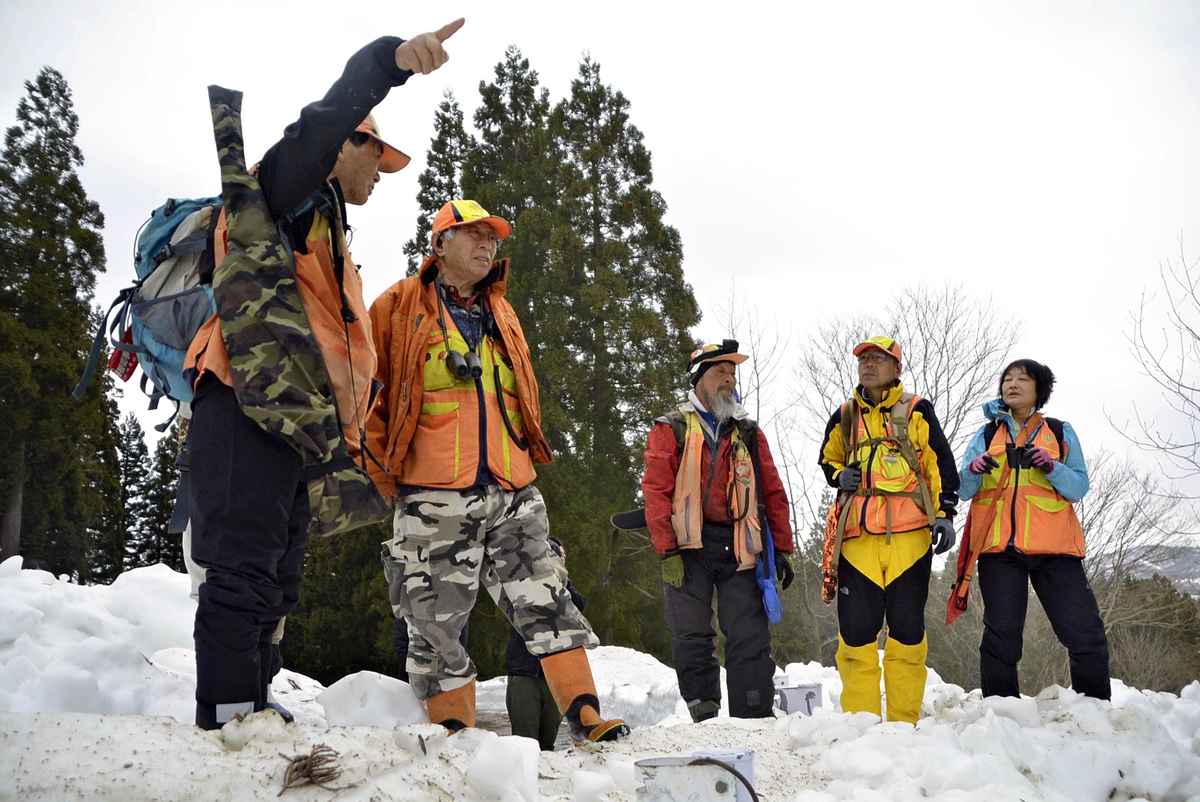
Members of the Niigata prefectural hunting association conduct spring bear hunting in Tokamachi, Niigata Prefecture, on April 4. They flew drones so that they could search for bears from both the ground and the air.
15:54 JST, April 26, 2026
Efforts are now fully underway to remove “spring bears” that are still in hibernation or lethargic just after emerging from hibernation.
The government is moving forward in keeping with the roadmap for bear population control it released in March. As part of these efforts, it is implementing a subsidy program in 11 prefectures this fiscal year, four more than in fiscal 2025.
Bears have already begun appearing in urban areas in the Tohoku region, and reducing their numbers during the spring is expected to help prevent the damage they can cause.
You may also like to read
Man in His 50s Attacked by Bear in Fukushima City While Gathering Wild VegetablesHunting in a team
“This is our first drive hunt of the season. We’ve been asked to capture 100 bears, so I want to get some good results,” Tomio Ikeda, the chairman of the Niigata prefectural hunting association, said in a speech in the snow-covered mountains of Tokamachi, Niigata Prefecture, on April 4.
The association has been commissioned by the prefecture to hunt spring bears. A drive hunt is a typical method for doing so, in which a team of hunters enters the mountains to push bears out.
On April 4, a group of 23 hunters in their 30s to 70s spread out to their respective positions.
Spring bear hunting is carried out when snow still covers the mountains. Hunting on snow makes it easy to spot bears from a distance and to find traces such as their footprints and droppings. Different techniques are used, such as den hunting in which bears are captured while they are hibernating in their dens, and drive hunting in which hunters divide up the tasks to hunt bears.
Although the Niigata hunters did not encounter any bears on April 4, similar hunts were to be carried out in 16 municipalities of the prefecture, including Minamiuonuma and Myoko, by the end of May. A total of 1,000 hunters are expected to enter mountain areas, aiming to capture 100 bears in total.
Potential threat
Spring bear hunting was once conducted mainly in the Tohoku region to obtain gallbladders used in traditional Chinese medicine and for the bears’ fur. As concerns grew over the declining population of bears, more focus was placed on conserving them and the hunting practice ceased to exist in some areas.
However, the frequent bear attacks on people in recent years have dramatically changed the situation. The government views spring bear hunting as an effective measure to address the situation because it not only helps reduce the number of bears before they come into human settlements, it causes bears to fear humans and keep their distance.
To help carry out the hunting, the government has increased its subsidies for hiring hunters and other operations. This fiscal year, four prefectures — Miyagi, Niigata, Toyama and Gifu — will newly embark on the spring bear hunting initiative.
Earlier than usual
In the Tohoku region, bear sightings have begun earlier than usual this year as bears wandered in residential areas in Sendai and Koriyama, Fukushima Prefecture, earlier this month. It is therefore urgent to cull bears and reduce their population starting in spring in order to reduce the damage they cause.
“It’s possible to make bears afraid of people by capturing individual bears near human settlements, which are a potential threat to people, as they could wander into populated areas. This could help reduce the scale and frequency of bear sightings,” said Shinsuke Koike, a professor of ecology at the Tokyo University of Agriculture and Technology and an expert on bear behavior.
“This effort must be continued from a long-term perspective,” Koike said.
Passing on hunting skills and expertise
However, as the spring bear hunting involves hunters entering mountains and working in a team, it requires people with knowledge and experience. The Miyagi prefectural government, which is participating in the hunting project from this fiscal year, has given up on starting this spring due to insufficient preparations, as this type of hunt has not been carried out in the prefecture for the past two decades.
Miyagi Prefecture now aims to begin the project at the end of this fiscal year.
Passing on the necessary skills and know-how to the next generation is a major challenge against the backdrop of an aging and declining hunter population.
As of fiscal 2024, the Dainihon Ryoyukai (All Japan hunting association) had about 56,000 members with a Class 1 gun hunting license, which allows them to handle rifles and other firearms. That is just one-fifth of the number 40 years ago and many of the license holders are now 60 years old or older.
“More and more experienced hunters are retiring,” said Masato Inagaki, 74, chairman of the Kazuno municipal hunting association in Akita Prefecture.
In March, the Akita prefectural government held a drive-hunt training session for first-year members of the prefectural hunting association. Experienced hunters served as instructors to transfer their skills and knowledge to younger hunters, explaining how to avoid falling in the mountains and the dangers of bear counterattacks.
Hiromi Taguchi, a professor emeritus of environmental studies at the Tohoku University of Art and Design and an expert on bear hunting, said: “There have been cases in which communities sought guidance from other regions to revive drive hunts. To continue spring bear hunting, it is essential for each community to continue to pass down these techniques. Training young hunters is important.”
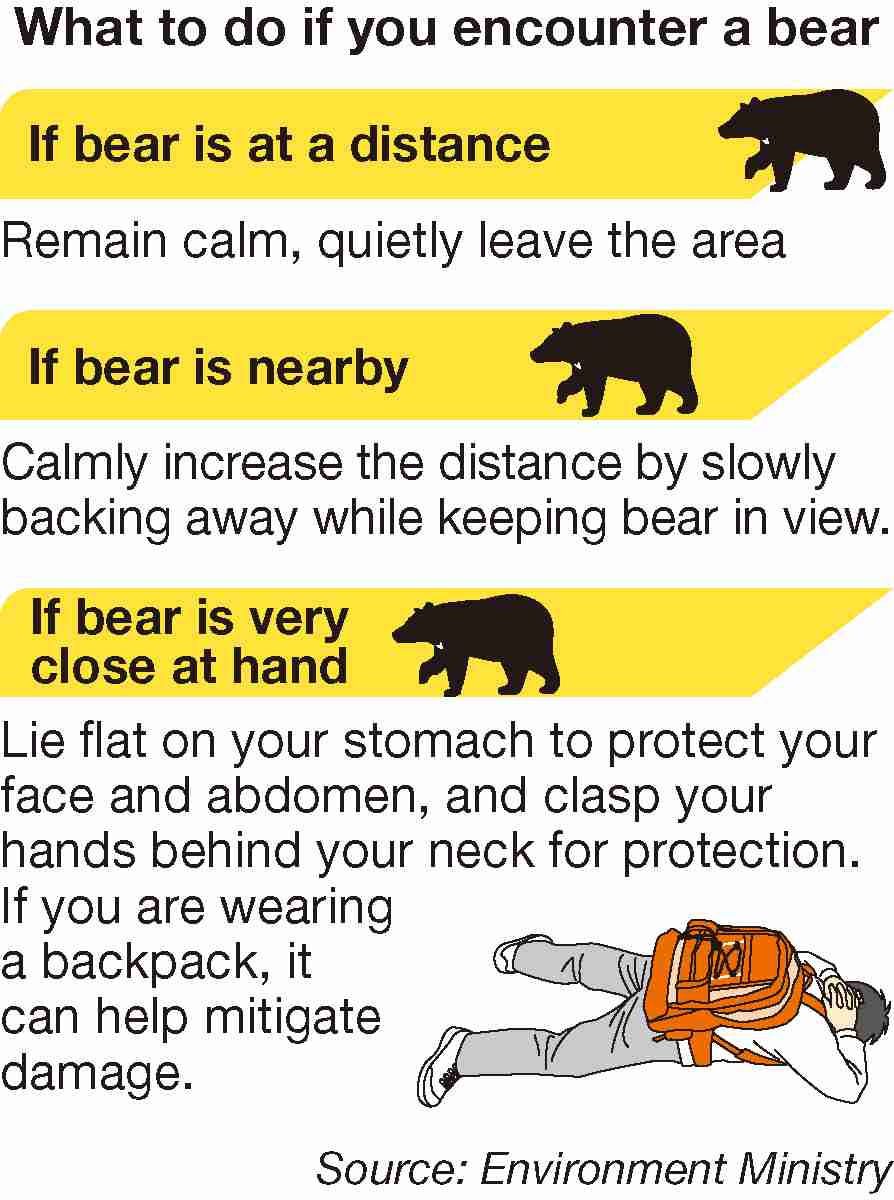
How to Protect Yourself During Bear Encounters


Related Tags







Most Read
Most read in the last 24 hours
-

Former Staff Members at Japan's Osaka-Kansai Expo Use Skills from...
-

India’s Arms Indigenization Quest for Self-Reliance / Big Firms, ...
-

Japan Moves Closer to Blocking Illegal Online Casinos as Governme...
-

Shifts Startup Focus to Nurturing Global Winners
-

Bibimbap with Spring Vegetables and Asari Clam Miso a Rich Taste ...
-

Princess Aiko Enjoys Imperial Court Music, Dance; Production, Cos...
-

Official App to Help Startups Meet Other Participants
-

Umami History: Kyoto Chef Murata Worked to Share Japan’s Scientif...
Most read in the last 7 days
-
Earthquake Hits Japan's Tohoku Region; 3-meter Tsunami Warning Is...
-

China, South Korea Object to Japanese PM Takaichi's Ritual Offeri...
-

Trump Extends the Ceasefire with Iran but Keeps the Blockade
-

India's Arms Indigenization Quest for Self-Reliance / New Delhi S...
-

¥1,000 Coins to Be Issued to Mark Anniversary of Beginning of Jap...
-

Most Serious Cyberattacks against the UK Now from Russia, Iran an...
-

Trump Opposes United–American Merger, Signals Support for Spirit
-

System Malfunction in Haneda Airport Causes 83 Flight Cancelation...
Most read in the last 30 days
-
Earthquake Hits Japan's Tohoku Region; 3-meter Tsunami Warning Is...
-
Police Find Child's Shoe During Search for Missing Boy in Nantan,...
-
Body Found in Nantan, Kyoto Prefecture, During Search for 11-Year...
-
Cherry Blossoms, Rapeseed Flowers Perform Colorful ‘Duet’ in Niig...
-
China, South Korea Object to Japanese PM Takaichi's Ritual Offeri...
-
Trump Extends the Ceasefire with Iran but Keeps the Blockade
-

Olympic Gold Medal-Winning Figure Skaters Riku-Ryu Announce Retir...
-

Japanese Prime Minister Takaichi Speaks to Pakistani Prime Minist...
Top Articles in Society
-
Earthquake Hits Japan’s Tohoku Region; 3-meter Tsunami Warning Issued (Update 1)
-
Police Find Child’s Shoe During Search for Missing Boy in Nantan, Kyoto Prefecture
-
Body Found in Nantan, Kyoto Prefecture, During Search for 11-Year-Old Boy in Area (Update 1)
-
Cherry Blossoms, Rapeseed Flowers Perform Colorful ‘Duet’ in Niigata
-

Japan to Ban Use of Portable Chargers on Airplanes from April 24, Number of Regular Chargers To Be Limited to 2
JN ACCESS RANKING
-
Earthquake Hits Japan’s Tohoku Region; 3-meter Tsunami Warning Issued (Update 1)
-
Police Find Child’s Shoe During Search for Missing Boy in Nantan, Kyoto Prefecture
-
Body Found in Nantan, Kyoto Prefecture, During Search for 11-Year-Old Boy in Area (Update 1)
-
Cherry Blossoms, Rapeseed Flowers Perform Colorful ‘Duet’ in Niigata
-
China, South Korea Object to Japanese PM Takaichi’s Ritual Offering to Yasukuni Shrine
Most read in the last 24 hours
-
Former Staff Members at Japan's Osaka-Kansai Expo Use Skills from...
-
India’s Arms Indigenization Quest for Self-Reliance / Big Firms, ...
-
Japan Moves Closer to Blocking Illegal Online Casinos as Governme...
-
Shifts Startup Focus to Nurturing Global Winners
-
Bibimbap with Spring Vegetables and Asari Clam Miso a Rich Taste ...
Most read in the last 7 days
-
Earthquake Hits Japan's Tohoku Region; 3-meter Tsunami Warning Is...
-
China, South Korea Object to Japanese PM Takaichi's Ritual Offeri...
-
Trump Extends the Ceasefire with Iran but Keeps the Blockade
-
India's Arms Indigenization Quest for Self-Reliance / New Delhi S...
-
¥1,000 Coins to Be Issued to Mark Anniversary of Beginning of Jap...
Most read in the last 30 days
-
Earthquake Hits Japan's Tohoku Region; 3-meter Tsunami Warning Is...
-
Police Find Child's Shoe During Search for Missing Boy in Nantan,...
-
Body Found in Nantan, Kyoto Prefecture, During Search for 11-Year...
-
Cherry Blossoms, Rapeseed Flowers Perform Colorful ‘Duet’ in Niig...
-
China, South Korea Object to Japanese PM Takaichi's Ritual Offeri...