
16:17 JST, May 6, 2023
What kind of impact will the continuation of interest rate hikes have on the lingering financial turmoil and the U.S. economy? The Federal Reserve Board should carefully assess the situation and manage its policies going forward.
The Fed has raised its benchmark interest rate by 0.25 percentage point to the 5-5.25% range, marking the 10th consecutive rate hike since the central bank lifted its zero rate policy in March 2022. The benchmark rate is now at its highest level in about 16 years since 2007.
Two U.S. banks, including the midsize lender Silicon Valley Bank, failed in March, and on May 1, First Republic Bank also collapsed.
Regarding the decision to continue raising interest rates amid persistent concerns about financial instability, Fed Chair Jerome Powell said at a press conference, “Inflation pressures continue to run high and the process of getting inflation back down to 2% has a long way to go.”
Low-income earners, in particular, are among those who take a hit from inflation. It is important to stave off price increases.
The U.S. consumer price index in March rose 5% from a year earlier, exceeding the Fed’s target of 2%, even though the rate of increase declined for the ninth consecutive month. Wage increases due to labor shortages are pushing up prices for services.
U.S. real gross domestic product grew at an annualized rate of 1.1% in the first three months of this year from the previous quarter, posting growth for the third consecutive quarter. Consumer spending grew significantly.
The robust U.S. economy may also have been a supporting factor behind the Fed’s decision to raise interest rates.
However, it remains to be seen whether the financial turmoil will subside.
The Fed’s rate hikes have caused the prices of government bonds and other assets held by banks to fall, worsening the banks’ financial situation. Banks could tighten their lending criteria, making them increasingly reluctant to lend. If the flow of money to businesses and households stagnates, the situation could result in an economic slowdown.
Tighter lending by banks is said to have a similar cooling effect on the economy as central bank interest rate hikes. The Fed must closely examine the impact of financial instability on the real economy.
There is a view that the U.S. economy will face a downturn toward the second half of the year as a result of the rapid interest rate rises. The focus will now be on when the Fed will stop raising rates.
The latest Fed statement changed the language regarding the need for additional rate increases in the future direction of monetary policy, indicating a possible pause in June when policymakers next meet.
The Fed’s policy change will greatly impact global financial markets. It is hoped that the Fed will carefully disseminate information on its policy direction while examining economic and price movements.
(From The Yomiuri Shimbun, May 6, 2023)


Most Read
Popular articles in the past 24 hours
-

Exhibition Featuring Yoshiharu Tsuge’s Manga World Underway in Ch...
-
Tokyo Skytree Observation Deck Remains Closed for Inspection afte...
-
Japanese Watermelon Shipments Starts in Leading Production Distri...
-
Impact on Japanese Economy Unclear with Trump’s New Tariffs, Shif...
-

Takeshima Day: Persistently Demanding Resolution from South Korea...
-

Hanzomon Line Service Suspended between Kudanshita, Oshiage Stati...
-
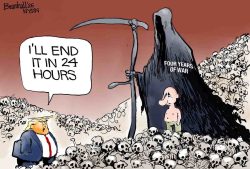
CARTOON OF THE DAY (February 25)
-
Hanzomon Line Service Resumes
Popular articles in the past week
-

Producer Behind Pop Group XG Arrested for Cocaine Possession
-

iPS Treatments Pass Key Milestone, but Broader Applications Far f...
-

Japan, U.S. Name 3 Inaugural Investment Projects; Reached Agreeme...
-

Tokyo Skytree's Elevator Stops, Trapping 20 People; All Rescued (...
-

Director Naomi Kawase's New Film Explores Heart Transplants in Ja...
-

Japan’s Major Real Estate Firms Expanding Overseas Businesses to ...
-

Milano Cortina 2026: Japanese Figure Skater Kaori Sakamoto’...
-

Baby Monkey Punch Captures Hearts at Chiba Pref. Zoo, on Social M...
Popular articles in the past month
-
Producer Behind Pop Group XG Arrested for Cocaine Possession
-

Japan PM Takaichi’s Cabinet Resigns en Masse
-

Japan Institute to Use Domestic Commercial Optical Lattice Clock ...
-

Man Infected with Measles Reportedly Dined at Restaurant in Tokyo...
-

Israeli Ambassador to Japan Speaks about Japan’s Role in the Reco...
-

Videos Plagiarized, Reposted with False Subtitles Claiming ‘Ryuky...
-

Man Infected with Measles May Have Come in Contact with Many Peop...
-

Prudential Life Insurance Plans to Fully Compensate for Damages C...
Top Articles in Editorial & Columns
-

Riku-Ryu Pair Wins Gold Medal: Their Strong Bond Leads to Major Comeback Victory
-
Reciprocal Tariffs Ruled Illegal: Judiciary Would Not Tolerate President’s High-Handed Approach
-
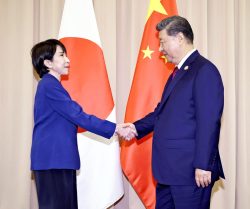
China Provoked Takaichi into Risky Move of Dissolving House of Representatives, But It’s a Gamble She Just Might Win
-
Japan’s Plan for Investment in U.S.: Aim for Mutual Development by Ensuring Profitability
-
Policy Measures on Foreign Nationals: How Should Stricter Regulations and Coexistence Be Balanced?
JN ACCESS RANKING
-
Producer Behind Pop Group XG Arrested for Cocaine Possession
-
Japan PM Takaichi’s Cabinet Resigns en Masse
-
Man Infected with Measles Reportedly Dined at Restaurant in Tokyo Station
-
Israeli Ambassador to Japan Speaks about Japan’s Role in the Reconstruction of Gaza
-
Videos Plagiarized, Reposted with False Subtitles Claiming ‘Ryukyu Belongs to China’; Anti-China False Information Also Posted in Japan