
Deep Tech, Corporate Ties Key to Scaling up Japan Startups Come into Focus at SusHi Tech Tokyo 2026
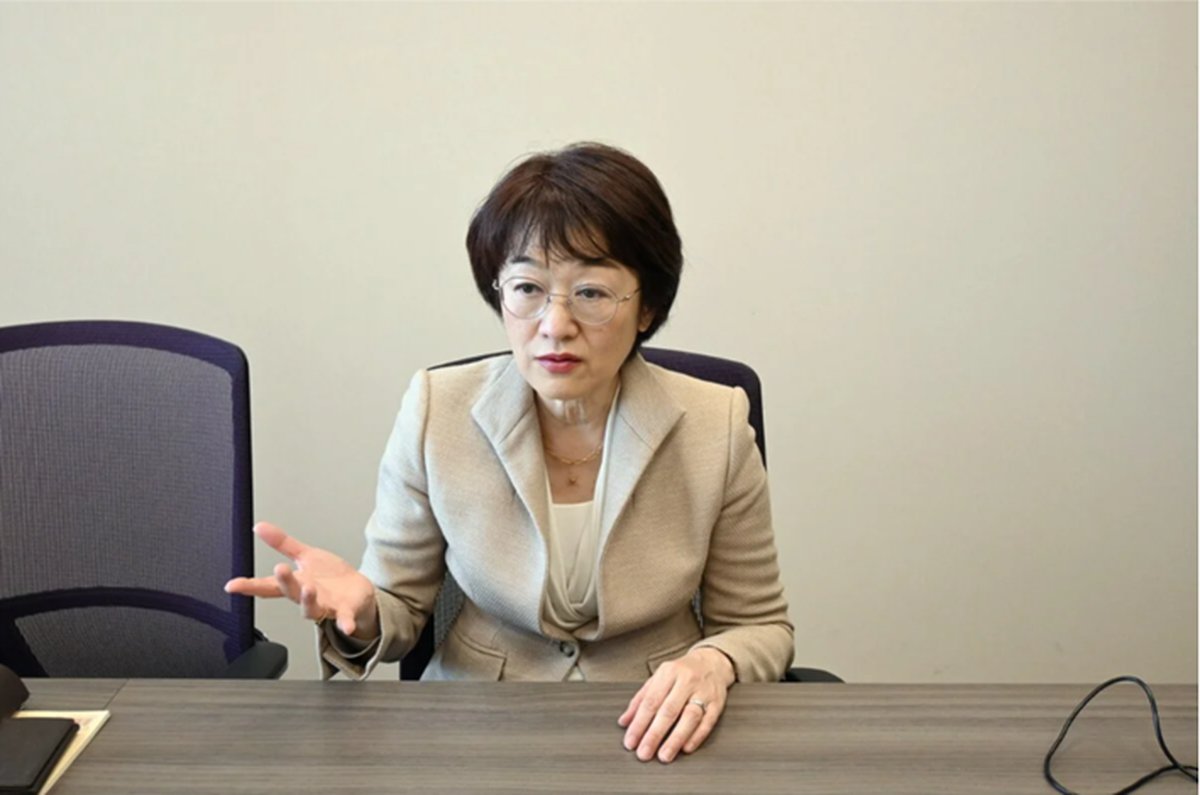
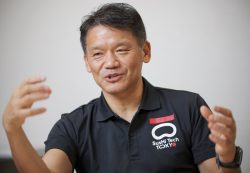
Kaori Iwasaki speaks during an interview with The Yomiuri Shimbun in Chiyoda Ward, Tokyo.
13:17 JST, April 27, 2026
Japan’s struggle to shed its “startup laggard” label will be in focus as domestic and international ventures gather for SusHi Tech Tokyo 2026, began on Monday and will run though Wednesday at Tokyo Big Sight in Koto Ward.
In an interview with The Yomiuri Shimbun, Kaori Iwasaki, a senior analyst at The Japan Research Institute, Ltd., noted that although the environment is improving, the key to scaling up lies in stronger collaboration with established firms to capitalize on Japan’s deep-tech expertise.
The following are excerpts from an interview conducted by Yomiuri Shimbun Staff Writer Tomoko Numajiri.
The Yomiuri Shimbun: How do you evaluate the environment surrounding startups in Japan today?
Iwasaki: The environment for startups is vastly superior to what it was a decade ago. As they gain greater mainstream social acceptance, startups are increasingly becoming a magnet for top-tier talent.
In a survey conducted by Dai-ichi Life Insurance Co. on future career aspirations, “company president and entrepreneur” ranked among the top 10 for high school boys for the first time last year. Japan has a strong preference for stability, and few aim to become entrepreneurs, but signs of change are emerging. The fact that changing jobs has become common and working styles have diversified is also lowering the hurdles to starting a business.
However, despite Japan accounting for 3.6% of global nominal gross domestic product in 2024, it accounted for only 1.2% of total global startup investment. Given this disproportionately small presence relative to its economy’s size, it cannot be said that the country has shed its label as a startup laggard.
Yomiuri: What factors are behind this “lagging” status?
Iwasaki: Startups accumulate experience and knowledge by rotating through a three-stage cycle of founding a company, growing it and recovering investments. This leads to an increase in serial entrepreneurs and venture capital firms. This cycle began in Silicon Valley around the 1960s and 1970s, whereas Japan’s ecosystem only gained real momentum after the 2000s. There is a vast difference in experience.
Yomiuri: The number of Japanese startup companies grew to about 25,000 in 2025, a 1.5-fold increase from 2021.
Iwasaki: The broadening base of the startup scene is a positive step, but the numbers are still far from enough. More concerning is the rarity of businesses that have scaled up, highlighting a major structural weakness in the ecosystem. With the global competitiveness of established Japanese firms on the decline — leaving only two in the world’s top 100 by market capitalization — anticipation is mounting for startups to fill the void and emerge as the next generation of global leaders.
Yomiuri: Why are there so few unlisted unicorns with a market capitalization of over $1 billion in Japan?
Iwasaki: The reasons are layered. While the limited experience with the startup cycle is a hurdle, the disparity in the talent pool is equally significant. Silicon Valley attracts talent from around the world, where people set ambitious goals and take on challenges that defy conventional wisdom. For better or worse, the Japanese are disciplined and sensible. Few people draw up bold visions.
Scaling up requires the development of globally viable products and services. Because of Japan’s large domestic market, many believe they should expand overseas only after securing a foothold at home. However, this often raises hurdles to global expansion as Japanese becomes the official language within the company, hindering the globalization of human resources.
Yomiuri: In which fields do you expect unicorns to emerge?
Iwasaki: Deep tech is a key area. Because these technologies require high levels of expertise and a significant lead time before commercialization, Silicon Valley’s typical advantage in speed is less of a factor. This is a field where Japan can truly leverage its core strengths, such as the research and development capabilities of its universities and its sophisticated manufacturing technology.
While only two Japanese firms remain in the global top 100, the picture changes when looking at the top 1,000, where 70 Japanese companies are represented. Japan ranks third in the world by country, trailing only the United States and China, highlighting significant depth in our corporate sector.
Japan boasts high-quality companies across a diverse range of industries, providing fertile ground for startups to find partners that can utilize their deep tech. If startups can focus on creating “one from zero” and then collaborate with established firms to scale that to 100 or even 10,000, it creates a powerful win-win scenario for both parties.
Yomiuri: Can you speak on the various support measures the central and local governments are taking?
Iwasai: In 2022, the government established the “Startup Development Five-Year Plan.” With support measures addressing every stage of development, Japan’s startup support system is now among the most comprehensive in the world.
Although the plan runs through fiscal 2027, support must continue even if sufficient results are not immediately achieved. We shouldn’t stop the cycle that has finally begun to turn.
Looking at overseas examples, countries such as France, South Korea and Singapore have succeeded in fostering startups through extensive government support. Public procurement is highly effective for integrating startup offerings into the public sector.
Yomiuri: What role does Tokyo play as a capital city?
Iwasaki: Investors supplying risk money prioritize a deep sense of trust when dealing with startups. When issues arise, having an environment where parties can meet face-to-face is essential.
Tokyo serves as a massive hub where information, events and human networks, including investors, are densely concentrated. I hope to see startups take flight globally by leveraging this ecosystem.
While the Tokyo metropolitan government’s development of support hubs is effective, it should also continue to focus on deepening ties with universities.


Related Tags


Most Read
Most read in the last 24 hours
-

Dutch Man Injured on Closed Mt. Fuji Route, Having Fallen While D...
-
Tokyo Vice Governor: SusHi Tech Tokyo Garners Tangible Business O...
-
Japan to Host Leaders from Major Cities from Around the World for...
-

Govt to Support Universities in 17 Strategic Fields to Boost Huma...
-

Sabastian Sawe of Kenya Becomes First Person to Run a Sub-2-hour ...
-

Iran's Top Diplomat Briefly Returns to Pakistan but Trump Says th...
-

DC Gala Shooting Suspect Aired Grievances against Trump in Writin...
-
Japanese Police Storm Bus to Arrest Man with Knife; No Injuries R...
Most read in the last 7 days
-
Earthquake Hits Japan's Tohoku Region; 3-meter Tsunami Warning Is...
-
China, South Korea Object to Japanese PM Takaichi's Ritual Offeri...
-

Trump Extends the Ceasefire with Iran but Keeps the Blockade
-

India's Arms Indigenization Quest for Self-Reliance / New Delhi S...
-
¥1,000 Coins to Be Issued to Mark Anniversary of Beginning of Jap...
-

Most Serious Cyberattacks against the UK Now from Russia, Iran an...
-

Trump Opposes United–American Merger, Signals Support for Spirit
-

System Malfunction in Haneda Airport Causes 83 Flight Cancelation...
Most read in the last 30 days
-
Earthquake Hits Japan's Tohoku Region; 3-meter Tsunami Warning Is...
-

Police Find Child's Shoe During Search for Missing Boy in Nantan,...
-

Body Found in Nantan, Kyoto Prefecture, During Search for 11-Year...
-
China, South Korea Object to Japanese PM Takaichi's Ritual Offeri...
-
Cherry Blossoms, Rapeseed Flowers Perform Colorful ‘Duet’ in Niig...
-
Trump Extends the Ceasefire with Iran but Keeps the Blockade
-

Olympic Gold Medal-Winning Figure Skaters Riku-Ryu Announce Retir...
-
Japanese Prime Minister Takaichi Speaks to Pakistani Prime Minist...
Top Articles in Business
-
Foreign Tourists Set New Record in March; 30% Drop in Visitors from Middle East
-

Japan’s ANA to Introduce Fuel Surcharges to Domestic Flights from Fy27, Driven by Rising Fuel Costs, Declining Profits
-
Toyota Motor to Begin Full-Scale Hydrogen Production in May; Mass Production and Sales of Equipment Planned to Start in 2029
-
Middle Powers Should Create Alternative to WTO, Says Research Group
-
Airborne Cellular Stations to Be Tested in Ishikawa, Miyagi; Aim to Ensure Communication During Disasters
JN ACCESS RANKING
-
Earthquake Hits Japan’s Tohoku Region; 3-meter Tsunami Warning Issued (Update 1)
-
Police Find Child’s Shoe During Search for Missing Boy in Nantan, Kyoto Prefecture
-
Body Found in Nantan, Kyoto Prefecture, During Search for 11-Year-Old Boy in Area (Update 1)
-
China, South Korea Object to Japanese PM Takaichi’s Ritual Offering to Yasukuni Shrine
-
Cherry Blossoms, Rapeseed Flowers Perform Colorful ‘Duet’ in Niigata
Most read in the last 24 hours
-
Dutch Man Injured on Closed Mt. Fuji Route, Having Fallen While D...
-
Tokyo Vice Governor: SusHi Tech Tokyo Garners Tangible Business O...
-
Japan to Host Leaders from Major Cities from Around the World for...
-
Govt to Support Universities in 17 Strategic Fields to Boost Huma...
-
Sabastian Sawe of Kenya Becomes First Person to Run a Sub-2-hour ...
Most read in the last 7 days
-
Earthquake Hits Japan's Tohoku Region; 3-meter Tsunami Warning Is...
-
China, South Korea Object to Japanese PM Takaichi's Ritual Offeri...
-
Trump Extends the Ceasefire with Iran but Keeps the Blockade
-
India's Arms Indigenization Quest for Self-Reliance / New Delhi S...
-
¥1,000 Coins to Be Issued to Mark Anniversary of Beginning of Jap...
Most read in the last 30 days
-
Earthquake Hits Japan's Tohoku Region; 3-meter Tsunami Warning Is...
-
Police Find Child's Shoe During Search for Missing Boy in Nantan,...
-
Body Found in Nantan, Kyoto Prefecture, During Search for 11-Year...
-
China, South Korea Object to Japanese PM Takaichi's Ritual Offeri...
-
Cherry Blossoms, Rapeseed Flowers Perform Colorful ‘Duet’ in Niig...