
Correspondents’ Dinner Lacked Highest Security Level despite Presence of Top Officials
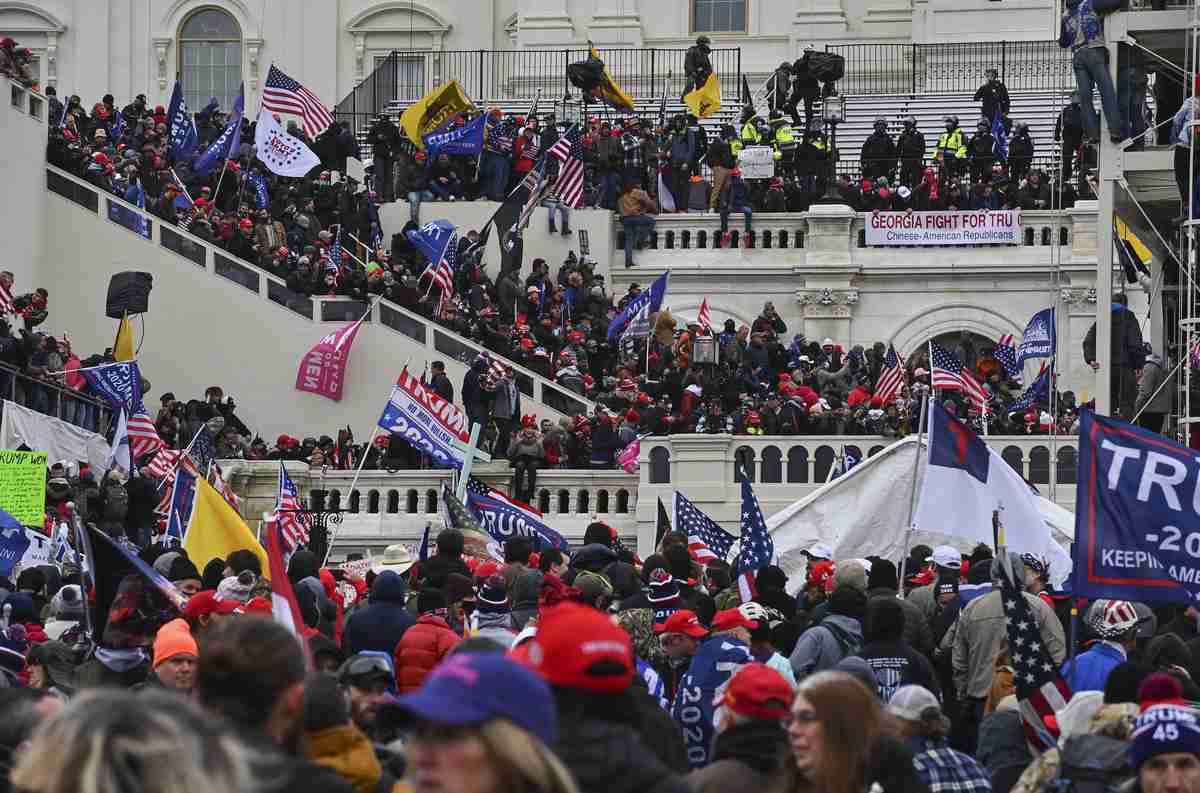
The absence of a National Special Security Event designation last came under scrutiny for the failure to protect the U.S. Capitol on Jan. 6, 2021.
13:13 JST, April 27, 2026
The Trump administration provided a lower level of security for the White House correspondents’ dinner than it has for other gatherings of high-ranking officials, even though the president and many Cabinet members were in attendance, according to officials familiar with the plan.
President Donald Trump and Vice President JD Vance were quickly evacuated to safety Saturday when a gunman charged the security perimeter and attempted to storm the ballroom at the Washington Hilton Hotel. Others in attendance included Speaker of the House Mike Johnson, Secretary of State Marco Rubio, Treasury Secretary Scott Bessent and Defense Secretary Pete Hegseth.
The concentration of high-ranking leaders in one ballroom left the nation unusually vulnerable as the would-be assassin raced past Secret Service before he was apprehended. A worst-case scenario might have resulted in passing the power of the presidency to the senior-most senator of the majority party, Chuck Grassley (R-Iowa), who was not at the event and is third in line to the presidency behind Vance and Johnson.
When so many officials gather in one place for official functions such as an inauguration or State of the Union address, the secretary of homeland security typically puts the Secret Service in charge of coordinating all security through a formal designation known as a “National Special Security Event.”
There was no such designation on Saturday night at an event also attended by thousands of journalists and other government officials, according to local and federal officials who spoke on the condition of anonymity because they were not authorized to discuss security details. The suspected gunman, 31-year-old Cole Tomas Allen, wrote a statement saying he wanted to target members of the Trump administration and ridiculed what he called lax security at the hotel, according to two law enforcement officials familiar with the writings. He said Iranian agents could easily have brought more dangerous weapons to the venue, according to the text.
The White House referred questions to the Department of Homeland Security, which did not immediately respond to requests for comment. A spokesperson for the Washington Hilton said in an email that the Secret Service “led security for the event.”
The Secret Service did not answer questions about its role.
One D.C. government official said they were not aware of an instance when the annual dinner had been designated as a National Special Security Event. It typically hosts high-ranking officials, but the lineup of those who attend varies from year to year.
WHCA Executive Director Steve Thomma also said in a text he was not aware of such a designation in the past. “Not a thing that’s ever come up in my time as executive director,” said Thomma, who has been the association’s executive director since 2017.
The Secret Service considered the site it was charged with protecting to be the ballroom and the immediate perimeter around it, according to two law enforcement officials briefed on the investigation who spoke on the condition of anonymity because there is a pending prosecution. The agency did not take responsibility for the entire Hilton hotel.
Outside, D.C. police handled road closures and traffic. In between, there was no clear responsibility for the security of the thousands of guests and rest of the Hilton property, where authorities said the suspect had booked a room.
Acting attorney general Todd Blanche said Sunday he did not view the incident as a security failure. The gunman was detained before reaching the ballroom.
“On the contrary, it was a massive security success story,” Blanche said during an interview with CNN’s Dana Bash. “I mean, if you think about what happened as far as what we know right now, this suspect barely breached the perimeter.”
The full range of security precautions taken before and during the event was not immediately detailed by authorities. Attendees were free to enter the hotel with only a paper or digital ticket, then mill about for hours before walking through metal detectors.
Attendees including Sen. John Fetterman (D-Pennsylvania) and Kari Lake, senior adviser for the U.S. Agency for Global Media, questioned the security at the event. Rep. Ritchie Torres (D-New York) called for an investigation.
In a post on X, Grassley said he was setting up a briefing with Secret Service leadership about “security protocols & related law enforcement matters” involving the dinner. He thanked the Secret Service for “quick action” at the scene.
D.C. police said the gunman was armed with a shotgun, a handgun and knives. One Secret Service officer was struck by a bullet but protected by a bulletproof vest. Blanche said authorities initially believe the suspect fired the shot that struck the officer.
“While this was extraordinarily dangerous and put a lot of lives at risk,” Blanche said during an interview with NBC News’s “Meet the Press,” “the system worked. All of us were safe. President Trump was safe.”
In a statement, WHCA President Weijia Jiang said the evening was “was a harrowing moment for everyone in attendance.”
“Our dinner exists to celebrate the First Amendment and the hard daily work of the journalists who defend it,” Jiang wrote. “The WHCA board will be meeting to assess what happened and determine how to proceed. We will provide updates as soon as any are available.”
Jiang and Thomma did not immediately respond to questions about whether there had been any discussion with DHS prior to the dinner about whether it should be designated a National Special Security Event or who was responsible for security outside the immediate perimeter of the ballroom.
The absence of a National Special Security Event designation last came under scrutiny for the failure to protect the U.S. Capitol during the certification of the presidential election results on Jan. 6, 2021. Pro-Trump rioters overpowered the Capitol Police and breached the building, forcing lawmakers to evacuate and suspending the certification for hours. The Capitol was eventually cleared with help from the D.C. police, federal agents and the National Guard.
In the aftermath, the House Jan. 6 committee, the Government Accountability Office and the Justice Department Inspector General all recommended designating future electoral certifications as National Special Security Events. The joint session of Congress on Jan. 6, 2025, was such an event, with the Secret Service in charge.
A D.C. government official briefed on the preparation for the event, who spoke on the condition of anonymity because they were not authorized to speak publicly, said National Special Security Events tend to be for multiday events with regular attendance by the president and top cabinet officials.
“This is a dinner that he might not go to at the last minute and is not annually attended by him,” the official said in a text message in response to questions about why the event was not given the highest security level. “The State of the Union can only occur with the president, the WHCD has occurred many times without POTUS.”
Trump told reporters after the dinner that Secret Service and law enforcement did what they were supposed to do.
“I’m the one that would complain,” he said on Saturday night. “I’d be up here right now saying they didn’t do their job. Oh, believe me, because, you know, it’s my life.”




Most Read
Most read in the last 24 hours
-

Dutch Man Injured on Closed Mt. Fuji Route, Having Fallen While D...
-
Tokyo Vice Governor: SusHi Tech Tokyo Garners Tangible Business O...
-

Japan to Host Leaders from Major Cities from Around the World for...
-
Govt to Support Universities in 17 Strategic Fields to Boost Huma...
-

Sabastian Sawe of Kenya Becomes First Person to Run a Sub-2-hour ...
-
Iran's Top Diplomat Briefly Returns to Pakistan but Trump Says th...
-
DC Gala Shooting Suspect Aired Grievances against Trump in Writin...
-

Japanese Police Storm Bus to Arrest Man with Knife; No Injuries R...
Most read in the last 7 days
-
Earthquake Hits Japan's Tohoku Region; 3-meter Tsunami Warning Is...
-
China, South Korea Object to Japanese PM Takaichi's Ritual Offeri...
-
Trump Extends the Ceasefire with Iran but Keeps the Blockade
-

India's Arms Indigenization Quest for Self-Reliance / New Delhi S...
-

¥1,000 Coins to Be Issued to Mark Anniversary of Beginning of Jap...
-
Most Serious Cyberattacks against the UK Now from Russia, Iran an...
-
Trump Opposes United–American Merger, Signals Support for Spirit
-
System Malfunction in Haneda Airport Causes 83 Flight Cancelation...
Most read in the last 30 days
-
Earthquake Hits Japan's Tohoku Region; 3-meter Tsunami Warning Is...
-
Police Find Child's Shoe During Search for Missing Boy in Nantan,...
-
Body Found in Nantan, Kyoto Prefecture, During Search for 11-Year...
-
China, South Korea Object to Japanese PM Takaichi's Ritual Offeri...
-
Cherry Blossoms, Rapeseed Flowers Perform Colorful ‘Duet’ in Niig...
-
Trump Extends the Ceasefire with Iran but Keeps the Blockade
-

Olympic Gold Medal-Winning Figure Skaters Riku-Ryu Announce Retir...
-
Japanese Prime Minister Takaichi Speaks to Pakistani Prime Minist...
Top Articles in News Services
-
Trump Extends the Ceasefire with Iran but Keeps the Blockade
-
Most Serious Cyberattacks against the UK Now from Russia, Iran and China, Cyber Chief Says
-
Trump Opposes United–American Merger, Signals Support for Spirit
-

Florida Launches Criminal Probe into OpenAI and ChatGPT over Deadly Shooting
-
Trump Picks a University of Minnesota Professor to Lead His Economic Council
JN ACCESS RANKING
-
Earthquake Hits Japan’s Tohoku Region; 3-meter Tsunami Warning Issued (Update 1)
-
Police Find Child’s Shoe During Search for Missing Boy in Nantan, Kyoto Prefecture
-
Body Found in Nantan, Kyoto Prefecture, During Search for 11-Year-Old Boy in Area (Update 1)
-
China, South Korea Object to Japanese PM Takaichi’s Ritual Offering to Yasukuni Shrine
-
Cherry Blossoms, Rapeseed Flowers Perform Colorful ‘Duet’ in Niigata
Most read in the last 24 hours
-
Dutch Man Injured on Closed Mt. Fuji Route, Having Fallen While D...
-
Tokyo Vice Governor: SusHi Tech Tokyo Garners Tangible Business O...
-
Japan to Host Leaders from Major Cities from Around the World for...
-
Govt to Support Universities in 17 Strategic Fields to Boost Huma...
-
Sabastian Sawe of Kenya Becomes First Person to Run a Sub-2-hour ...
Most read in the last 7 days
-
Earthquake Hits Japan's Tohoku Region; 3-meter Tsunami Warning Is...
-
China, South Korea Object to Japanese PM Takaichi's Ritual Offeri...
-
Trump Extends the Ceasefire with Iran but Keeps the Blockade
-
India's Arms Indigenization Quest for Self-Reliance / New Delhi S...
-
¥1,000 Coins to Be Issued to Mark Anniversary of Beginning of Jap...
Most read in the last 30 days
-
Earthquake Hits Japan's Tohoku Region; 3-meter Tsunami Warning Is...
-
Police Find Child's Shoe During Search for Missing Boy in Nantan,...
-
Body Found in Nantan, Kyoto Prefecture, During Search for 11-Year...
-
China, South Korea Object to Japanese PM Takaichi's Ritual Offeri...
-
Cherry Blossoms, Rapeseed Flowers Perform Colorful ‘Duet’ in Niig...