
India’s Arms Indigenization Quest for Self-Reliance / Big Firms, Startups Compete and Collaborate to Create Ecosystem
6:00 JST, April 26, 2026
This is the third installment in a five-part series on India’s bid to accelerate its all-alignment strategy for self-reliance by enhancing domestic arms production.
***
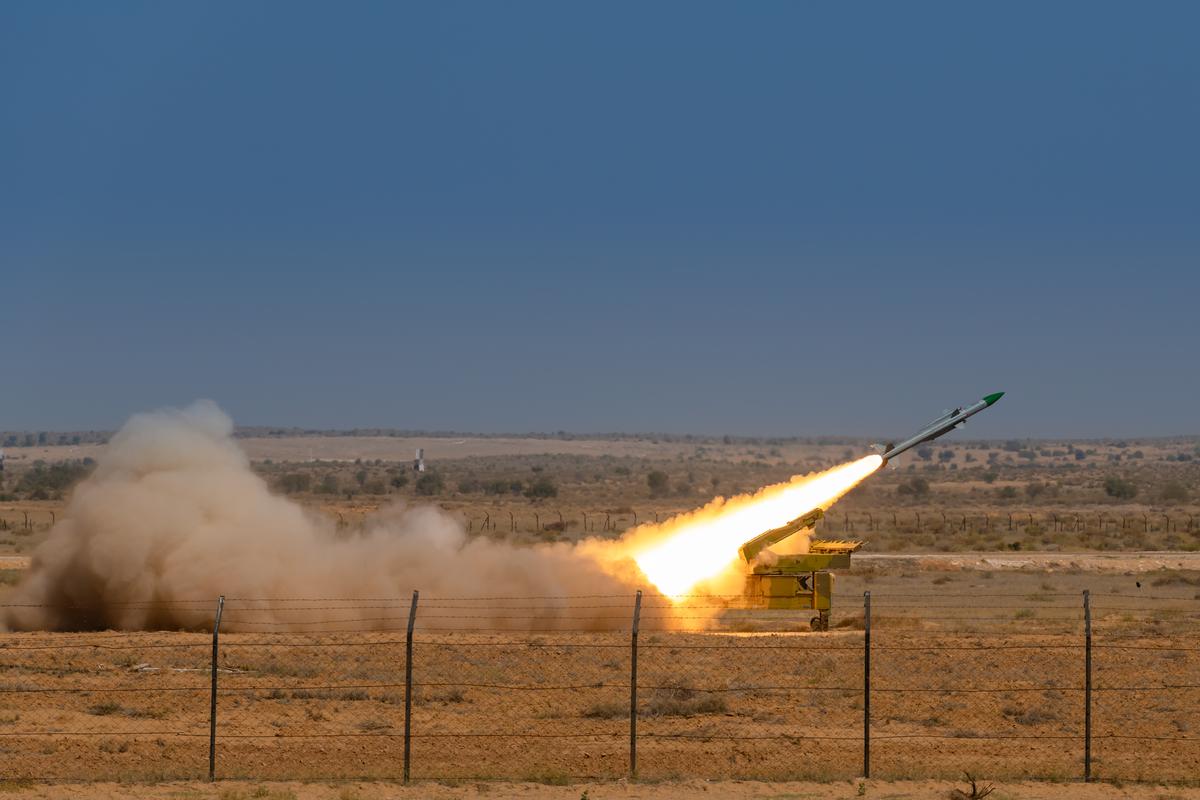
Courtesy of the Indian Ministry of Defence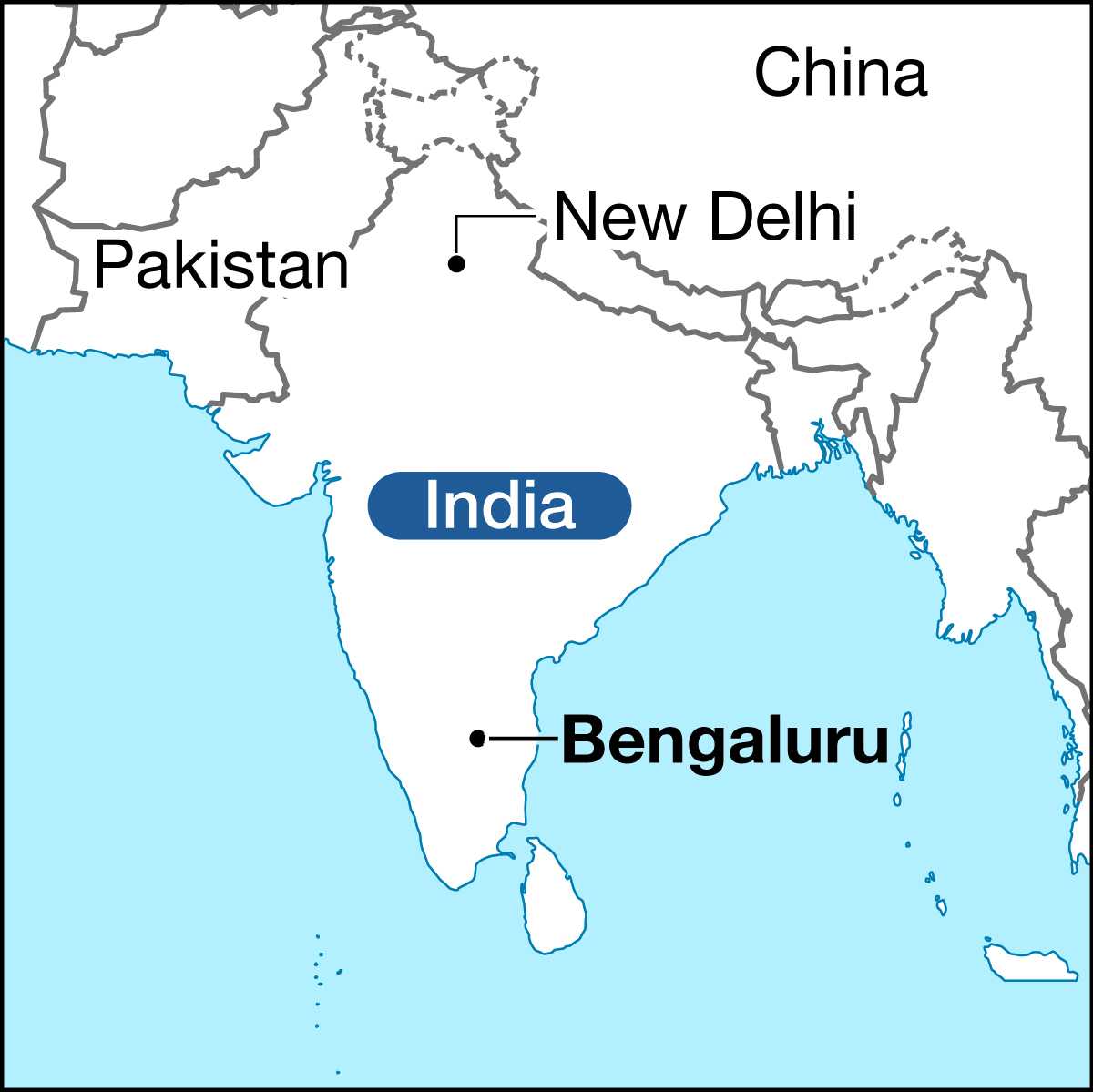
BENGALURU, India — Often dubbed the “Silicon Valley of India,” the vibrant southern city of Bengaluru on the Deccan Plateau is home to many arms companies as well as IT firms, including Bharat Electronics Limited (BEL), India’s leading defense firm established in 1954.
“[We are] a very agile organization, quickly adapting to changes,” a senior official of the government-owned entity stressed at its office on a huge company campus.
BEL is a major driver of India’s weapon indigenization efforts, supplying the Akash missile, a communication system for the INS Vikrant aircraft carrier, electronic warfare systems and night vision devices. Its sales in fiscal 2024-25 were about 230 billion rupees (approximately ¥390 billion), up more than 60% from fiscal 2020-21.
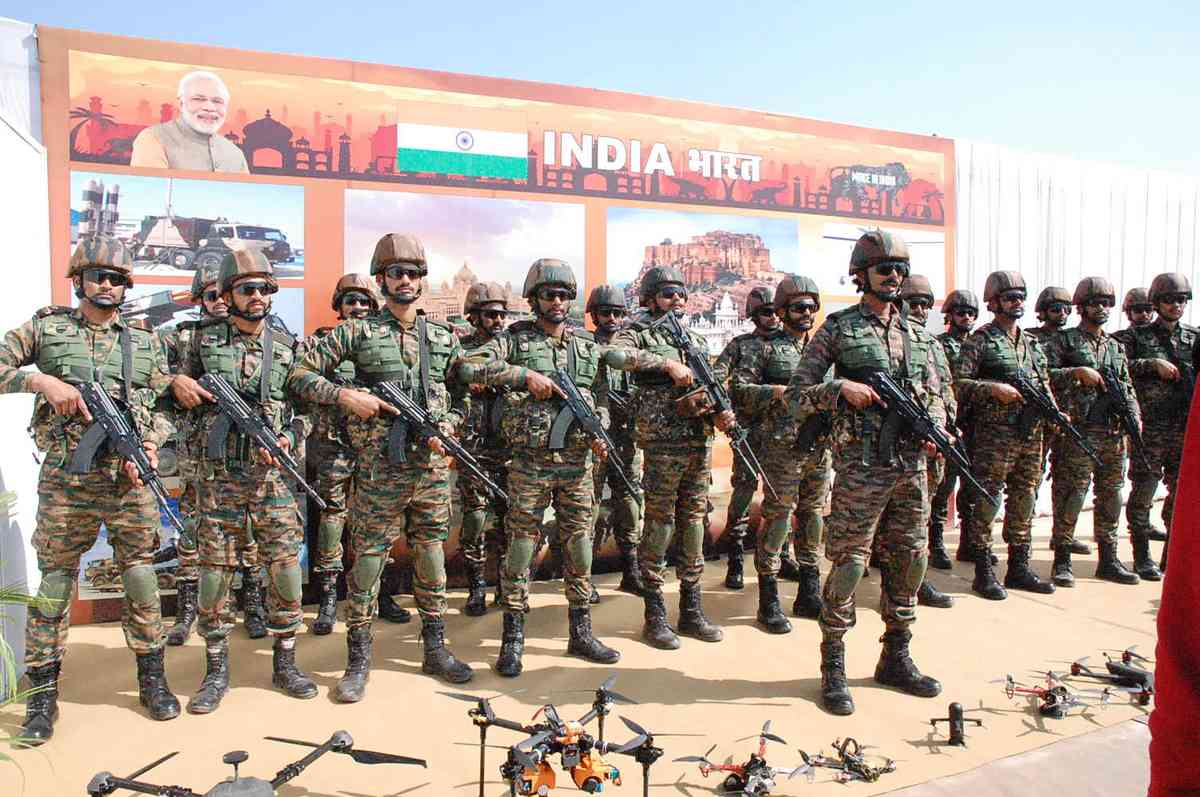
Soldiers in a platoon responsible for drone operation line up at an Army base in Jodhpur in Rajasthan, India, on Feb. 25.
In the Stockholm International Peace Research Institute’s list of the top 100 defense companies, released in December 2025, BEL ranked 58th in terms of arms revenue, close to Japan’s Kawasaki Heavy Industries ranked 55th.
The company is active in seeking technology transfers through joint research and production with foreign defense firms. BEL is expected to co-produce the UNICORN integrated stealth antenna system used by the Japan Maritime Self-Defense Force for its fleet of Mogami-class frigates, as Tokyo basically agreed in 2024 with New Delhi to export the antenna to India.
You may also like to read
India’s Arms Indigenization Quest for Self-Reliance / Desert Drills near Pakistan Showcase Determination to Be Developed Nation India’s Arms Indigenization Quest for Self-Reliance / New Delhi Sticks to Its ‘All-Alignment’ Guns Even after Iran Warship AttackTech ties with 60 nations
BEL is producing defense gear under OEM (original equipment manufacturer) arrangements with companies in about 10 countries such as the United States, the United Kingdom, France, Sweden and Israel, according to a senior official of the company. It has also formed technological partnerships with firms from approximately 60 nations.The private sector has grown to compete with public firms in India’s defense industry. Private firms were allowed into defense production in 2001, and the private sector’s share of the market has increased from 21% in fiscal 2023-24 to 23% in fiscal 2024-25.
Public firms such as BEL are tasked with fostering a broad industrial ecosystem for defense in cooperation with private companies. Together with another government-owned defense firm, BEL has invested in Defence Innovation Organisation (DIO), a nonprofit company incorporated in 2017 to foster innovation in micro, small and medium enterprises (MSMEs) and provide grants of up to hundreds of millions of rupees. About 16,000 MSMEs are estimated to be engaged in defense production, according to the government.
Anticipating ‘swarm war’
A variety of loitering munitions and unmanned ground vehicles (UGVs) were displayed at a workshop of Bengaluru startup NewSpace Research and Technologies, one of the firms that have received government support through the DIO framework.
Equipped with power generators, the UGVs are used with drones, making humans unnecessary on the battlefield. An order for a total of 300 such sets has already been placed by the Indian armed forces, according to a senior manager of the company.
“This is the most important for us,” the manager said, pointing to a small, mobile artificial intelligence processor that enables multiple drones to engage in coordinated “swarm” attacks.
The firm plans to keep concentrating on production for the Indian armed forces in the next 3-4 years and shift to export afterwards. “In two years, the first [full-fledged] drone swarm war will probably take place. The world will then have much interest in our products,” a company executive said.
Weak in manufacturing, R&D
India’s defense production policy and infrastructure have yet to improve. Some experts say the still strongly government-led and bureaucratic procurement has led to a delay in production of the fifth-generation fighter; they point out that South Korea and Turkey, which started similar programs around the same time as India, have already held prototype flights.
India’s relative weakness in manufacturing, which accounts for only 13% of its GDP, and the nation’s thin research and development (R&D) expenditure — which stands at 0.65% of its GDP, far lower than the 2%-4% in the United States, Japan and the European Union — are also seen as major challenges.
The NewSpace Research and Technologies executive, however, listed unique assets that India possesses that will help it become a defense equipment power in the future.
“India has technology. It also has an advantage as an English-speaking nation, as it facilitates access to literature on relevant technological information, which is often written in English. Furthermore, the nation’s geography with various conditions in land, sea and air is good to produce a variety of products,” he said.







Most Read
Most read in the last 24 hours
-
Japanese Govt to Set Up Panel on Widening Access to Sports Broadc...
-

New Budget Framework for Investments: Work to Achieve Both Growth...
-

Toyota Unveils New Development Hub in Woven City Repurposed from ...
-

Elegant Weeping Cherry Blossoms on Display at Water Purification ...
-

Fukui: Dinosaur Faculty Building Unveiled in Japanese University'...
-

Man Admits to Abandoning Wife's Body in Zoo Incinerator in Hokkai...
-

Japan Govt Panel Says Blocking of Illegal Online Casinos Effectiv...
-

Online Casinos: Blocking is an Option Should Widespread Use Conti...
Most read in the last 7 days
-
Earthquake Hits Japan's Tohoku Region; 3-meter Tsunami Warning Is...
-

China, South Korea Object to Japanese PM Takaichi's Ritual Offeri...
-

Trump Extends the Ceasefire with Iran but Keeps the Blockade
-

India's Arms Indigenization Quest for Self-Reliance / New Delhi S...
-

Japan to Ban Use of Portable Chargers on Airplanes from April 24,...
-

¥1,000 Coins to Be Issued to Mark Anniversary of Beginning of Jap...
-

Most Serious Cyberattacks against the UK Now from Russia, Iran an...
-

Trump Opposes United–American Merger, Signals Support for Spirit
Most read in the last 30 days
-
Earthquake Hits Japan's Tohoku Region; 3-meter Tsunami Warning Is...
-

Police Find Child's Shoe During Search for Missing Boy in Nantan,...
-

Body Found in Nantan, Kyoto Prefecture, During Search for 11-Year...
-

Cherry Blossoms, Rapeseed Flowers Perform Colorful ‘Duet’ in Niig...
-
China, South Korea Object to Japanese PM Takaichi's Ritual Offeri...
-
Trump Extends the Ceasefire with Iran but Keeps the Blockade
-

Olympic Gold Medal-Winning Figure Skaters Riku-Ryu Announce Retir...
-

Japanese Prime Minister Takaichi Speaks to Pakistani Prime Minist...
Top Articles in Politics
-
India’s Arms Indigenization Quest for Self-Reliance / New Delhi Sticks to Its ‘All-Alignment’ Guns Even after Iran Warship Attack
-

Japan Aims to Enhance Deterrence, Defense Industry by Allowing Exports of Weapons
-

Former Japan PM Murayama’s Farewell Ceremony Held; Former Deputy PM Kono Vows to ‘Carry on Path Toward Peace’
-

Chinese Warships Cruise Past Japanese Islands in Retaliation for MSDF Ship Using Taiwan Strait
-

Japan’s PM Takaichi Seeks to Advance Policies Bearing Her Own ‘Color,’ Eyes Amending Constitution, Building Strong Economy
JN ACCESS RANKING
-
Earthquake Hits Japan’s Tohoku Region; 3-meter Tsunami Warning Issued (Update 1)
-
Police Find Child’s Shoe During Search for Missing Boy in Nantan, Kyoto Prefecture
-
Body Found in Nantan, Kyoto Prefecture, During Search for 11-Year-Old Boy in Area (Update 1)
-
Cherry Blossoms, Rapeseed Flowers Perform Colorful ‘Duet’ in Niigata
-
China, South Korea Object to Japanese PM Takaichi’s Ritual Offering to Yasukuni Shrine
Most read in the last 24 hours
-
Japanese Govt to Set Up Panel on Widening Access to Sports Broadc...
-
New Budget Framework for Investments: Work to Achieve Both Growth...
-
Toyota Unveils New Development Hub in Woven City Repurposed from ...
-
Elegant Weeping Cherry Blossoms on Display at Water Purification ...
-
Fukui: Dinosaur Faculty Building Unveiled in Japanese University'...
Most read in the last 7 days
-
Earthquake Hits Japan's Tohoku Region; 3-meter Tsunami Warning Is...
-
China, South Korea Object to Japanese PM Takaichi's Ritual Offeri...
-
Trump Extends the Ceasefire with Iran but Keeps the Blockade
-
India's Arms Indigenization Quest for Self-Reliance / New Delhi S...
-
Japan to Ban Use of Portable Chargers on Airplanes from April 24,...
Most read in the last 30 days
-
Earthquake Hits Japan's Tohoku Region; 3-meter Tsunami Warning Is...
-
Police Find Child's Shoe During Search for Missing Boy in Nantan,...
-
Body Found in Nantan, Kyoto Prefecture, During Search for 11-Year...
-
Cherry Blossoms, Rapeseed Flowers Perform Colorful ‘Duet’ in Niig...
-
China, South Korea Object to Japanese PM Takaichi's Ritual Offeri...