
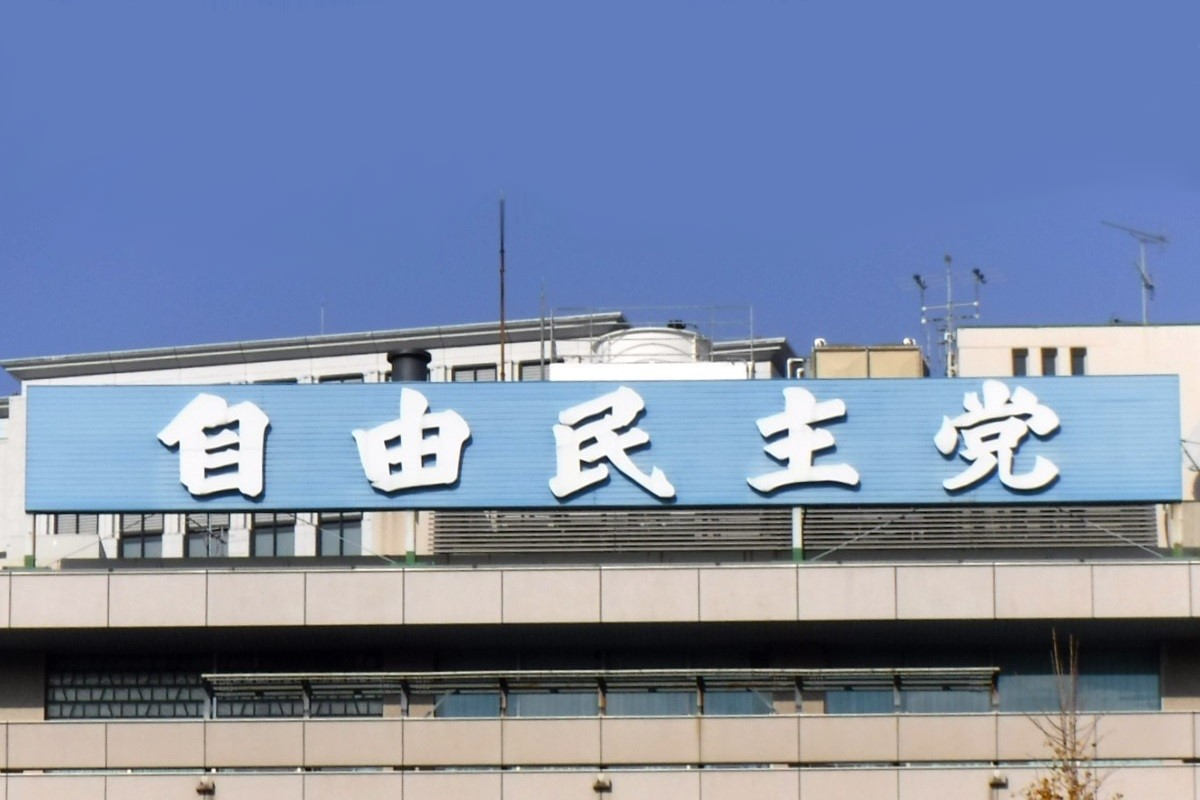
The Liberal Democratic Party’s headquarters in Chiyoda Ward, Tokyo.
16:23 JST, April 23, 2026
A Liberal Democratic Party subcommittee intends to recommend penalties for unscrupulous artificial intelligence operators who fail to comply when the government requests reports under the AI Law, according to a draft of the subcommittee’s proposals regarding AI policy.
The draft also states the government should actively investigate and provide guidance to operators that generate a large amount of content that infringes upon copyrights.
The draft proposals were compiled by the AI and Web3 subcommittee, chaired by former digital minister Masaaki Taira. They are expected to be submitted to the government soon. The government will then consider policies in line with the recommendations.
The draft proposals point out that the damage caused by copyright infringement and deepfakes due to generative AI are becoming increasingly apparent.
They highlight the lack of penalty provisions in the current AI Law, stating that “effective means of addressing challenges in the AI era are limited.” With unscrupulous AI operators in mind, the draft urges the government to “consider more effective and appropriate measures, including penalties.”
The European Union’s AI law imposes penalties on operators who fail to comply with requests for information. The draft proposals cite the risk that, if penalties are not put in place, Japan may be unable to obtain the same information from AI operators that other countries can.
Foreign-made generative AI services have seen a surge in the unauthorized creation of videos and images bearing a striking resemblance to Japanese anime and manga characters.
The draft proposals require the government “to actively seek explanations regarding measures to prevent such generation and the actual state of training data, and reports on response status.” The draft also urges the government to take necessary measures, such as providing guidance, based on the AI Law.
In addition, it argues that Japan should enhance its autonomy in AI to ensure sovereign AI. It calls on the government to support the development of domestically produced AI for autonomous vehicles, strengthen domestic development of components and semiconductors for robots, and accelerate the introduction of AI robots through the use of “robot special zones.”
Japan’s AI Law, which went into effect in September, is aimed at addressing risks while encouraging research and development.
Under Article 16 of the law, if a case arises in which citizens’ rights are infringed upon due to the misuse of AI, the government will investigate and provide guidance and advice to the relevant businesses.







Most Read
Most read in the last 24 hours
-

Japan Monitoring Situation Surrounding Revocation of Taiwan Presi...
-

Promote Support, Respect to Help Prevent Harassment of Athletes
-
Japan Should Serve as Bridge between Nuclear, Non-nuclear States,...
-

Yamato Museum Reopens in Hiroshima Pref. Following Extensive Reno...
-

Toyota Unveils New Development Hub in Woven City Repurposed from ...
-

Fukui: Dinosaur Faculty Building Unveiled in Japanese University'...
-

Elegant Weeping Cherry Blossoms on Display at Water Purification ...
-
Man Admits to Abandoning Wife's Body in Zoo Incinerator in Hokkai...
Most read in the last 7 days
-
Earthquake Hits Japan's Tohoku Region; 3-meter Tsunami Warning Is...
-

Trump Extends the Ceasefire with Iran but Keeps the Blockade
-

China, South Korea Object to Japanese PM Takaichi's Ritual Offeri...
-

India's Arms Indigenization Quest for Self-Reliance / New Delhi S...
-

Japan to Ban Use of Portable Chargers on Airplanes from April 24,...
-

¥1,000 Coins to Be Issued to Mark Anniversary of Beginning of Jap...
-

Most Serious Cyberattacks against the UK Now from Russia, Iran an...
-

Trump Opposes United–American Merger, Signals Support for Spirit
Most read in the last 30 days
-
Earthquake Hits Japan's Tohoku Region; 3-meter Tsunami Warning Is...
-
Police Find Child's Shoe During Search for Missing Boy in Nantan,...
-
Body Found in Nantan, Kyoto Prefecture, During Search for 11-Year...
-

Cherry Blossoms, Rapeseed Flowers Perform Colorful ‘Duet’ in Niig...
-
Trump Extends the Ceasefire with Iran but Keeps the Blockade
-
China, South Korea Object to Japanese PM Takaichi's Ritual Offeri...
-

Olympic Gold Medal-Winning Figure Skaters Riku-Ryu Announce Retir...
-

Japanese Prime Minister Takaichi Speaks to Pakistani Prime Minist...
Top Articles in Politics
-
India’s Arms Indigenization Quest for Self-Reliance / New Delhi Sticks to Its ‘All-Alignment’ Guns Even after Iran Warship Attack
-
Japan Aims to Enhance Deterrence, Defense Industry by Allowing Exports of Weapons
-

Former Japan PM Murayama’s Farewell Ceremony Held; Former Deputy PM Kono Vows to ‘Carry on Path Toward Peace’
-

Chinese Warships Cruise Past Japanese Islands in Retaliation for MSDF Ship Using Taiwan Strait
-

Japan’s PM Takaichi Seeks to Advance Policies Bearing Her Own ‘Color,’ Eyes Amending Constitution, Building Strong Economy
JN ACCESS RANKING
-
Earthquake Hits Japan’s Tohoku Region; 3-meter Tsunami Warning Issued (Update 1)
-
Police Find Child’s Shoe During Search for Missing Boy in Nantan, Kyoto Prefecture
-
Body Found in Nantan, Kyoto Prefecture, During Search for 11-Year-Old Boy in Area (Update 1)
-
Cherry Blossoms, Rapeseed Flowers Perform Colorful ‘Duet’ in Niigata
-
Trump Extends the Ceasefire with Iran but Keeps the Blockade
Most read in the last 24 hours
-
Japan Monitoring Situation Surrounding Revocation of Taiwan Presi...
-
Promote Support, Respect to Help Prevent Harassment of Athletes
-
Japan Should Serve as Bridge between Nuclear, Non-nuclear States,...
-
Yamato Museum Reopens in Hiroshima Pref. Following Extensive Reno...
-
Toyota Unveils New Development Hub in Woven City Repurposed from ...
Most read in the last 7 days
-
Earthquake Hits Japan's Tohoku Region; 3-meter Tsunami Warning Is...
-
Trump Extends the Ceasefire with Iran but Keeps the Blockade
-
China, South Korea Object to Japanese PM Takaichi's Ritual Offeri...
-
India's Arms Indigenization Quest for Self-Reliance / New Delhi S...
-
Japan to Ban Use of Portable Chargers on Airplanes from April 24,...
Most read in the last 30 days
-
Earthquake Hits Japan's Tohoku Region; 3-meter Tsunami Warning Is...
-
Police Find Child's Shoe During Search for Missing Boy in Nantan,...
-
Body Found in Nantan, Kyoto Prefecture, During Search for 11-Year...
-
Cherry Blossoms, Rapeseed Flowers Perform Colorful ‘Duet’ in Niig...
-
Trump Extends the Ceasefire with Iran but Keeps the Blockade