
Japanese R&D Tax Credits to Support Artificial Intelligence, Robotics, Semiconductors, Other Strategic Tech
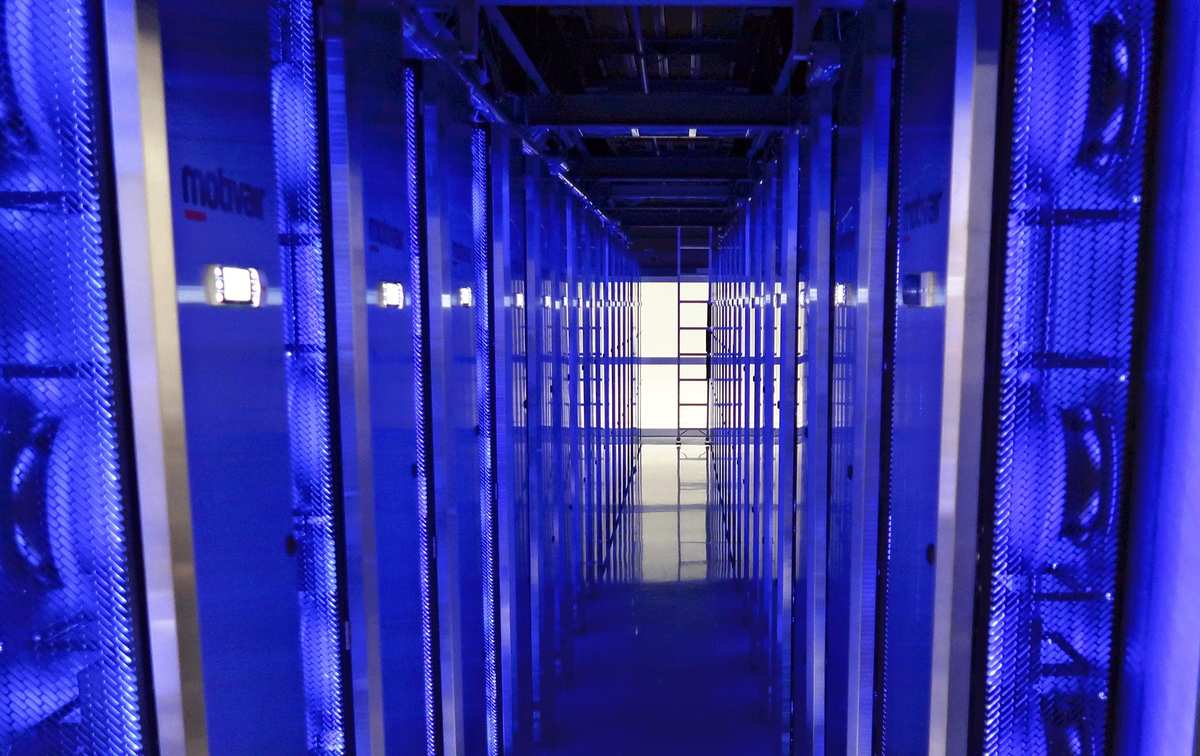
The ABCI 3.0 supercomputer at the National Institute of Advanced Industrial Science and Technology
17:07 JST, December 11, 2025
The government and the ruling coalition have entered the final stage of talks on expanding and introducing corporate tax breaks to support companies’ research and development and capital investment. For R&D spending on key technologies such as artificial intelligence, up to 40% or more of the investment amount would be deducted from corporate tax liabilities.
A new capital investment promotion tax system, allowing companies in all industries to deduct 7% of their capital outlays, will also be created. The measures will be written into the tax reform outline to be finalized by the end of the year.
For R&D investment, the enhanced tax incentives will apply to six fields the government designates as “national strategic technologies,” including “AI and advanced robotics” and “semiconductors and communications,” raising the ceiling on tax credits to as much as 40% of the investment amount — although for pre-approved joint research with universities and research institutions, the rate will be increased to as much as 50%.
For areas outside these six fields, the government will review the scheme by partially scaling back existing deduction rates and making other adjustments. Tax breaks will also be narrowed for R&D outsourced overseas, except in cases such as pharmaceutical companies conducting clinical trials abroad. The aim is to maintain and strengthen R&D bases within Japan.
The new capital investment promotion tax scheme will cover capital spending of at least ¥3.5 billion for large corporations and ¥500 million or more for small and midsize firms. Companies will be able to choose either a 7% tax credit or immediate expensing, under which the full amount of the investment can be booked as a cost in the first fiscal year. Investment plans formulated by the end of March 2029 will be eligible, and the tax relief is expected to total around ¥400 billion a year.
The government initially considered a more generous measure that would have raised the deduction rate to 15%, but shelved the idea because it would have overly expanded the scale of the tax cuts.
Global competition for leadership in key technologies such as semiconductors, quantum technology and nuclear fusion is intensifying, and the United States and Europe are also accelerating moves to strengthen tax incentives for capital investment.
In the United States, a permanent law allowing full and immediate expensing of capital investment costs was enacted in July this year. Germany has also passed a tax-cut package worth €46 billion (about ¥8.3 trillion), including future cuts to corporate taxes. Policymakers in Tokyo had feared that without comparable tax incentives, Japanese companies would shift more of their investment overseas.



Most Read
Most read in the last 24 hours
-
Promote Support, Respect to Help Prevent Harassment of Athletes
-
Yamato Museum Reopens in Hiroshima Pref. Following Extensive Reno...
-
Japanese Govt to Set Up Panel on Widening Access to Sports Broadc...
-
Toyota Unveils New Development Hub in Woven City Repurposed from ...
-

New Budget Framework for Investments: Work to Achieve Both Growth...
-
Elegant Weeping Cherry Blossoms on Display at Water Purification ...
-
Fukui: Dinosaur Faculty Building Unveiled in Japanese University'...
-
Man Admits to Abandoning Wife's Body in Zoo Incinerator in Hokkai...
Most read in the last 7 days
-
Earthquake Hits Japan's Tohoku Region; 3-meter Tsunami Warning Is...
-
Trump Extends the Ceasefire with Iran but Keeps the Blockade
-
China, South Korea Object to Japanese PM Takaichi's Ritual Offeri...
-

India's Arms Indigenization Quest for Self-Reliance / New Delhi S...
-
Japan to Ban Use of Portable Chargers on Airplanes from April 24,...
-
¥1,000 Coins to Be Issued to Mark Anniversary of Beginning of Jap...
-

Most Serious Cyberattacks against the UK Now from Russia, Iran an...
-

Trump Opposes United–American Merger, Signals Support for Spirit
Most read in the last 30 days
-
Earthquake Hits Japan's Tohoku Region; 3-meter Tsunami Warning Is...
-
Police Find Child's Shoe During Search for Missing Boy in Nantan,...
-
Body Found in Nantan, Kyoto Prefecture, During Search for 11-Year...
-

Cherry Blossoms, Rapeseed Flowers Perform Colorful ‘Duet’ in Niig...
-
Trump Extends the Ceasefire with Iran but Keeps the Blockade
-
China, South Korea Object to Japanese PM Takaichi's Ritual Offeri...
-

Olympic Gold Medal-Winning Figure Skaters Riku-Ryu Announce Retir...
-
Japanese Prime Minister Takaichi Speaks to Pakistani Prime Minist...
Top Articles in Politics
-
India’s Arms Indigenization Quest for Self-Reliance / New Delhi Sticks to Its ‘All-Alignment’ Guns Even after Iran Warship Attack
-
Japan Aims to Enhance Deterrence, Defense Industry by Allowing Exports of Weapons
-

Former Japan PM Murayama’s Farewell Ceremony Held; Former Deputy PM Kono Vows to ‘Carry on Path Toward Peace’
-

Chinese Warships Cruise Past Japanese Islands in Retaliation for MSDF Ship Using Taiwan Strait
-

Japan’s PM Takaichi Seeks to Advance Policies Bearing Her Own ‘Color,’ Eyes Amending Constitution, Building Strong Economy
JN ACCESS RANKING
-
Earthquake Hits Japan’s Tohoku Region; 3-meter Tsunami Warning Issued (Update 1)
-
Police Find Child’s Shoe During Search for Missing Boy in Nantan, Kyoto Prefecture
-
Body Found in Nantan, Kyoto Prefecture, During Search for 11-Year-Old Boy in Area (Update 1)
-
Cherry Blossoms, Rapeseed Flowers Perform Colorful ‘Duet’ in Niigata
-
Trump Extends the Ceasefire with Iran but Keeps the Blockade
Most read in the last 24 hours
-
Promote Support, Respect to Help Prevent Harassment of Athletes
-
Yamato Museum Reopens in Hiroshima Pref. Following Extensive Reno...
-
Japanese Govt to Set Up Panel on Widening Access to Sports Broadc...
-
Toyota Unveils New Development Hub in Woven City Repurposed from ...
-
New Budget Framework for Investments: Work to Achieve Both Growth...
Most read in the last 7 days
-
Earthquake Hits Japan's Tohoku Region; 3-meter Tsunami Warning Is...
-
Trump Extends the Ceasefire with Iran but Keeps the Blockade
-
China, South Korea Object to Japanese PM Takaichi's Ritual Offeri...
-
India's Arms Indigenization Quest for Self-Reliance / New Delhi S...
-
Japan to Ban Use of Portable Chargers on Airplanes from April 24,...
Most read in the last 30 days
-
Earthquake Hits Japan's Tohoku Region; 3-meter Tsunami Warning Is...
-
Police Find Child's Shoe During Search for Missing Boy in Nantan,...
-
Body Found in Nantan, Kyoto Prefecture, During Search for 11-Year...
-
Cherry Blossoms, Rapeseed Flowers Perform Colorful ‘Duet’ in Niig...
-
Trump Extends the Ceasefire with Iran but Keeps the Blockade